




Vietnam proactively supports and contributes to ASEAN community building process: Dr. Nguyen Hung Son
WVR - Dr. Nguyen Hung Son, President of the Diplomatic Academy of Vietnam, shared with The World and Vietnam Report his insights on the key messages and contributions of the ASEAN Future Forum (AFF) 2026 to the region and the world.
Latest
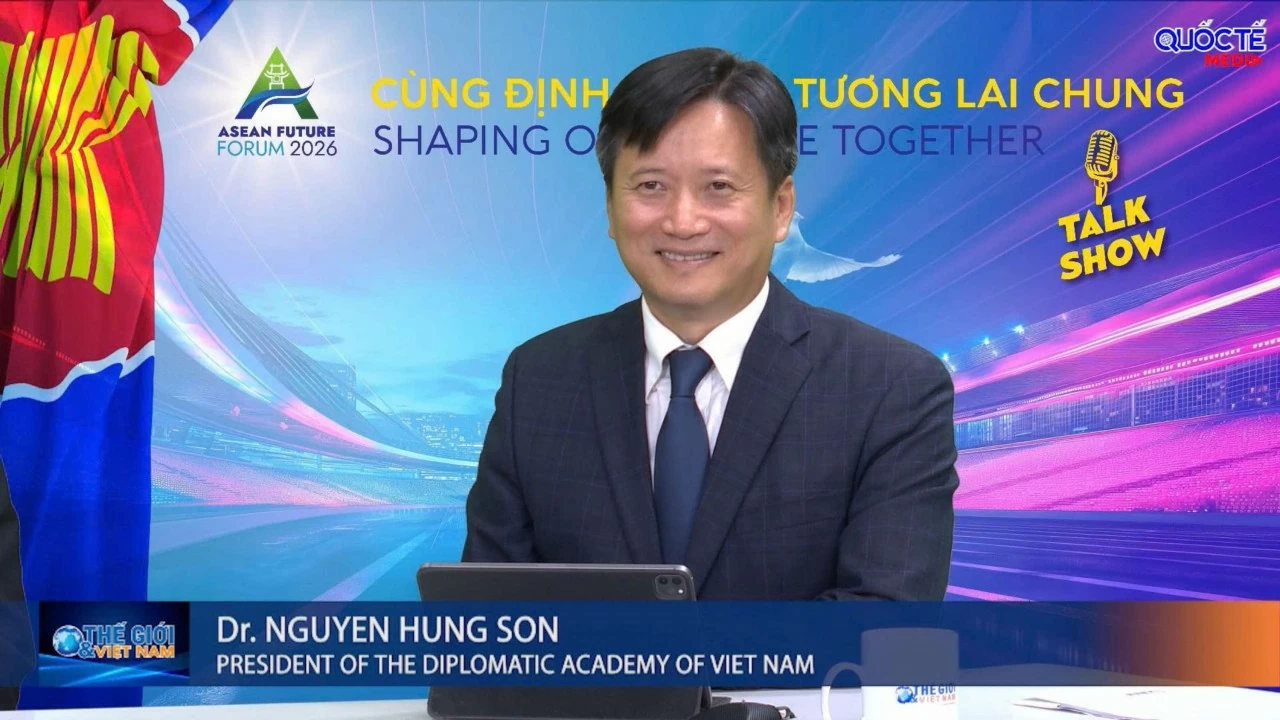 |
| Dr. Nguyen Hung Son, President of the Diplomatic Academy of Vietnam. (Photo: Thanh Long) |
Dr. Nguyen Hung Son, as the AFF is drawing near, could you please share some key priorities of this year's forum and the message that host country Vietnam wants to convey?
I think the initiative, ever since Vietnam initiated the AFF, has always been to support the official track of ASEAN in order to contribute Vietnam's little effort in supporting the community-building process. And so, every year, Vietnam chooses the theme that supports the Chair of that year in contributing to the effort of the Chair to contribute to the agenda of ASEAN in that year.
| More from WVR |
 ASEAN Future Forum 2026: Dialogue for peacebuilding and resilience ASEAN Future Forum 2026: Dialogue for peacebuilding and resilience |
So I fully concur with the theme of ASEAN Future Forum is very much in line, if not identical, to the chairmanship of ASEAN in that year. And this is not coincidental, this is deliberate because we wanted the ASEAN Future Forum to support the Chair and to contribute to ASEAN's overall effort in that year in the community-building process.
Secondly, the key priorities for Vietnam is, of course, to create an open forum that engages stakeholders into a discussion on how to support the Chair and how to support ASEAN's overall effort in a future-oriented manner, so how we can add value to the discussions within ASEAN and between ASEAN and its partners to contribute to the overall process.
Third, we are also prioritizing on the issues that matters to the ASEAN people, especially in dealing with the challenges of the time. And because of that, the forum this year, as you can see, discusses topics that are very much the concerns of both the governments and the people of ASEAN. For example, energy security; how to adopt AI; how to remodel our economies and even how to better resolve conflict in the region and beyond.
So that is the priorities of the forum. And the key message that we would like to convey is that Vietnam is being proactive in supporting and contributing, as a responsible member of the ASEAN community, to the ASEAN community building process.
What are your comments on the ASEAN readiness and overall approach in responding to regional and global challenges, particularly the ASEAN collective effort to address the recent energy crisis?
The context of the region and the world today is very similar to when ASEAN was created. There is immense transformation in the region and the global configuration. The transformation is profound and generational and therefore asks for very bold assessments and very bold reactions from every country.
And I think that amidst this transformation, very few if no country is fully ready to adapt. And because of that, I think every country, every region have to find a way to better respond to the changes and to better adapt to the transformations. And that is the same spirit that we would like the ASEAN community to take.
One of the key priorities and objectives of both ASEAN as an organization and as Vietnam and many Southeast Asian countries as member states is how to enhance resilience amid this very profound transformations and changes. And I think that ASEAN needs to better coordinate the policies and better cooperate in order to increase the resilience and from that increase the readiness to tackle the challenges.
And that's exactly what we would like to do with the ASEAN Future Forum: To find innovative ways for ASEAN member states to collaborate among each other and with partners in order to strengthen ASEAN resilience, in order to better adapt to the challenges of today, and so that to better be ready for even more transformations and changes that is to come.
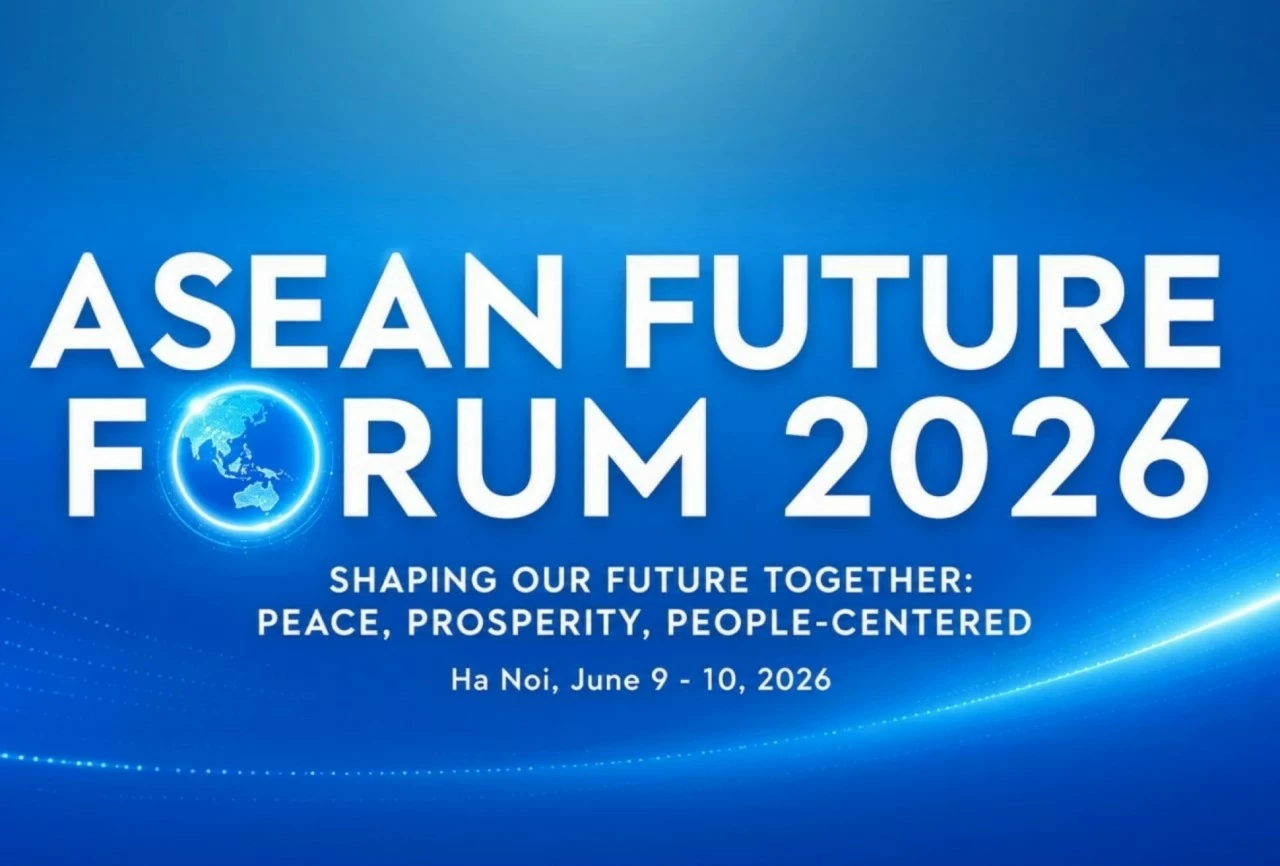 |
| The 3rd ASEAN Future Forum (AFF) will take place from June 9-10 in Hanoi with the theme "Shaping our future together: Peace, Prosperity, People-centered". (Photo: Diplomatic Academy of Vietnam) |
How do you assess ASEAN's increasingly extensive and deepening network of partnerships and what does this signify for the association's vitality and influence?
ASEAN as a "beacon of hope" and you pointed out a particular strength of ASEAN, which is the capability to engage and embark in an extensive network of partner around the world. And over the course of the 60 years of development of ASEAN, ASEAN has been able to develop and formalize and institutionalize a lot of the partnerships, both from within the region and also in other regions.
And that has allowed ASEAN to pursue a development and an adjustment of its foreign policy, as Ambassador rightly mentioned out, very independent and very neutral without being overly dependent on any of its partners. And so that has been a particular strength of ASEAN and that is one source of what we call today ASEAN centrality - the ability and the network of partnerships in all directions.
However, I think that in the new global context, in the transformed world and a world that is developing very dynamically, I think that network can be further strengthened. And I think the ways that it can be strengthened is what we at the AFF would like to contribute: Which is to build more networking between different stakeholders.
What ASEAN has done very well over the past 60 years is build the extensive network of government-to-government relations. What we would like to contribute is to strengthen the network with the networks of the business, with the network of the people, with the network of the think tank, with the network of the cities within the region. And we’re doing so because we thought that these are important players that is going to shape ASEAN.
For example, we think about AI. AI now is in the hands of the corporate sector. And without the contributions of the big tech companies, the businesses, the very innovative little SMEs which are investing on the future adaptations of AI into our societies, then I think we are missing an important part in our future. And therefore engagement with the business sector we thought is a useful exercise. Likewise with the think tankers; I think the think tankers are thoughtful people which can contribute innovative ideas to help policy makers expand their scope and find innovative ways to emerging issues.
Also, the role I think of the communities within cities. The cities are now concentrations of a lot of the people, and the people are strength. They are also the concentrations of the capital investments and technology. So the connections of the cities, if done properly, can synergize efforts by many of the growth centers in ASEAN capitals and ASEAN countries to create and amplify the growth potentials that we all have.
So in other words, I'd like to say that looking at the future, we would like to contribute ways in order to strengthen the network that ASEAN has built successfully over the course of its 60 years of existence.
Amid both opportunities and challenges facing ASEAN today, what are your expectations for the ASEAN Future Forum 2026 as a platform of ideas, dialogue, and policy connectivity?
Our expectations are going to be very simple. We just wanted to create an open space so that all stakeholders can interact with each other - they can interact across stakeholders.
And this across interaction is important so that policy makers can listen to the youth, policy makers can listen from the business community, from the think tanks. And also the think tanks can also listen and talk to the business and the youth, for example, so they can have a conversation across the groups that they do not often interact.
Secondly, we hope that through such a process, new ideas are going to emerge. If you listen to a voice that you don't usually hear often, you sometimes come up with new ideas, and sometimes bright ideas comes about through that conversation. And we hope that the forum can be a place for innovative ideas to emerge and to be nurtured.
And thirdly, we expect and we hope that this setting is going to encourage people to think ahead and to think about the future. So yes, the important things of today is going to preoccupy our mind, but we also encourage to think a step further. Think future-oriented, so we can come up with future-oriented solutions.
So those are the three expectations that we have with the forum. And we thought that the past forum have achieved to a certain extent those expectations, and we hope that by being innovative in the design of this forum ourselves, we can even better efficiently achieve those expectations.
Thank you very much!
| Prime Minister of Timor-Leste arrives in Hanoi for official visit and AFF 2026 WVR/VNA - On the afternoon of June 7, Prime Minister of the Democratic Republic of Timor-Leste Kay Rala Xanana Gusmao arrived in Hanoi, commencing his ... |
| Mekong subregion is truly the heart of mainland Southeast Asia: Lao Ambassador to Vietnam WVR - Ahead of the ASEAN Future Forum (AFF) 2026, H.E. Mrs. Khamphao Ernthavanh, Lao Ambassador to Vietnam, shared her expectations for the Forum and ... |
| Politburo Member Le Hoai Trung: Strengthening cooperation among Southeast Asian political parties is a strategic imperative WVR - On the morning of June 8, in Hanoi, within the framework of the 3rd ASEAN Future Forum (AFF), the Roundtable "Southeast Asian Political ... |
| Thai Prime Minister Urawadee Sriphiromya arrives in Hanoi for official visit and attendance at ASEAN Future Forum WVR/VNA - Prime Minister of Thailand Anutin Charnvirakul arrived in Hanoi on June 8 morning, beginning an official visit to Vietnam and attendance at the ... |

| Connecting ASEAN cities through culture, heritage and people Ahead of the ASEAN Future Forum 2026 (June 9-10), Chairman of the Hanoi People’s Committee Vu Dai Thang granted an interview to The World and ... |


