




Vietnamese Teaching Methodology Training Course: Nurturing the Vietnamese spirit among Overseas Vietnamese teachers
WVR - For overseas teachers, the 2026 Vietnamese Teaching Methodology Training Course is not just an opportunity to enhance professional skills but also a journey back to their roots.
Latest
From classroom lessons to real-life experiences, the training course provides knowledge, inspiration, and motivation for them to spread the Vietnamese language and culture to the Vietnamese community and international friends.
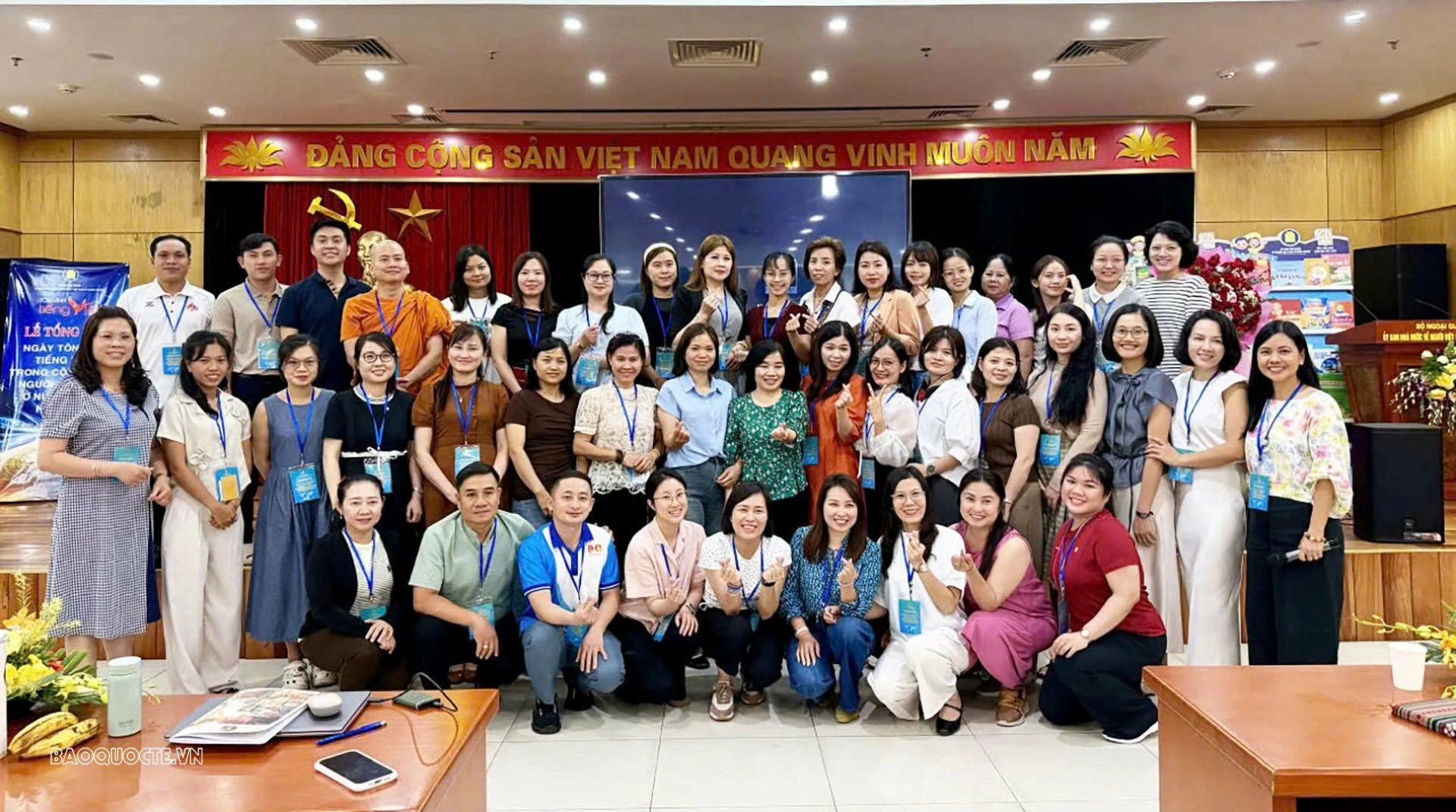 |
| Overseas teachers at the training class. (Photo: Thanh Long) |
From August 11 to August 27, the Vietnamese Teaching Methodology Training Course for overseas Vietnamese teachers takes place in Hanoi, bringing together 50 overseas teachers from 14 countries and territories.
The program is one of the practical activities aimed at realizing the spirit of Resolution No. 23-NQ/TW of the Politburo on overseas Vietnamese affairs, contributing to helping the younger generation of overseas Vietnamese understand their roots and nurture their love for their homeland and country.
This is also an opportunity for overseas teachers to share practical experiences, discuss difficulties, innovations, and effective models in teaching Vietnamese in different regions, thereby contributing to forming and strengthening a network of Vietnamese language teachers abroad that is increasingly connected, supportive, and developing together.
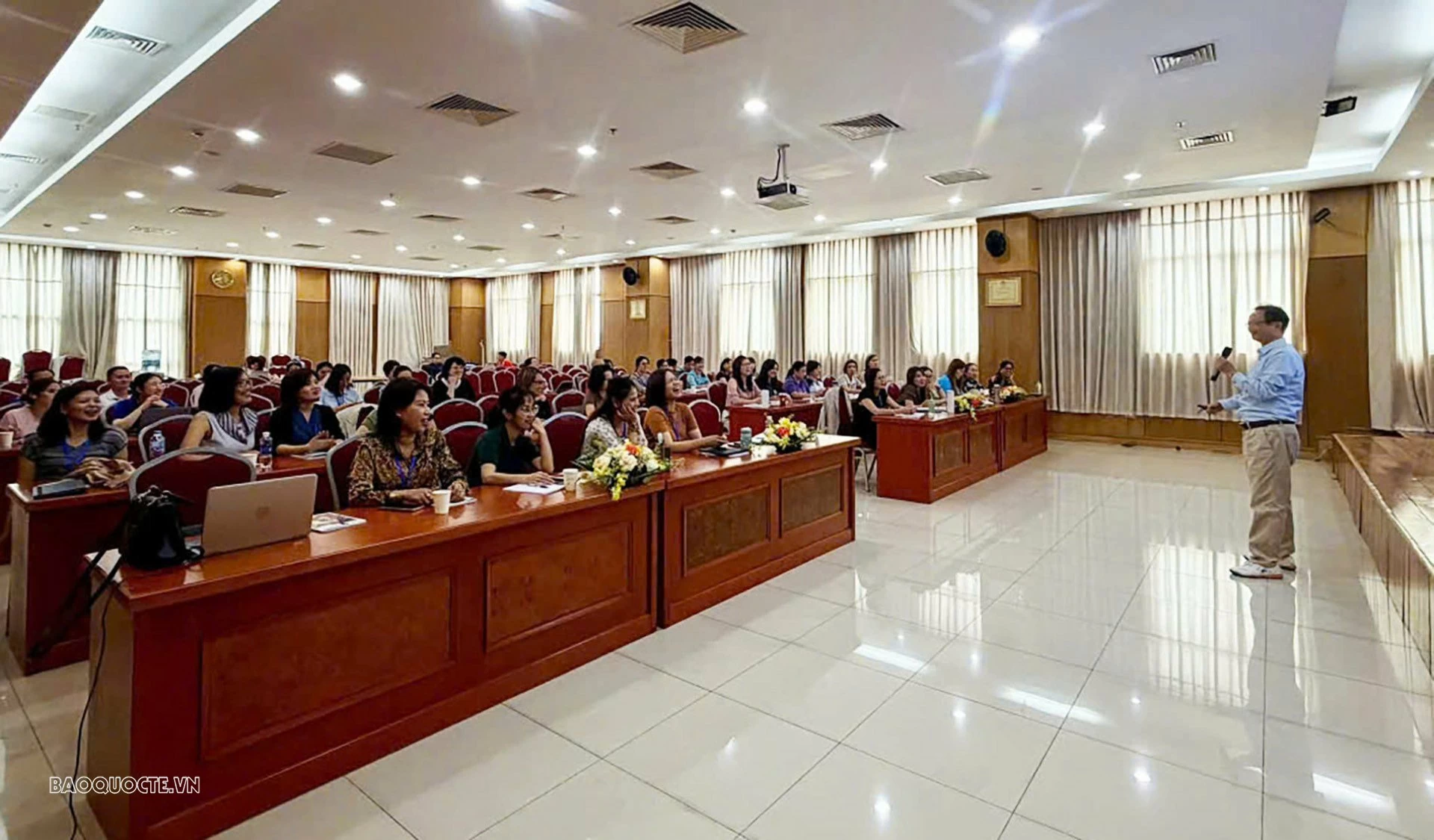 |
| Overview of the training class. (Photo: Thanh Long) |
According to the program schedule, participants attend 21 specialized training sessions focusing on topics such as: methods of teaching Vietnamese phonetics, grammar, and vocabulary; skills in teaching writing and organizing classroom activities; methods of teaching Vietnamese to children; and designing programs and lessons.
The highlight of the course is the teaching practice sessions and field trips to cultural and historical sites such as Ho Chi Minh Mausoleum, Van Mieu - Quoc Tu Giam, Bat Trang pottery village, and sites in Ninh Binh and Bac Ninh.
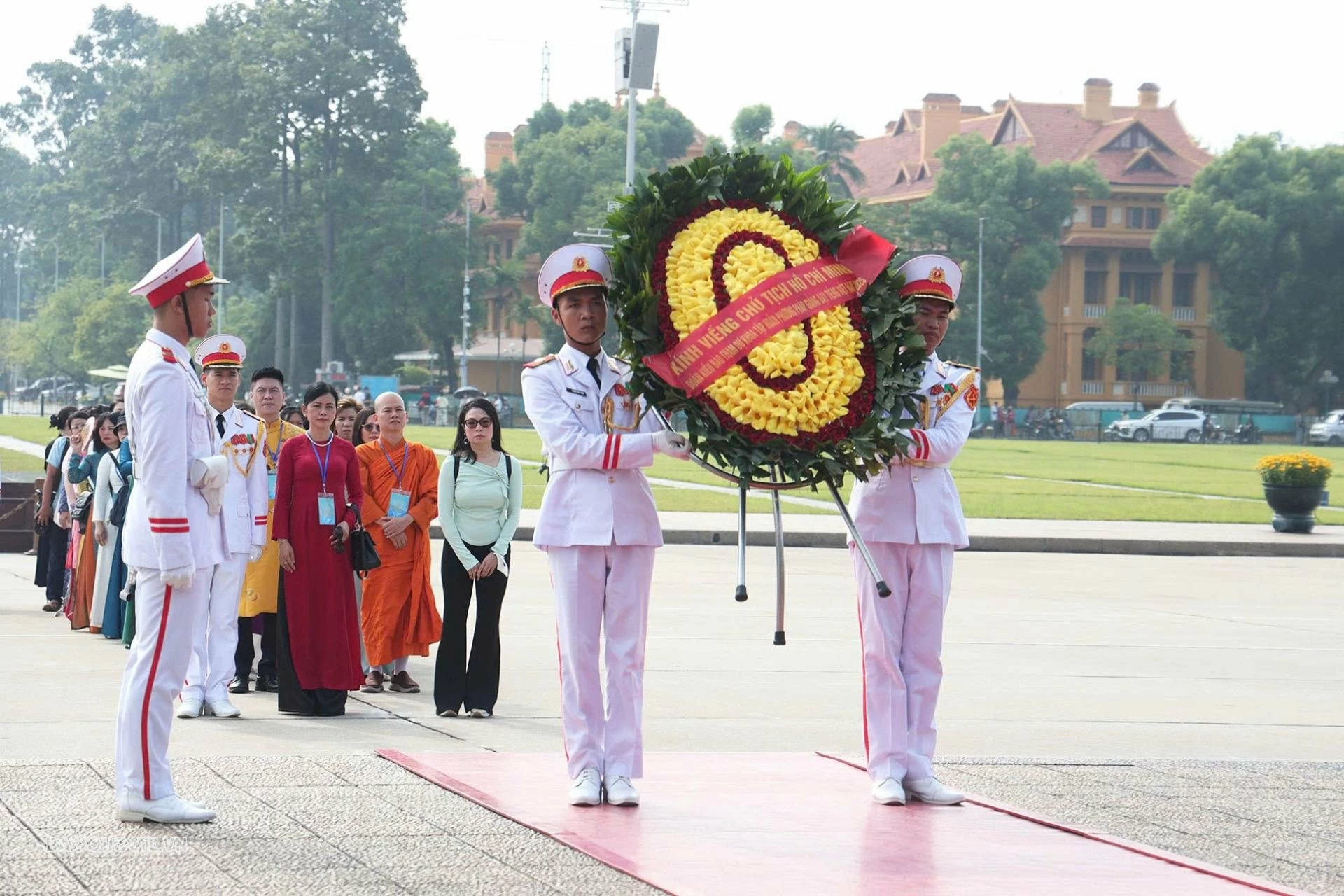 |
| The delegation visiting Ho Chi Minh Mausoleum. (Photo: Thanh Long) |
In addition, participants are introduced to the ecosystem of electronic textbooks and free television learning materials for the community. Side activities include exchanges with “Vietnamese Ambassadors” and attending the Closing Ceremony of the Day Honouring the Vietnamese Language in the Overseas Vietnamese Community in 2026.
In an interview with The World & Vietnam Report, Ms. Dao Thi Anh Tuyet, an overseas Vietnamese from Busan (Republic of Korea), shared that during her work at a Vietnamese teaching facility for Koreans, she gradually became attached to teaching. However, she always wished to receive more formal training in pedagogy and linguistics.
Therefore, the Vietnamese Teaching Methodology Training Course for overseas Vietnamese teachers is a very meaningful opportunity, helping her gain a deeper understanding of the Vietnamese language and culture. The knowledge acquired will serve as a foundation for her to convey to Korean students accurately and vividly, contributing to spreading the essence of Vietnamese culture.
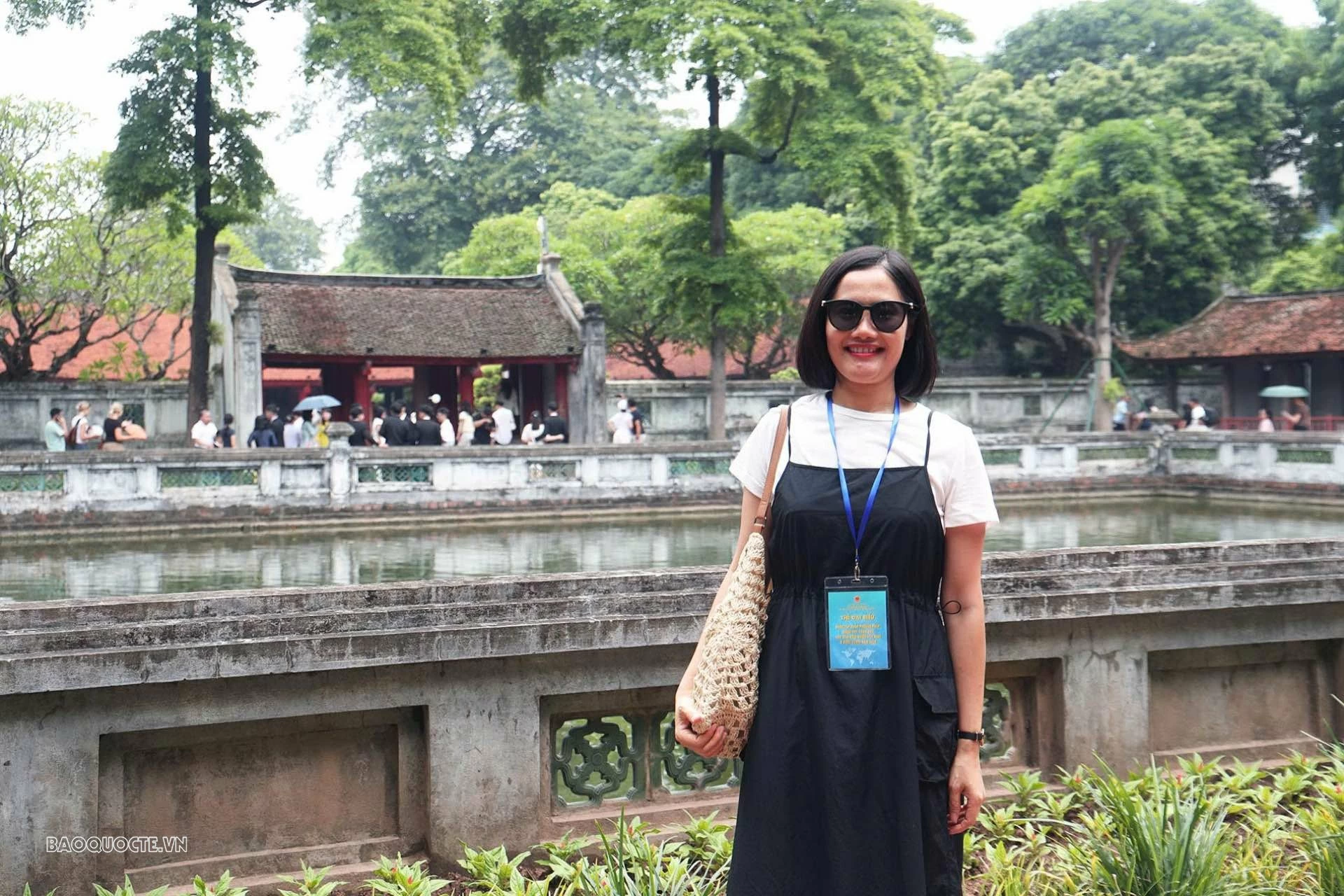 |
| Ms. Dao Thi Anh Tuyet, an overseas Vietnamese from Busan (Republic of Korea). (Photo: Thanh Long) |
For her, Vietnamese teachers abroad often face difficulties in directly accessing domestic cultural life, mainly relying on online resources.
Returning to Vietnam to participate in the training course, learning directly from experts and experienced individuals has brought her many valuable experiences. As a result, when she returns to the Republic of Korea, she will have more real and vivid stories to incorporate into her lessons, helping students better understand Vietnam and its people.
According to Ms. Anh Tuyet, one of the most meaningful aspects of the training course is the opportunity for Vietnamese teachers from various countries to meet, exchange in Vietnamese, enjoy Vietnamese cuisine, and share teaching experiences in different cultural environments. Each country has its own characteristics, so exchanging experiences among teachers has provided many practical lessons.
After the training course, participants will maintain connections, agreeing to regularly exchange, update information, support, and motivate each other in preserving and spreading the Vietnamese language and culture in their respective countries.
On this occasion, Ms. Dao Thi Anh Tuyet also expressed her gratitude to the Consulate General of Vietnam in Busan for facilitating her participation in this meaningful training course.
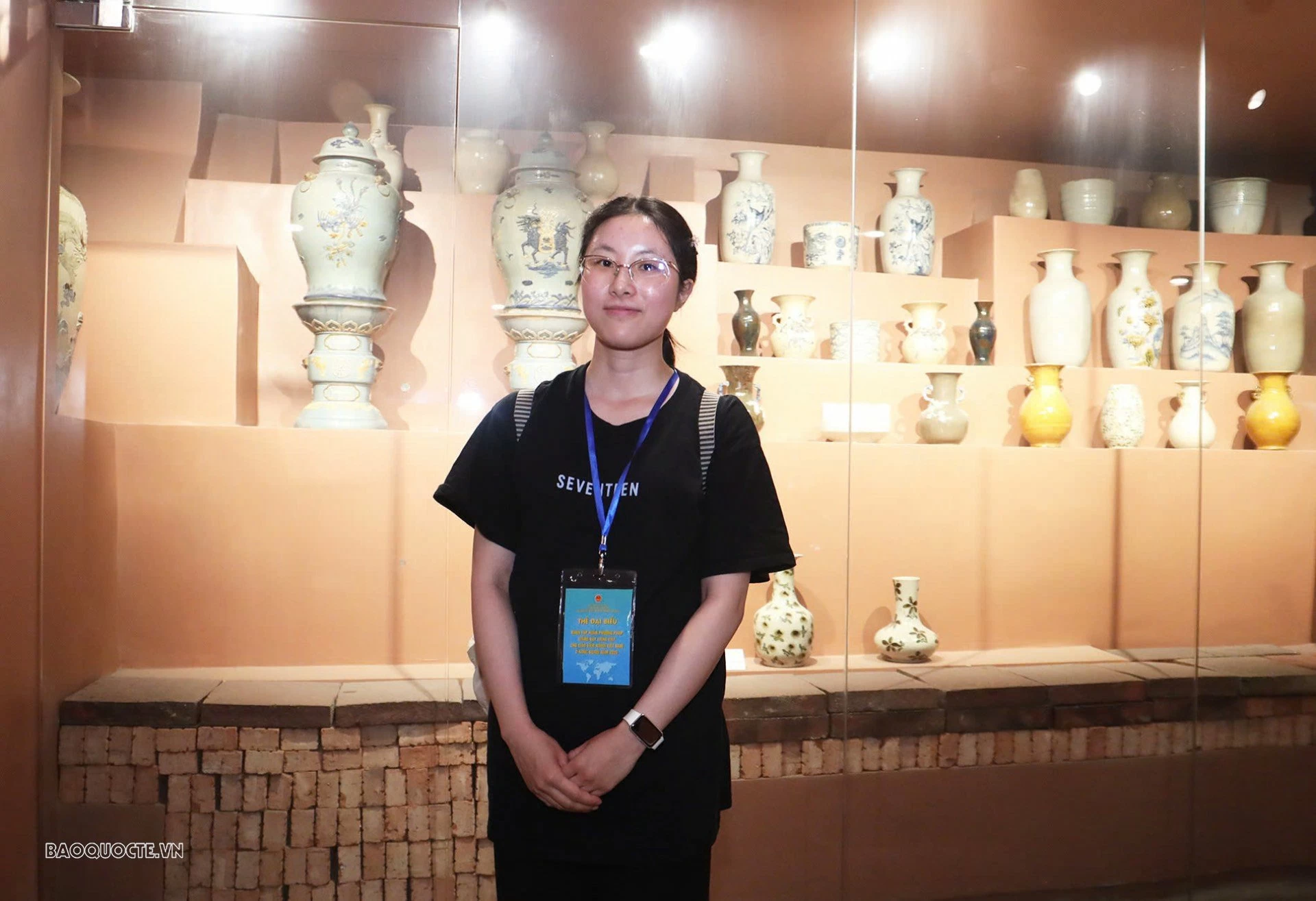 |
| Ms. Dang Khanh Chi, an overseas Vietnamese from Poland. (Photo: Thanh Long) |
As a young overseas Vietnamese from Poland, Dang Khanh Chi shared that although she has not yet taught a class, she has always had a special love for foreign languages, including Vietnamese. Participating in the training course is an opportunity for her to learn from lecturers and teachers, while also gaining motivation and inspiration to pursue teaching Vietnamese in the future.
Having studied at Lac Long Quan Vietnamese School in Warsaw, Khanh Chi stressed that the training course has provided her with new knowledge and experiences in teaching methods and how to convey language associated with Vietnamese culture.
Sharing her upcoming plans, Khanh Chi expressed her desire to become a Vietnamese language teacher for the Vietnamese community in Poland, especially for children of mixed heritage. According to her, helping them use Vietnamese not only serves communication but also nurtures a love for their homeland, helping them better understand Vietnamese culture, history, and roots.
Khanh Chi also appreciated the practical experience activities within the training course, such as the trip to Bat Trang pottery village.
According to her, besides learning grammar and spelling in class, extracurricular activities provide teachers with vivid materials to introduce students to Vietnamese culture, history, and traditional crafts, thereby creating learning interest and fostering a connection with their homeland for the younger generation abroad.
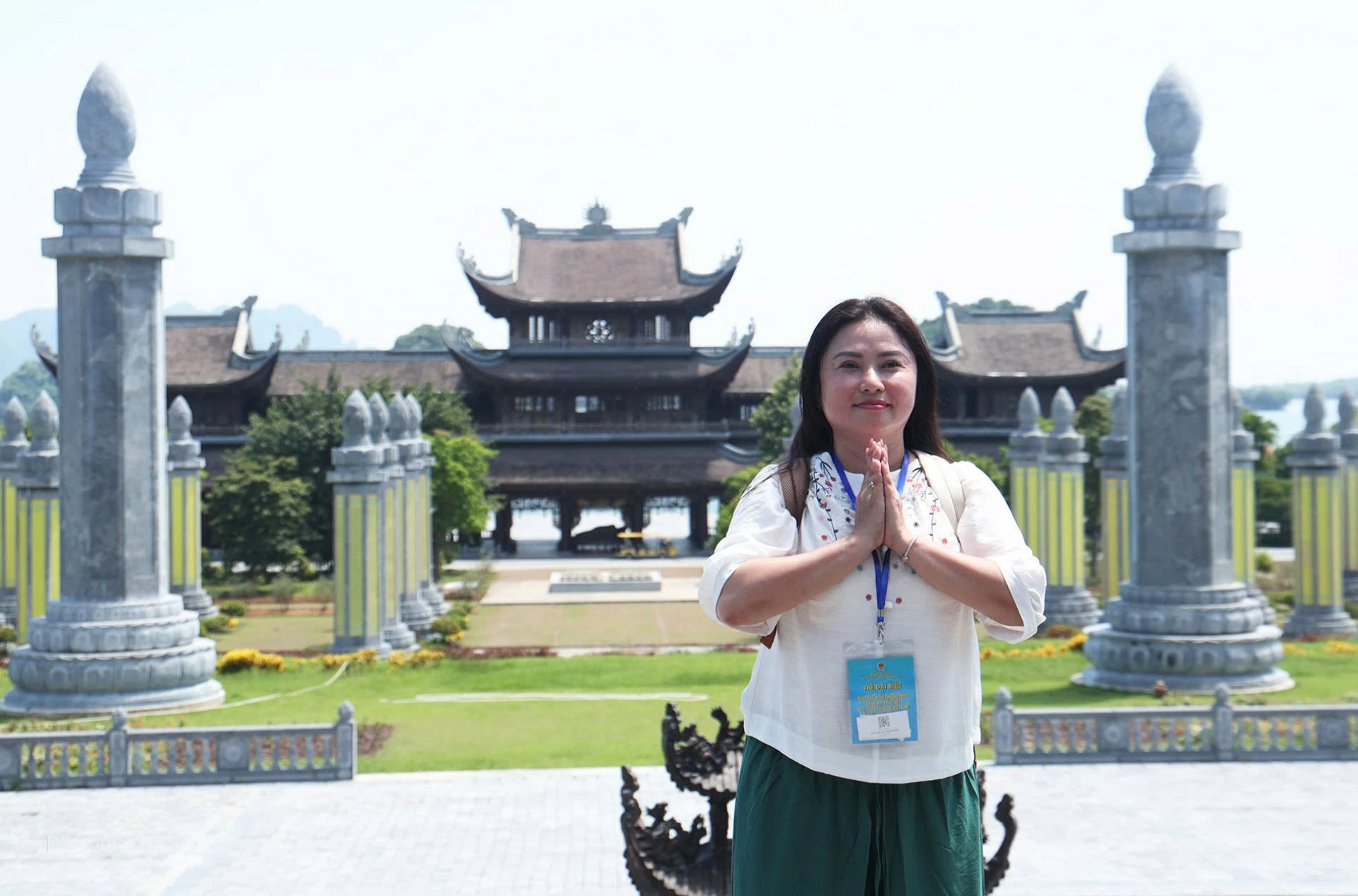 |
| Ms. Tieu Mai Lan, an overseas Vietnamese from Taiwan (China). (Photo: Thanh Long) |
For Ms. Tieu Mai Lan, a Vietnamese of Chinese descent born in Ho Chi Minh City and currently living and working in Taiwan (China), this training course has given her a deeper understanding of the complexity and richness of Vietnamese grammar and phonetics.
She expressed her hope that the Ministry of Education and Training could develop simpler and more accessible teaching methods for foreigners. She was also very impressed with the opportunity to interact and connect with colleagues from 14 countries and territories.
Through conversations, she noticed differences in lesson planning and textbook use in countries like the Republic of Korea, Laos, or Italy; she also highly appreciated the Vietnamese textbooks compiled by Vietnamese teachers in Taiwan (China) to suit practical applications.
Besides studying, Ms. Lan also had memorable experiences when she visited Ho Chi Minh Mausoleum, Van Mieu - Quoc Tu Giam, and Tam Chuc Pagoda for the first time.
Standing before the grandeur of the pagoda, she couldn't help but feel emotional and considered this journey so beautiful that it felt like “a dream come true”.
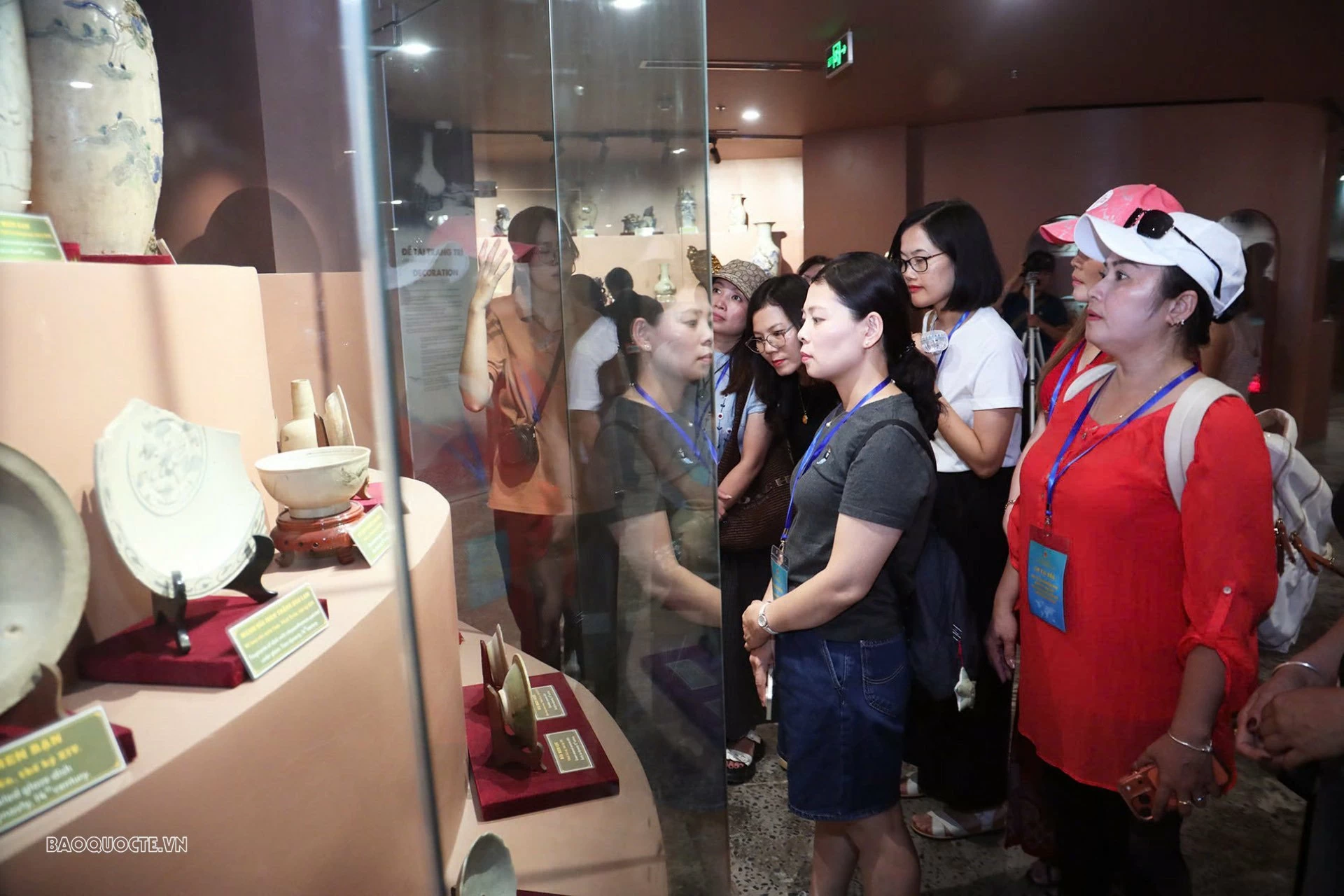 |
| The delegation visiting the museum and exploring cultural history at Bat Trang. (Photo: Thanh Long) |
It can be said that the 2026 Vietnamese Teaching Methodology Training Course for overseas Vietnamese teachers significantly contributes to improving the quality of the teaching staff, the effectiveness of teaching and learning Vietnamese in the community, while also preserving national cultural identity, strengthening ties with the homeland, enhancing national unity, and building a stronger overseas Vietnamese community.
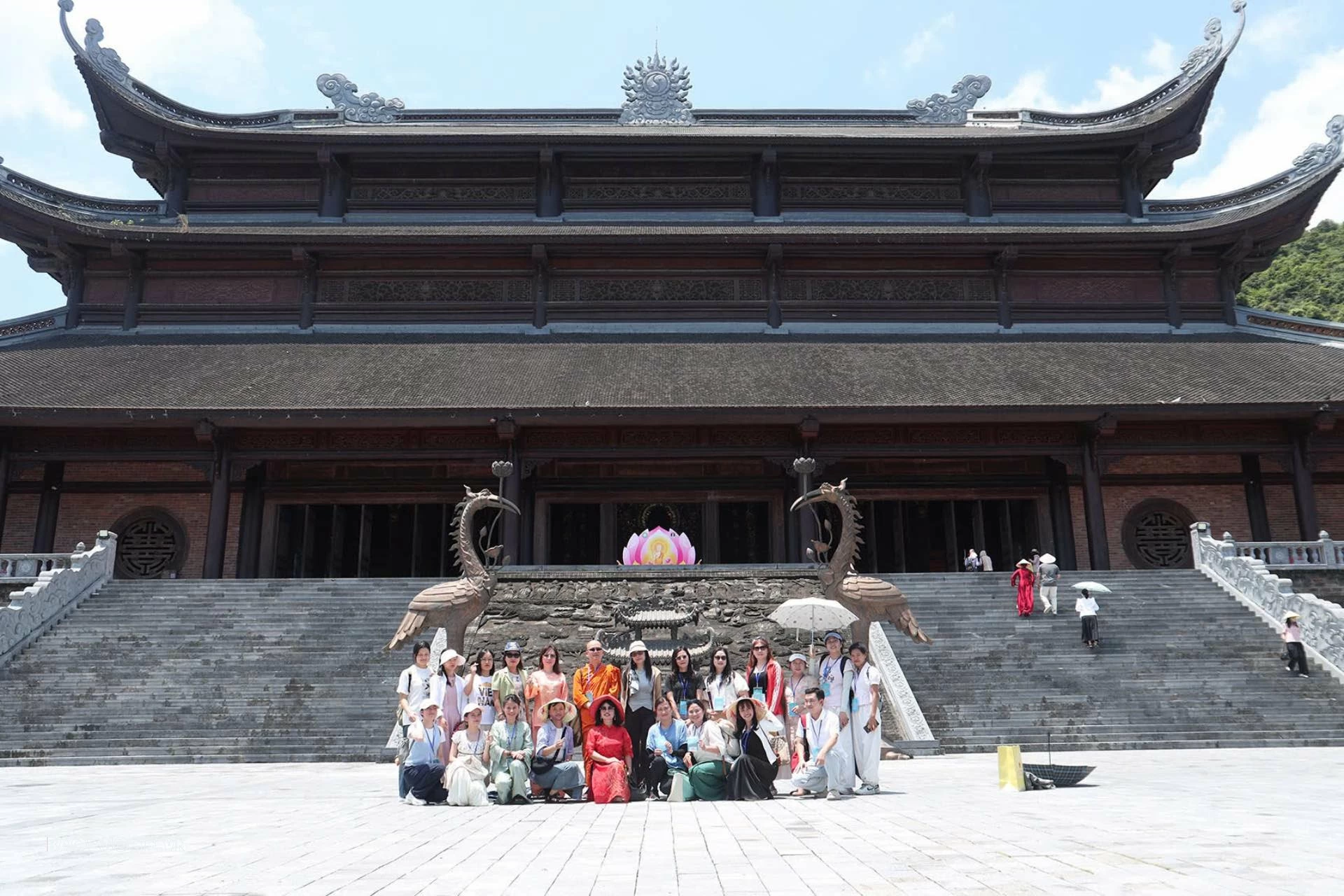 |
| The delegation exploring Tam Chuc Pagoda (Ninh Binh). (Photo: Thanh Long) |