



NA deputies discuss draft Law on Cultural Industry Development: Igniting creativity and preserving heritage
WVR - In response to the demands of cultural industry development, National Assembly deputies emphasise the necessity of protecting the rights of heritage communities.
Latest
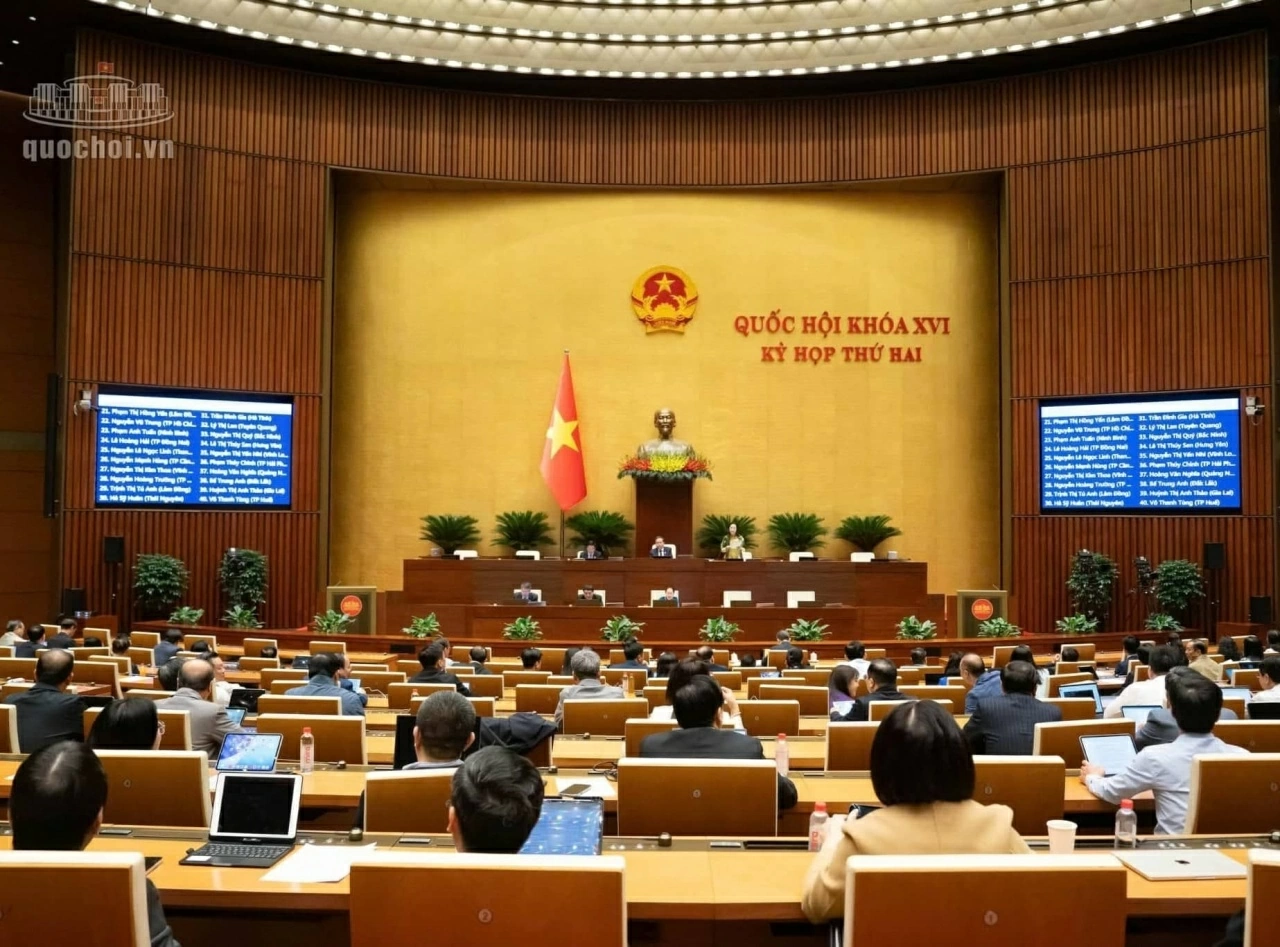 |
| National Assembly Chairman Tran Thanh Man presides, Vice Chairman Nguyen Thi Thanh moderates the session. (Source: National Assembly) |
On November 10, continuing the agenda of the 2nd Session of the 16th National Assembly, under the chairmanship of National Assembly Chairman Tran Thanh Man and the moderation of Vice Chairman Nguyen Thi Thanh, the National Assembly discussed the draft Law on Cultural Industry Development.
Focusing on the preservation and promotion of traditional cultural values linked with cultural industry development, National Assembly delegates propose completing mechanisms to protect the rights of heritage communities and folk artisans; supporting creativity, skill transmission, and clearly defining the boundary between creative freedom and actions that distort national cultural identity.
Ensuring the rights of heritage communities
Commenting on the draft Law, deputy Chau Quynh Dao from the An Giang province delegation expressed concern that the draft has not fully established mechanisms to protect heritage communities and folk artisans, especially ethnic minorities.
According to the deputy, Clause 3, Article 26 on the Exchange Platform only requires those listing products to provide information about their origins, lacking mechanisms for benefit sharing and voluntary consensus, as per international standards.
“Without specific constraints, businesses might use heritage names like the Thai Xoe dance or Khmer folk songs for commercial transactions without mechanisms to ensure benefits for the communities that own and preserve these heritages,” deputy Quynh Dao emphasised.
Citing practical examples, the delegate noted that the palm-leaf manuscripts of the Khmer people in Bay Nui, An Giang are at risk of extinction due to a lack of livelihood and teaching mechanisms; the Kteh patterns of the E De people are copied for commercial fashion production, while the women who weave them by hand receive very low wages. In the Northwest, the Mong khene and Then melodies are being altered and incorporated into commercial music products, distorting the sacred space of the heritage.
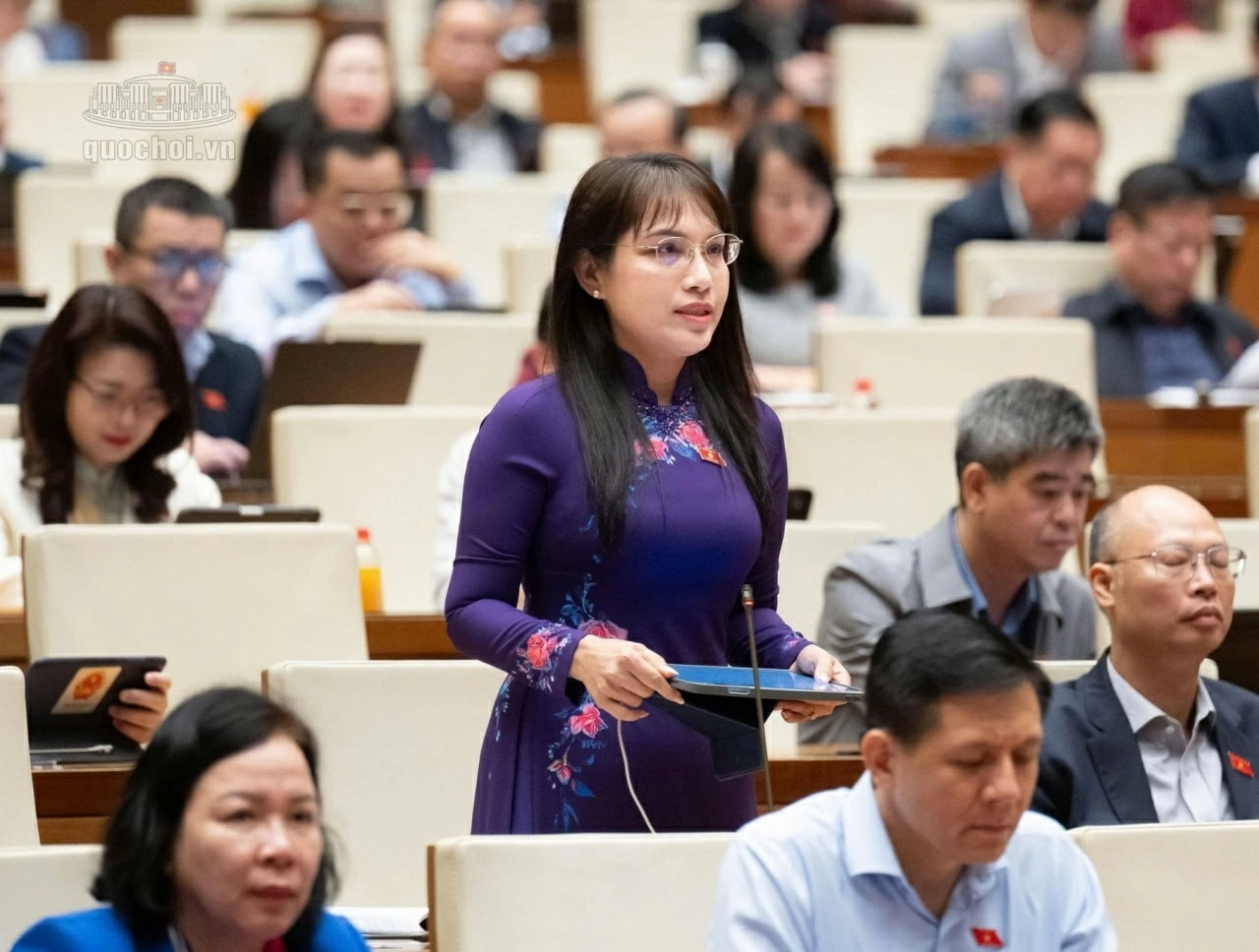 |
| Deputy Chau Quynh Dao from the An Giang province delegation speaks. (Source: National Assembly) |
From this reality, the deputy proposed legalizing mechanisms for access and benefit sharing in Articles 19 and 26; stipulating that products and property rights derived from the cultural heritage of ethnic minorities listed on the Exchange Platform must have benefit-sharing agreements and community consent. Additionally, adding to Article 7 prohibitions against unauthorized commercial exploitation, distortion, or the use of digital technology and artificial intelligence (AI) to illegally copy intangible cultural heritage and traditional knowledge without community consent.
Deputy Chau Quynh Dao also suggested making the criterion of respecting cultural copyright and having benefit-sharing agreements with the community a mandatory criterion when evaluating products with Vietnamese identity, instead of just a 10/100 point requirement as in the draft.
Sharing concerns about protecting and promoting the cultural values of ethnic minorities, deputy Nguyen Le Ngoc Linh from the Thanh Hoa province delegation stated that, according to Resolutions No. 33 and No. 80, the culture of ethnic minorities is an inseparable part and invaluable asset of Vietnam's unified yet diverse culture, serving as an intrinsic resource and important soft power for sustainable development. However, the draft Law still lacks sufficient mechanisms for ethnic minorities to truly become creative subjects and enjoy equal benefits from the intellectual property their communities preserve and transmit.
Deputy Ngoc Linh cited: “Many unique heritages have been recognized by UNESCO, such as the Thai Xoe Art, the Xong chu xon xao epic, the Ao com - Khan Pieu attire, the Gong Culture Space of the Central Highlands, the Then Singing of the Tay - Nung - Thai, and the Bau Truc Cham Pottery. Particularly, the culture of the Tho ethnic group in Thanh Hoa and Nghe An, with the Cham Do Ho melodies, the Boc Mo festival, the Ke dang dance, the spiritual Tang House, traditional herbal knowledge, and the craft of weaving thorn hammocks, is at risk of fading. Notably, some Tho people in their 50s and 60s have never worn their traditional ethnic attire.”
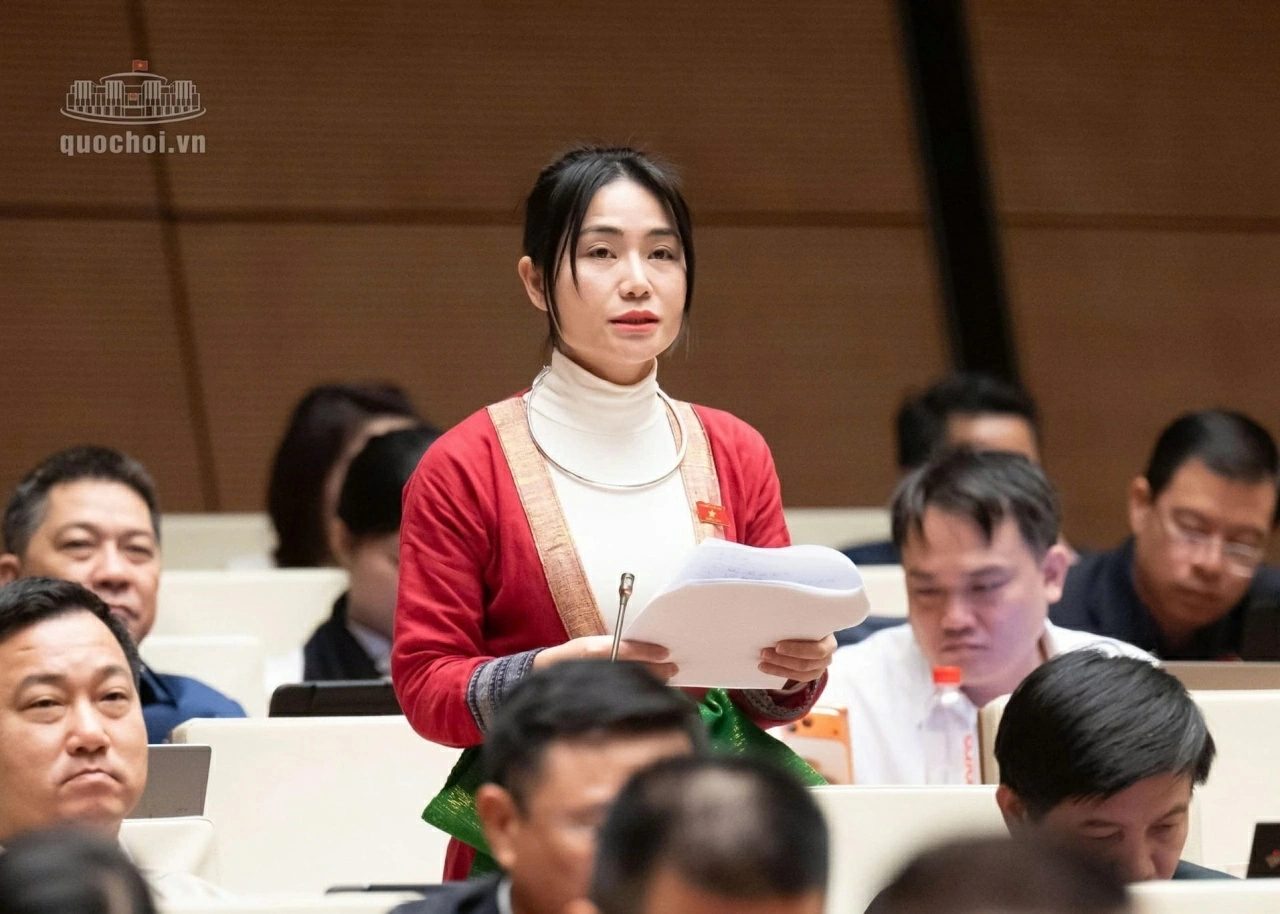 |
| Deputy Nguyen Le Ngoc Linh from the Thanh Hoa province delegation speaks. (Source: National Assembly) |
To ensure ethnic minority cultures are not sidelined in the creative economy, the deputy proposed adding a separate section on cultural industries linked with the preservation and promotion of ethnic minority cultural heritage; shifting the mindset from protection and enjoyment to creation and cooperative development, affirming that communities and artisans are the owners and creators, with the right to participate in management and equitably benefit from the economic value of heritage.
Additionally, the deputy called for institutionalizing mechanisms for voluntary consensus, prior notice, and benefit sharing; stipulating that the commercial exploitation of intangible heritage and traditional knowledge must have community representative consent and allocate at least 3-5% of revenue to the local community's cultural preservation and development fund.
Deputy Ngoc Linh also suggested designing special financial and tax incentives for businesses, cooperatives, and community cultural facilities in ethnic minority and mountainous areas; including policies for 100% corporate income tax exemption and land rent exemption for traditional handicraft, ancient pottery, and weaving production facilities; establishing a seed capital fund to support ethnic minority youth in creative startups in their villages. Furthermore, forming creative clusters and village ecosystems linked with ethnic characteristics in key areas with large ethnic minority populations is essential.
Linking cultural industry development with Heritage preservation and transmission
Echoing the need to ensure benefits for heritage communities, deputy Phan Thi Thuy Linh from the Thanh Hoa province delegation proposed completing the criteria for supporting products in the experimental phase; simultaneously concretizing mechanisms for reinvestment in skill transmission activities, ensuring creators have the conditions to develop products and communities have resources to maintain and promote traditional cultural values.
Regarding Article 21 of the draft Law, the deputy acknowledged the expansion of support policies from teaching and training to experimenting and completing products with Vietnamese cultural identity. However, it is necessary to clarify the criteria for supporting products that are incomplete and in the creative process.
Citing an example of a small business wanting to bring Dong Ho paintings to the screen through animation, the deputy noted that although they have a script and initial sketches, the creative team still needs support in animation techniques to convey the unique characteristics of Dong Ho paintings to the audience. Meanwhile, Clause 2, Article 22 stipulates that requesting an assessment of identity is voluntary, except when identity is a condition for receiving support.
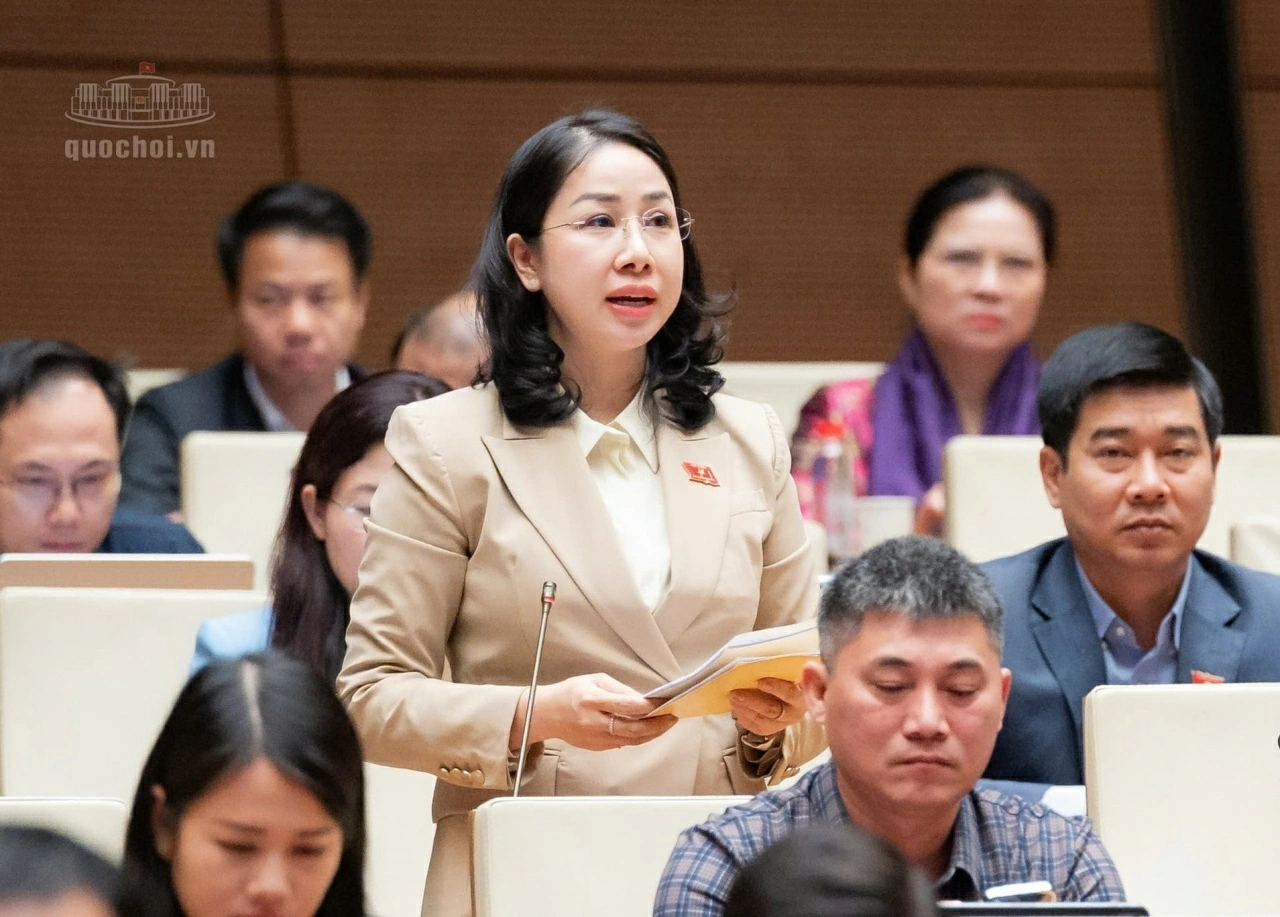 |
| Deputy Phan Thi Thuy Linh from the Thanh Hoa province delegation speaks. (Source: National Assembly) |
“When the work is still in the experimental phase, on what criteria will the competent authority base its decision to approve support for the above-mentioned film crew's training course? Will they base it on the script, the trial film plan, or must they wait for the evaluation results of the work's value and identity?” deputy Thuy Linh questioned.
From the story of lacquer experiments at the Indochina Fine Arts School, when artist Tran Van Can painted a phoenix and artisan Dinh Van Thanh polished the lacquer to reveal the phoenix, the deputy argued that the identity of a product can continue to be enriched during the creative process. Therefore, the deputy suggested adding to Article 21 three criteria for supporting training for products still in the experimental phase: the skills needed, the feasibility of the plan, and how to verify results after the course.
Regarding Articles 11 and 28, the deputy proposed clarifying the responsibility for reinvesting in skill transmission activities, creating stable resources to preserve and promote heritage values.
“In 2011, UNESCO listed Xoan Singing in the List of Intangible Cultural Heritage in Need of Urgent Safeguarding. Thanks to the persistent teaching of artisans, including artisan Nguyen Thi Lich in Xoan An Thai ward, by 2017, when Xoan Singing was transferred to the Representative List of the Intangible Cultural Heritage of Humanity, Phu Tho had 62 successors capable of teaching future generations,” deputy Thuy Linh cited.
On this basis, the deputy proposed concretizing local mechanisms for ordering skill transmission according to multi-year plans, supporting both teachers and learners. The results should not only be evaluated by the number of classes opened but also based on the songs and techniques that learners truly master and are evaluated by the singing guilds and craft villages themselves.
For projects seeking state budget support to directly exploit a specific cultural heritage commercially, the deputy proposed that businesses must submit agreements with the heritage community along with their support application. The agreement should clearly define the scope and form of exploitation, the representative chosen by the community, and specifically stipulate how to calculate the revenue portion allocated for skill transmission, the recipient, and the purpose of use so that the community can supervise.
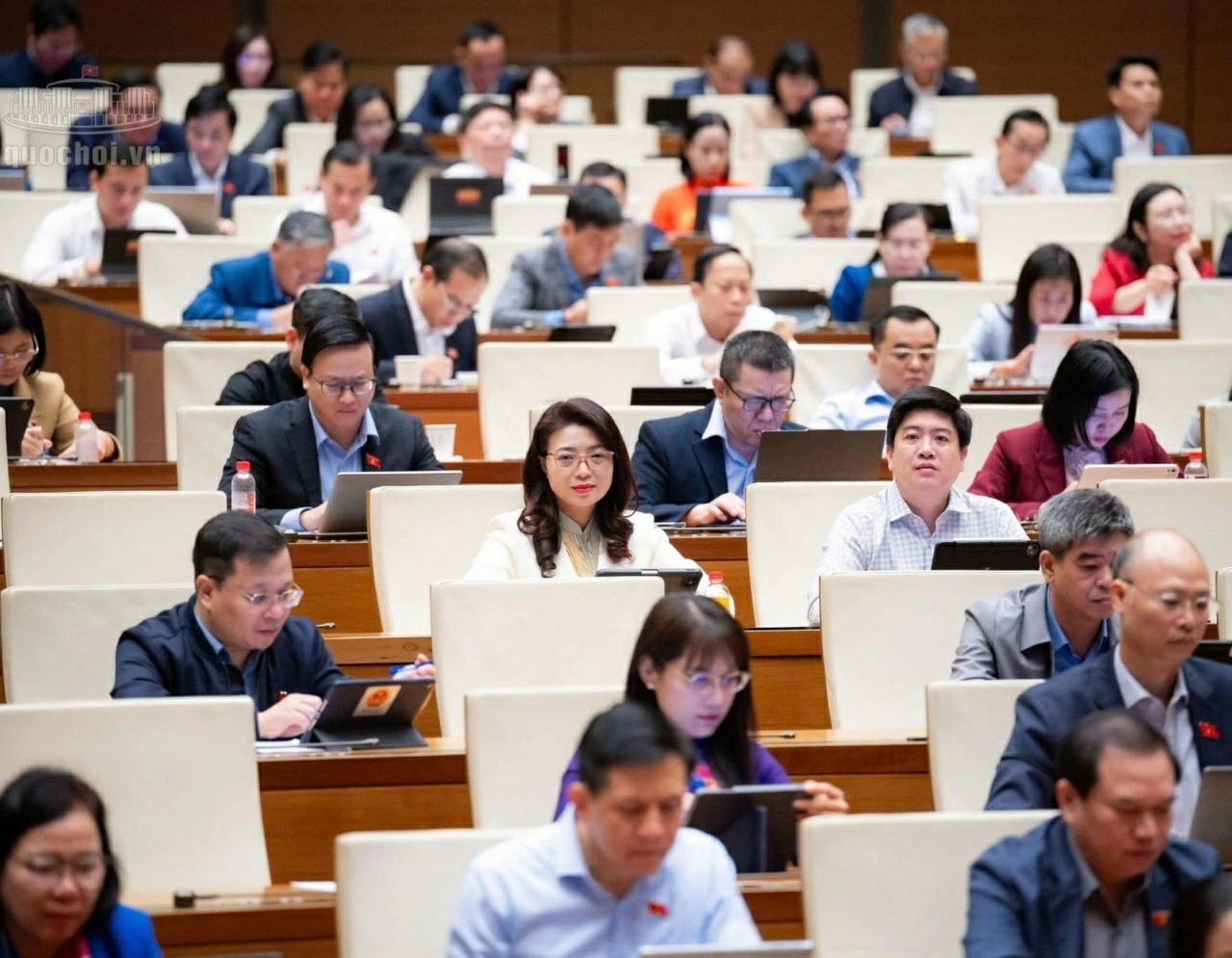 |
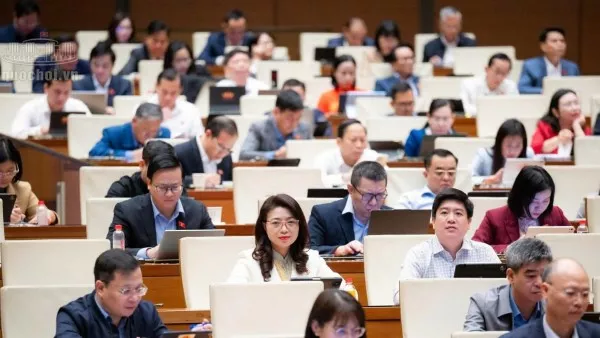
| Delegates attend the discussion session. (Source: National Assembly) |
Clearly defining the boundary between creative freedom and historical distortion, cultural identity distortion
In addition to the requirement to protect community rights and preserve heritage, deputy Pham Anh Tuan from the Ninh Binh province delegation expressed strong agreement with the draft Law, which has fundamentally shifted the mindset, identifying culture as a key economic sector based on a harmonious combination of cultural creativity, technology, and intellectual property rights. However, according to the delegate, it is necessary to harmoniously resolve the relationship between creative freedom and the need to protect historical and cultural values.
“How to maximize creative freedom while maintaining boundaries and preventing the risk of historical distortion and cultural identity distortion in the market mechanism. If managed too tightly, it will stifle creativity, making domestic products lack breakthroughs; conversely, if left to the market to self-regulate, it could lead to commercialization, historical distortion, affecting ideological security and national pride,” the dee stated clearly.
From this requirement, the delegate proposed adding to Article 7 a prohibition against exploiting cultural industry activities to distort national history, deny revolutionary traditions, insult national symbols, and distort core cultural heritage.
Additionally, it is necessary to clearly distinguish between artistic fiction and intentional distortion; add to Clause 4, Article 2 the principle of ensuring the right to artistic fiction in exploiting and promoting historical and cultural values, but not distorting the nature of historical events, the merits of ancestors, defaming national heroes, vulgarizing rituals, or infringing on territorial sovereignty.
According to the deputy, Article 23 should stipulate that the Expert Council evaluating key cultural industry products includes interdisciplinary members, including representatives from management agencies, historians, independent cultural experts, and creative art experts, ensuring objective, scientific appraisal, respecting creative rights, and avoiding one-sided administrative imposition.
Regarding preferential policies in Article 30 and the National Cultural Card in Article 28, the deputy proposed legalizing the principle of screening, using financial policies as a tool to regulate the market, focusing on prioritizing the highest resources for projects that respect traditional cultural values, have serious scientific advisors, and harmoniously combine history and contemporary creativity. Through this, encourage businesses to enhance responsibility, proactively consult historical experts from the idea-building stage, contributing to sustainable cultural industry development.