



11th Vietnam-Australia Diplomatic and Defence Strategic Dialogue held in Hanoi
WVR - On November 10, in Hanoi, the 11th Vietnam-Australia Diplomatic and Defence Strategic Dialogue (Dialogue 2+2) took place.
Latest
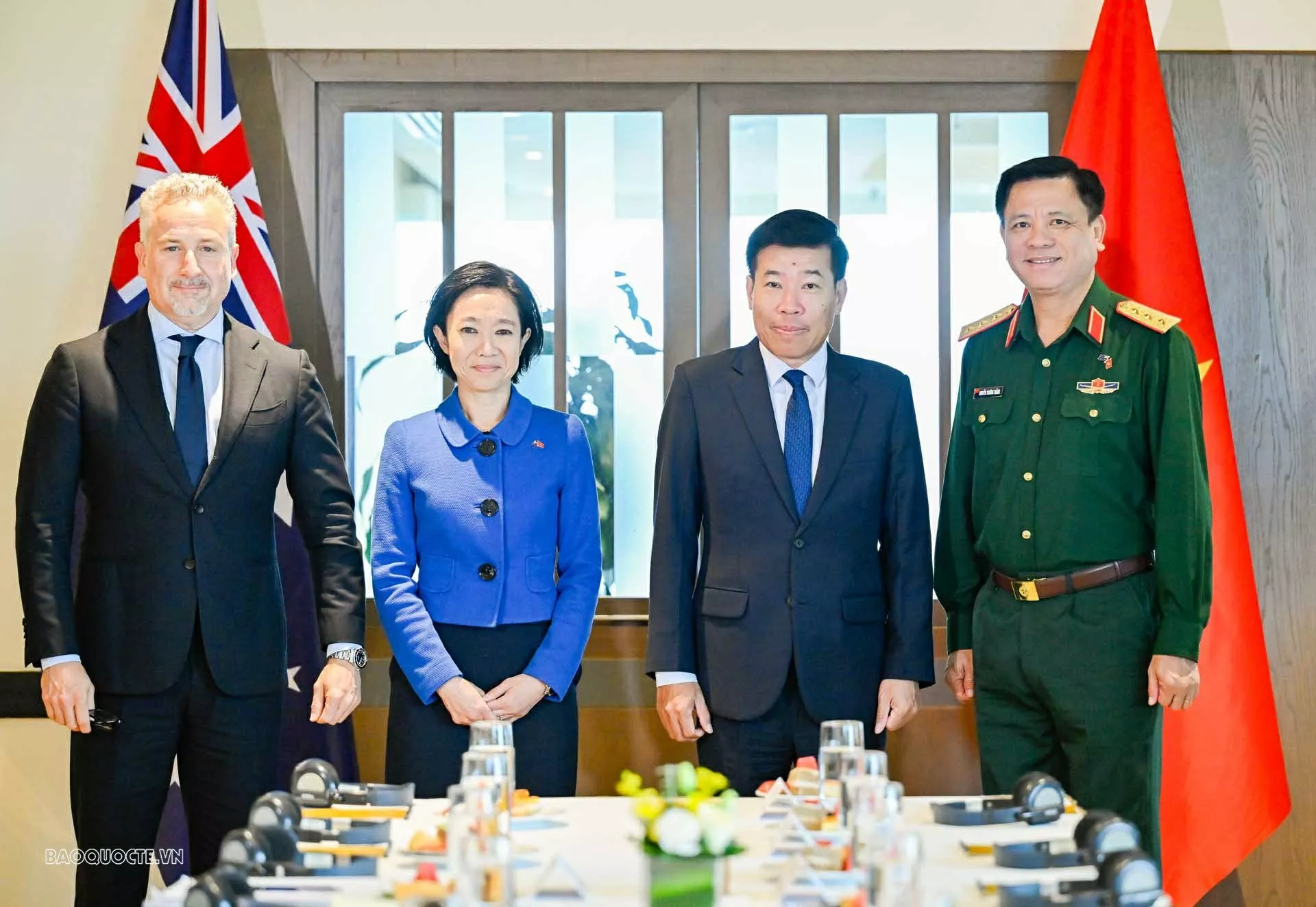 |
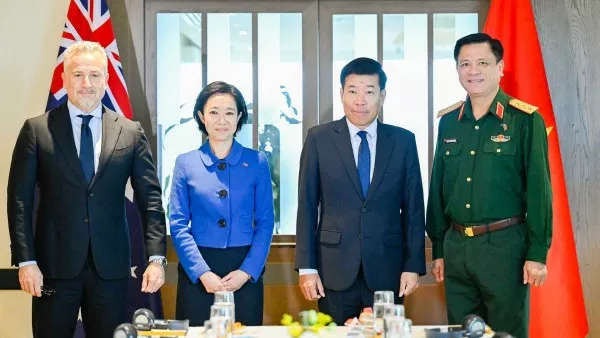
| Member of the Party Central Committee, Standing Deputy Secretary of the Party Committee, Deputy Minister of Foreign Affairs Nguyen Manh Cuong, and Standing Member of the Central Military Commission and Deputy Minister of National Defence Sen. Lieut. Gen. Nguyen Truong Thang. Australia was represented by Michelle Chan, Deputy Secretary, South and Southeast Asia Group and Head of the Office of Southeast Asia, in the Department of Foreign Affairs and Trade, and Hugh Jeffrey, Deputy Secretary of Australia’s Department of Defence responsible for Strategy, Policy and International Cooperatiion co-chaired the dialogue. (Photo: Nguyen Hong) |
Vietnam’s co-chairs were Member of the Party Central Committee, Deputy Minister of Foreign Affairs Nguyen Manh Cuong and Standing Member of the Central Military Commission and Deputy Minister of National Defence Sen. Lieut. Gen. Nguyen Truong Thang. Australia was represented by Michelle Chan, Deputy Secretary, South and Southeast Asia Group and Head of the Office of Southeast Asia, in the Department of Foreign Affairs and Trade, and Hugh Jeffrey, Deputy Secretary of Australia’s Department of Defence responsible for Strategy, Policy and International Cooperation.
Representatives from relevant units of the Ministries of Foreign Affairs and National Defence of both countries also attended the Dialogue
.Both sides called each other trustworthy, effective partners with plenty of shared views on global and regional issues, and praised the deepening of the Vietnam–Australia Comprehensive Strategic Partnership.
They pointed to General Secretary of the Communist Party of Vietnam Central Committee and President To Lam’s August 2026 state visit to Australia, and the agreements and declarations signed then as a solid political foundation for practical cooperation. They welcomed progress in delivering those outcomes.
On the global and regional outlook, the two sides described a complex and unpredictable environment with rising instability and overlapping traditional and non-traditional security challenges weighing on countries’ security and development. They called for stronger cooperation and dialogue, trust building and conflict prevention to keep a peaceful, secure and stable environment based on international law and the UN Charter.
They agreed to step up consultations, information sharing and strategic trust, and deliver on the high-ranking leaders’ common understandings set out in documents adopted in August 2026, including the Joint statement on deepening the Comprehensive Strategic Partnership, the Joint statement on economic resilience cooperation, the Joint Statement on the Enhancement of Science, Technology and Innovation Connectivity, and the updated Joint Vision Statement on Defence Cooperation. They welcomed collaboration in maritime security, transnational crime and online fraud, climate change response and UN peacekeeping under the bilateral Peacekeeping Partnership.
They vowed to boost two-way trade and investment, back a transparent, open, inclusive, fair, sustainable and rules-based multilateral trading system, diversify supply chains, including energy; cooperate in energy reserves, and expand sci-tech cooperation, especially in strategic technologies, AI and data security to bolster each economy’s autonomy and resilience. Australia committed to supporting Vietnam’s capacity building for its APEC 2027 host role,
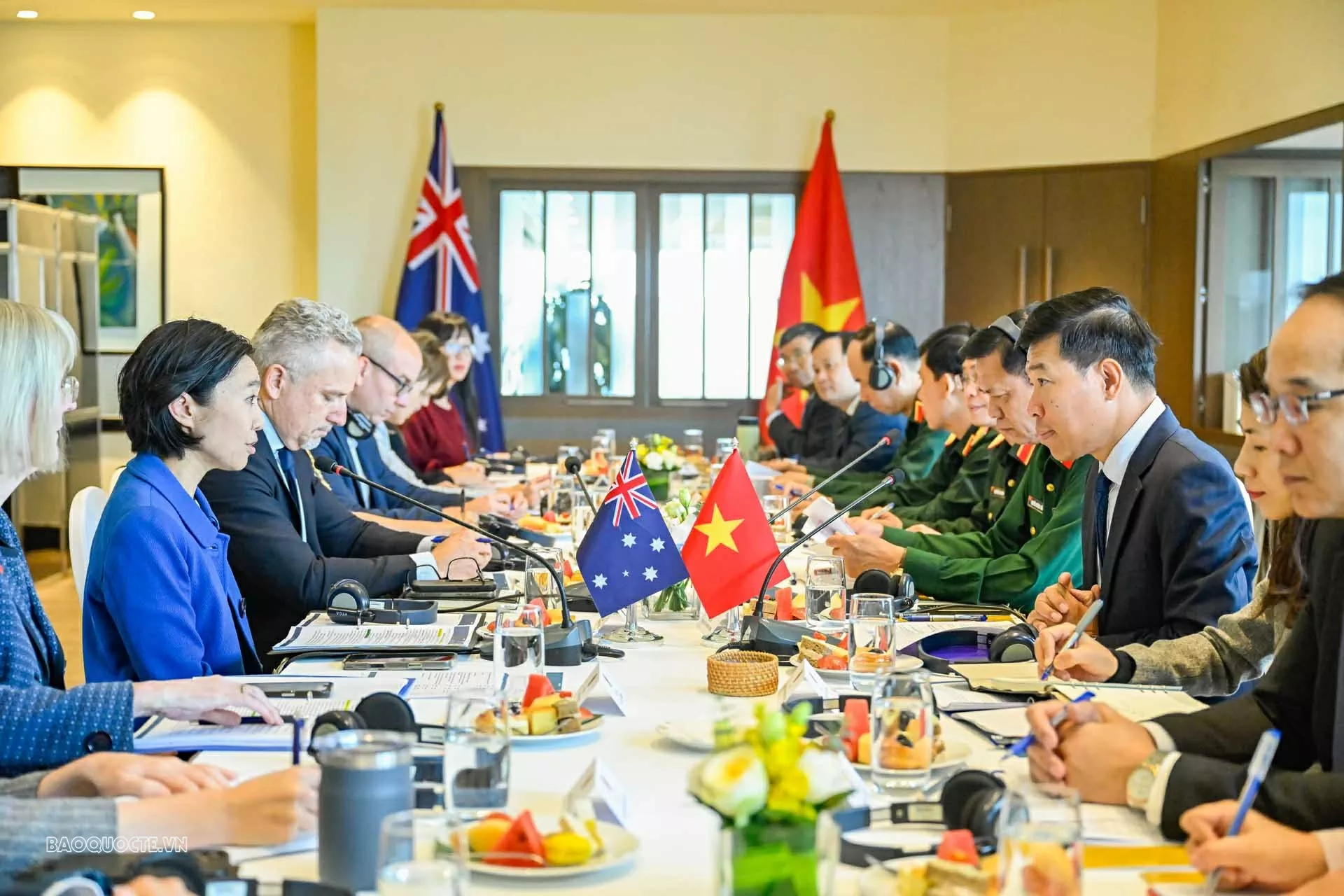 |
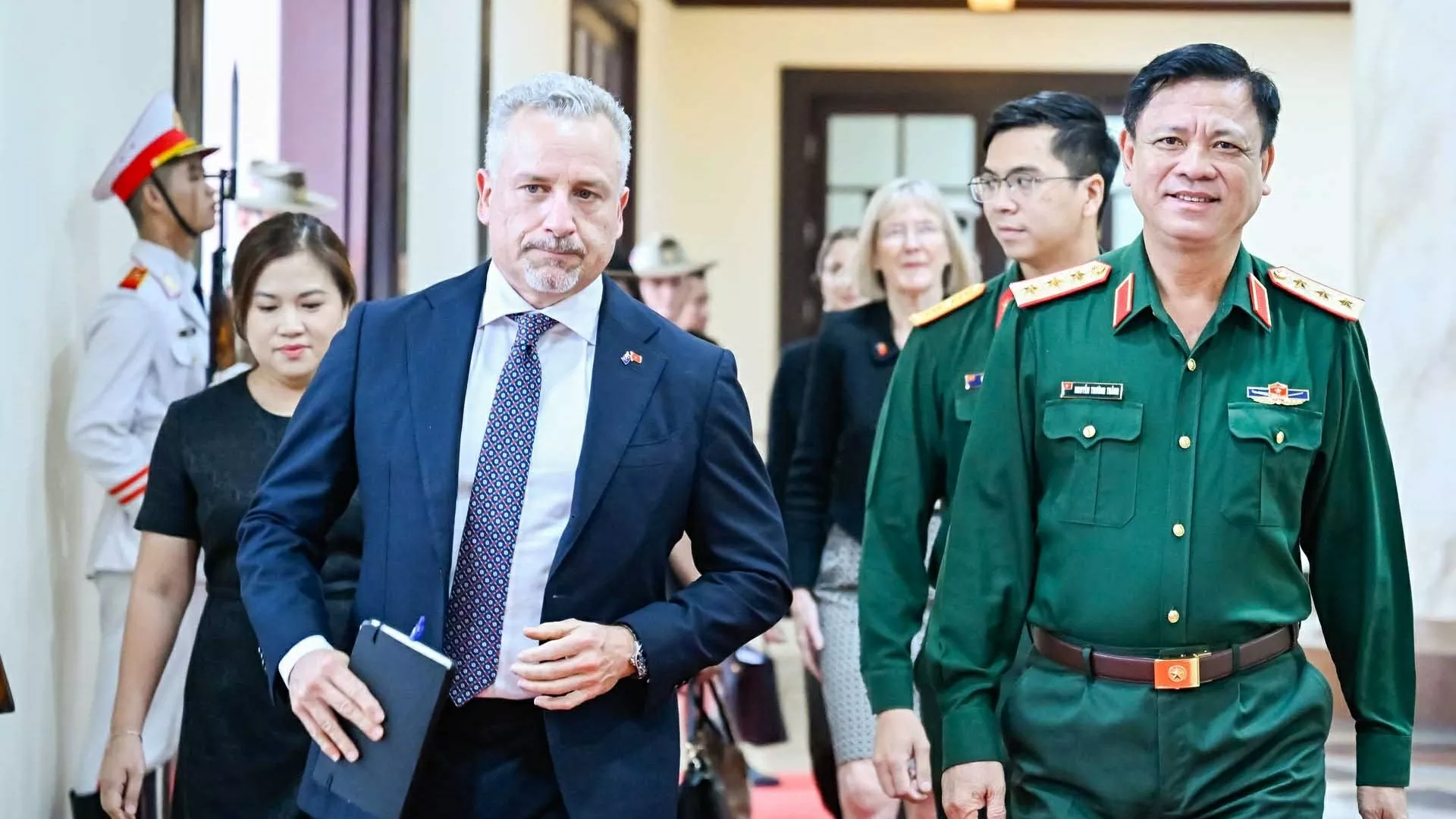
| Both sides affirmed that Vietnam and Australia are reliable partners, cooperating effectively with many shared perspectives on regional and international issues. (Photo: Nguyen Hong) |
Australia lauded Vietnam’s Resolution 20-NQ/TW adopted at the 14th Party Central Committee’s third plenum, which targets building Vietnam into a strong maritime nation. It promised to keep helping Vietnam improve maritime capacity, train personnel and share experience. They underscored bilateral maritime cooperation under the Australia’s Southeast Asia Maritime Partnerships to address common maritime challenges in line with the 1982 UN Convention on the Law of the Sea (UNCLOS).
They reaffirmed the importance of maintaining peace, security, stability, freedom of navigation and overflight, and secure trade on strategic sea lanes, and called for the peaceful settlement of disputes without threat or use of force, consistent with international law and especially UNCLOS 1982.
On regional issues, the two sides recommitted to a peaceful, stable, prosperous, inclusive, sustainable and resilient Asia-Pacific and Indian Ocean. They backed ASEAN centrality and ASEAN-led mechanisms, including the ASEAN Defence Ministers' Meeting Plus (ADMM+) as key to dialogue, cooperation and trust building, and pledged to work closely to deepen the ASEAN–Australia Comprehensive Strategic Partnership. They noted the ASEAN Future Forum as an important initiative for substantive discussion of ASEAN’s future, with Australia supporting Vietnam’s hosting of the fourth forum in 2027.
They agreed to push cooperation under the Mekong–Australia Partnership to bolster resilience, inclusive development and sustainability in the Mekong sub-region, and consider expanding cooperation in the Pacific islands.
Closing the event, both sides praised the 2+2 dialogue mechanism’s role and effectiveness and agreed to hold the 12th edition in Australia at a suitable time in 2027.