



Vietnam and Japan lacquer art connection project
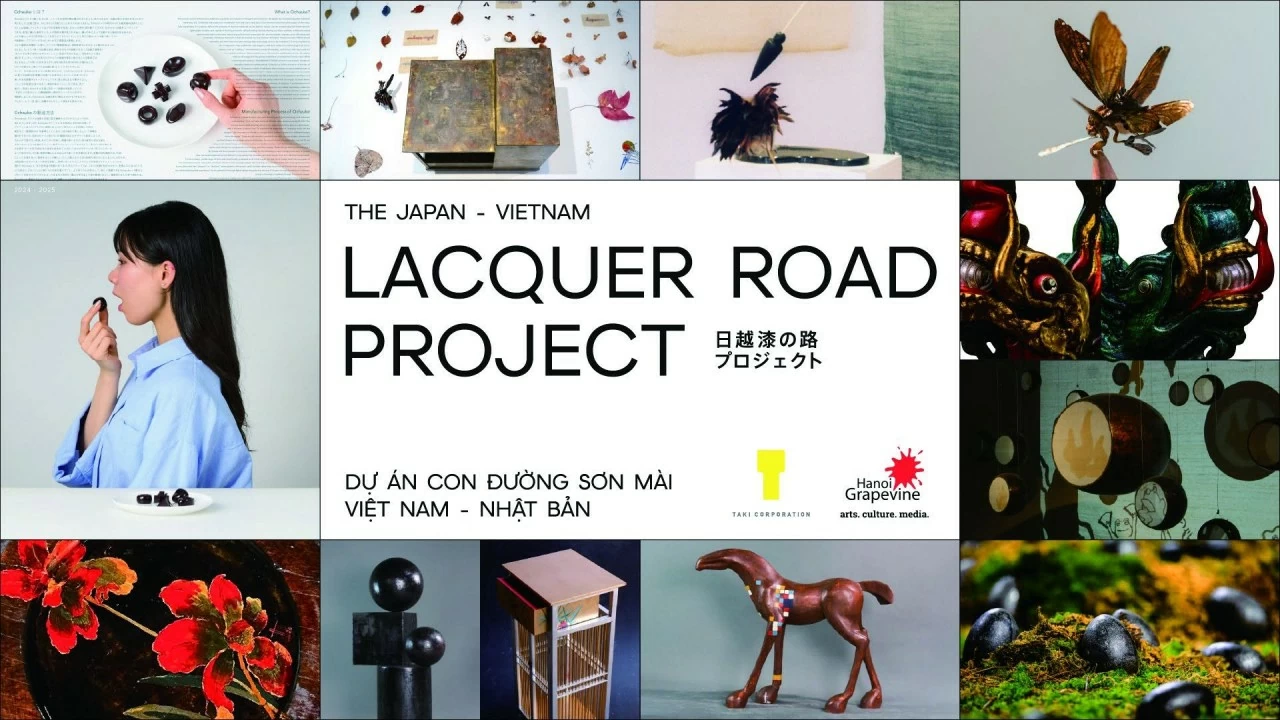
WVR - Hanoi Grapevine has officially launched the Vietnam – Japan Lacquer Road Project, in collaboration with TAKI Corporation (Tokyo, Japan), establishing a long-term cooperative platform between Vietnamese lacquer art and Japan's Wajima-nuri.
Latest
According to the organizers, the project not only introduces the parallel heritage of both crafts but also aims to build a dialogue space where artists, craftsmen, researchers, and communities from both countries can share knowledge, practices, and new approaches to lacquer materials in a contemporary context.
 |
Through research programs, creative residencies, exhibitions, and educational activities, the project aims to contribute to preserving traditional values while opening up new creative directions for the younger generation of artists.
Both Vietnam and Japan boast unique lacquer traditions, developed over centuries with their own systems of materials, techniques, and aesthetic languages. However, in the face of modern life's changes, both are confronting challenges such as breaks in the transmission of skills, market changes, and the need for new forms of expression.
From these similarities, the Vietnam – Japan Lacquer Road Project was formed to promote professional exchange, research, and creativity between the lacquer communities of the two countries, while spreading the value of traditional crafts to a wider audience.
Mr. Uchiyama Ken, Executive Director in charge of IDEAL Company, TAKI Corporation, stated that this is the company's first official cultural exchange framework with a foreign partner.
According to him, TAKI Corporation wishes to leverage its experience in advertising, communication, and design to help shape the future for traditional crafts and social values.
“We hope the dialogue between the lacquer cultures of Vietnam and Japan will become a 'road' connecting craftsmanship and aesthetics to future generations,” Mr. Uchiyama Ken shared.
In the initial phase, the project will implement various activities such as exchanges between artisans and artists from both countries; creative residency programs at workshops; technical workshops; professional dialogues; creation and exhibition of works combining materials and techniques from Vietnam and Japan; research cooperation on the transmission of traditional knowledge; programs for students and young artists; building a digital archive and publishing materials on lacquer.
According to the plan, from the Fall of 2026, the project will launch its first two components. In September, three Vietnamese artists, Truong Hoang Hai, Dinh Cong Dat, and Tran Thao Mien, will participate in a research program in Wajima City (Ishikawa Prefecture, Japan), working with local artisans, attending technical workshops, and professional dialogues.
By November 2026, the project is expected to participate in the Hanoi Creative Design Festival 2026, showcasing works and products created from the collaboration between artists from both countries, while also displaying Wajima lacquer products.
The exhibition will be part of the "Dinh trong pho" project, curated by artist Nguyen The Son, along with many interactive activities for the public.
Through a series of research, creative, and academic exchange activities, the Vietnam – Japan Lacquer Road Project is expected to enhance cultural exchange between Vietnam and Japan, while providing new momentum for the preservation, promotion, and innovation of lacquer art in the context of international integration.