



Celebrating Lunar New Year Tet: From tradition to a space for connection – Dr. Pham Hoang Manh Ha
WVR - Lunar New Year Tet remains a sacred milestone in Vietnamese culture, however the way it is celebrated is evolving in the modern context.
Latest
As the Lunar New Year of the Horse 2026 approaches, Dr. Pham Hoang Manh Ha, a lecturer at Thanh Hoa University of Culture, Sports and Tourism, shares his personal perspective on celebrating Tet, the Lunar New Year in the age of technology.
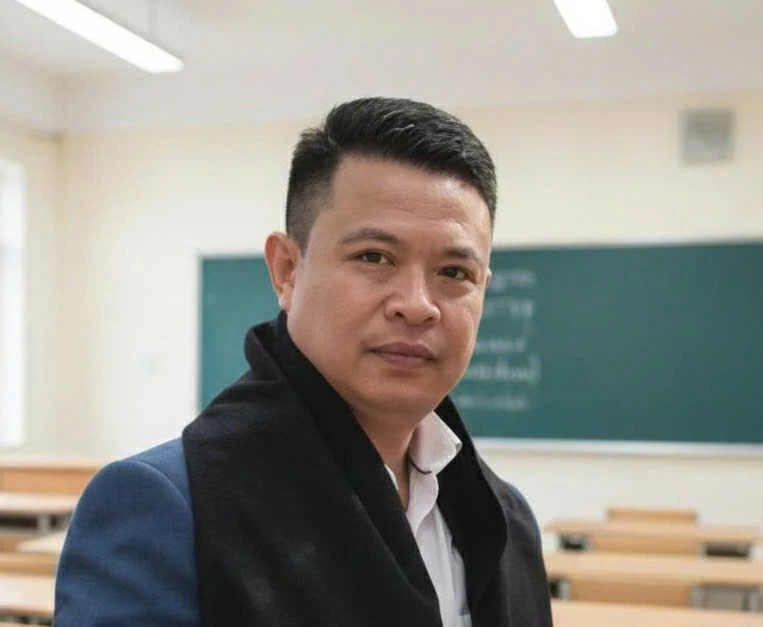 |
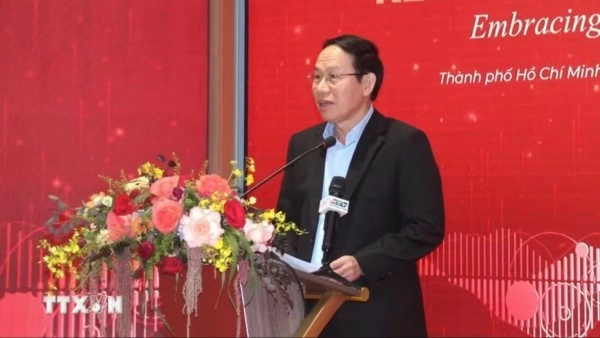
| Dr. Pham Hoang Manh Ha discusses celebrating Tet as a habit or reimagining Tet as a space for connection. |
Tet is "sacred time" in Vietnamese life
Lunar New Year Tet is still considered a sacred milestone in Vietnamese cultural life. However, in modern life, the way people celebrate and perceive Tet is changing significantly. How do you view these transformations from a cultural and social perspective?
I believe that the changes in how Vietnamese people celebrate Lunar New Year Tet today should not be viewed through a "loss-gain" lens but rather as a process of cultural restructuring in a modern social context.
First and foremost, it must be affirmed that Tet remains a "sacred time" in the spiritual life of the Vietnamese. Although the forms of celebration may change, Tet is still the intersection of old and new, past, present, and future; it is a moment when people pause from their daily lives to reflect on family, origins, and themselves. This "time suspension" creates a unique cultural depth for Tet, something that ordinary holidays cannot replace.
However, in the context of strong modernization and digitalization, the way Tet is celebrated has been significantly simplified. Many elaborate rituals have been shortened; the Tet space has gradually shifted from villages to apartments; traditional feasts now involve convenience services. This reality leads some to worry that Tet is "losing its identity". But from a cultural and social perspective, I see it as a sign of adaptability.
More noteworthy is the shift in Tet's social function. Previously, Tet was more about obligations to the community, clan, and village; today, it increasingly focuses on individual needs, with the nuclear family at its centre. Many people hope Tet is a time for rest, "healing", and re-energizing rather than performing rituals. This change reflects the transition from traditional to modern society, where the "self" is more prominently placed.
Another transformation lies in the perception of sacredness. Tet is no longer heavily laden with external rituals but increasingly delves into spiritual meaning. A full family meal or a phone call home can become a "new ritual" if it touches emotions and memories. In this context, the "sacredness" does not disappear but shifts from the outside to the inside.
From the perspective of preserving traditional culture, I believe the important thing is not to try to keep every custom intact but to preserve the core values of Tet: Reunion, gratitude to ancestors, a spirit of goodwill, and new beginnings. As long as these values continue, Tet remains vibrant in Vietnamese life.
Therefore, instead of merely reminiscing about the "Tet of the past", perhaps we should view Tet as a cultural entity in motion. This adaptability will help Tet continue to exist as a sacred milestone in the nation's life.
From "face-to-face" to digital interaction
If Tet in the past was associated with direct gatherings, visiting relatives, and neighbors, today's Tet witnesses a strong shift towards interactions via social media. How does this change impact the emotional depth and quality of connections between people, in your opinion?
In the previous section, we talked about "sacred time"; now we can discuss the "cultural space of Tet". I view the shift from direct interaction to social media interaction as a change in the structure of communication space, rather than simply a "decline in affection" as some emotional assessments suggest.
In traditional Tet, gatherings were not just meetings but a comprehensive cultural experience: Sharing space, rhythms of life, and emotions. A handshake, a cup of tea, a New Year's wish occurred in a symbolically rich context, where emotions were nurtured by the real presence of each person. The "face-to-face" element created a lasting depth of connection.
In modern Tet, social media has significantly expanded the radius of connection. Smartphones allow people to send wishes to dozens, even hundreds of relationships. On the positive side, this maintains contact with those far away, with relationships hard to meet in everyday life.
The issue lies in the quality of emotions. Social media interactions are often quick, short, simultaneous, and can easily become "performative". Copied wishes may create a sense of connection but lack the depth of experience. When communication does not require much time and listening, emotions can become vague. Notably, social media also affects how people perceive care: Not being wished or responded to can sometimes cause feelings of being forgotten, even though the real relationship still exists. Emotions are thus influenced by algorithms and displayed images, rather than shared memories and experiences.
However, social media should not be seen as an "opponent" of traditional Tet. The issue is not the medium but the awareness of its use. A long video call, a sincere status update, or using social media to arrange direct meetings can all deepen connections.
In summary, "digital interaction" during Tet both expands the possibility of contact and poses challenges to emotional depth. Tet is truly complete when people know how to live slowly in the digital world, creating space for presence and sharing, values that have defined the essence of Vietnamese Tet for centuries.
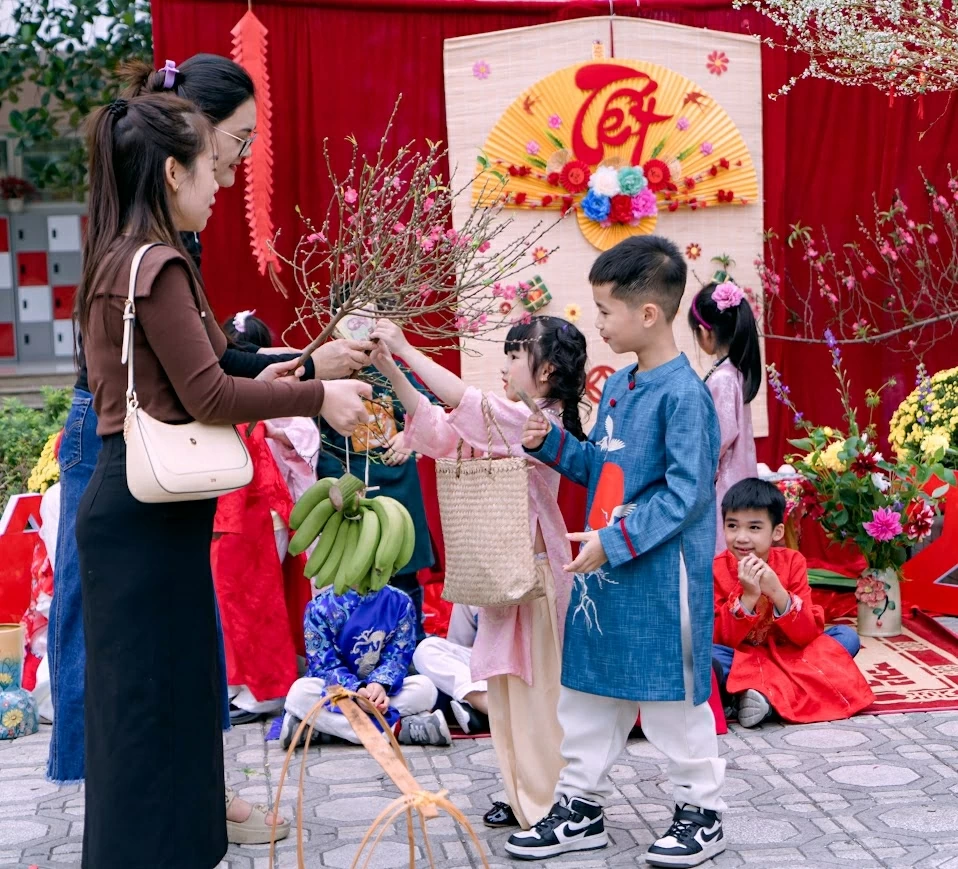 |
| Lunar New Year Tet is an opportunity for everyone to experience in their own way. (Photo: Hoang Bach) |
Signals of social transformation
Many young people share the feeling of "crowded yet empty" Tet – meeting many but having few real connections. How do you explain this phenomenon? Is this an inevitable consequence of modern life, or does it reflect deeper changes in family and community structures?
In my opinion, the feeling of "crowded yet empty" Tet is not a random paradox but a manifestation of transformations in the contemporary social structure of Vietnam.
"Crowded" and "empty" belong to two different dimensions. "Crowded" refers to the number of contacts; "empty" refers to the quality of presence. When these dimensions are out of sync, people can be amidst many gatherings but still feel a lack of connection.
Firstly, this phenomenon reflects the accelerated pace of life. Many enter Tet in a state of fatigue, with pressures not yet released. Meetings thus easily become more about "checking in" than sharing. Facing each other, yet each person is immersed in their own world, making presence fragmented.
Additionally, there is a shift in family and community structures. Multi-generational families are gradually giving way to nuclear families; kinship and village relations are no longer regularly nurtured but mainly activated during Tet. As the foundation of shared living fades, the bond also becomes less enduring.
For young people, Tet also presents silent value conflicts. They wish to rest and be true to themselves but simultaneously face expectations of reunion and visiting. When gatherings are heavily duty-bound, feelings of emptiness easily arise.
However, this sense of emptiness does not necessarily indicate a lack of relationships but reflects a desire for deeper connections. Many young people do not reject Tet; they are seeking a version of Tet where meetings are meaningful, where they are listened to more than given formal wishes.
Therefore, "crowded yet empty" Tet is both a consequence of modernization and a cultural signal worth pondering. It raises the question: Do we maintain Tet as a habit or reimagine it as a genuine space for connection? The answer will shape the future face of Tet.
Amid these changes, what are the core values that make up the "soul of Tet" that need to be preserved, even if the form of celebration can be flexible according to today's living conditions?
Discussing the "soul of Tet", I believe that what needs to be preserved is not every specific form but the foundational values that give Tet its vitality.
First is the element of "returning". Tet is not just a geographical shift but a spiritual return, a return to family, memories, and identity. As long as people remain conscious of their roots, the soul of Tet is present.
Second is reunion and intergenerational connection. Tet is a time when generations are present in a shared timeline, where stories and life experiences are passed on. Even if meetings are fewer, as long as there is listening between generations, this cultural function is maintained.
The third value is gratitude. Even if rituals are simplified, as long as the spirit of "remembering the source" is present in thoughts and actions, Tet retains its sacred depth.
We cannot ignore the meaning of new beginnings. Tet closes one cycle and opens up hope. In a society with many pressures, this is a necessary pause to rejuvenate life's energy.
Finally, the soul of Tet lies in a slow pace of life and complete presence. As long as people spend time with each other and cherish shared moments, Tet retains its profound humanistic essence.
To ensure Tet is not just a long holiday...
What can individuals and families do to ensure Tet is not just a long holiday, but truly becomes a time of "returning", nurturing spiritual life, and continuing culture in the present and future?
To ensure Tet does not become just a long holiday, it is important to redefine its meaning. Tet is truly a "return" when it touches the spiritual depth.
First is preparation from within. Returning home or staying in the city can both be a return if we know how to set aside daily roles and pressures. A calm mindset is the prerequisite for Tet to become a space for healing and introspection.
For families, it is not necessary to fully recreate traditional rituals, but to maintain meaningful shared moments: A peaceful meal, a session of old stories, cleaning the house together in a spirit of sharing. It is the "doing together" and "being together" that create shared memories – the glue of family culture. View Tet as an opportunity to pass on life values. Children need to participate and experience so that culture is naturally continued.
For each individual, it is important to actively choose how to celebrate Tet. Not every festivity is necessary. Reduce superficial interactions to focus on truly meaningful relationships. Tet is not measured by the number of meetings but by the depth of connection.
Finally, view Tet as an open space for dialogue between tradition and modernity. Maintain the spirit of gratitude, reunion, and hope, but be flexible according to the new pace of life. When each individual and family consciously chooses, Tet will not fade over time but continue to thrive as a spiritual source of Vietnamese culture.