







UNESCO and the Government of Japan sign Project to enhance disaster prevention and school safety capacity in Vietnam
On the morning of February 12, in Hanoi, the United Nations Educational, Scientific and Cultural Organization (UNESCO) and the Government of Japan signed an agreement to implement the project "Enhancing Vietnam's Capacity for Early Warning, Disaster Risk Reduction, and Ensuring a Safe Learning Environment".
Latest
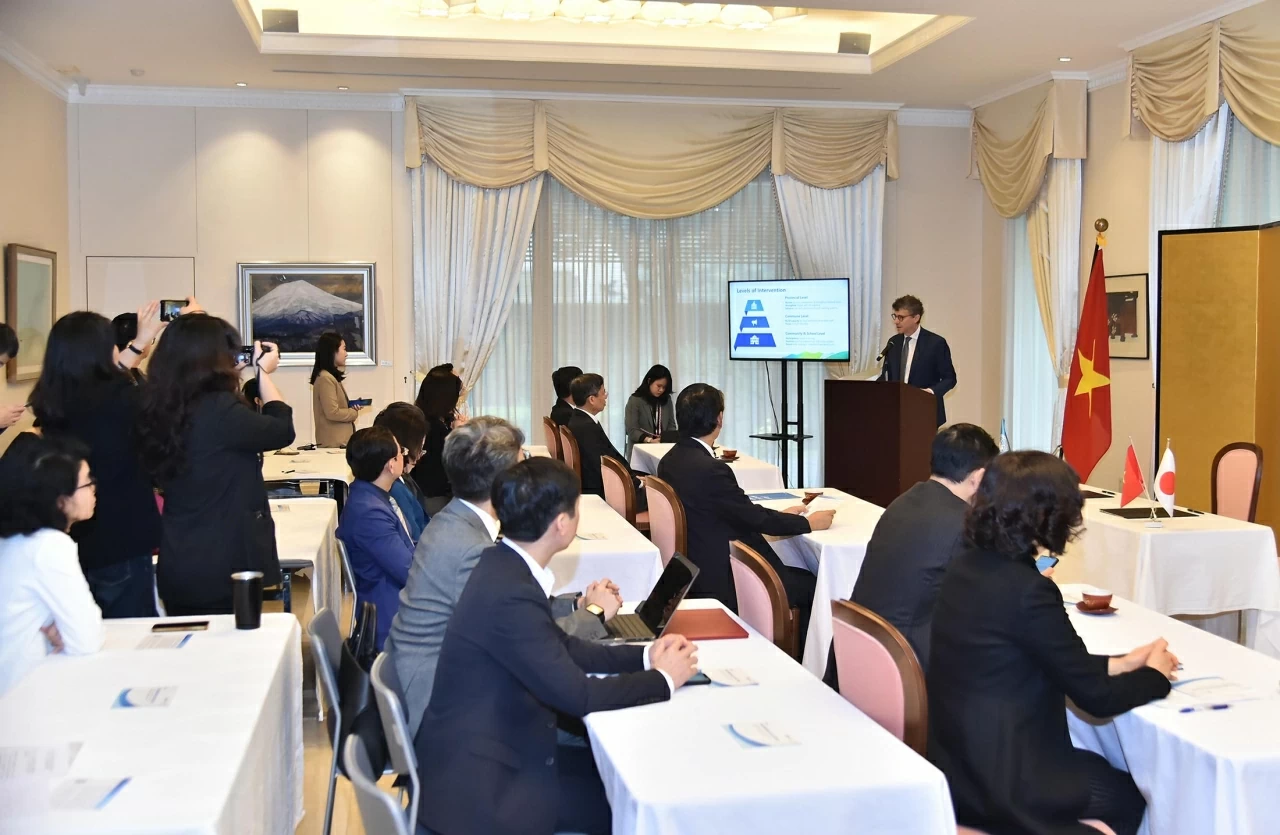 |
| Overview of the signing ceremony. (Photo: Thanh Long) |
In recent years, Vietnam has been continuously hit by severe typhoons such as Wipha, Bualoi, and Matmo, causing significant damage to lives, infrastructure, livelihoods, and disrupting educational activities in many localities. This reality highlights the necessity to enhance readiness at all levels, from communities to public services and schools.
Nghe An was chosen for the project due to its frequent exposure to natural disasters and its strategic importance. The province houses the Western Nghe An Biosphere Reserve and Vinh City, which is part of UNESCO's Global Network of Learning Cities, providing favorable conditions for implementing integrated, community-based solutions to enhance resilience.
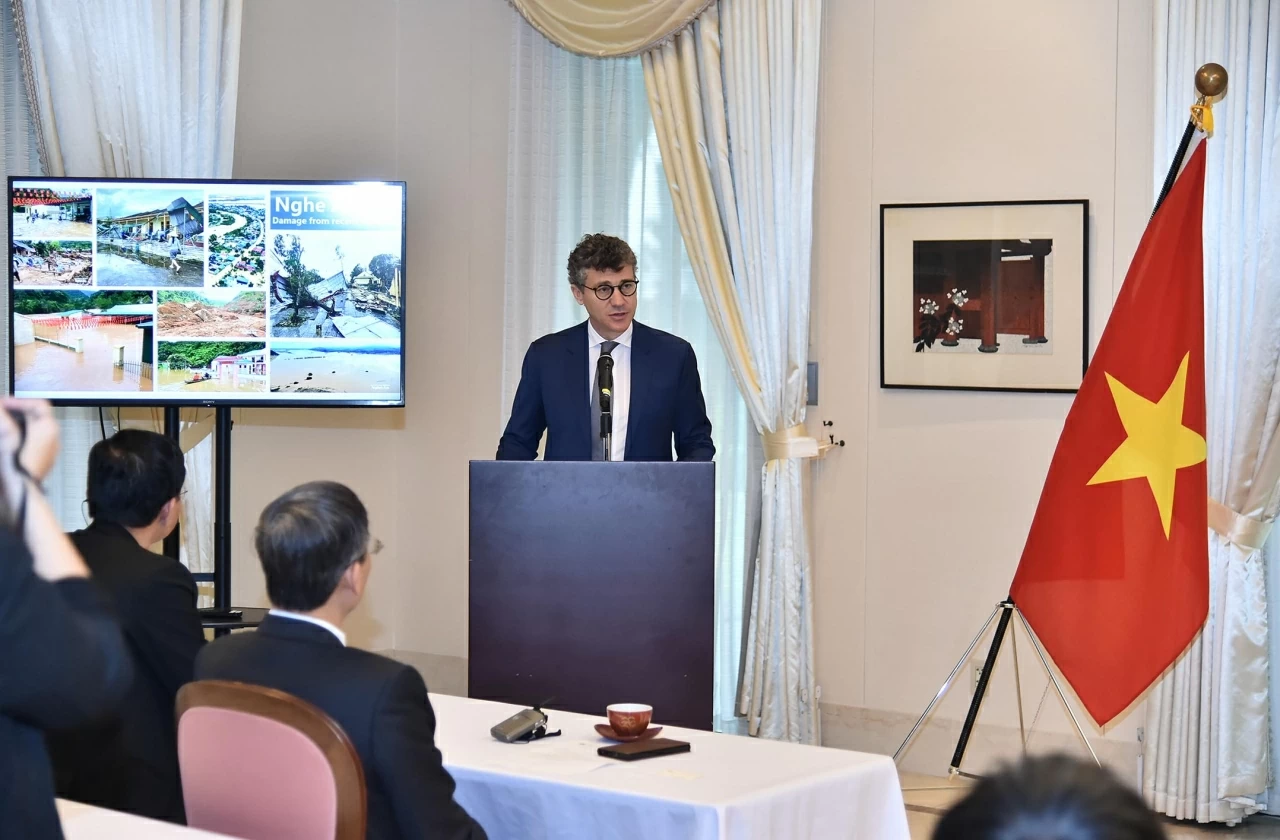 |
| UNESCO Representative in Vietnam Jonathan Wallace Baker speaking at the ceremony. (Photo: Thanh Long) |
Speaking at the signing ceremony, Mr. Jonathan Wallace Baker, UNESCO Representative in Vietnam, expressed his honor to attend the event and thanked the Government of Japan, especially the Japanese Ambassador, for their commitment to supporting Vietnam in enhancing disaster prevention and response capabilities. He also acknowledged the close cooperation of the Vietnam National Commission for UNESCO, Nghe An provincial leaders, and various ministries, sectors, and research institutes in the project development process.
According to Mr. Baker, in recent years, Nghe An has been heavily impacted by climate change, with increasing floods, landslides, and extreme weather, significantly affecting the lives of residents, especially in mountainous areas. This situation necessitates a strong shift from emergency response to proactive prevention, preparedness, and enhanced early warning linked to sustainable development.
The signed project will support updating provincial risk management plans, enhancing risk mapping and monitoring systems, and early warning; while also improving the capacity of staff, frontline forces, and promoting community and school participation in disaster response efforts.
Approximately 15,000 residents, students, teachers, and local officials are expected to benefit directly from the project. UNESCO is committed to continuing close collaboration with partners to effectively implement the project, contributing to tangible changes for the community.
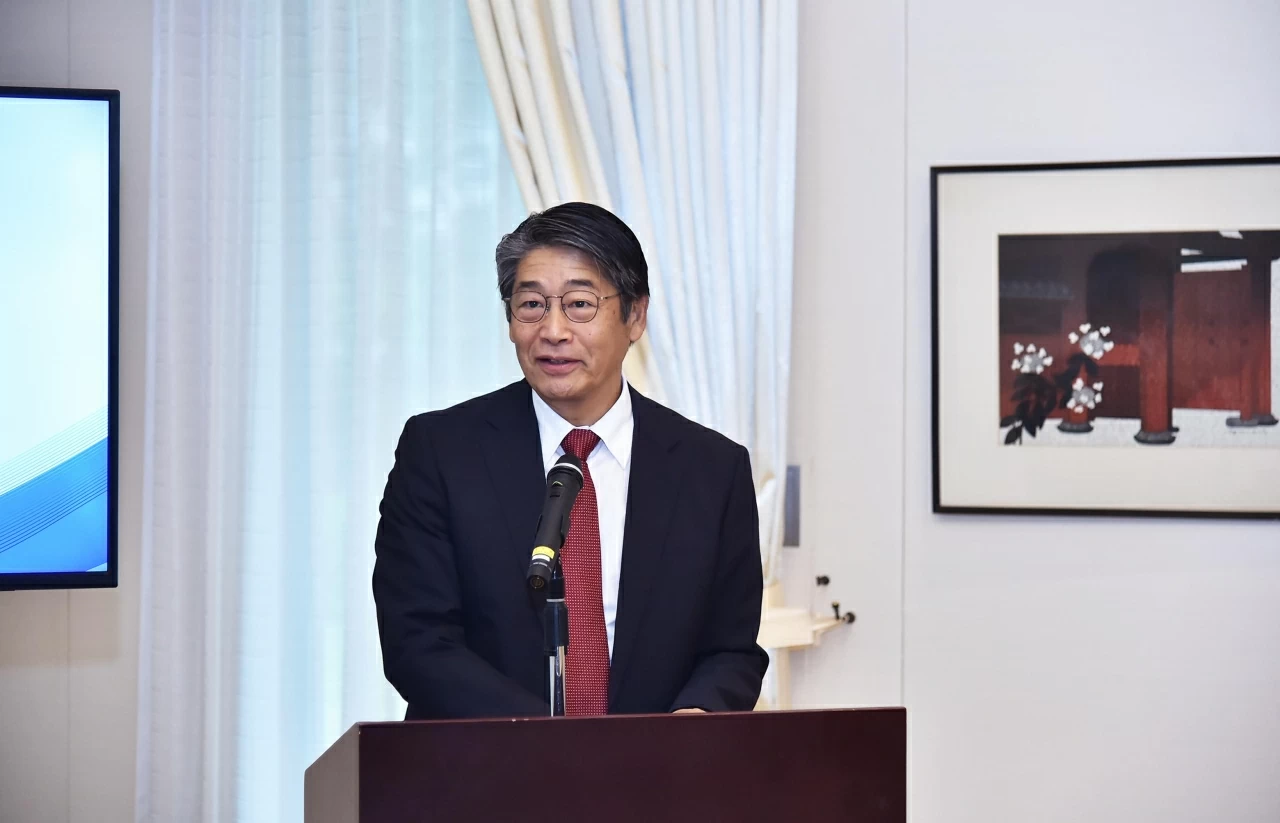 |
| Japanese Ambassador to Vietnam Ito Naoki speaking at the ceremony. (Photo: Thanh Long) |
Mr. Ito Naoki, Japanese Ambassador to Vietnam, shared that within the framework of the Comprehensive Strategic Partnership for Peace and Prosperity in Asia and the world, Vietnam-Japan relations have continued to be strengthened and developed more deeply and substantively. The two sides not only enhance cooperation in economic, cultural, and people-to-people exchanges but also expand into disaster risk reduction and climate change response.
According to Ambassador Ito Naoki, in Central Vietnam, the Japan International Cooperation Agency (JICA) is supporting the implementation of the Master Plan for Flood Control. Additionally, Japan plans to sign an agreement for a budget support loan (ODA) worth 333 million USD to enhance climate change response and disaster risk reduction measures. Through these cooperation programs, Japan continues to share the experience and expertise of a country frequently affected by natural disasters, contributing to enhancing Vietnam's resilience.
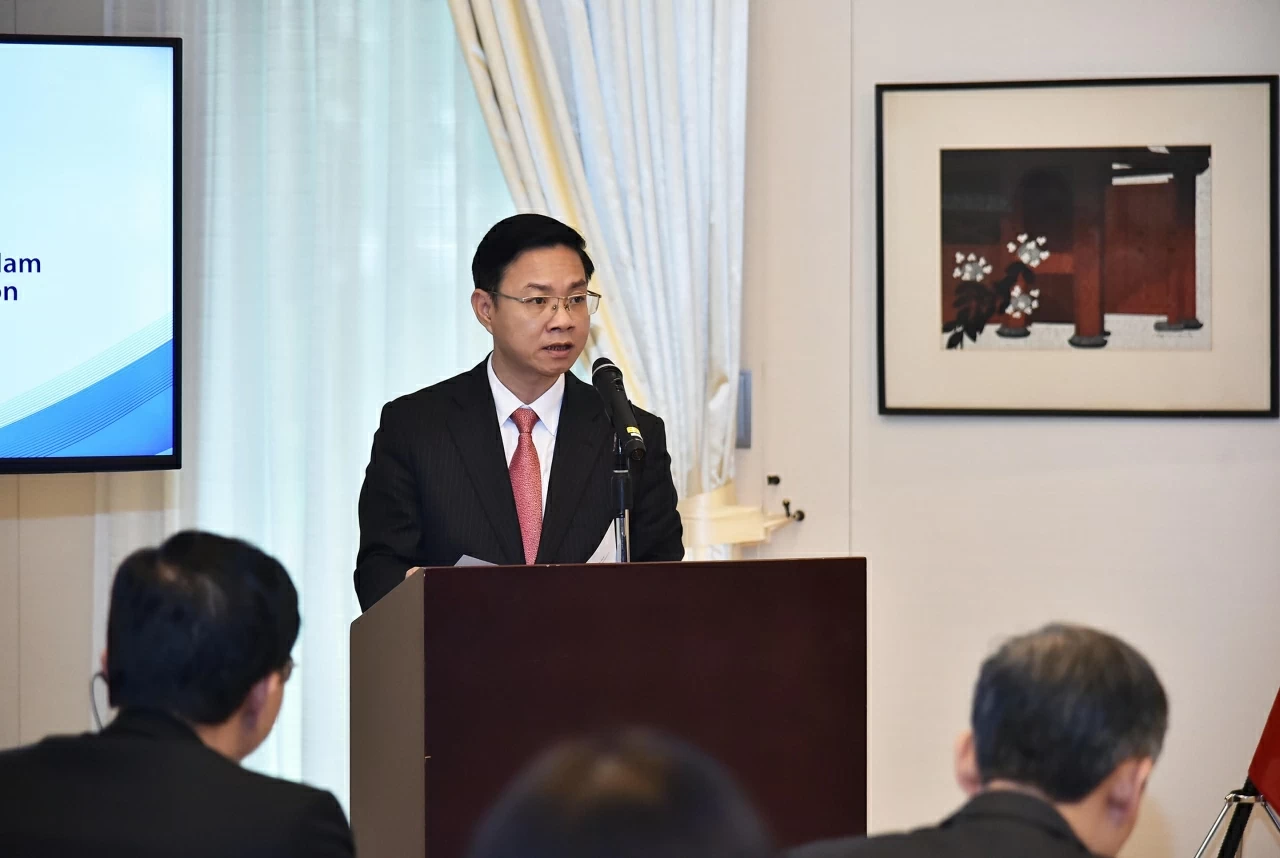 |
| Deputy Minister of Foreign Affairs, Chairman of the Vietnam National Commission for UNESCO Ngo Le Van expressing gratitude to the Government and People of Japan for supporting Vietnam through UNESCO and UNICEF. (Photo: Thanh Long) |
Speaking at the ceremony, Mr. Ngo Le Van, Deputy Minister of Foreign Affairs, Chairman of the Vietnam National Commission for UNESCO, expressed gratitude to the Government and People of Japan for supporting Vietnam through UNESCO and UNICEF, affirming this as evidence of effective cooperation and the Comprehensive Strategic Partnership between Vietnam and Japan for peace and prosperity.
The Deputy Minister appreciated UNESCO's role in connecting science, education, culture, and international cooperation, while also acknowledging the organization's support for Vietnam in heritage conservation, educational development, sustainable development promotion, and climate change response.
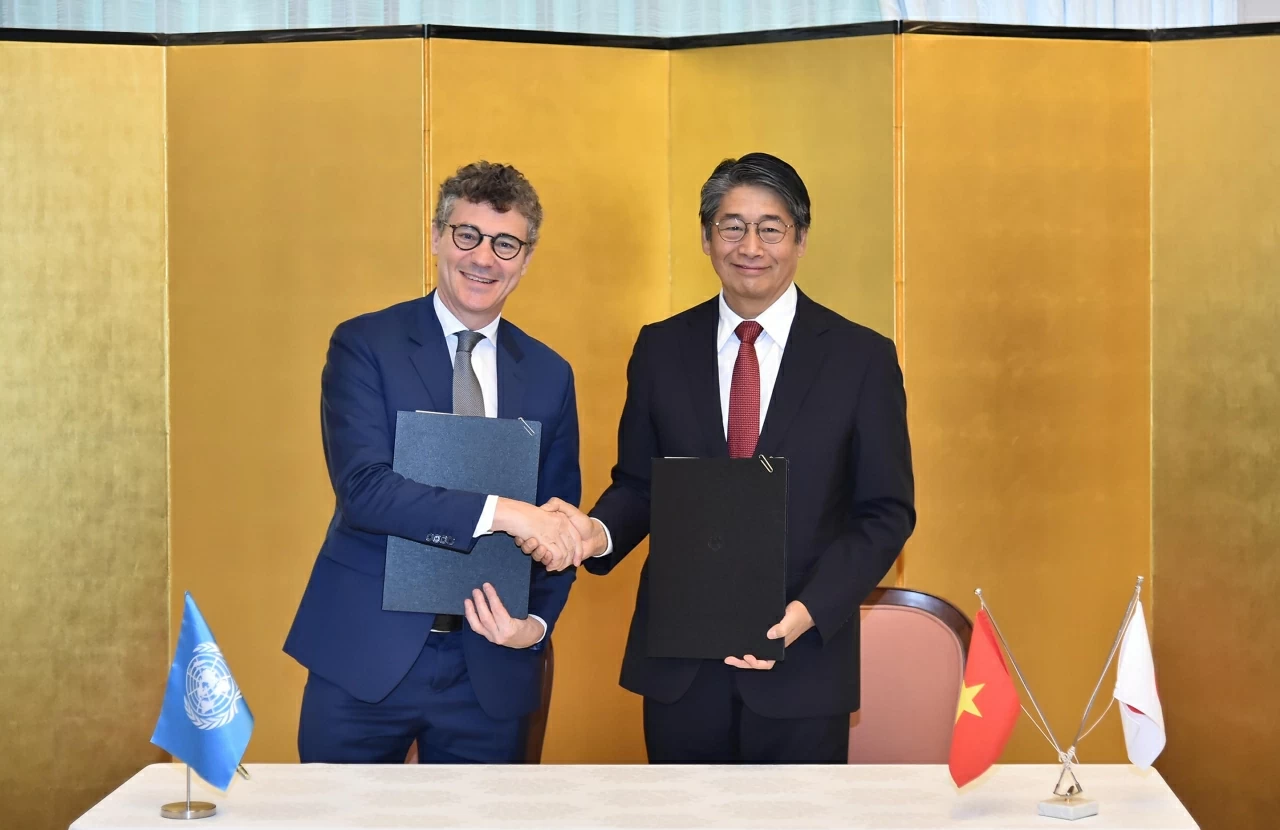 |
| UNESCO Representative in Vietnam Jonathan W. Baker and Ambassador Ito Naoki signing the project implementation agreement. (Photo: Thanh Long) |
According to the Deputy Minister, Japan's experience in disaster risk reduction and the principle of "prevention is better than cure" is a valuable lesson, helping Vietnam not only recover from disasters but also aim for better reconstruction, green growth, and the goal of net-zero emissions by 2050.
Deputy Minister Ngo Le Van thanked UNESCO for promptly mobilizing emergency aid, protecting heritage, and maintaining education in affected areas; emphasizing that linking early warning systems with school safety will enhance community resilience, especially for the younger generation.
Affirming that the signing ceremony has concretized commitments into practical actions, the Deputy Minister stated that Vietnam will closely coordinate with Japan, UNESCO, and partners to effectively implement the project, contributing to achieving Sustainable Development Goals and the Sendai Framework for Disaster Risk Reduction.
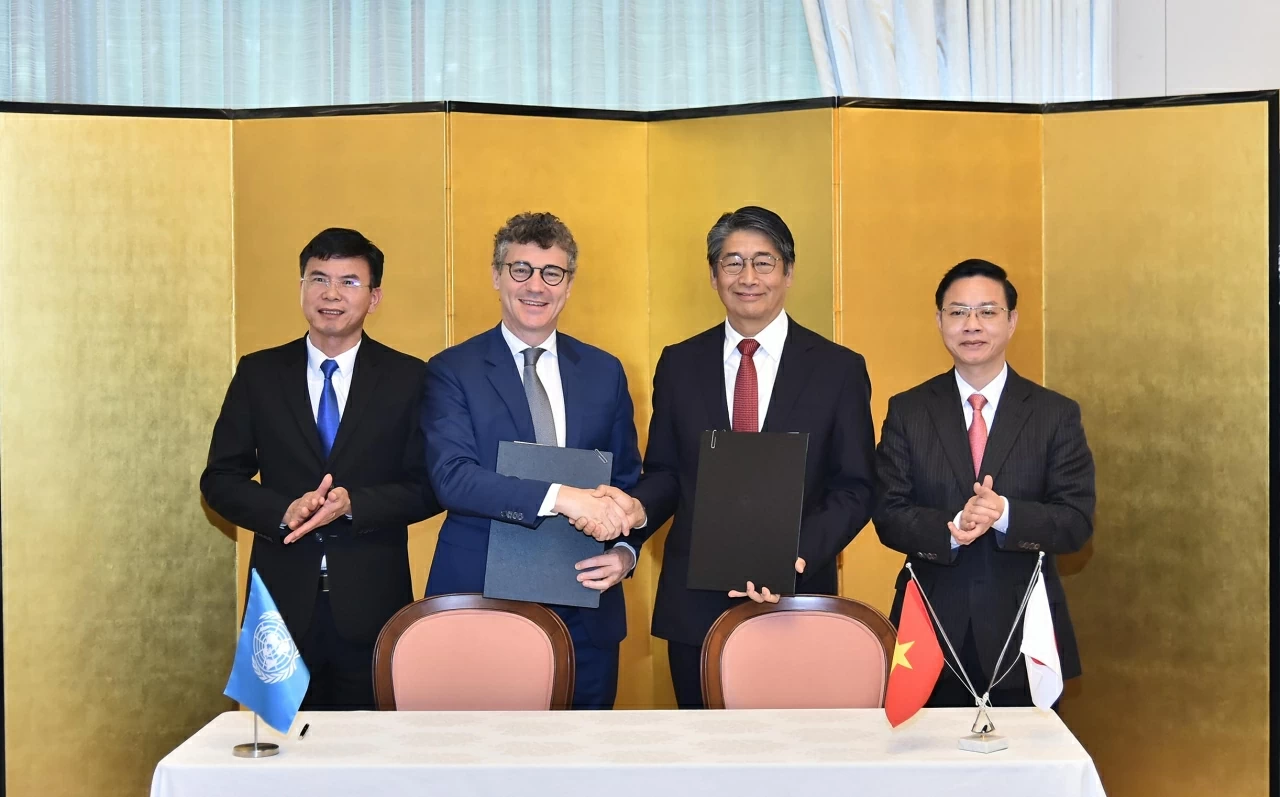 |
| Deputy Minister of Foreign Affairs, Chairman of the Vietnam National Commission for UNESCO Ngo Le Van and Mr. Nguyen Danh Hung, Deputy Director of Nghe An Department of Agriculture and Rural Development witnessing the project agreement signing. (Photo: Thanh Long) |
| Approximately 15,000 people are expected to directly benefit from the project "Enhancing Vietnam's Capacity for Early Warning, Disaster Risk Reduction, and Ensuring a Safe Learning Environment", including local communities, students, teachers, and school management staff, with many others benefiting indirectly. The experience and lessons from the project will serve as a reference for other localities and at the national level. The project will upgrade the early warning system for flash floods and landslides in high-risk areas and enhance the coordination and response capacity of authorities and communities according to national priorities and international standards. Simultaneously, the project will strengthen school resilience through risk mapping, response planning, and capacity building for staff and teachers, ensuring uninterrupted learning. The project will be implemented from March 2026 to March 2027, with activities concentrated in Nghe An province, with a total budget of 533,333 USD (approximately 13.8 billion VND). This initiative aligns with Vietnam's national priorities for disaster prevention and educational innovation, while also contributing to the implementation of international frameworks such as the Sendai Framework for Disaster Risk Reduction and the Sustainable Development Goals. |