


Preserving Vietnamese in Northeastern Thailand: From the first class to a journey spanning generations
WVR - On April 29, the seminar “Enhancing the Teaching and Learning of Vietnamese Language and Culture in the Community in Northeastern Thailand” was held from the main venue at Vietnam Town, headquarters of the Vietnamese Association in Udon Thani Province, with online connections to domestic and several other locations.
Latest
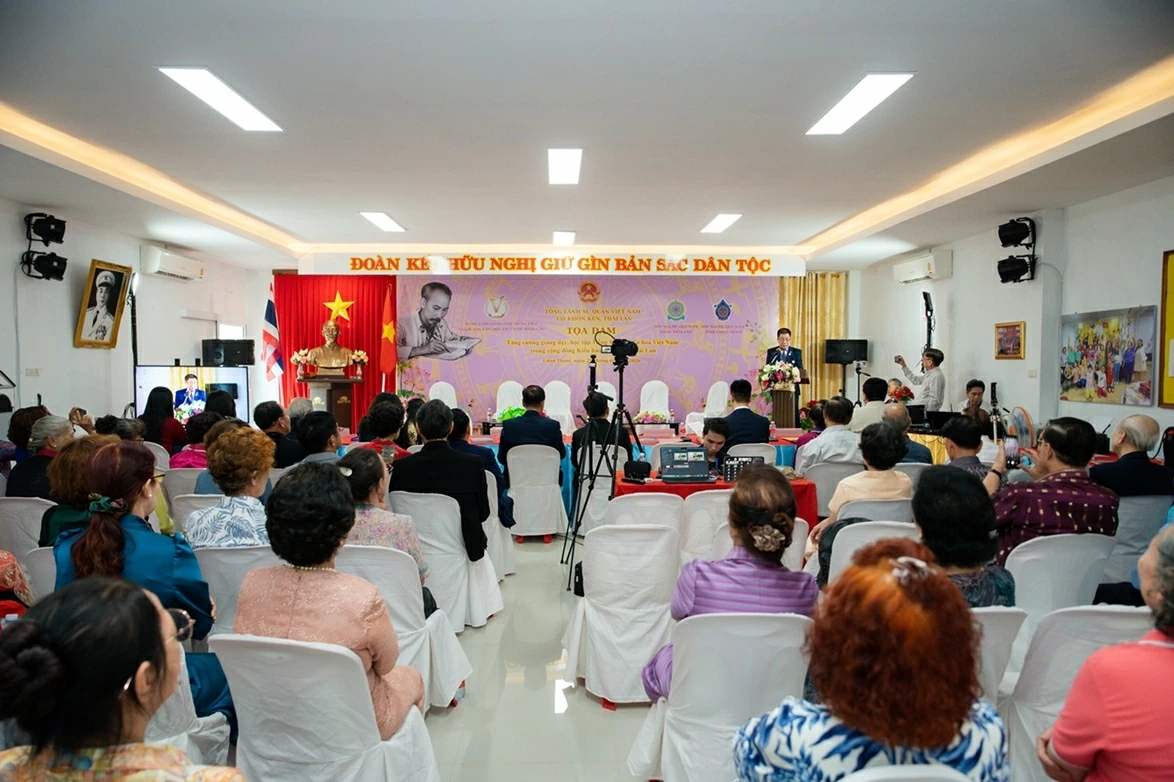 |
| The seminar “Enhancing the Teaching and Learning of Vietnamese Language and Culture in the Community in Northeastern Thailand” attracted over 300 participants both in-person and online. (Photo: Chu An) |
The program attracted the participation of a large number of overseas Vietnamese, Thai friends, and the cooperation of many domestic and local agencies, reflecting the shared interest and effort in preserving and spreading the Vietnamese language and culture among the more than 100,000 Vietnamese people in Northeastern Thailand.
Attending the seminar were the Consul General of Vietnam in Khon Kaen, Dinh Hoang Linh and his wife; Prof. Dr. Nguyen Minh Thuyet; Ho Van Lam, President of the General Association of Vietnamese People in Thailand; Luong Xuan Hoa, President of the Vietnamese Association in Udon Thani Province; Nguyen Duy Anh, Member of the Central Committee of the Vietnam Fatherland Front, General Secretary of the Global Network for Teaching Vietnamese Language and Culture; along with representatives from various agencies, experts, teachers, parents, students, and the Vietnamese community in Thailand.
From domestic locations, the program was attended by representatives from the State Committee for Overseas Vietnamese; Dang Thanh Phuong, Deputy Head of the People's External Relations Committee, Central Committee of the Vietnam Fatherland Front; Deputy Chief of Office of the People's Committee of Ho Chi Minh City, along with leaders of Ho Chi Minh City and related units.
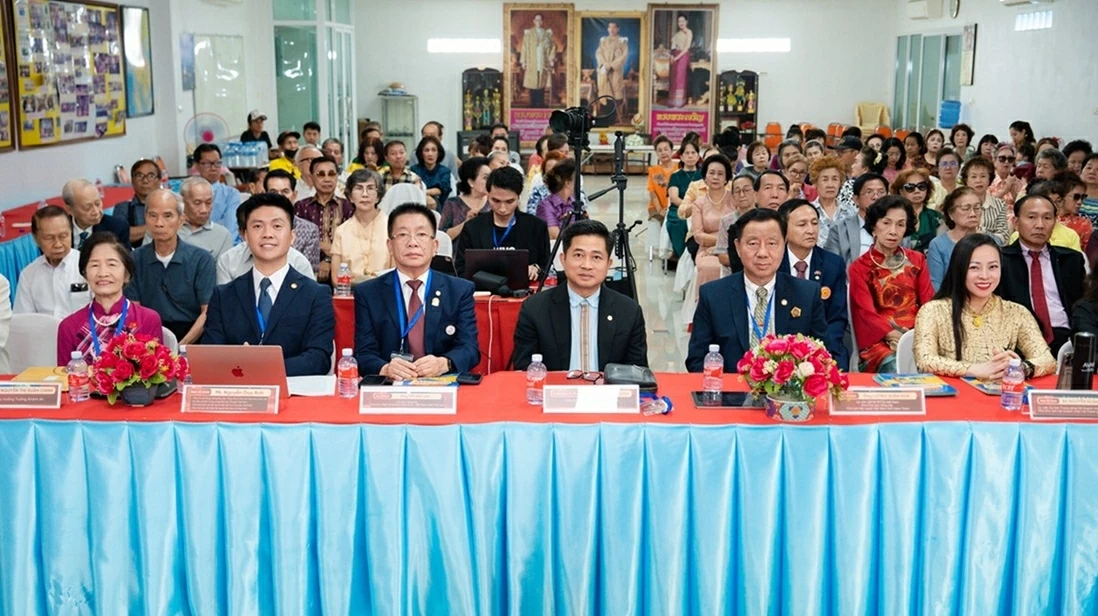 |
| Delegates attending the seminar. (Photo: Chu Van) |
From “National soul” to a community story
In Northeastern Thailand, where the Vietnamese community has formed and developed over generations, the story of preserving the Vietnamese language becomes even more meaningful and urgent. The seminar “Enhancing the Teaching and Learning of Vietnamese Language and Culture in the Community in Northeastern Thailand” was organized in this context, not only to assess the current situation but also to seek practical, sustainable solutions for the journey of preserving the mother tongue.
Vietnamese is not just a means of communication for the overseas Vietnamese community; it is a repository of memories and a connection to homeland and roots. In Northeastern Thailand, where the Vietnamese community has existed for generations, preserving Vietnamese is not merely about education but about maintaining identity.
The seminar held in Udon Thani was not just a professional activity but an opportunity to reflect on the long journey of the community, from difficult days to today's efforts to preserve the mother tongue.
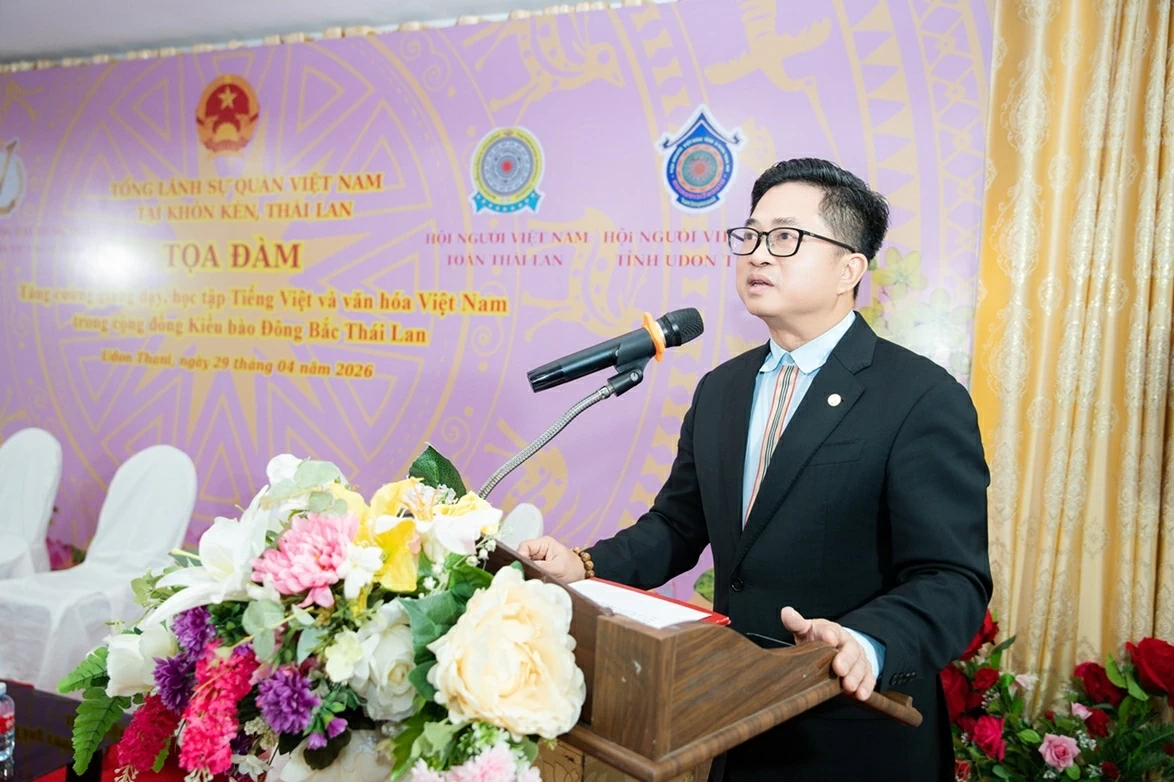 |
| The Consul General of Vietnam in Khon Kaen, Dinh Hoang Linh. (Photo: Chu Van) |
In his opening speech, the Consul General of Vietnam in Khon Kaen, Dinh Hoang Linh, emphasized: Vietnamese is the “soul of the nation”, the foundation for maintaining cultural identity and connecting the overseas community with the homeland. He recalled the historical milestone nearly a century ago when President Ho Chi Minh opened a Vietnamese language class for overseas Vietnamese in Udon Thani, laying the groundwork for the Vietnamese learning movement in Thailand.
Khanh An school - Where the journey to preserve Vietnamese began
One of the emotional highlights of the seminar was the presentation by Nguyen Thi Xuan Oanh, a teacher at Khanh An Vietnamese School, considered one of the earliest Vietnamese language teaching institutions in Thailand.
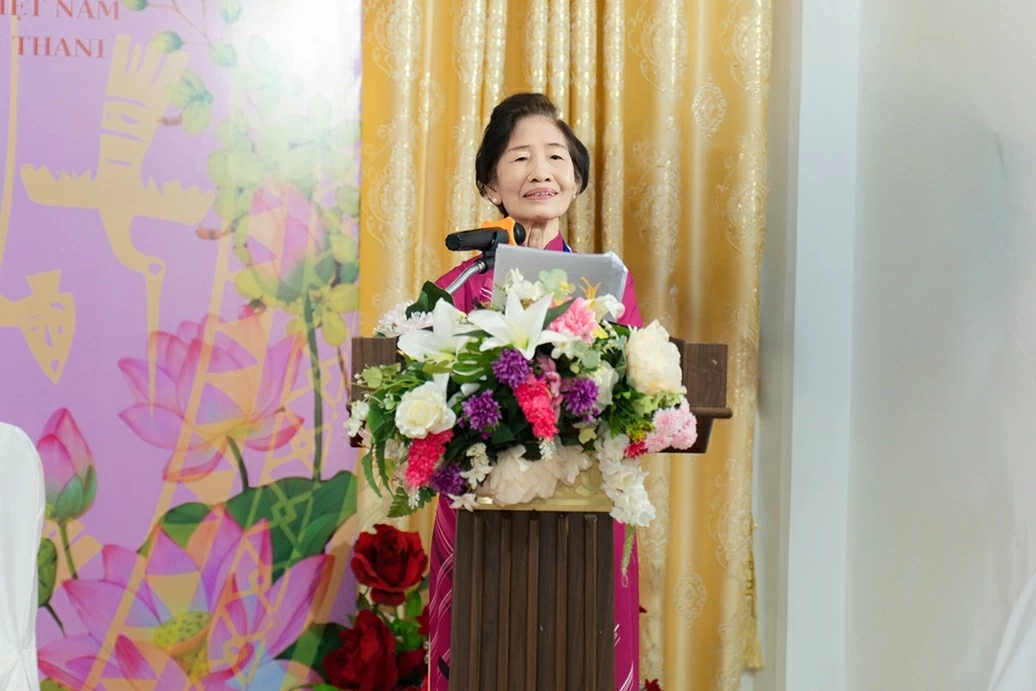 |
| Nguyen Thi Xuan Oanh, a teacher at Khanh An Vietnamese School. (Photo: Chu Van) |
In her sharing, she emotionally recalled the difficult periods of the community, especially before 1975, when teaching and learning Vietnamese faced many limitations, sometimes having to be maintained under conditions lacking both material facilities and social environment.
“There were times when teaching Vietnamese was not just about classrooms but about silently preserving it within each family, each teacher,” Oanh shared.
From those simple classes, blackboards, chalk, and love for the mother tongue, Khanh An School has become one of the cradles of the Vietnamese teaching movement in Northeastern Thailand. From there, Vietnamese not only survived but gradually spread, entering the community's life through generations.
“Today, the ferrymen on Thai soil, some have grown old, some have passed on, but the spirit and love for Vietnamese are still fiercely preserved and inherited,” Oanh shared emotionally.
When Vietnamese is nurtured through the third and fourth generations
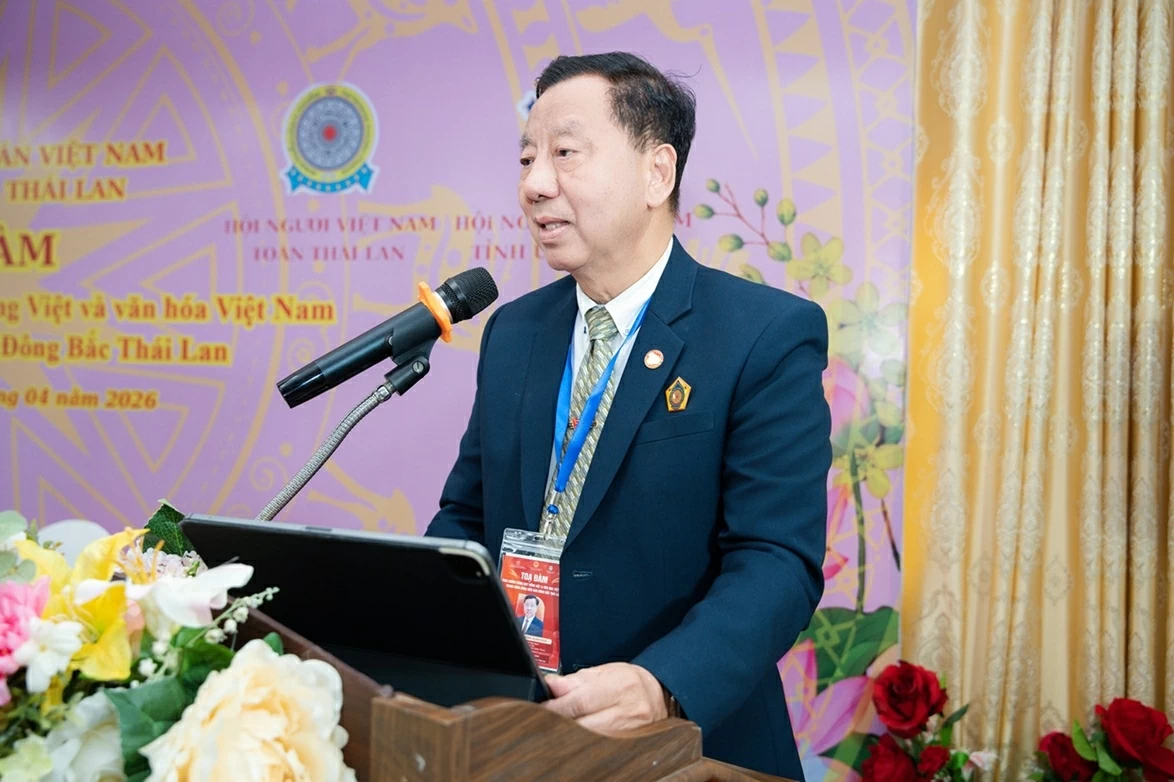 |
| The President of the Vietnamese Association in Udon Thani Province, Luong Xuan Hoa. (Photo: Chu Van) |
In many other countries, the Vietnamese community mainly consists of the first and second generations, but in Northeastern Thailand, Vietnamese has passed through the third and fourth generations – a rare and commendable achievement.
According to Nguyen Duy Anh, Member of the Central Committee of the Vietnam Fatherland Front, General Secretary of the Global Network for Teaching Vietnamese Language and Culture, this is the special value of the Vietnamese community in Thailand.
He believes that the sustainability of this achievement lies not only in classrooms but also in the nurturing of Vietnamese within families, community activities, and the collective memory of many generations.
“Vietnamese here is not only taught but lived with the community,” he said.
However, in the context of deep integration, challenges remain. Many delegates noted that today's younger generation tends to use the local language more, while the environment for using Vietnamese within families and society is gradually shrinking.
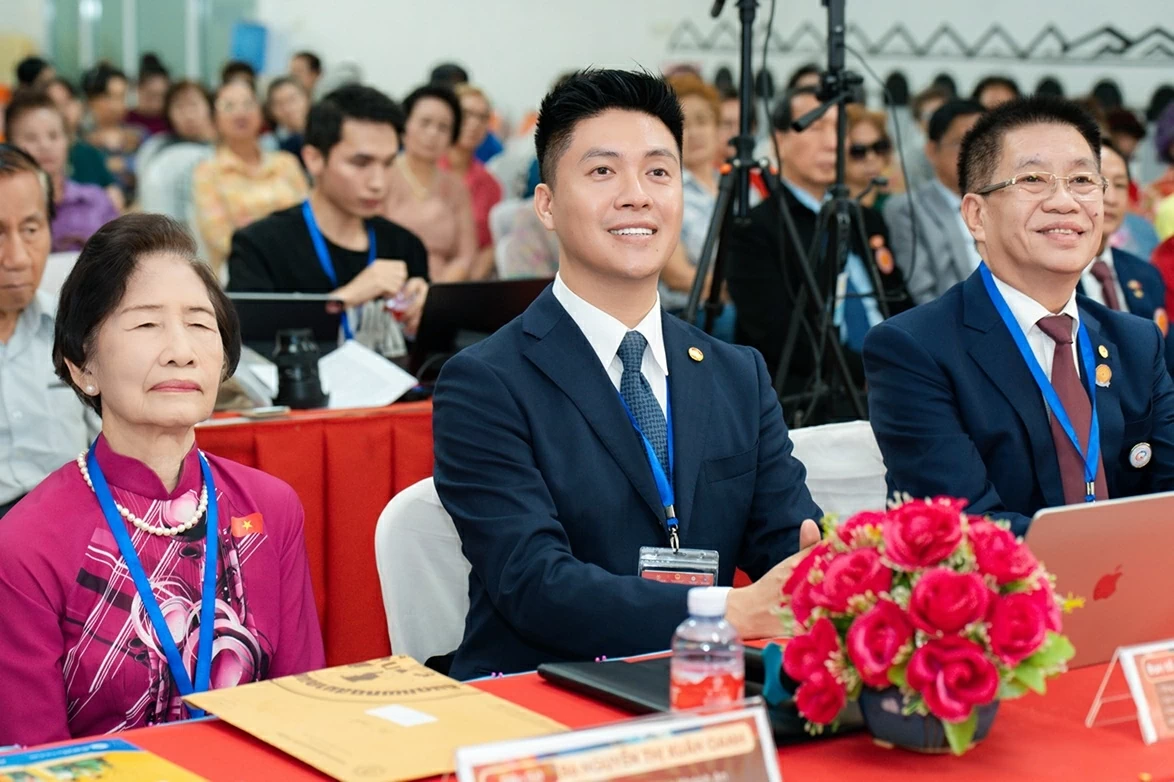 |
| Nguyen Duy Anh (center), Member of the Central Committee of the Vietnam Fatherland Front, General Secretary of the Global Network for Teaching Vietnamese Language and Culture. (Photo: Chu Van) |
Facing reality to find solutions
The seminar dedicated significant time to practical exchanges, with the participation of teachers, parents, and students – those directly involved in teaching and learning Vietnamese.
The consensus was that although the demand for learning Vietnamese in the community is very high, there are still many challenges such as a lack of teachers, suitable learning materials, and an environment for using the language in daily life – issues also recognized in many Vietnamese communities worldwide.
From this reality, many solutions were proposed, emphasizing the role of families, schools, and associations in creating a sustainable learning environment.
Within the seminar framework, Songpon Baolopet, Director of the Vietnam Studies Center, Udon Thani Rajabhat University, emphasized that the collaboration of research and training institutions and partners in Thailand is not only of professional significance but also a sustainable bridge in cultural and educational exchanges between the two countries.
According to him, teaching and researching Vietnamese is helping Thai people better understand the country, people, and culture of Vietnam, thereby strengthening the foundation of the Vietnam-Thailand friendship.
From the community's perspective, Luong Xuan Hoa, Member of the Central Committee of the Vietnam Fatherland Front, Vice President of the General Association, President of the Vietnamese Association in Udon Thani Province, shared that for overseas Vietnamese, Vietnamese is not just a language but a sacred bond with the homeland.
According to him, preserving Vietnamese is also about preserving identity, memories, and the connection of Vietnamese generations abroad, especially as the community has experienced many historical ups and downs.
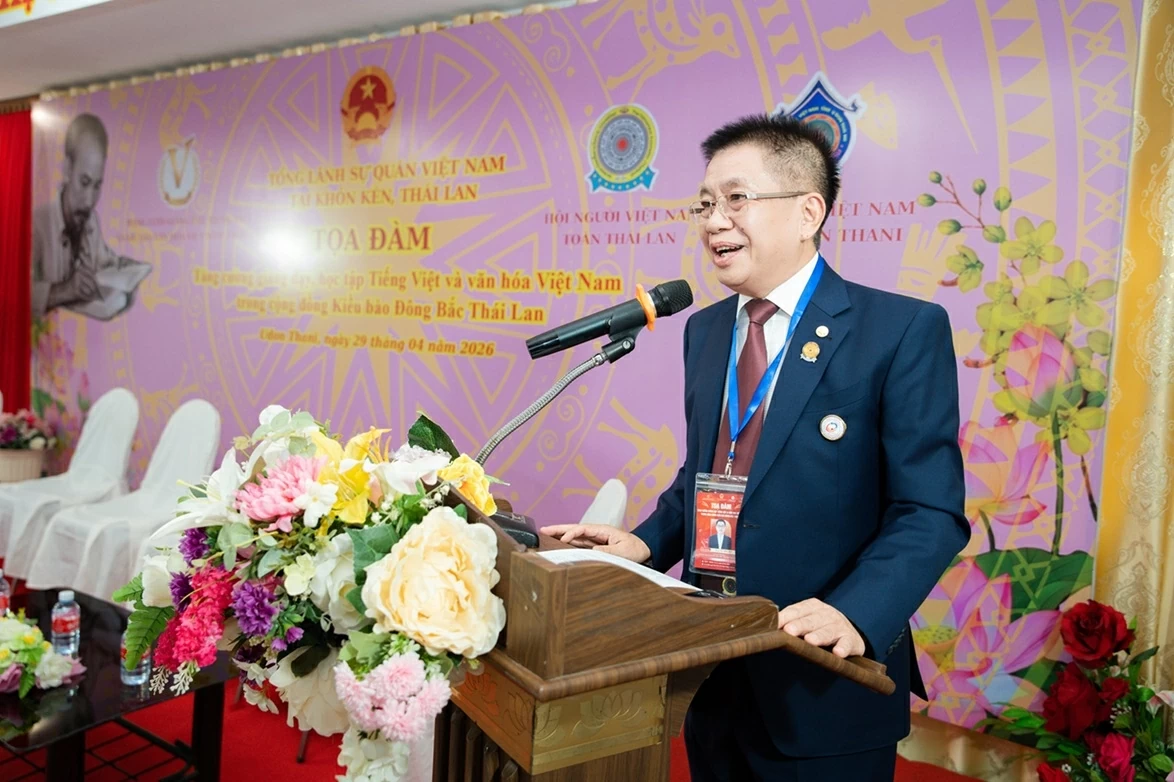 |
| President of the General Association of Vietnamese People in Thailand, Ho Van Lam. (Photo: Chu Van) |
Sharing the same view, Ho Van Lam, President of the General Association of Vietnamese People in Thailand, President of the Thai-Vietnamese Business Association, believes that spreading Vietnamese should be placed within the overall community life, from education to economy, from family to exchange activities.
When Vietnamese is used in daily life, in the work environment, and community connections, the language will not only be preserved but also continue to be nurtured and developed.
From classrooms to policy: A need for a Vietnamese ecosystem
One highly regarded approach is enhancing connections between communities through the Global Network for Teaching Vietnamese.
Established in 2025, the Network has attracted the participation of hundreds of teachers and volunteers from over 130 countries and territories, becoming an important platform for sharing experiences, learning materials, and teaching methods.
According to Nguyen Duy Anh, the most important thing is not the numbers but the increasingly clear consensus within the community: preserving Vietnamese is preserving the cultural foundation and long-term vitality of the overseas Vietnamese community.
Not stopping at community initiatives, delegates also emphasized the role of policy and support from within Vietnam.
Proposals included: Introducing Vietnamese as a foreign language in local schools; Expanding the model of Vietnamese bookcases in the community; Enhancing cultural activities and festivals associated with Vietnamese; Creating an environment for using Vietnamese in daily life and work.
These solutions aim to build a comprehensive Vietnamese ecosystem – where the language not only exists in classrooms but is present in all aspects of life.
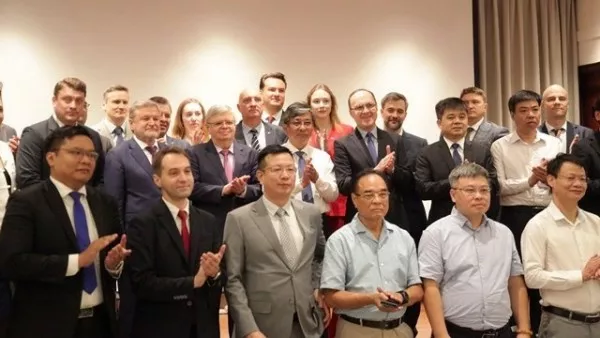
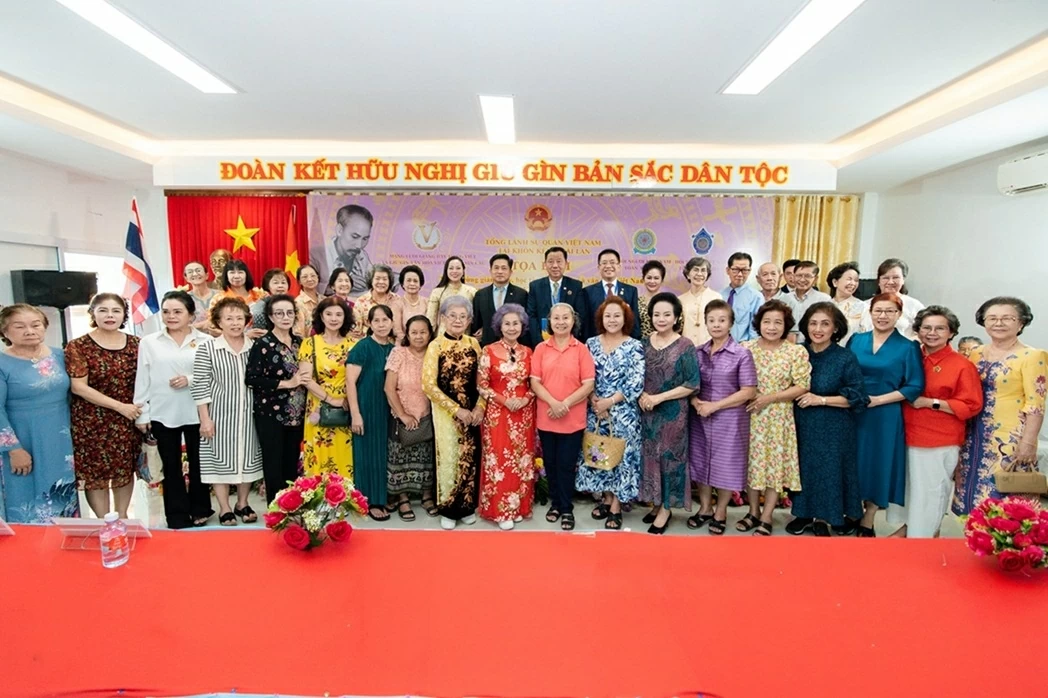 |
| Delegates taking a commemorative photo. (Photo: Chu Van) |
Preserving Vietnamese – Preserving roots, preserving the future
A meaningful highlight of the program was the launch ceremony of the book Vui hoc tieng Viet Volume 2. Not just an educational publication, the book is a culmination of dedication and love for Vietnamese, aimed at young generations of overseas Vietnamese.
At the program, Prof. Dr. Nguyen Minh Thuyet directly introduced the structure and content of the book, hoping to make learning Vietnamese more approachable, lively, and connected to life.
Concluding the seminar, a consistent message was affirmed: Preserving Vietnamese is not just preserving a language, but preserving roots, identity, and the future of the community.