




Zó Paper: From local craft to global stage
Zó paper, once a cornerstone of Vietnam’s cultural life, is finding a new path to the world. Revived by a new generation and shaped by the experiences of international visitors, this ancient craft is transforming from a fading tradition into a dynamic cultural bridge.
Latest
One sheet of paper, a millennium of history
Dating back to the 13th century, giấy dó or dó paper once held a cornerstone position in the cultural life of ancient Vietnam. Beyond serving as the canvas for folk paintings and historical texts, this resilient material was once the chosen medium for royal decrees. Handcrafted through a rigorous process of pounding, filtering, and pressing the bark of the dó tree, every sheet represents a labour of meticulous patience. The craft is deeply woven into the memory of traditional villages flanking the ancient citadel of Thăng Long, where the rhythmic sound of Yen Thai pestles once echoed through folk verses.
However, the tide of modernity threatened to wash these values away. As mass-produced industrial paper flooded the market, the traditional craft lost its footing. Ancient production spaces began to shrink, leaving behind only the fading echoes of a golden era.
In response to this decline, Zó Project emerged with a mission to revive these ancestral techniques while offering immersive, hands-on experiences for those wishing to “touch” the process. Through these workshops, dó paper no longer just exists in history books; it becomes a living bridge, seen through the fresh perspectives of both locals and international visitors.
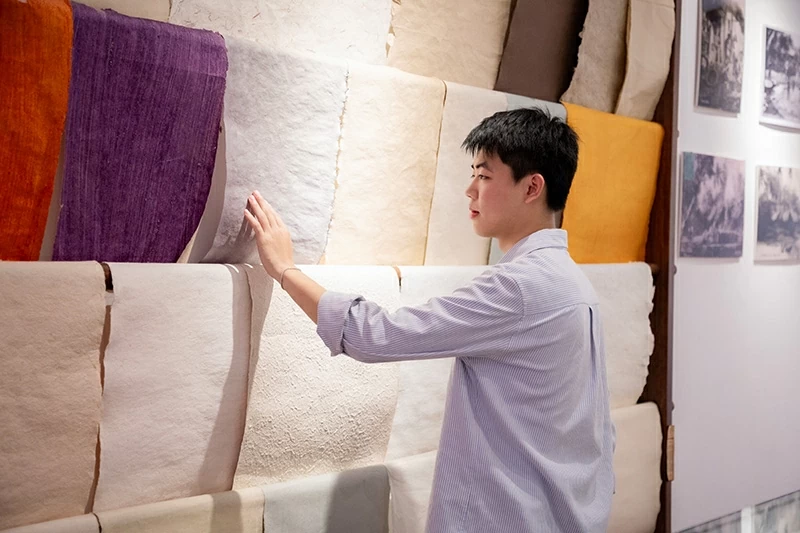 |
| Visitors exploring Zó Project’s exhibition space. |
Zó Project: translating tradition into a contemporary language
Founded in 2013, Zó Project was born from a singular passion for rescuing the ancient craft of dó paper from the brink of extinction while securing sustainable livelihoods for local artisans. Supported by local authorities, this traditional craft has found a new heartbeat at the Trích Sài Cultural Space in Hanoi’s West Lake district. Here, the rhythmic process of papermaking is no longer a hidden relic but a public spectacle for curious travellers.
What sets Zó Project apart is that dó paper has moved beyond the confines of exhibition galleries to embrace a new identity. By collaborating with contemporary artists and designers, notably, famous woodblock printing artist Tran Nguyen Dan or Quynh Tram, the project has seamlessly integrated dó paper into contemporary life. Once reserved for royal decrees and folk art, the bark-based paper is now being reimagined as minimalist notebooks, fashion accessories, and high-end art prints.
Additionally, through calligraphy classes, creative retreats, and painting exhibitions, Zó Project has built a “cultural bridge”, nourishing the curiosity of a global audience.
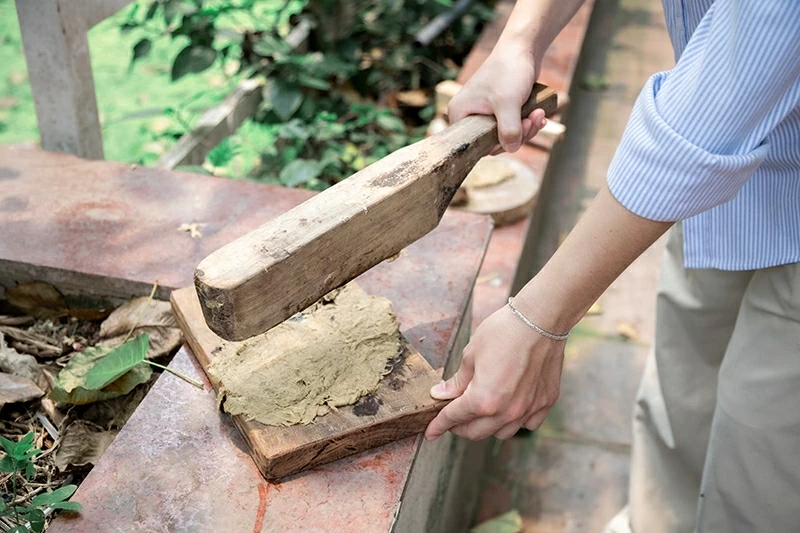 |
| Soft jute fibres, pounded and kneaded in natural resin, are filtered to create a gossamer-thin yet durable layer of paper. |
The birth of a single sheet is an endurance exercise: soft jute fibres are pounded with wooden pestles, kneaded in sticky resin, and filtered through bamboo screens to create a texture that is delicate yet remarkably resilient.
However, the path to revival is steep. Faced with a scarcity of raw materials and a dwindling workforce, Zó Project pivoted toward a community-centric model, engaging a new generation of culture-seekers, volunteers, and international tourists.
“We have welcomed many visitors, including diplomats or international newspapers”, said Nguyen Duy Anh, a staff member at Zó Project.
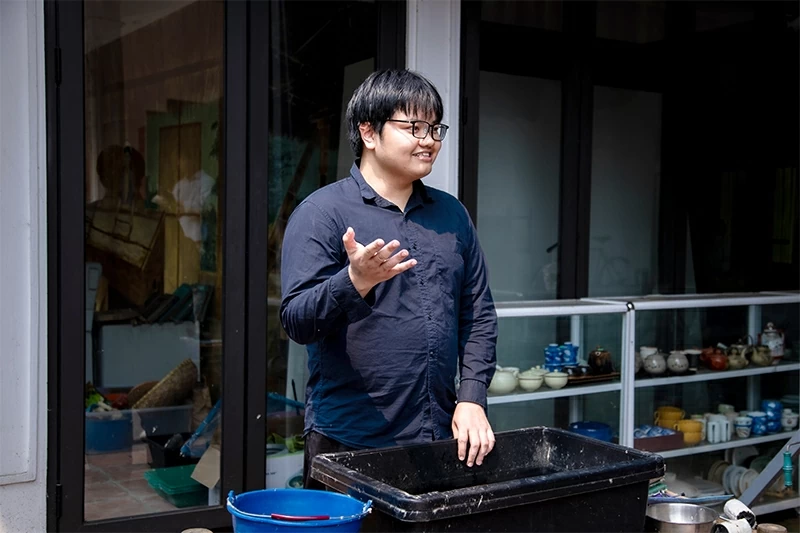 |
| “These immersive activities are vital in projecting Vietnam’s cultural identity to the world. Our ambition is for the dó paper to be recognised as a UNESCO World Heritage,” Duy Anh added. |
The "touch" of culture: A global lens
In a Hanoi filled with countless attractions, the journey of Michael (Denmark) and Oil (Thailand) took an unexpected turn. Rather than following the well-trodden tourist path, they stumbled upon Zó Project on a sun-drenched morning by West Lake.
Inside the workshop, the world slowed down. As they stirred the pulp and lifted the drying frames, a complex world revealed itself. “ I just think it might be difficult and involve a hundred steps.” Michael laughed, realising that each piece of paper is a masterpiece of labour.
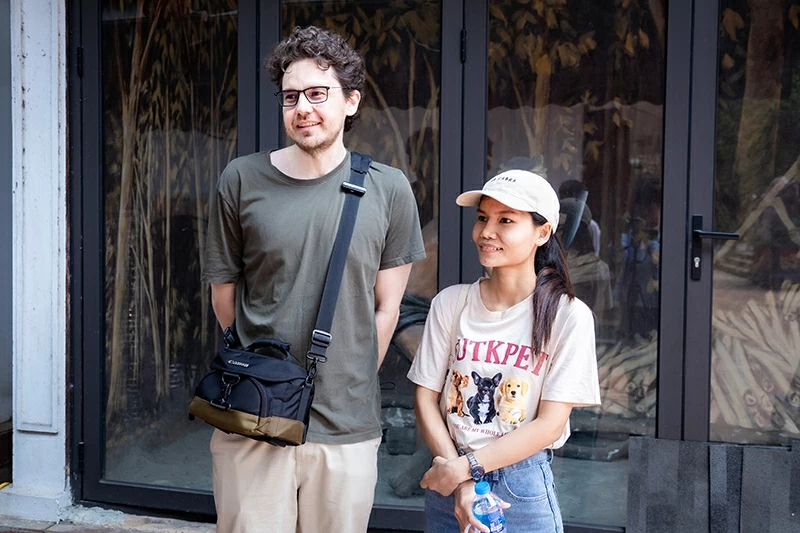 |
| Michael and Oil were excited to share their unique experience at Zó Project. |
Beyond curiosity, the experience offered a rare sense of connection. In a world of mass-produced souvenirs, Michael found something authentic. “Some of the tourist attractions just want to rush customers very fast, and they stuff themselves. Here it feels so unique, so Vietnamese”
This “tactile” experience transforms dó paper from a foreign concept into a personal memory. When visitors leave, they carry more than just handmade paper; they carry a story of a Vietnam that is both modern and profoundly enduring.
From ancient villages to the global heritage map
Zó Project’s vision extends far beyond the borders of Hanoi. The team is now looking to take the craft to other cities and across oceans. One of the social enterprise’s long-term goals is to put this paper on the global map.
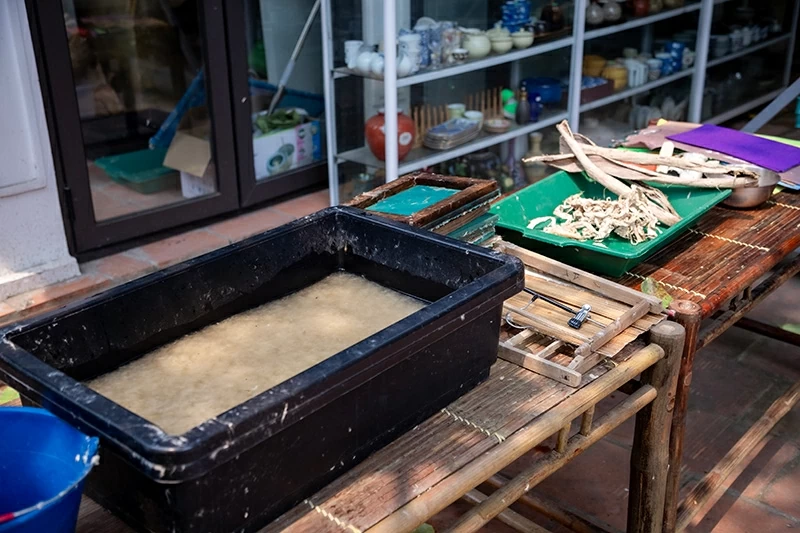 |
| Each sheet of dó paper is the product of countless meticulous handcrafting steps. |
“While this will take a lot of effort, I believe our hard work, along with the continuous support of the local and international community, will help us reach this goal,” said Duy Anh.
Amid the currents of international integration, Zó Project is far more than a craft revival. It is an awakening of a thousand-year-old memory, where the elegance of dó paper meets the enduring spirit of the ancient capital to write a living cultural chapter that resonates with hearts worldwide.
| Bac Ninh receives UNESCO recognition for Dong Ho Folk Painting craft On the evening of March 27, at 3/2 Square, Bac Ninh province held a ceremony to receive the UNESCO Certificate recognizing the Dong Ho Folk ... |
Tags: