

Conference discusses Vietnam’s proud 80-year diplomatic journey and its contribution to shaping a new era
WVR - On the morning of July 28, at the Ministry of Foreign Affairs’ Working Complex, a scientific conference titled “Diplomacy in the Ho Chi Minh Era: 80 Years of Devoted Service to the Nation and People” was held to mark the 80th anniversary of the diplomatic sector’s founding (August 28, 1945 – August 28, 2025). Deputy Prime Minister and Foreign Minister Bui Thanh Son attended the event and delivered a keynote address.
Latest
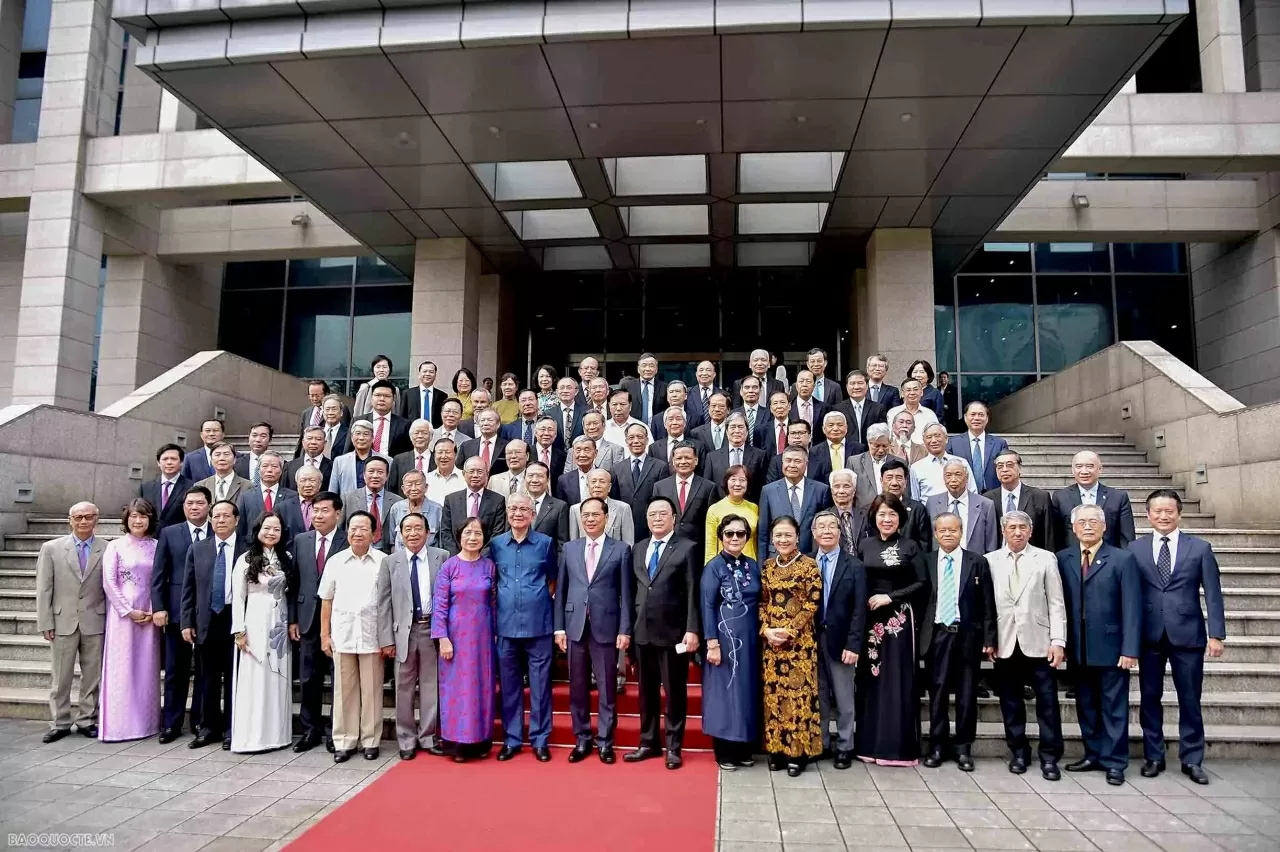 |
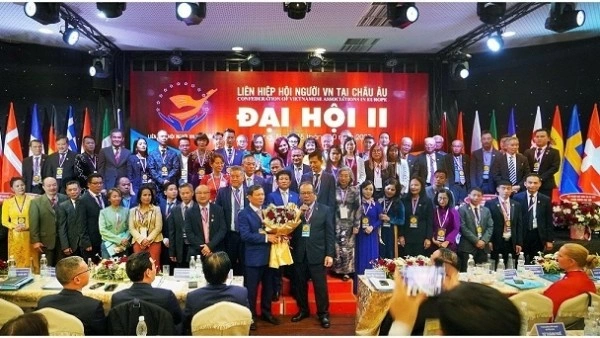
| Deputy Prime Minister and Minister of Foreign Affairs Bui Thanh Son takes a group photo with delegates attending the conference. (Photo: Quang Hoa) |
More than 400 delegates also participated, including leadership of the Ministry of Foreign Affairs, representatives from central commissions, ministries and agencies; generations of diplomatic leaders and staff, and foreign affairs officials, together with younger successor generations. Also present were officials from the Central Committee’s Commission for External Relations, which has been integrated into the Ministry of Foreign Affairs.
Glorious footsteps across eight decades
In his opening remarks, Deputy Prime Minister and Foreign Minister Bui Thanh Son emphasized that the Diplomatic Service had the honour of being directly guided, trained, and nurtured by President Ho Chi Minh, who served as the first Foreign Minister.
Inheriting the diplomatic tradition of forebears over thousands of years of nation building and defense, under the leadership of the Party and the Ho Chi Minh diplomatic thought over 80 years, Vietnamese diplomacy has consistently devoted itself to national service, making worthy contributions to the nation’s historic achievements.
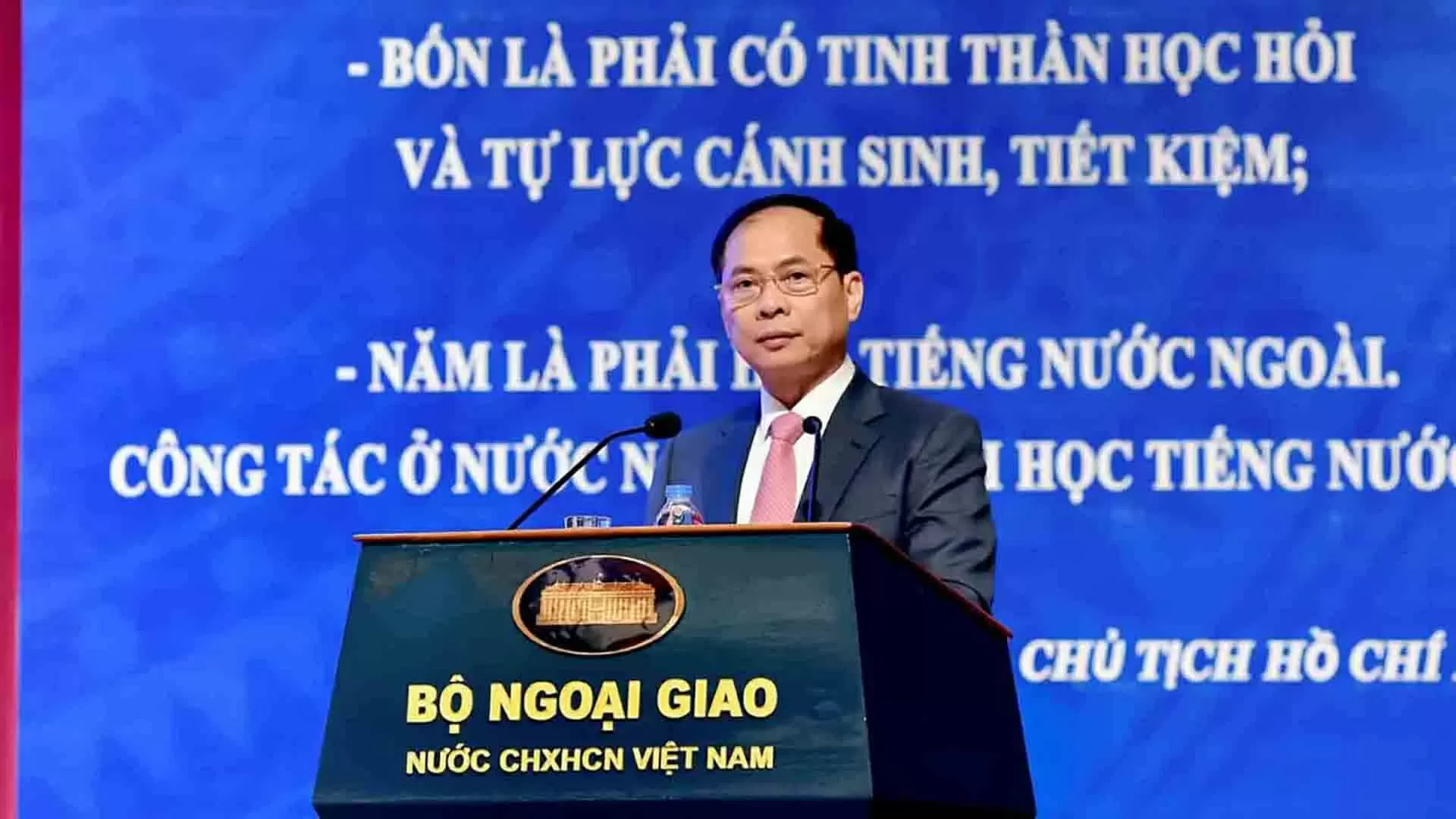 |
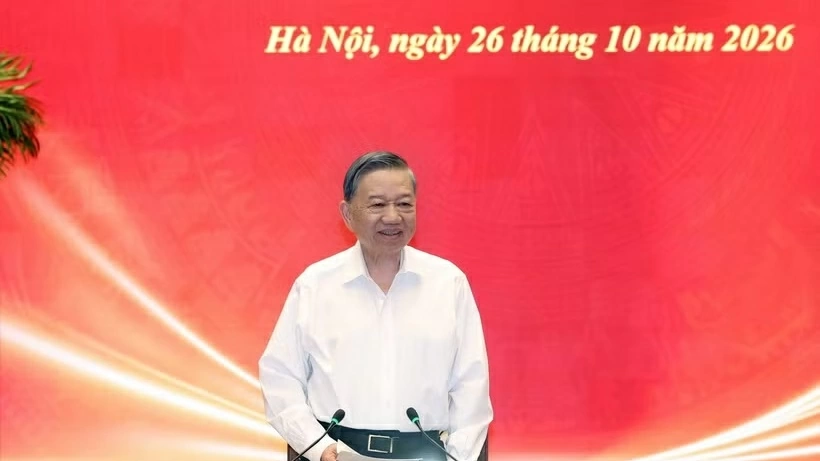
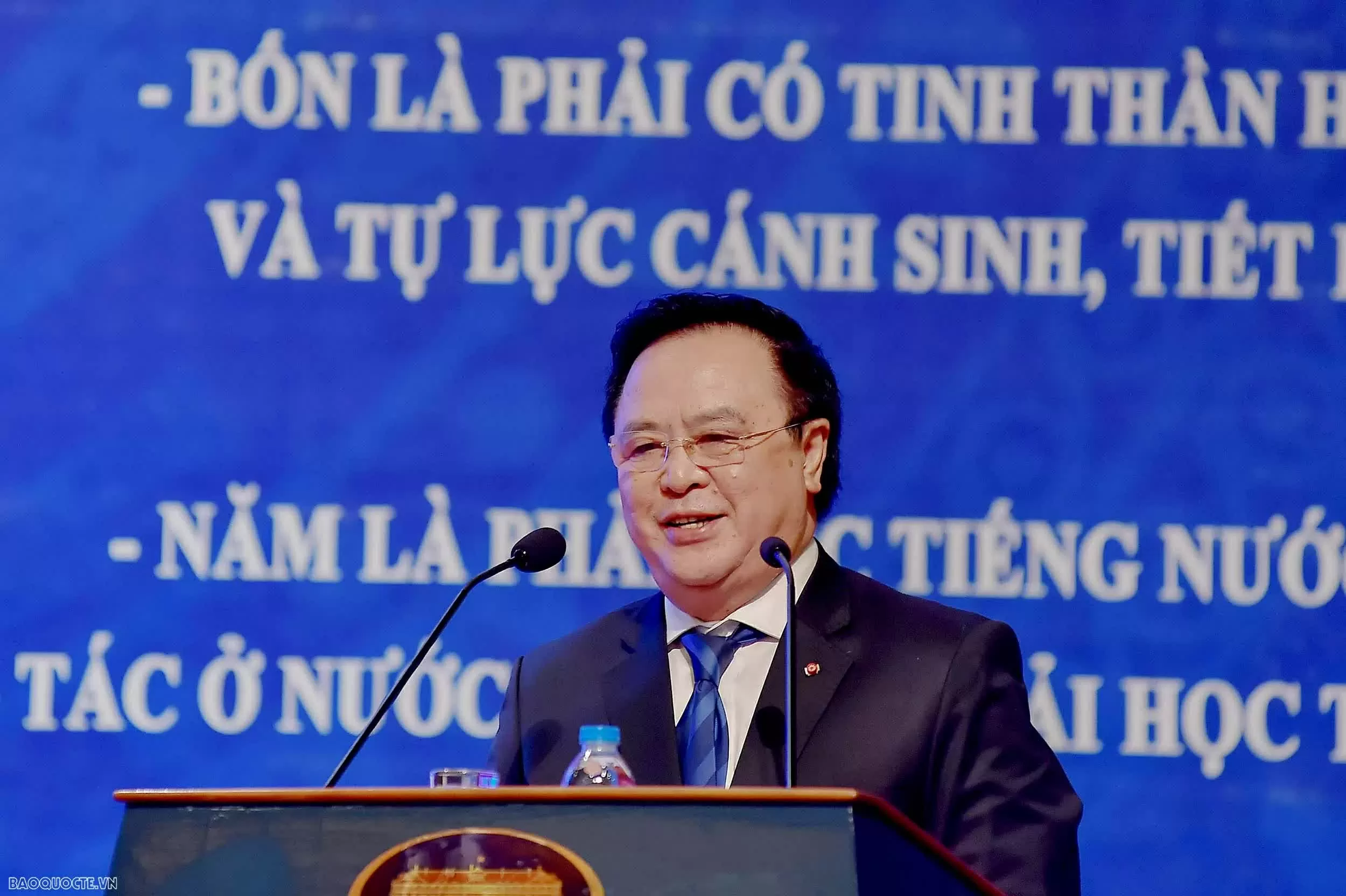
| Deputy Prime Minister and Minister of Foreign Affairs Bui Thanh Son delivered the opening speech at the Workshop. (Photo: Quang Hoa) |
According to Deputy Prime Minister and Foreign Minister Bui Thanh Son, these achievements and contributions include: making worthy contributions to the successful completion of the struggle for national independence and reunification; affirming the pioneering role of diplomacy in maintaining a peaceful and stable environment, attracting external resources and favorable conditions to serve the two strategic tasks of national construction and defense; significantly enhancing the country’s international standing, taking Vietnam from a nation once absent on the political world map to one with an increasingly prominent role and position in global politics, the world economy, and human civilization; and making remarkable progress in institution building and the diplomatic sector workforce development.
More importantly, to achieve these important accomplishments, the diplomatic service has drawn several major lessons. These include the lesson of utilizing the combined strength of the nation and the era; harmonizing national interests with international obligations and responsibilities; and maintaining firm principles while applying flexible strategies.
Additionally, lessons were learned about the importance of unity and consensus; the need for continued innovation in diplomatic thinking and methods; the smoothly coordinated implementation of the three pillars of foreign affairs—Party diplomacy, State diplomacy, and people-to-people diplomacy; and most importantly, the lesson of the absolute and comprehensive leadership of the Party and the unified management of the State over foreign affairs work.
However, Deputy Prime Minister Bui Thanh Son candidly acknowledged several existing shortcomings: underperformance in leveraging benefits from international agreements; strategic research and forecasting sometimes lagging behind fast unpredictable developments; and resources for foreign affairs and diplomacy forces not commensurate with the country’s new standing and rising demands.
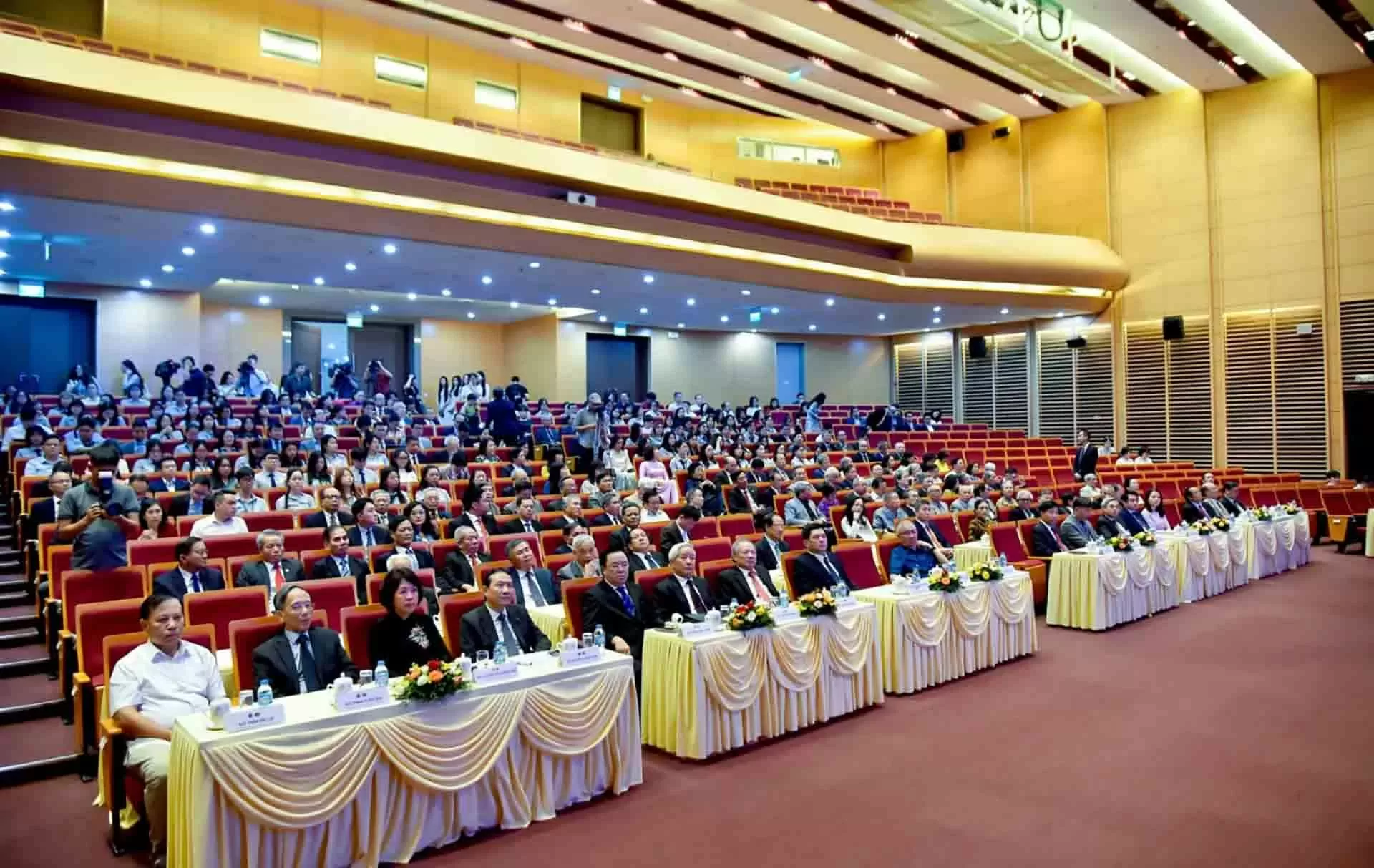 |
| Participants attending the conference (Photo: Quang Hoa) |
“Reflecting on the glorious journey we have traveled, we are ever more aware of the heavy yet honourable mission of Vietnam’s diplomacy in the new era—the era of national rise,” the Deputy Prime Minister emphasized. “It is essential to continue upholding the pioneering role of diplomacy in maintaining a peaceful and stable environment, attracting external resources and favourable conditions to effectively contribute to achieving the country’s strategic goals—especially the development goals for 2030 and 2045 as set forth by the 13th National Party Congress.”
Following the merger of the Central Committee’s Commission for External Relations and the assumption of certain functions from the National Assembly's Committee for External Relations, the diplomatic sector now stands at a pivotal moment to further maximize the combined strength of Party diplomacy, State diplomacy, and people-to-people diplomacy to fulfill its pioneering role and the critical, regular tasks entrusted by the Party, the State, and the people.
The Deputy Prime Minister and Foreign Minister also called on the conference to focus on several key areas: Reviewing the 80-year historical practice to contribute to the development of modern Vietnamese diplomatic theory in both external affairs and institution building; defining the content of diplomacy in the new era, particularly its “vital and ongoing” tasks; proposals to improve the effectiveness of foreign affairs and diplomatic work; initiatives and solutions for building and strengthening the diplomatic sector; and recommendations to enhance the quality of research, forecasting, and strategic advisory work for the Party and the State.
Ho Chi Minh’s diplomatic legacy and golden pages of history
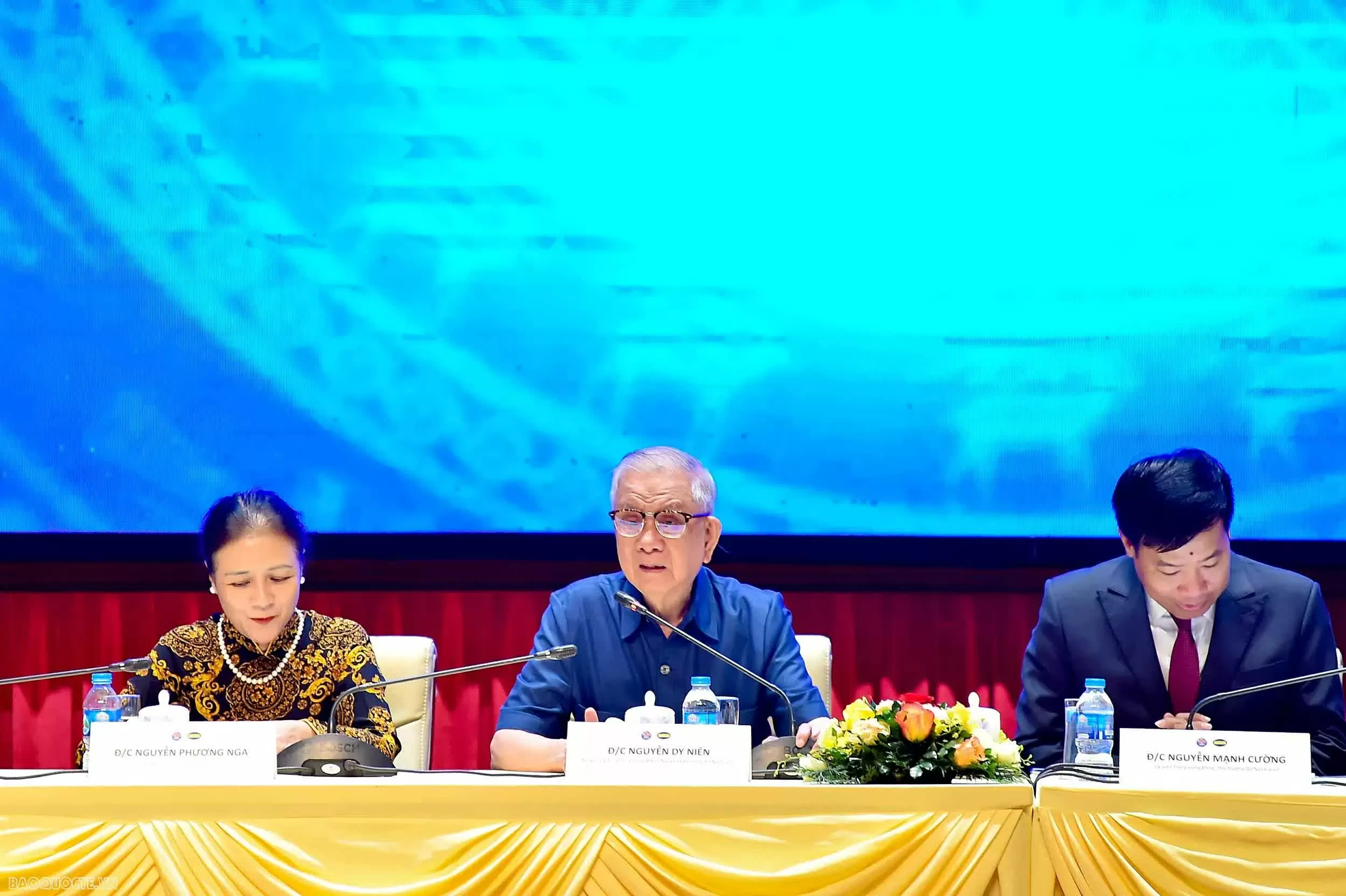 |
| Ambassador Nguyen Dy Nien, former member of the Party Central Committee and former Minister of Foreign Affairs, shared his pride when talking about Vietnam's current position in the international arena. (Photo: Quang Hoa) |
Recalling achievements and challenges over eight decades, former member of the Party Central Committee, former Minister of Foreign Affairs Nguyen Dy Nien shared five proud milestones. He cited the founding of the Foreign Ministry by President Ho Chi Minh, who became its first Minister; the Geneva Accords in 1954 as Vietnam’s first international conference after Dien Bien Phu; the Paris Agreement in 1973 ending war and restoring peace; the firm diplomacy after helping Cambodia escape the Pol Pot genocide; and today’s high global standing, with 12 comprehensive strategic partners among major countries and many others—demonstrating Vietnam's strong and secure global status.
He views the 80th anniversary as not only a source of pride but also a chance to honour the great legacy of President Ho Chi Minh and the predecessors who contributed talent and sacrifice.
 |
| Mr. Hoang Binh Quan, former member of the Party Central Committee and former Head of the Central External Relations Commission, highlighted the achievements of the Party's external relations. (Photo: Quang Hoa) |
Mr. Hoang Binh Quan, former Central Party Committee member and former Head of the Central Committee's Commission for External Relations, highlighted the achievements of Party diplomacy. He likens the Commission and the Foreign Ministry as “two siblings” born and coordinated by the Party and President Ho Chi Minh over eight decades, writing the glorious history of Vietnamese diplomacy.
And now, in this era of national resurgence, the two “brothers” have come together under one common roof, united in the shared mission of building a comprehensive, modern diplomacy for a new era.
According to Mr. Hoang Binh Quan, a distinctive feature of Vietnamese diplomacy is the close linkage and coordination between Party diplomacy, state diplomacy, and people-to-people diplomacy. This is also a key direction for mobilizing the "combined strength" in foreign affairs.
Within this framework: Party diplomacy serves as the foundation, establishing political groundwork and acting as a crucial political channel that facilitates Vietnam’s relations with other countries. State diplomacy functions as the principal and official channel between the Vietnamese state and Government and their counterparts around the world, engaging in all areas. It plays an active and leading role in various regional and international mechanisms and forums, pushing forward Vietnam’s deep and comprehensive international integration. People-to-people diplomacy plays a vital role in building a social foundation of friendship. It is a powerful "soft power" channel that touches hearts through justice, reason, morality, and humanism.
“Practice has proven that close, stable coordination—like the ‘three-legged stool’—has been vividly demonstrated in what I call the ‘six types of coordination’: Coordinating in foreign policy research, advising, and policymaking; Coordinating the organization of diplomatic activities; Coordinating in handling diplomatic incidents and situations; Coordinating external communication; Coordinating in capacity-building and personnel training; Coordinating in managing and guiding diplomatic operations,” Mr. Hoang Binh Quan stated.
Now, Vietnam’s goal is to proactively and substantively engage in deep and comprehensive international integration—into global politics, the world economy, and human civilization. The former head of the Party’s Central Commission for External Relations expressed confidence that the achievements and experience accumulated over 80 years of Vietnamese diplomacy—including 76 years of Party diplomacy—will serve as valuable motivation, determination, and a rich reservoir of knowledge.
This will enable the continued effective implementation of Party diplomacy, state diplomacy, and people-to-people diplomacy in a coordinated manner—thereby contributing meaningfully to Vietnam’s rise alongside the times, and to the realization of the noble goals of the Party, the State, and the nation.
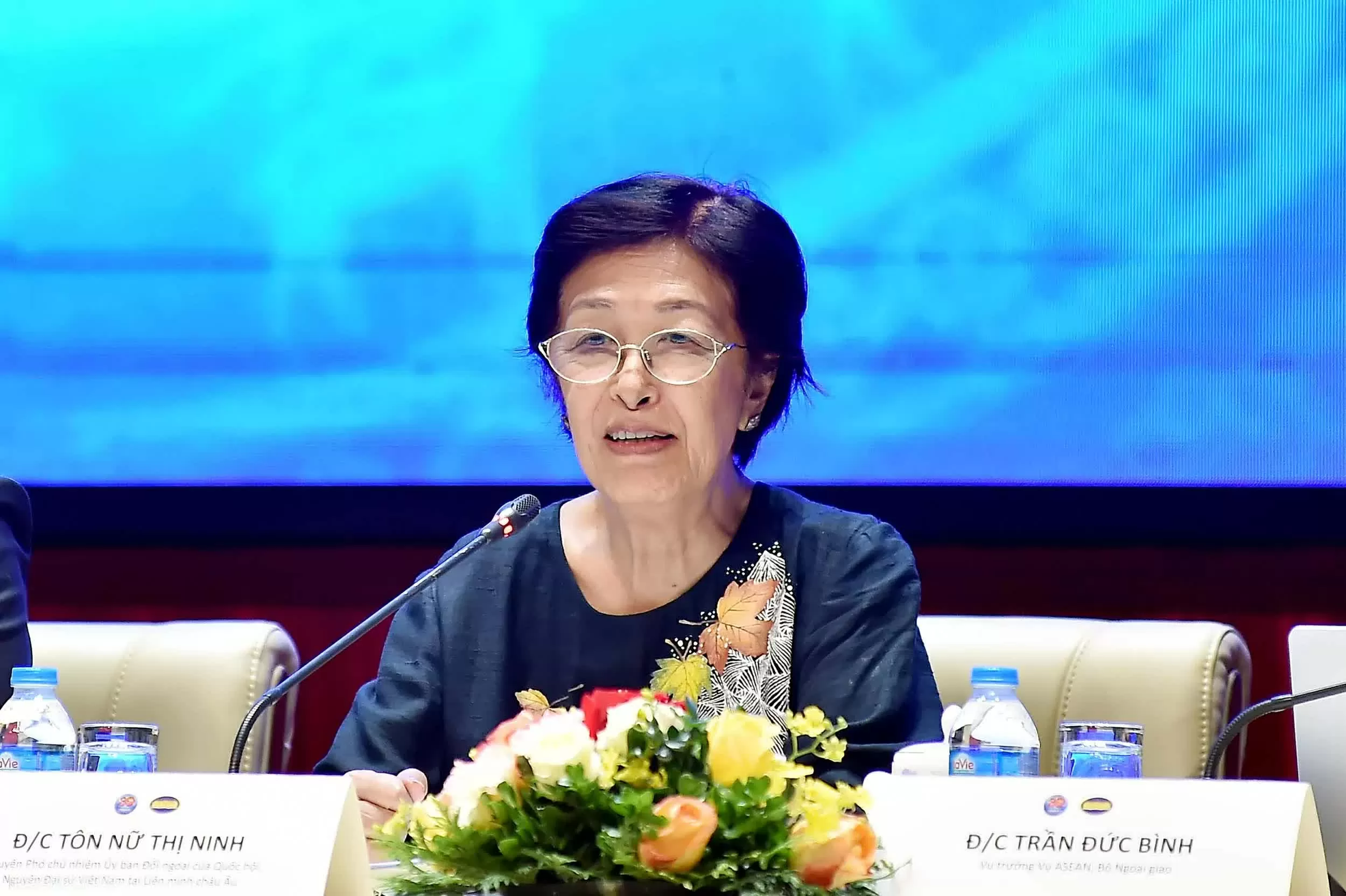 |
| Ambassador Ton Nu Thi Ninh, former Vice Chairwoman of the National Assembly's Foreign Affairs Committee, emphasized that the diplomatic sector must continue to provide timely and appropriate advice, contributing to identifying risks and obstacles as well as highlighting and taking advantage of opportunities. (Photo: Quang Hoa) |
Ambassador Ton Nu Thi Ninh, former Vice Chair of the Foreign Affairs Committee of the National Assembly, stressed that the diplomatic sector must continue timely and correct advisory work to recognize threats and obstacles, while highlighting and seizing opportunities to create optimal diplomatic outcomes for Vietnam’s rise in the new era.
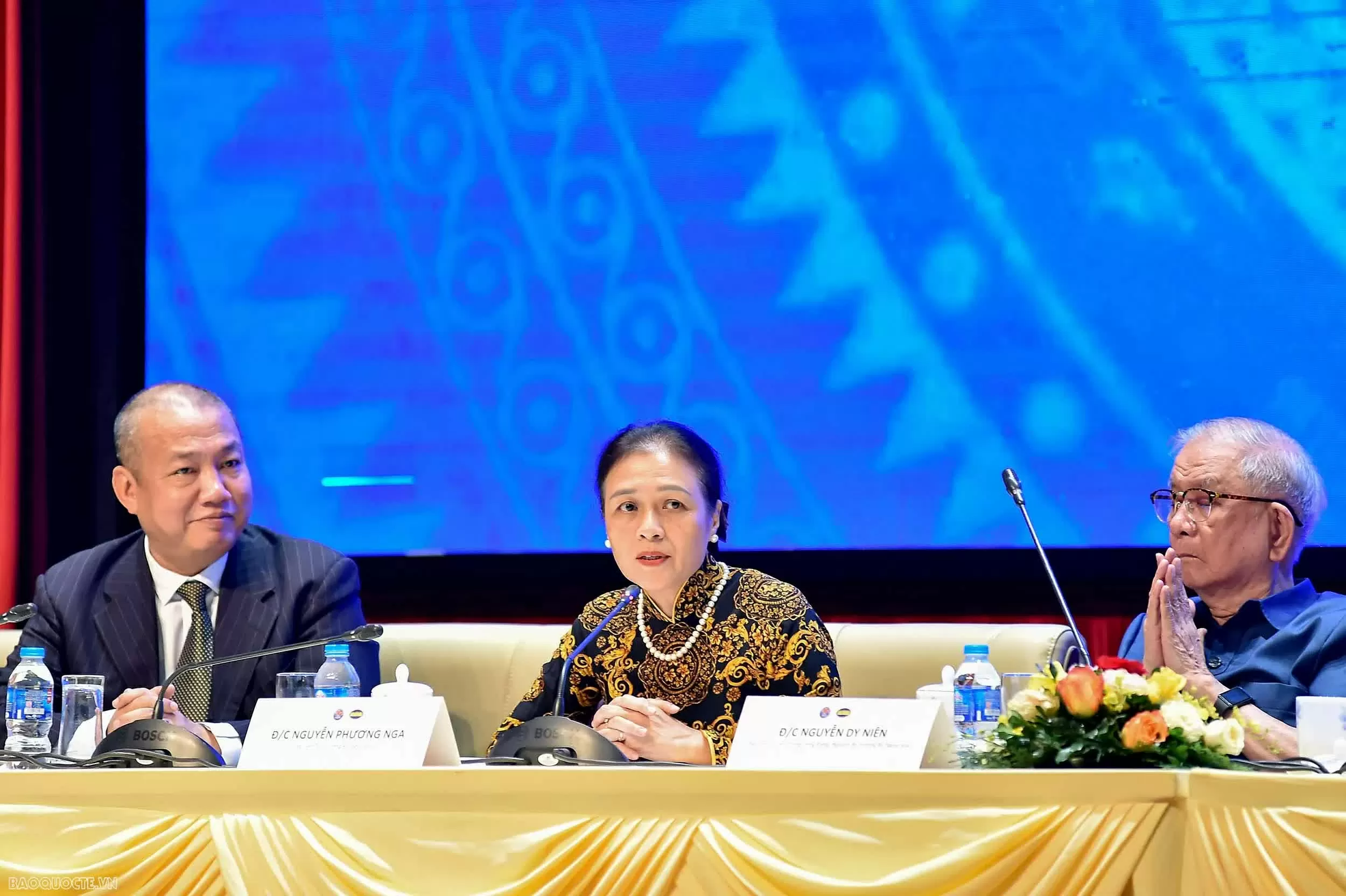 |
| Ambassador Nguyen Phuong Nga, former President of the Vietnam Union of Friendship Organizations and former Deputy Minister of Foreign Affairs, believes that people-to-people diplomacy will promote the strength of connecting people, building a favorable social foundation to deepen relations between countries, stabilize and sustain. (Photo: Quang Hoa) |
Ambassador Nguyen Phuong Nga, former President of the Vietnam Union of Friendship Organizations and former Deputy Foreign Minister, affirmed that people diplomacy is a distinctive innovation, a precious asset of Vietnam’s diplomacy—rooted in “people centered,” honourable, peaceful, humane values central to Ho Chi Minh’s diplomatic thought.
She noted guidance from General Secretary To Lam that diplomacy in the new era must connect tightly with the will of the people and between the nation and the world, reinforcing people diplomacy’s role in building deep, stable bilateral ties and mobilizing global solidarity, thereby helping maintain peace and defend national interests to build a strong, prosperous, and happy Vietnam.
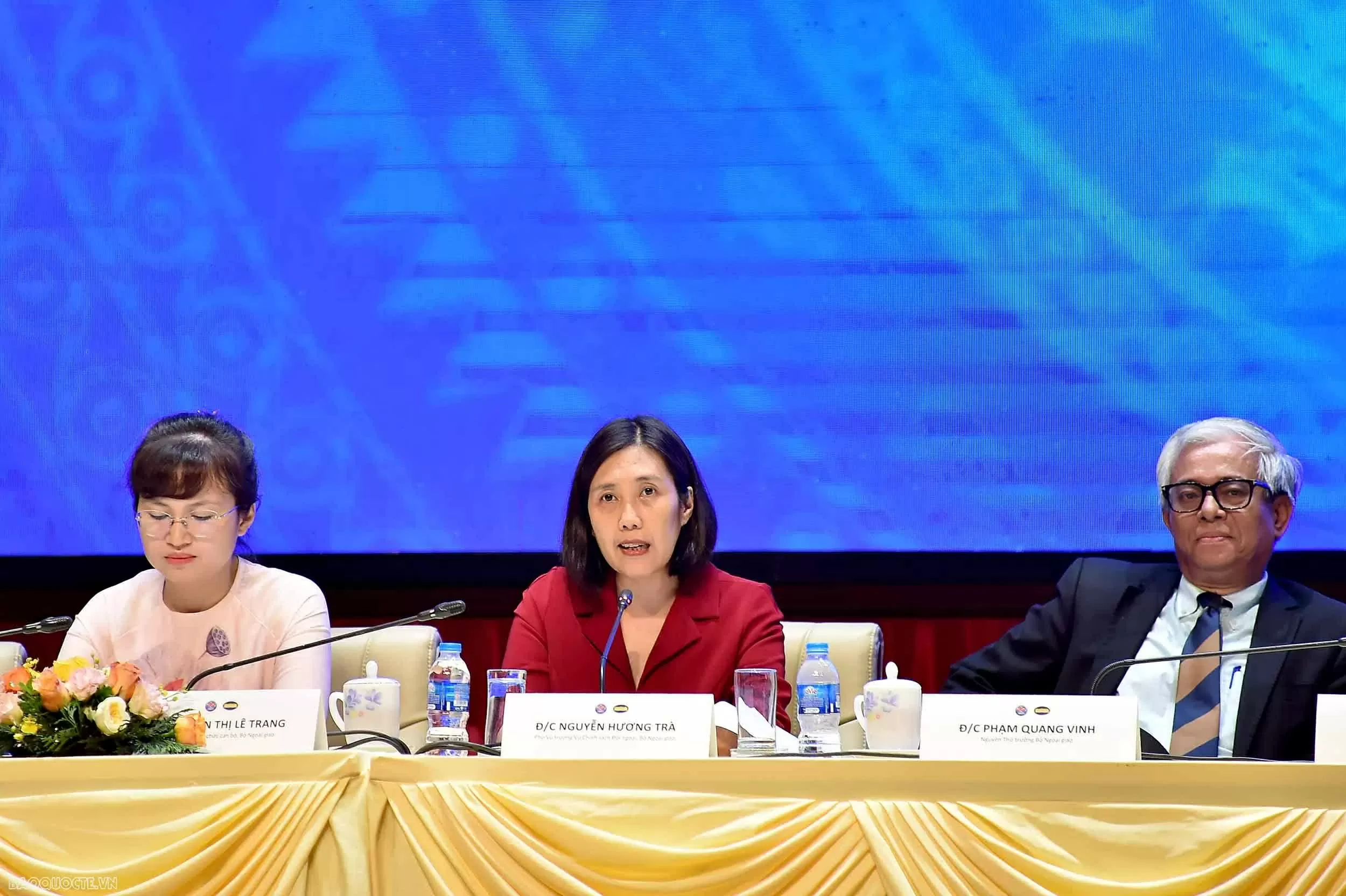 |
| Ms. Nguyen Huong Tra, Deputy Director General of the Foreign Policy Department, pointed out that not only has Vietnam deeply integrated into the economy, it has also proactively participated in multilateral institutions, leading or co-founding international initiatives that are in line with national interests. (Photo: Quang Hoa) |
Deputy Director General Nguyen Huong Tra of the Foreign Policy Department highlighted Vietnam’s achievements: establishing diplomatic ties with 194 countries, comprehensive partnerships with 37, participation in 17 Free Trade Agreements, and membership in over 70 international organizations.
Beyond economic integration, Vietnam has proactively participated in multilateral institutions and co led or founded global initiatives aligned with national interests. Cultural and social integration has also amplified Vietnamese identity abroad while broadening learning and exchange opportunities for the people. But deep integration comes with challenges: risk of domination by larger powers, cultural infiltration, and dependency on external resources—requiring continued refinement of the theoretical basis and dialectical handling between independence and international integration.
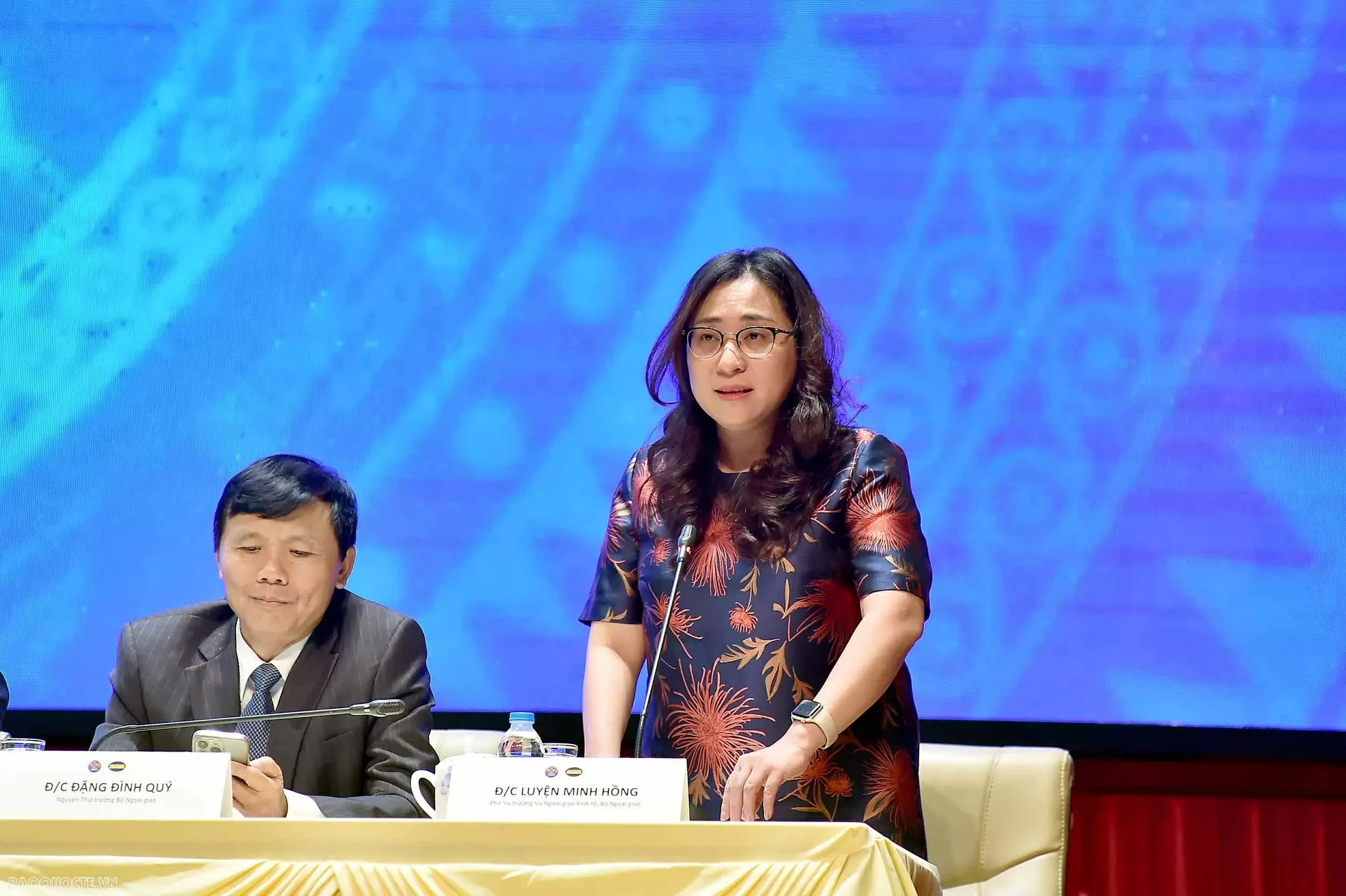 |
| Ms. Luyen Minh Hong, Deputy Director General of the Department of Economic Diplomacy, proposed five orientations to innovate thinking and methods of implementing economic diplomacy. (Photo: Quang Hoa) |
Deputy Director General Luyen Minh Hong of Economic Diplomacy proposed five directions to renew economic diplomatic thinking and methods: sharpen the economic content of foreign policy, especially at high levels; upgrade research and advisory quality aligned with actual trends; diversify traditional growth drivers (investment, export, tourism) through broader markets, products, and supply chains; link economic diplomacy with international integration and help shape global rules in strategic sectors; and foster new growth drivers like science, technology, and innovation, including strategic international cooperation and attracting overseas Vietnamese talent.
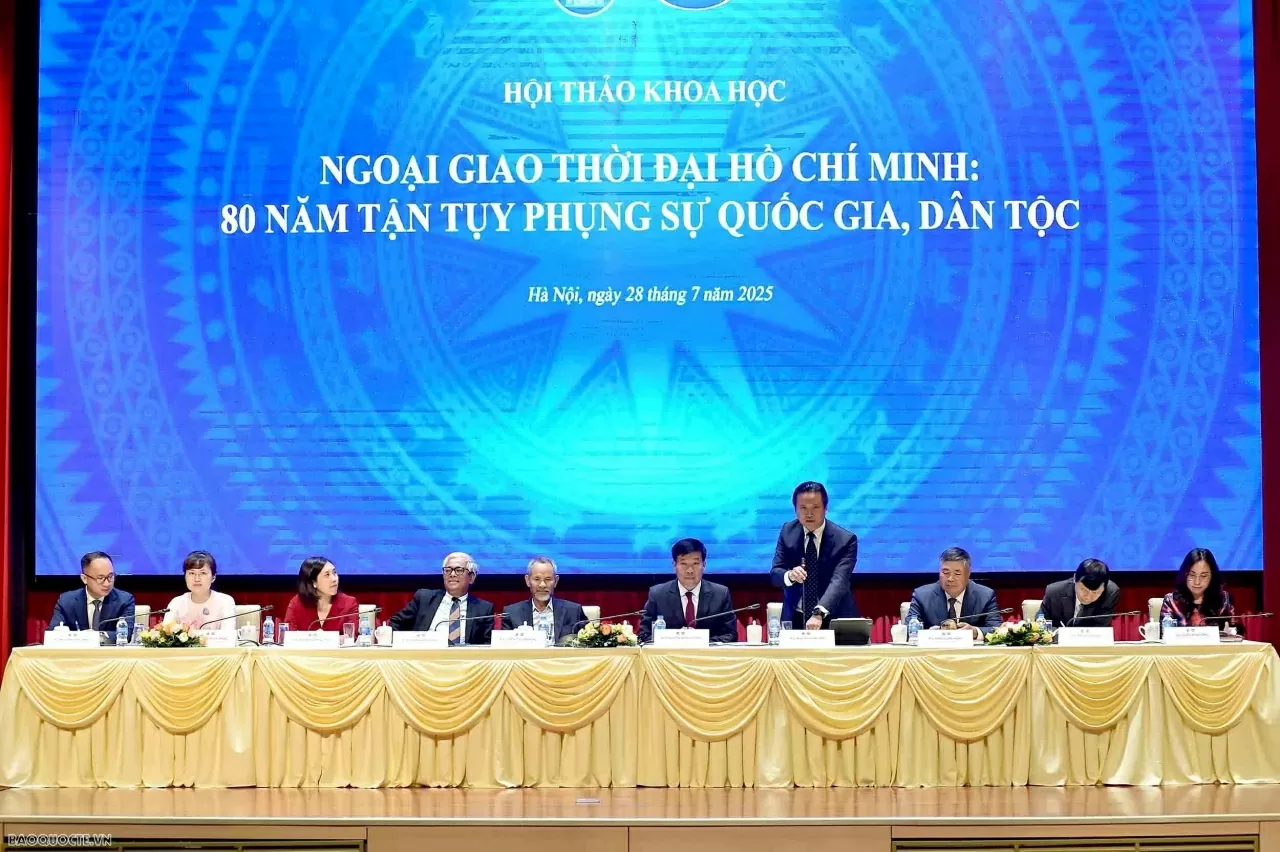 |
| Delegates attending session 2 of the workshop. (Photo: Quang Hoa) |
Deputy Director General Nguyen Thi Le Trang of the Personnel Department reflected that generations of diplomatic cadres have always been united in spirit, sharing ideals and determination across war and peace. Their dedication and wisdom provided luminous beacons for today’s officers.
Facing new national ascendancy, restructuring of the diplomatic apparatus (“lean, strong, efficient”) calls for building a professional, ideologically grounded diplomatic staff—the “red and expert” combined—critical to the sector’s strategic mission.
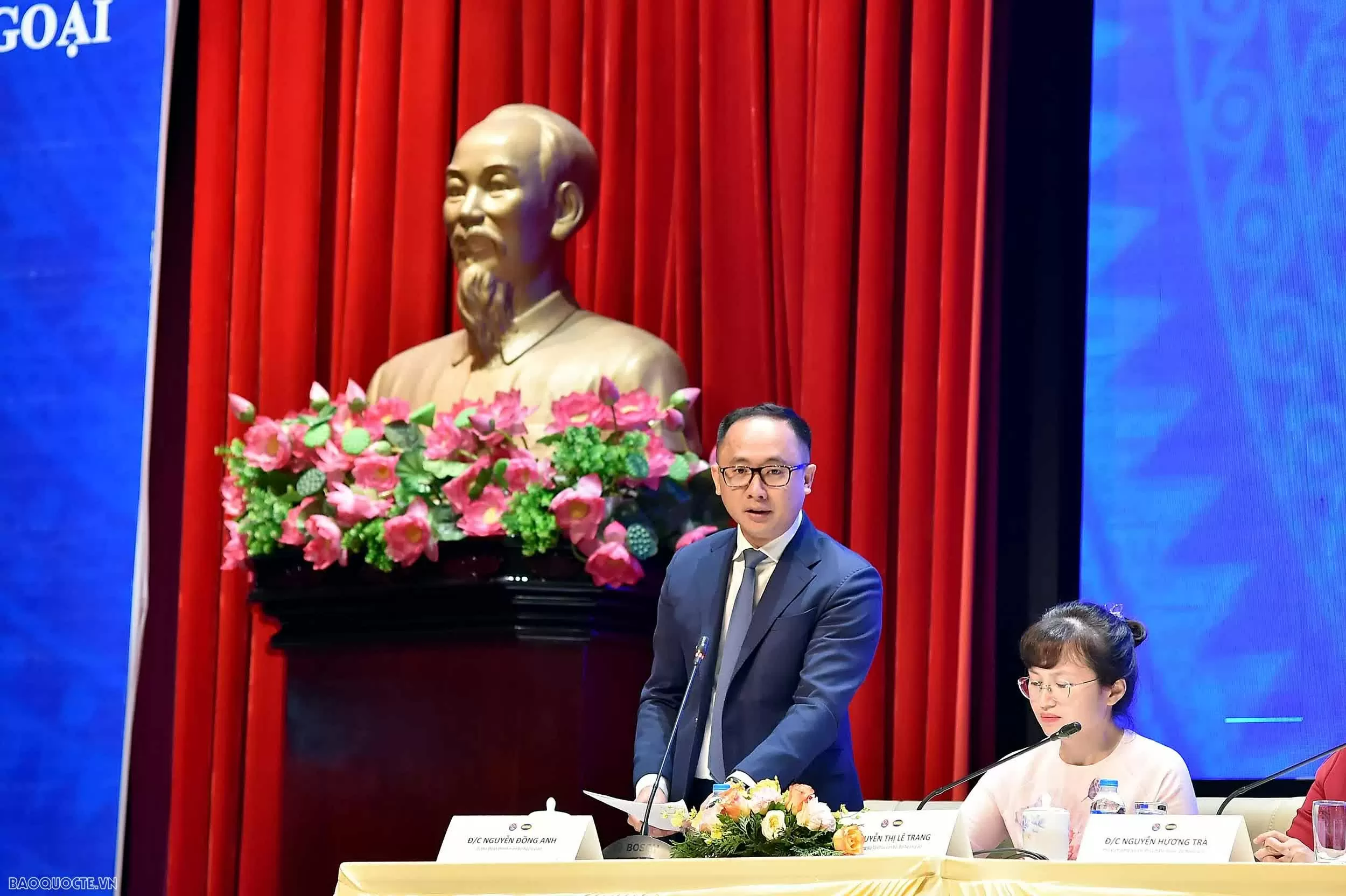 |
| Party Committee member and Youth Union Secretary Nguyen Dong Anh said that today's youth have the ability to work cross-culturally, communicate in multiple languages and rely on data to better understand international public psychology. (Photo: Thanh Long) |
Representing more than 8,000 youth union members of the Ministry of Foreign Affairs, Mr. Nguyen Dong Anh, Member of the Party Executive Committee, Secretary of the Ministry's Youth Union emphasized that today’s youth must be pioneers in innovation, applying new technologies (AI, big data, language tech, digital interaction) to diplomatic functions like international analysis, knowledge management, multimedia communication, and virtual diplomacy. Young diplomats possess cross cultural, multilingual, data driven capabilities, and many have participated in regional forums (ASEAN Youth, Asian Diplomat Fellowship, UN internships). He urged continued support for youth involvement in digital, economic digital, and tech science diplomacy innovation projects.
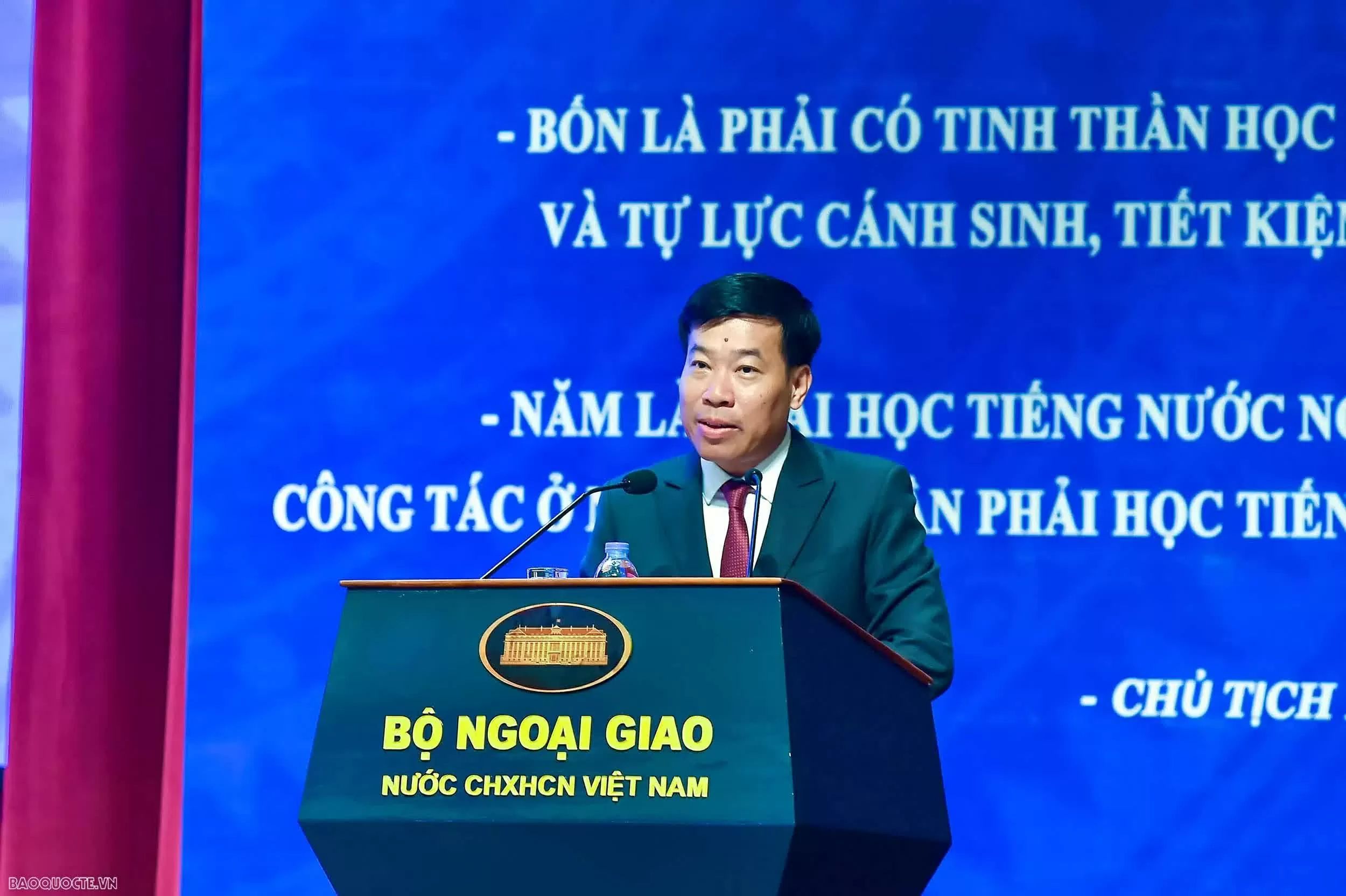 |
| Party Central Committee member, Permanent Deputy Secretary, Deputy Minister of Foreign Affairs Nguyen Manh Cuong delivered the concluding speech at the Workshop. (Photo: Quang Hoa) |
Finally, Member of the Party Central Committee and Deputy Foreign Minister Nguyen Manh Cuong concluded that the conference was a deep academic and inspirational forum. It not only revisited the proud history of Vietnam’s revolutionary diplomacy born from the need for national survival, freedom, and rebuilding, but also inspired reflection on its ideological values, strategic vision, and mission in the country’s new era.
Referring to first session discussions on resilience, strategic thinking, flexible diplomacy, and pillar coordination as enduring diplomatic heritage, and second session proposals on innovation, adaptation, integration, digitization, and youth leadership, Deputy Foreign Minister Nguyen Manh Cuong expressed gratitude to all participants. He highlighted that this conference should serve as a springboard toward building a comprehensive, modern, pioneering diplomacy for a powerful and increasingly esteemed Vietnam on the global stage.