

Diplomacy in the first half of 2025: Joining national efforts to accelerate, achieve breakthroughs, and build momentum for a new era
WVR - The world and Vietnam enter 2025 with intertwined opportunities and challenges that go beyond expectations. The nation stands on the threshold of a new era. The journey to complete the 13th National Party Congress’s term and to prepare for a period of national advamcement began right from the start of the year.
Latest
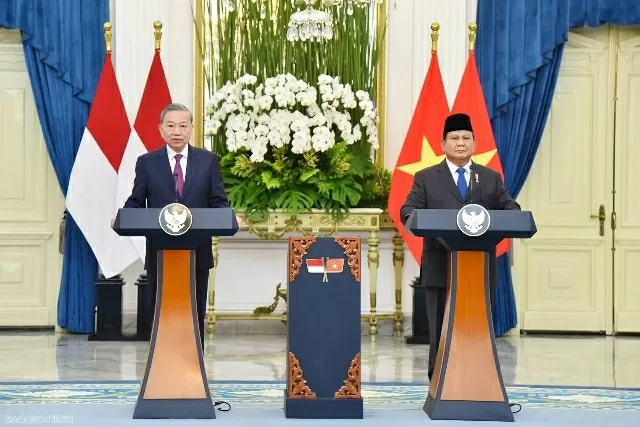 |
| Diplomacy in the First Half of 2025: On March 10, General Secretary To Lam and Indonesian President Prabowo Subianto held a press conference to officially announce the elevation of Vietnam-Indonesia relations to a Comprehensive Strategic Partnership. (Photo: Tuan Anh) |
Turning Challenges into Motivation, Opportunities into Action
In 2025, the world remains tense and divided, with escalating and complex conflicts in Ukraine and the Middle East, as well as global tariff and trade wars. This era is marked by instability, unpredictability, and multiple risks, underpinned by strategic competition and geopolitical confrontation among major powers and a friction between the old global order and a new multipolar, multi-centered, multi-layered world. These developments affect all nations.
This is a pivotal year with many significant national and international events, especially the historic coincidence of the 80th anniversary of the United Nations and the founding of the Democratic Republic of Vietnam—both celebrated in a spirit of bold renewal. Vietnam stands before a great opportunity and must act swiftly to avoid missing it.
A breakthrough in strategic vision and new thinking by the Party is clearly reflected in the streamlined reorganization of the political system. Resolution 59 identifies “the promotion of external relations and international integration as a fundamental and ongoing priority.” The “four strategic pillars” — legal institutions, science and technology, international integration, and private sector development — form a crutial foundations for empowering the nation to make breakthrough progress.
Challenges stimulate efforts to overcome hardship and innovate; opportunities urge the nation to successfully fulfill the 13th Party Congress’s Resolution and the 2021–2025 five-year socio-economic development plan. History, the present, and the future converge in the effort to rise into a new era.
Time waits for no one. From the very beginning of the year, the whole country has pushed forward with a "run while lining up" approach—accelerating, breaking through, and racing to the finish line. In step with the country, on January 6, the Ministry of Foreign Affairs held a conference to review 2024 and outline 2025 priorities. This included thoroughly grasping and resolutely implementing Resolution No. 59-NQ/TW on international integration in the new context, directives from General Secretary To Lam on diplomacy in the rising era, as well as five key tasks and focal solutions set out by Prime Minister Pham Minh Chinh.
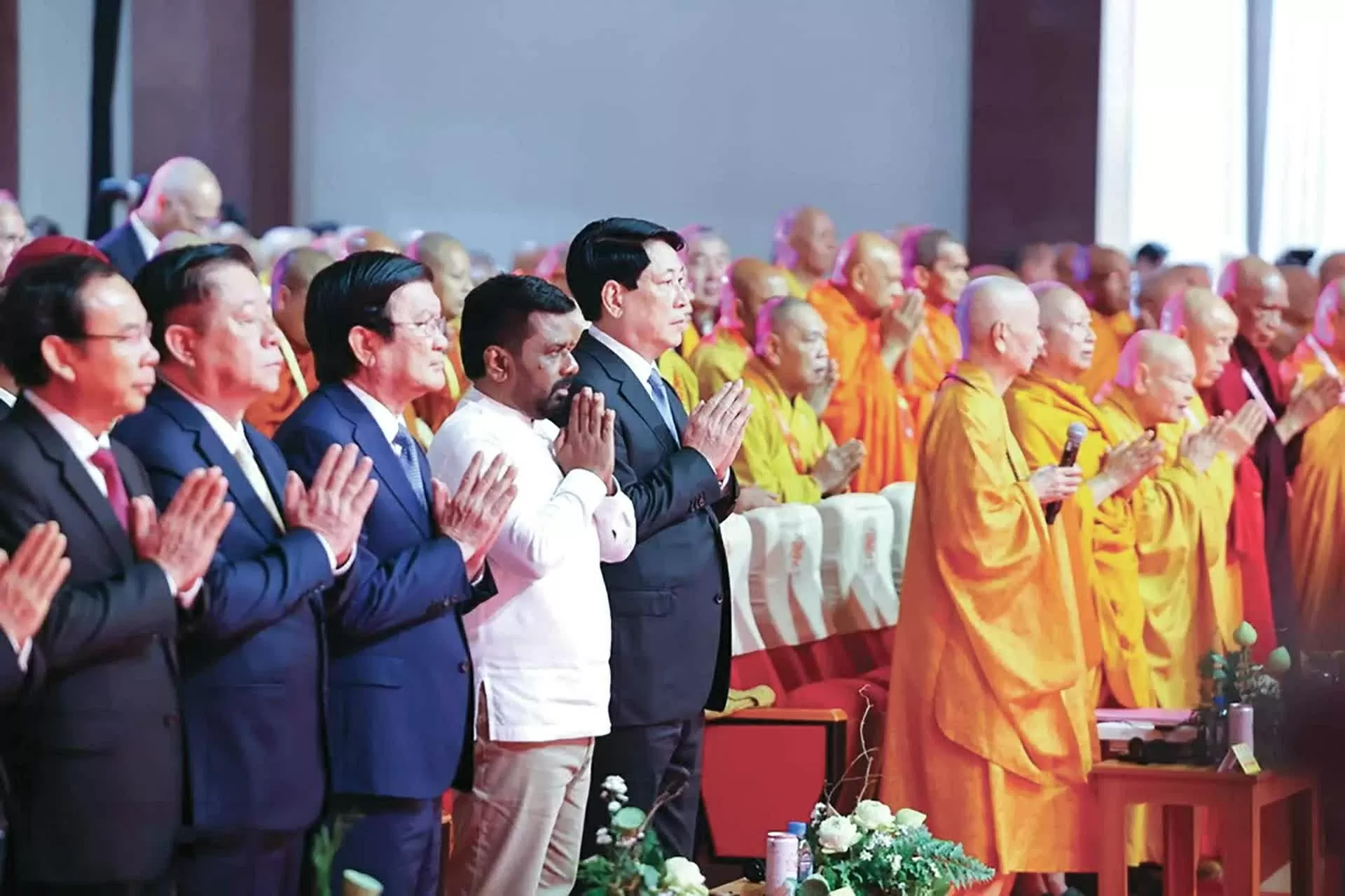 |
| President Luong Cuong, Sri Lankan President Anura Kumara Dissanayaka, and delegates attend the Opening Ceremony of the United Nations Day of Vesak 2025. (Source: VNA) |
A milestone journey
In the first six months of 2025, Vietnamese foreign affairs and diplomacy achieved many positive results. Highlights include proactive, coordinated, innovative, and effective actions across the three pillars: Party diplomacy, State diplomacy, and People-to-People diplomacy—both bilateral and multilateral.
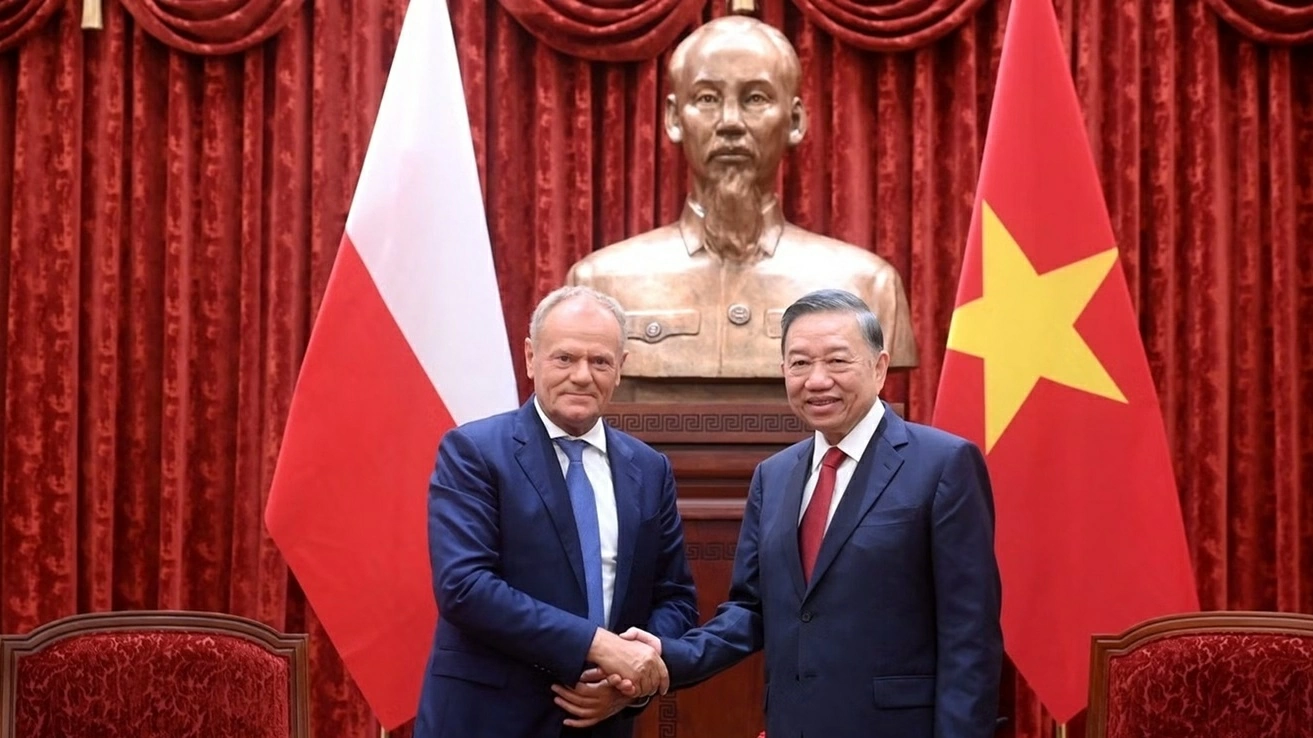
First is political diplomacy. Under the leadership of the Central Committee, the Politburo, the Secretariat, and the direct involvement of high-level Party and State leaders, Vietnam has elevated and upgraded relationships with key partners. These efforts serve as bridges to promote development cooperation in strategic regions and refresh key pillars in traditional partnerships.
This dynamic six-month period featured nearly 20 overseas visits by top Party, State leaders and receptions of over a dozen high-level foreign delegations to Vietnam. These activities helped strengthen and upgrade relationships, raising the total number of Comprehensive Strategic Partnerships to 13 and Strategic Partnerships to 10.
Despite intense geopolitical competition and confrontation, Vietnam has maintained balanced and harmonious relations with major powers.
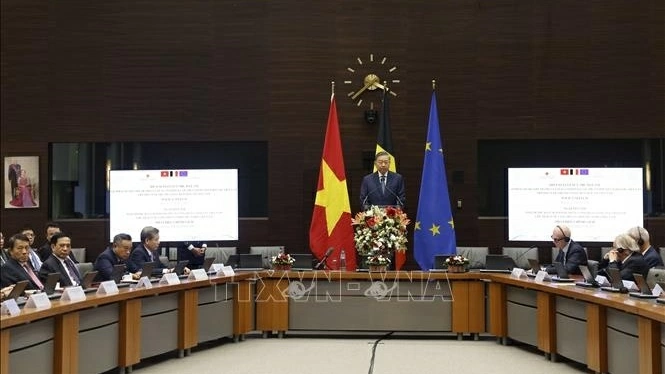
In multilateral diplomacy, Vietnam participated in, hosted, and contributed actively to international conferences such as the 150th Inter-Parliamentary Union Assembly (IPU-150), United Nations Conference on Trade and Development (UNCTAD), the 4th P4G Summit (Partnering for Green Growth and the Global Goals 2030), the 3rd UN Ocean Conference (UNOC 3), the 46th ASEAN Summit and more.
High-level political diplomacy played a decisive role in consolidating Vietnam’s broad diplomatic landscape, increasing political trust, enhancing the country’s international stature, protecting national interests, and opening new directions and fields for cooperation appropriate to each relationship.
Second is economic diplomacy. Foreign economic relations remained a highlight, proactively overcoming difficulties, opening new directions, and renewing the framework of economic cooperation. Strong progress was made in adjusting, expanding markets and attracting foreign investment (with total FDI reaching approximately 9 billion USD).
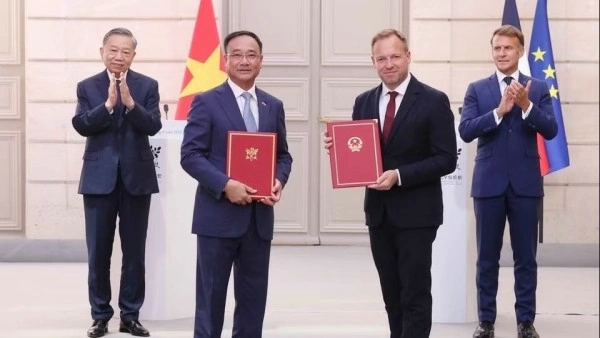
Vietnam engaged in flexible, proactive trade and tariff dialogues with the U.S., while diversifying markets, products, and supply chains with other partners in various regions. In each diplomatic activity, multiple agreements and memoranda of understanding were signed between ministries, localities, and businesses—laying a broad legal foundation for attracting investment and promoting deep, practical, and effective cooperation.
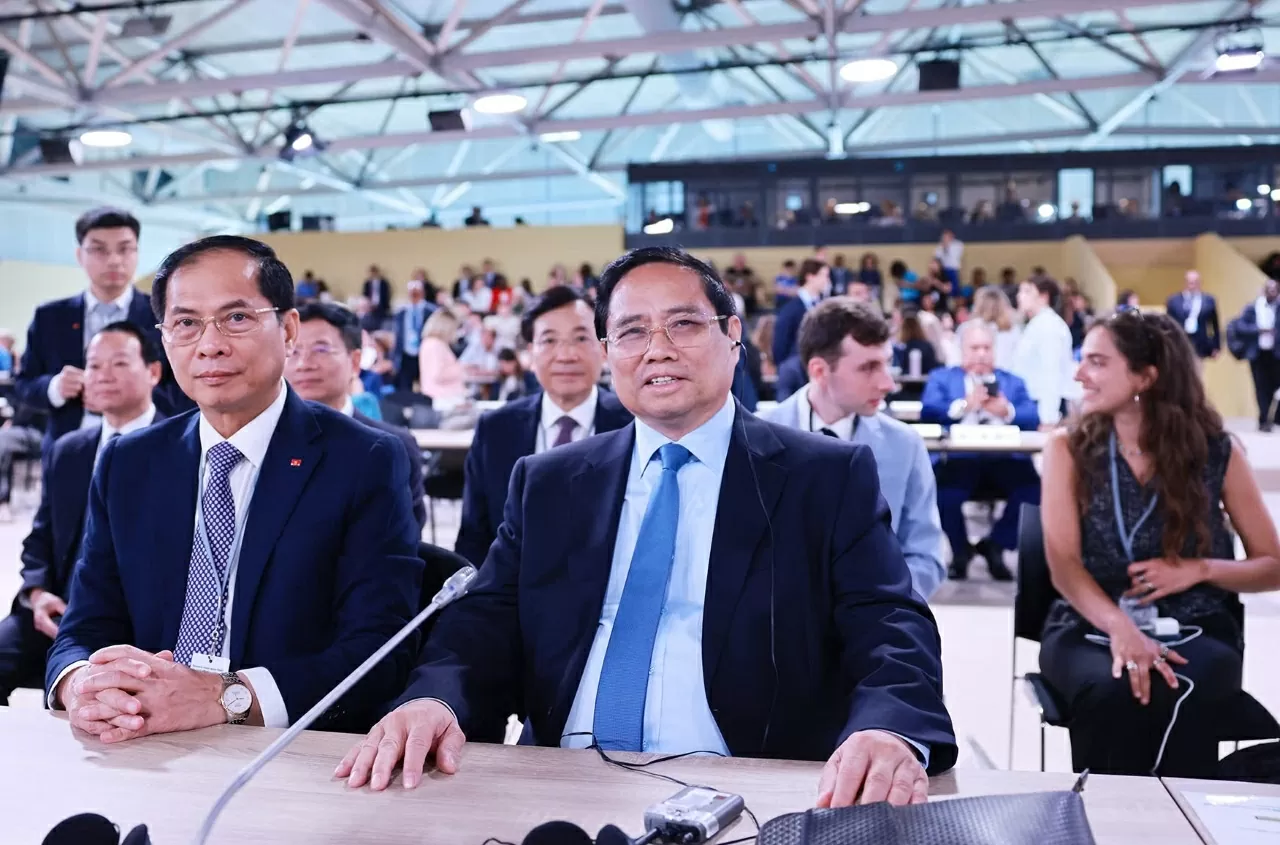 |
| Prime Minister Pham Minh Chinh attends the opening session of UNOC 3, joined by Deputy Prime Minister and Foreign Minister Bui Thanh Son and members of Vietnam’s high-level delegation. (Source: VNA) |
Diplomacy significantly contributed to Vietnam’s strong economic performance in the first half of 2025 across all three sectors. Many targets were met or exceeded compared to the same period in 2024. These achievements are paving the way for Vietnam to aim for 8% annual growth and maintain its position among the fastest-growing economies.
Third is defense and security diplomacy. Proactive implementation of plans in this domain brought substantive results. Vietnam’s participation in the 2025 Shangri-La Dialogue was highly regarded by the international community. The country also warmly welcomed foreign military delegations and organized parades to commemorate the 50th anniversary of national reunification. Vietnam also expanded its high-quality participation in UN peacekeeping missions and joined international rescue efforts in Myanmar.
Defense and security diplomacy has helped build trust, enhance the international reputation of the country and military, and foster favorable conditions for foreign relations and cooperation in other fields. This contributes to preserving peace and stability for national development and early, distant national defense.
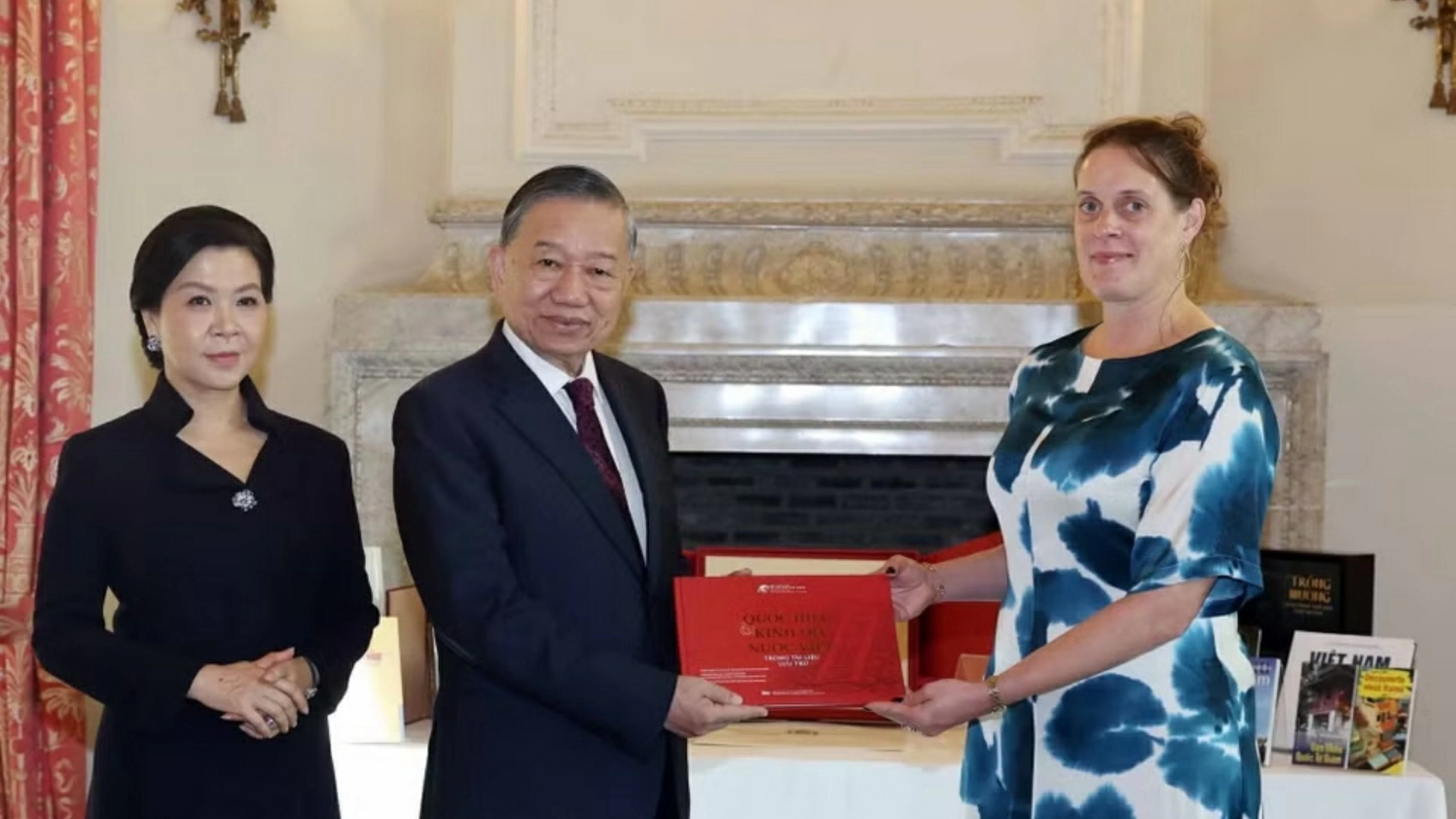
Fourth is expanding practical and effective cooperation. Vietnam further expanded and promoted effective cooperation in science and technology, digital transformation, high technology, transportation, logistics, culture, sports, tourism, and people-to-people exchanges. These efforts maximize the country's potential and strengths under a win-win approach. Such activities enriched the diplomacy landscape and created a favorable environment to strengthen bilateral relations, economic diplomacy, and people-to-people diplomacy.
Fifth is promoting external communication and strategic forecasting, which is both a task and a critical solution. External communications were conducted actively, flexibly, and creatively—updating international partners, organizations, and overseas Vietnamese communities on the latest policies of the Party and State.
Through this, Vietnam conveyed a strong message: a nation full of potential, dynamic, and rising in a new era. International media outreach has left a strong impression among international friends about Vietnam as a loyal, sincere partner and an attractive destination for cooperation and shared development.
Strategic forecasting was emphasized, with close monitoring of developments, keen identification of emerging issues and trends, accurate recognition of opportunities and challenges, and timely proposals for appropriate policy responses. These efforts helped maintain strategic initiative, handle sensitive, complex matters flexibly, and harmonize international relations.
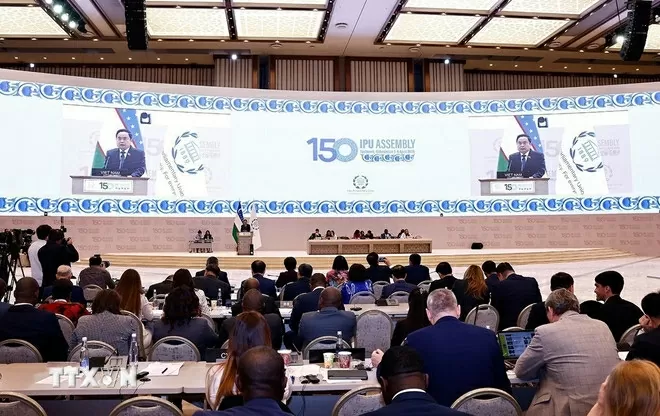 |
| National Assembly Chairman Tran Thanh Man speaks at the IPU-150 High-Level General Assembly. (Source: VNA) |
Preparing for the journey ahead
The first six months of 2025 marked a significant milestone, guided by the motto of acceleration and breakthrough, laying the groundwork for the dawn of a new era.
In foreign affairs, diplomacy has accompanied the nation with determination — firmly positioning Vietnam on the global stage, safeguarding a peaceful and stable environment, protecting national interests, mobilizing resources for development, and defending the country.
The key driver behind these achievements lies in the diplomatic sector’s profound implementation of the Party’s directions and viewpoints — notably Resolution No. 59-NQ/TW on international integration — which has ushered in a turning point and new momentum amid evolving circumstances.
It reflects a deep understanding of the Party’s strategic vision and innovative thinking on diplomacy and integration; it embodies the proactive, leading, and pivotal role of diplomacy, now acting with renewed vitality in a country and sector poised for advancement.
The Ministry has actively and proactively streamlined its organizational structure, while building a diplomatic corps under the guidance of Deputy Prime Minister and Minister of Foreign Affairs Bui Thanh Son — one that is absolutely loyal to national interests, trustworthy in character, firm in political will, strategic in vision, agile in reading the times, skillful in conduct, and highly professional in expertise.
These lessons are a valuable compass for the road ahead, helping elevate Vietnam’s diplomacy, and contributing to the nation’s momentum as it accelerates, breaks through, and enters confidently into a new era.