



Chairman of Delta E&C Group: Businesses must walk with 'steady feet' and 'clean shoes' to build national brands
WVR - According to Mr. Steve Bui, Chairman of Delta E&C Group and Chairman of the Vietnam-China Business Council, a national brand sometimes doesn't lie in skyscrapers but in the greasy notebooks and the integrity of workers. That is the most sustainable root for the world to trust in Vietnam.
Latest
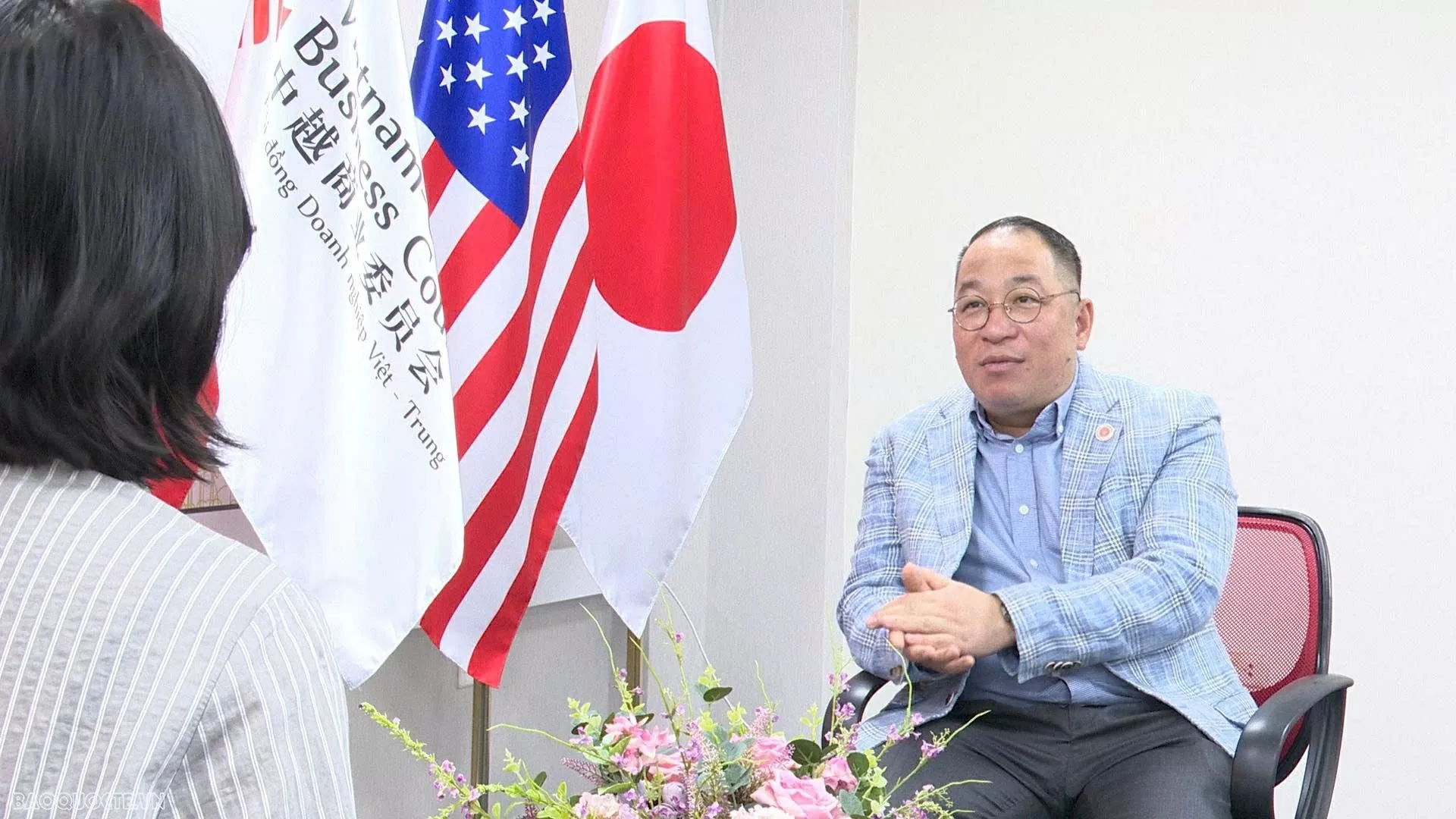 |
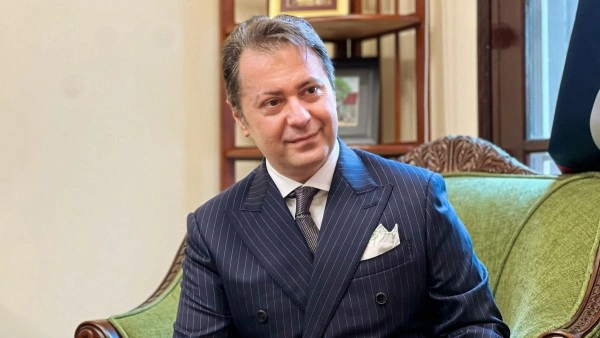
| Mr. Steve Bui, Chairman of Delta E&C Group, Chairman of the Vietnam-China Business Council, in an interview with the World and Vietnam Report. (Photo: Thanh Long) |
In the context of increasingly fierce geo-economic competition, a national brand is no longer just a state matter but is increasingly tied to the global outreach capabilities of enterprises.
Conversely, successful businesses in the international market become the most vivid 'brand ambassadors' for the national image.
The World and Vietnam Report had the opportunity to converse with Mr. Steve Bui, Chairman of Delta E&C Group, Chairman of the Vietnam-China Business Council. He is a businessman with many years of international experience and actively participates in and leads Vietnamese business networks in various countries. From the perspective of a business and association leader, he shared practical experiences on how Vietnamese businesses can contribute to building and elevating the national brand in the era of deep integration.
Mr. Steve Bui, in your opinion, in the current era of deep integration, where is the national brand of Vietnam being formed: From the state's macro policies or from the specific presence and success of Vietnamese businesses in the international market? According to you, what is the reasonable step with a higher chance of success?
In my view, a national brand is not about documents on the table but is shaped by the collective reputation of businesses in the market. I often say: Policies are just the "frame", while businesses are the "picture".
The state creates "passports" like bilateral and multilateral free trade agreements such as FTAs or legal corridors – these are the necessary conditions. But the sufficient and decisive conditions lie in the actions of businesses. When international customers hold a Vietnamese banana or tech product and nod in satisfaction, the national brand is truly formed. Conversely, if businesses engage in opportunistic practices, no matter how beautiful the policy "frame" is, it cannot salvage the country's reputation. Therefore, I assert that businesses are the core factor.
Regarding the reasonable steps for success, from practical experience, I believe businesses need to rethink in three aspects:
First is "understanding the rules", meaning they must standardize internationally from the start, selling what is needed rather than what they have.
Second is leveraging networks, using the overseas Vietnamese community and trade organizations as "extended arms" to understand culture and avoid risks. (And overseas Vietnamese businesses in the host country also play a crucial role in building the national brand as they are the quickest bridge to connect and understand the local people and businesses).
And finally is long-term thinking, abandoning the "quick trade" mentality. A faulty shipment that bravely takes responsibility and compensates is worth more than a thousand advertisements.
The state lays the carpet, but businesses must walk on it with steady feet and clean shoes. That is how we successfully bring Vietnam to the world.
Are there any Vietnamese national brands that have left a good impression on you, and what aspects caught your attention?
There are four names that I consider the most outstanding "ambassadors", helping to reposition Vietnam in the eyes of international friends in a unique way.
First is Viettel, with the mindset of a "soldier" in peacetime. I admire their venture into challenging markets that the West hesitates to enter, like Haiti or Mozambique. They don't just come to make money but to build national digital infrastructure, proving that Vietnamese people are capable of managing the most complex systems globally.
Second is Vinamilk. They are a strong testament that if one strictly adheres to international standards (like GlobalGAP, Organic) from the start, Vietnamese products can proudly enter foreign supermarkets at high prices without competing on low prices.
Next, in the agricultural sector, I am very impressed with Trung Nguyen Legend. The way Mr. Dang Le Nguyen Vu sells "coffee philosophy" instead of "raw coffee beans" is an extremely wise move. They turn the product into culture, making international customers respect the spiritual values of Vietnam.
And finally, representing intelligence is FPT. Their conquest of the highly demanding Japanese market and achieving billion-dollar revenue from overseas markets has completely shattered the stereotype that Vietnamese people are only good at manual labour. Moreover, their initiative to open training schools demonstrates a very sustainable development vision.
The real success of these businesses makes it much easier for bridge builders like me to convince foreign investors to trust the business environment in Vietnam.
From your experience directly managing Delta E&C in foreign markets, what factors make international partners change their perception of businesses and, more broadly, the capabilities of Vietnamese enterprises? Is there a situation that made you realize that just one project, one right approach, can change the perception of international partners?
This is a question that really "touches" the reality of my profession. After many years of working with partners from Japan, Republic of Korea, and now China, I have distilled a philosophy: "To sign a contract, we need capability; but to maintain a relationship, we need corporate character".
Previously, the international community often viewed us as cheap labour. But now, that perception is changing positively due to three factors: Honesty about capabilities (daring to admit what hasn't been done), a mindset of partnership (willing to sacrifice profit to keep commitments), and adherence to standards.
I would like to share a real story about "integrity" that completely changed the perception of a Japanese partner that I witnessed.
It was when I accompanied a delegation of experts from a Japanese corporation to evaluate a mold-making mechanical supplier in Vietnam. Instead of marveling at the modern CNC machines or the ISO certificates hanging on the wall, the Japanese team leader unexpectedly walked straight to the end of the line, where the defective product bin was located.
The atmosphere then became tense, and the entire factory management held their breath in worry. The expert picked up a defective component and asked the machine operator: "Why is this damaged?".
Contrary to the fear that the worker would stammer or make excuses, the young worker, with hands still greasy, picked up the component and answered clearly: "Sir, this scratch is due to the number 3 cutting tool being worn after 2,000 cycles. At 9:30 this morning, I heard an unusual vibration from the machine, so I stopped it, discarded this product, replaced the tool, and noted it in the operation log over there".
That answer made the Japanese expert smile and say to us: "Modern machines can be bought with money. But a worker who understands the machine, is honest about errors, and has the authority to stop the line when they see an issue like this is not found everywhere".
As a result, that factory not only received orders but also got higher technology transfers. This story is the clearest evidence that: A national brand sometimes doesn't lie in skyscrapers but in the greasy notebooks and the integrity of workers. That is the most sustainable root for the world to trust in Vietnam.
From the perspective of leading the Vietnam-China Business Council, how do you assess the role of these networks in connecting businesses, supporting each other, and contributing to building Vietnam's national image on the international stage?
This question is very pertinent. As someone deeply involved in Vietnam-China trade connection activities, I don't view associations and business organizations as mere "social clubs" for fun. I define them as the "soft infrastructure" of the economy, playing a vital role in four aspects:
First, associations act as "filters" and "shields". The international market is vast and full of risks. When a single business steps into the big sea, they are like walking in the fog. The membership label of an association is a guarantee of credibility, making partners wary if they intend to engage in dishonest dealings. And when disputes arise, the collective voice is a sufficient pressure to protect members' interests, rather than the "cry in the jar" of individuals.
Second, and most importantly, is the transition from "quick trade" to "professional commerce". We strive to guide members to abandon the small-scale mindset and strictly adhere to new regulations (like Orders 248, 249). When Vietnamese businesses operate methodically, pay taxes fully, and have beautiful packaging, we are "cleaning" the image of Vietnamese goods, from cheap and floating to high-quality products.
Third, this is where "tuition fees of the market" are shared. The costly lessons, expensive failures, or negotiation experiences with specific regions... are passed down by predecessors so that successors don't repeat the same mistakes. These practical knowledge cannot be taught in books.
Finally, entrepreneurs are the most effective "people's diplomats". Tight economic ties create a "glue" that helps stabilize political and social relations between the two countries.
In summary, our ancestors said "Trade with friends, sell with guilds". Internationally, a single swallow does not make a spring, but a flock flying in "formation", with discipline and a leader, will certainly create a much greater bargaining position for the Vietnam National Brand. That is the passion we always aim for.
In your opinion, what is the biggest weakness currently preventing the Vietnamese national brand from being fully recognized on the international stage: The internal capacity of businesses, the way stories are told to the world, or the coordination between the state and the private sector?
This question really hits the "Achilles' heel" of the issue. If forced to point out the core weakness that makes the Vietnamese brand fade despite exporting a lot, I would assert: It is not production capacity, but a severe lack of storytelling skills and value positioning mindset.
To put it figuratively: We are producing precious gems but selling them as if they were gravel.
I would like to analyze three main points:
First, we fall into the "good wine needs no bush" mindset. Vietnamese people do very well but speak poorly. We have the world's best rice (ST25), top-tier coffee, but internationally, Vietnam is only seen as a "raw material workshop". While Starbucks buys our coffee, tells a romantic story, and sells it for ten times more, we are still busy selling "components" and "specifications".
Second is the "misalignment" in coordination. The state promotes a macro image, while businesses run individually to worry about daily needs. The result is a fragmented image of Vietnam: sometimes as a cheap tourist destination, sometimes as a processing workshop. We lack a consistent message like Japan did with "Quality" or Switzerland with "Precision".
Finally, I don't believe "internal capacity" is the biggest weakness. In fact, we have made cars and semiconductors. The issue is that when we produce high-quality goods, the world still looks at us with skepticism: "Vietnamese goods? Probably cheap". This is a branding positioning error, not a product error.
My solution is we need a revolution: Shift from "Made in Vietnam" (processing) to "Make in Vietnam" (creation) and "Intelligent manufacturing in Vietnam". Sell culture with products – talk about farmers, about awakening energy instead of just caffeine content. And most importantly, we need a "conductor" for the state to set the stage, while businesses play a symphony together, instead of each playing their own tune as now.
Solving this "storytelling" issue, the value of Vietnamese goods can multiply without spending an extra drop of resources.
Finally, if you were to send a brief message to Vietnamese businesses that are and will be reaching out to the international market, what would you advise them to do and emphasize the most, so they can both build their corporate brand and contribute practically to the national brand of Vietnam?
If I were to send a brief, "practical" message to the Vietnamese business community that is and will be venturing into the big sea, I would encapsulate it in 3 specific actions and 1 crucial keyword:
3 immediate actions:
"Standardize" before "commercialize": Don't bring a "village pond" mindset to the big sea. Before selling a product, ensure it meets international standards (ISO, FDA, CE...) right from the raw material stage. "Quality passport" is more important than low prices.
Sell "value" instead of "resources": Don't just sell coffee beans, sell the culture of enjoyment. Don't just process software, sell complete solutions. Infuse your products with intellectual content and Vietnamese cultural stories. That's the only way to escape the middle-income trap.
Go together: Join associations and business networks. In foreign lands, information is gold, and community protection is armor. Don't go alone to be "broken" by non-tariff barriers.
And the most important factor is integrity. My heartfelt advice to you is: In international business, profits can come later, but reputation must go first. It's better to accept a loss on an order to keep a promise than to make a quick profit and lose a lifelong partner.
Always remember that when you step beyond the border, your name is not just your business name, but your middle name is "Vietnam".
The world is not short of cheap goods, but they are always "thirsty" for honest and responsible partners. Let customers feel the respect and pride of Vietnamese people when they hold your product. When your business becomes a "decent person" in the eyes of international friends, the Vietnam National Brand will naturally shine.
Wishing you strength and resilience, ringing the bell in foreign lands and making proud echoes!
Thank you very much!