




Integrating social responsibility into every national brand for sustainability: Scholar
WVR - According to Dr. Mac Quoc Anh, Member of the Central Committee of the Vietnam Fatherland Front, Party Secretary, Vice Chairman and General Secretary of the Hanoi Association of Small and Medium Enterprises (HANOISME), and Director of the Institute for Business Economics and Development, the small and medium enterprise community must enhance their sense of responsibility towards a national brand. Only then can that national brand be sustainable.
Latest
 |
| Dr. Mac Quoc Anh asserts that from cultural, historical, and national brand stories, businesses naturally integrate their brand, creating effective mutual support. (Photo: Thanh Long) |
How do you assess the readiness of Vietnamese businesses, especially small and medium enterprises, in participating in building a national brand today?
To form a brand of national stature, our businesses must engage in a process of production and business, as well as systematically and professionally develop marketing and communication strategies, with long-term investment.
A national brand is not merely a brand of a single enterprise; it must represent a nation to compete transparently and fairly with international brands operating in Vietnam. Similarly, a national brand should extend its reach to international markets.
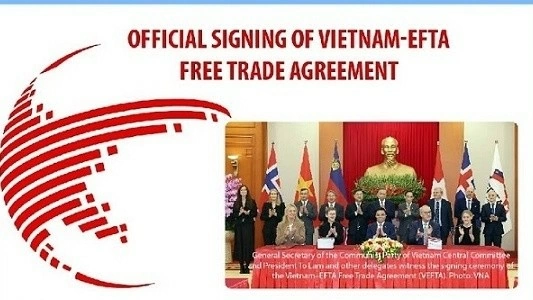
Vietnam currently has over 17 bilateral FTAs. We have become an important strategic partner of many developed countries such as the U.S., Japan, Singapore, Europe, Republic of Korea, India, South Africa... Clearly, a national brand must have international stature, not just be a brand of Vietnam.
In international economic integration, a national brand will help businesses establish a foothold, position, and status with partners and consumers. It also allows businesses to expand their scale and market share.
A well-invested, distinctive national brand with good business ethics will help businesses achieve high revenue, dominate the market, and increase access to technology and significant financial investments.
With the criteria of the National Brand Program such as product quality, innovation, and market leadership capacity, what is the feasible roadmap for small and medium enterprises to approach, meet, and break through?
Regarding market demand, it is evident that a branded enterprise must have plans and strategies to maintain that brand. A national brand does not last just one, two, or three years but accompanies businesses for five, ten years, possibly throughout a product's lifecycle or a company's development journey.
Moreover, for a national brand to lead, especially for small and medium enterprises, we must know how to invest, train internally, and have many promotions and after-sales service programs. We must also invest systematically, deeply, and broadly, not only in the domestic market but also internationally, for the national brand to have a wide-reaching impact.
Especially for the small and medium enterprise community, it is crucial to enhance the sense of responsibility towards a national brand. Responsibility here means responsibility to partners, consumers, society, and the community. Only then can the national brand be sustainable. Among the criteria of a national brand, besides building an image, social responsibility must be integrated into every national brand. The positioning of the national brand within each enterprise, especially small and medium ones, is also extremely important and necessary.
According to resolution number 68, the private enterprise sector will become the most important driver of the economy. The role of the national brand will become increasingly important for small and medium enterprises, as this sector accounts for 98.5%.
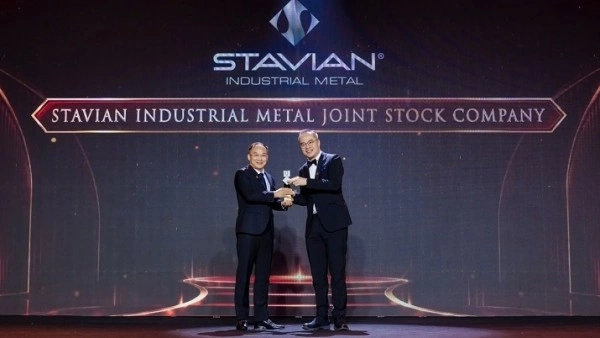
Therefore, we must enhance the quality of enterprises. To improve enterprise quality, there should be many awards, recognitions, and honors to position the brand of enterprises. Many enterprises, even if they have not achieved national brand status, always strive to earn such recognition.
Once achieved, enterprises must spread, lead, and share their experiences, lessons, and even failures with other businesses. This will lead to more national brands meeting market and customer needs.
Achieving a national brand means that the enterprise will have better creditworthiness, as they will be trusted by partners and customers. Business plans can access more capital, preferential loans, and reduce many other procedures.
Can you share an international model or experience that Vietnamese businesses can refer to in linking corporate brands with national brands to enhance their position on the global stage?
Currently, companies with a history of nearly 100 years or more in developed countries, such as Samsung in Republic of Korea, Toyota in Japan, are prime examples.
Their brands are always associated with national activities. High-level delegations visiting other countries often have these businesses accompany them. We highly appreciate this activity because they are linked to share, support, and accompany each other. Subsequently, they implement investment, trade, economic, and service activities. In each country, they have specific stories and products. Through cultural, exchange, sports, and artistic programs, businesses with strong brands are connected with the national brand, especially the cultural brand.
When combined in this way, the ability to spread and penetrate the market occurs more quickly. From cultural, historical, and national brand stories, businesses naturally integrate their brand, creating effective mutual support.
Through cultural, artistic, and historical elements, local investors and consumers better understand the humanity and origin of that nation, creating empathy and trust in the product. The process of building a national brand, as well as a corporate brand, is a long-term and continuous process.
Linking brands not only supports investment and trade but also spreads to political and cultural fields. These are exemplary models that many developing countries, including Vietnam, can learn from and apply.
In fact, Vietnam has implemented many similar models. In diplomatic activities, trade promotion, and investment connection, delegations often include businesses, especially from the private sector. Many local leaders, when attending international conferences and fairs, also bring along large, small, and medium enterprises to promote and attract investment for their regions.
It can be seen that within the national brand, there are local brands. Each locality has a business force, especially the private sector. In recent years, Vietnam has been gradually harmonizing these forces to promote trade, leverage the strengths and potential of the country and localities.
What is the role of the Hanoi Association of Small and Medium Enterprises in supporting businesses to raise product standards, comply with national criteria, and spread the value of the Vietnamese brand in the coming period, sir?
Currently, the standards that businesses need to meet are increasingly high and approaching international norms. Raising standards is not only to serve the domestic market but also to target the international market.
With the role of accompanying and bridging businesses with central and local agencies, the Association organizes training programs, coaching, and experience sharing, especially successful national brand-building models over the past 10 years.
Additionally, the Association collaborates and leverages programs from ministries and sectors, such as FTA training courses, product standard enhancement by the Ministry of Industry and Trade; national brand-building programs by the Trade Promotion Agency; and market information provided by the Ministry of Foreign Affairs. These are important channels helping small and medium enterprises access solutions and support policies.
Another task is to build value chain linkages, where strong businesses support those with limitations. Through these linkages, brand-building experience is shared and spread.
At the same time, the Association advises businesses on registering and protecting their brand, not only domestically but also in international markets, to avoid disputes and protect the Vietnamese brand when it has a standing both at home and abroad.
From an expert's perspective, what core values of Vietnam can become a national competitive foundation when promoting the Vietnamese brand on the international stage?
This is a very good question. For the Vietnamese brand, the first factor is culture, history, ethnicity, and the Vietnamese people. These are competitive factors on the international stage. Vietnam, with a population of 100 million, is a reliable partner on the international stage.
To reach international markets in the new phase, these values need to be identified as the foundation and core competitive advantage.
Secondly, the quality of Vietnamese products and services must be prioritized. Combining traditional commerce with e-commerce will help expand scale and spread the brand more effectively.
Thirdly, the ability to participate in the global supply chain. Currently, the rate of enterprises participating in the supply chain in Indonesia, Malaysia, and Thailand is over 46%, while Vietnam is just over 30%. Increasing this rate, especially in the early stages of the chain and supporting industries, will contribute to enhancing business sustainability.
Fourthly, the application of ESG standards. Early implementation of ESG will enhance the reputation and competitive capacity of the national and Vietnamese business brands in the long term.
Finally, promoting dual transformation, including green and digital transformation. Greening products and production processes will facilitate easier access to developed markets. Simultaneously, digital transformation in management, production, sales, and payment will expand scale, increase revenue, and enhance brand value.
Thank you very much!