



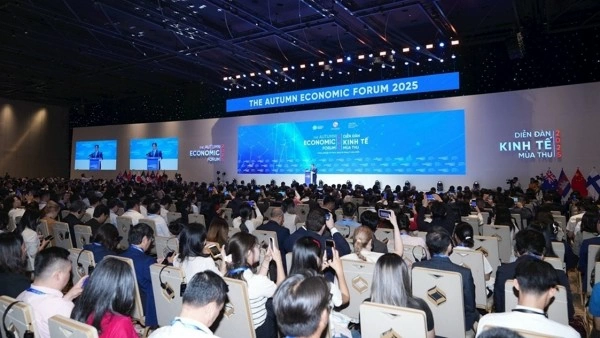



DHL Global Connectedness Report 2026: Globalization holds firm at a record level, while US and China continue to decouple
Globalization remains at a historically high level – despite escalating geopolitical tensions, rising US tariffs, and unprecedented uncertainty about future trade policies. This is one of the key findings of the DHL Global Connectedness Report 2026, released today by DHL and New York University’s Stern School of Business.
Latest
Based on more than 9 million data points tracking international flows of trade, capital, information, and people, the report offers the most comprehensive view of globalization available.
Globalization has held firm since 2022
The report tracks globalization on a scale from 0% (no cross-border flows) to 100% (borders and distance have no impact). The world’s level of globalization was 25% in 2025, in line with the record high set in 2022.
“Globalization is holding its ground – and that alone speaks volumes about its value,” said John Pearson, CEO of DHL Express. “From poverty to climate change, the world’s biggest challenges can only be solved through global thinking.
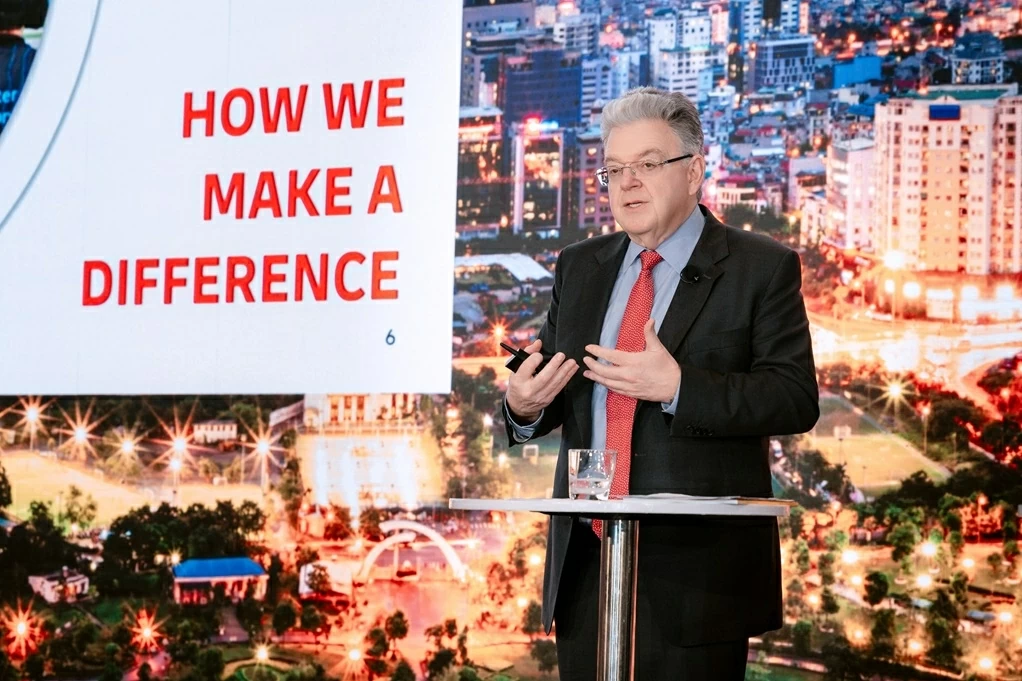 |
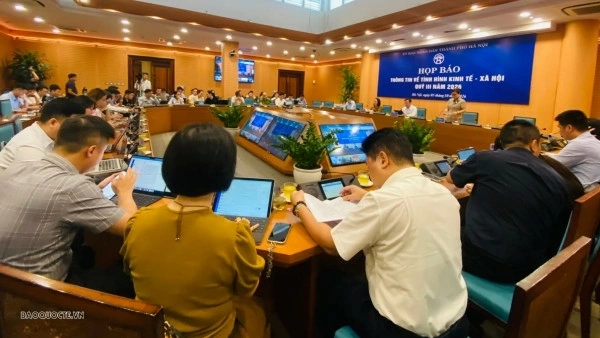
| “Globalization is holding its ground – and that alone speaks volumes about its value,” said John Pearson, CEO of DHL Express. (Photo: Van Chi) |
The DHL Global Connectedness Report shows that countries and companies are not retreating behind national borders. That is good news. DHL strengthens global ties by connecting markets, businesses, and people so they can adapt, diversify, and unlock new opportunities – even in uncertain times.”
At the same time, today’s globalization level of 25% underlines how far the world is from being fully globalized. In many areas, international flows could expand further in the absence of policy constraints.
AI boom and race to beat tariff hikes fueled trade in 2025
Global trade grew faster in 2025 than in any year since 2017, excluding the volatile Covid-19 period. US importers accelerated shipments early in the year ahead of tariff increases. US imports later dropped below prior-year levels, but rising Chinese exports to non - US markets helped sustain global trade volumes.
Trade in AI-related goods surged as countries and companies raced to build AI infrastructure. AI-related products drove 42% of goods trade growth in the first three quarters of 2025, according to WTO figures.
Trade outlook: Growth continues, even with higher tariffs
Looking ahead, recent US tariff increases are expected to modestly slow trade growth in 2026 – but not stop it. Global goods trade is projected to expand by an average of 2.6% per year through 2029, in line with the past decade.
One reason trade can keep growing despite US tariff hikes is that most trade does not involve the U.S. In 2025, 13% of imports went to the US, and 9% of exports came from the US. In addition, many countries are pursuing new trade agreements to secure access to alternative markets.
Information flows face barriers, people flows reach new highs
Beyond trade, the report finds diverging trends across other international flows: There is no broad shift of investment from foreign to domestic markets. Multinational firms still earn near-record shares of sales abroad. While announced greenfield foreign direct investment (FDI) fell in 2025, overall FDI flows rose, and cross-border M&A activity remained resilient.
Over the past two decades, information flows delivered the largest globalization gains. Since 2021, growth has slowed and become more volatile. Geopolitical tensions and restrictions on data flows may now be materially limiting the globalization of information.
After collapsing during the Covid-19 pandemic, people flows have fully recovered. The latest data show international travel, student mobility, and migration all at record highs.
Singapore leads country ranking, Europe tops regions
In the report’s country ranking, Singapore again ranks as the world’s most globalized nation, followed by Luxembourg and the Netherlands.
Europe is the most globalized region, followed by North America and the Middle East & North Africa. The United Kingdom has the most broadly distributed flows worldwide. The United Arab Emirates recorded the largest increase in globalization since 2001.
US - China tensions affect only small share of global flows
The report also finds that ties between the world’s two largest economies – US and China – continue to weaken.
However, these ties are surprisingly small in a global perspective. For example, trade between US and China accounted for 3.6% of world trade at its peak in 2015, before falling to 2.7% in 2024 and to only 2.0% during the first three quarters of 2025.
US – China share of international business investment is even smaller – less than 1% in 2025.
No global split into rival blocs
Even as US and China decouple, most countries continue to engage with their longstanding partners. Over the past decade, only 4–6% of global goods trade, greenfield FDI, and cross-border M&A have shifted away from geopolitical rivals.
Of these flows, most have not moved to close allies but to countries with flexible geopolitical positions, such as India and Vietnam. Overall, the world economy remains far from a broad split into rival blocs.
“The politics and policy surrounding globalization are much more volatile than the actual flows between countries,” said Prof. Steven A. Altman, Director of the DHL Initiative on Globalization at NYU Stern’s Center for the Future of Management.
“Global trade patterns changed more in 2025 than they do in a typical year, but less than they did during other recent disruptions such as the early stages of the war in Ukraine. Sound decision-making requires a calibrated view of how much global business ties are really changing. The risks to globalization are real, but so is the resilience of global flows.”
 |
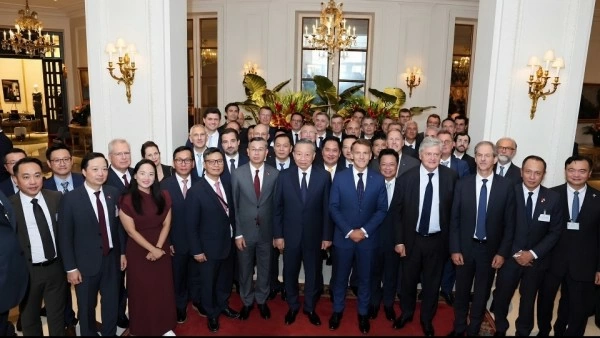
| Published regularly since 2011, the DHL Global Connectedness Report provides reliable insights on globalization by analyzing 14 types of international trade, capital, information, and people flows. (Photo: Van Chi) |
Traded goods and greenfield FDI reach record distances
Geopolitical tensions and supply chain concerns have led many observers to expect a shift from globalization to regionalization. In 2025, however, traded goods traveled the longest average distance on record (5,010 kilometers).
The average distance for greenfield FDI projects also rose to a new high (6,250 kilometers). Most other international flows are stretching over longer distances as well, and longer distances indicate less regionalization. Predictions of a broad move from global to regional business have not materialized – at least not yet.
Published regularly since 2011, the DHL Global Connectedness Report provides reliable insights on globalization by analyzing 14 types of international trade, capital, information, and people flows.
The 2026 edition is based on more than 9 million data points. It ranks the connectedness of 180 countries, accounting for 99.6 percent of global gross domestic product and 99.0 percent of the world’s population. A set of 180 one-page country profiles summarizes each country’s pattern of globalization.
The report was commissioned by DHL and authored by Steven A. Altman and Caroline R. Bastian of New York University Stern School of Business.