






Behind UN Peacekeeping Missions: The challenging work of logistics officers
WVR - In all military operations, logistics are often likened to the “lifeblood” that ensures the smooth operation of the entire machinery. For United Nations Peacekeeping Missions, this role becomes even more crucial as peacekeepers operate in conflict zones with complex security, isolated locations, and extremely limited infrastructure conditions.
Latest
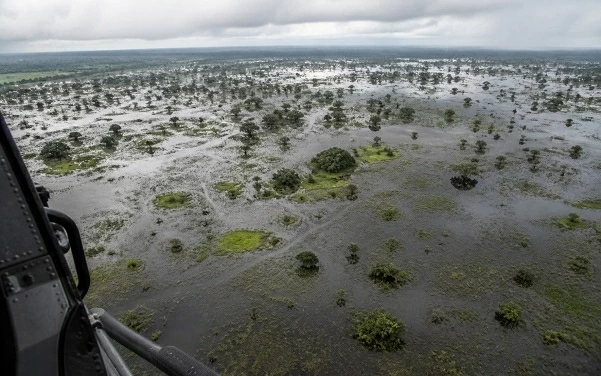 |
| Deserts turn into waterlogged swamps during the rainy season in Abyei. |
Therefore, ensuring logistics is considered a decisive factor in maintaining forces, deploying missions, and protecting the lives of soldiers and civilians. Without effective logistics, all military, humanitarian, or civil support operations cannot be carried out.
As the world witnesses increasing conflicts, political crises, climate change, and geopolitical competition, logistics in Peacekeeping Missions face increasingly complex challenges.
Harsh geography and limited infrastructure
Most United Nations Peacekeeping Missions are deployed in areas with prolonged conflicts, where infrastructure is destroyed or undeveloped, and transportation is completely isolated. This poses significant obstacles to logistics transportation and supply.
In many African or Middle Eastern countries – where missions like UNISFA, UNMISS, or MINUSCA are based – road systems, bridges, warehouses, and airports often do not meet military transport requirements.
Transporting food, fuel, technical equipment, and medical supplies is thus challenging, with prolonged transportation times and increased costs. Rugged terrains, deserts, or jungles also limit the mobility of support forces and logistics transport vehicles.
At the UNISFA Mission in Abyei, where the terrain is mainly barren deserts in the dry season and waterlogged swamps in the rainy season, ensuring transportation for the supply chain is a complex problem. Especially during the rainy season, the entire area is completely cut off by waterlogged swamps, making road transport impossible.
During most of the rainy season, maintaining the supply chain relies entirely on air transport, which faces numerous limitations due to weather conditions, equipment, infrastructure, and especially security risks from frequently present armed groups.
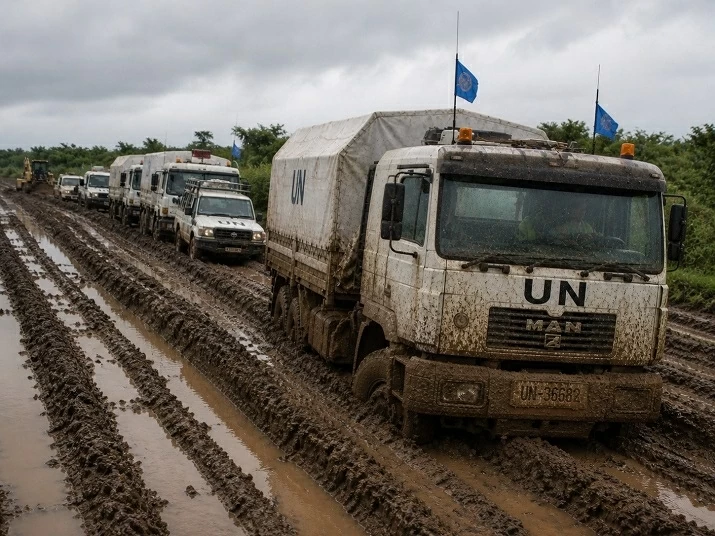 |
| Road transportation is extremely difficult due to underdeveloped infrastructure. |
Complex security environment and high risk
Unlike logistics for regular military operations, logistics at peacekeeping missions must often operate in unstable security environments.
Logistics transport routes can be threatened by armed groups, robbery attacks, ethnic cleansing, or local violence, posing significant risks even in daily conditions. The presence of rebels setting up checkpoints, robbing, and attacking logistics convoys is a constant threat.
At the UNISFA Mission, the geopolitical security situation is further complicated due to its location in the disputed area between Sudan and South Sudan, as well as being a disputed territory among various nomadic tribes, leading to frequent widespread conflicts and ethnic cleansing among armed groups, putting the lives of civilians and peacekeepers at high risk.
Therefore, in most cases, patrols, material transport, or humanitarian aid, logistics must be organized under armed protection and escort, increasing the complexity of logistics coordination.
Additionally, safety hazards such as unexploded ordnance and unidentified explosive materials on unprocessed routes can directly affect transportation processes, requiring close coordination with relevant agencies to conduct safety checks and clearance before each transport route.
Beyond risks on transport routes, in the current war conditions, logistics facilities also face constant threats of long-range weapon and drone attacks, causing material losses, supply chain disruptions, and even endangering the lives of on-site forces.
Therefore, planning, contingency planning, and ensuring the safety of logistics depots and support forces must be thoroughly and effectively calculated, where ensuring security and safety for peacekeeping forces and civilians is always a prerequisite.
In reality, at the UNISFA Mission, in 2025, it was necessary to forcibly evacuate and close three logistics facilities in Kadugli, Tiswin, and Abu Qussa due to constant security risks threatening the lives of peacekeepers in these areas. The mission accepted the trade-off of the logistics supply chain to ensure the safety of the forces.
One of the biggest challenges for logistics at peacekeeping missions is maintaining a stable supply chain. Peacekeeping forces often rely on long transport routes from various countries to supply food, equipment, fuel, and technical materials.
However, this supply chain is easily disrupted by factors such as armed conflict, customs procedures, natural disasters, or political instability in the host country. Moreover, many areas lack stable communication systems, hindering transportation coordination, warehouse management, and coordination between units in the mission.
When supplies are delayed, isolated units in the field (logistics facilities, patrol bases, and security assurance) may face shortages of essential materials such as fuel, medicine, or communication equipment.
In some cases, transporting equipment and necessities must pass through multiple intermediary countries, prolonging transportation for weeks or months, reducing the mobility and timeliness of logistics assurance.
Therefore, logistics planning must be comprehensive and encompass all influencing factors. In this, having accurate information, regular coordination, and achieving consensus among countries and conflicting factions is a key step in logistics planning. Additionally, the geographical features and climate conditions of each territory and operational area in each country must be meticulously considered.
Limitations in financial resources and equipment
Another major difficulty is the shortage of financial resources for peacekeeping activities. In recent years, the United Nations has faced limited budgets, with continuous cuts and tightened spending while mission requirements increase due to security risks and modern warfare conditions.
The United Nations Secretary-General has warned of a “significant gap between assigned tasks and available resources,” forcing many missions to operate with insufficient equipment and necessary means, including personnel.
Financial difficulties have compelled the United Nations to reduce forces and resources at many missions, directly affecting logistics assurance and the maintenance of peacekeeping forces.
At the UNISFA Mission, in 2025, due to general spending tightening policies, the mission had to cut more than 30% of existing personnel and two protection and support units.
Conversely, logistics assurance requirements are increasingly rising due to security risks necessitating the mandatory relocation of three logistics bases and adjusting the entire force deployment plan and assurance work to adapt to the organizational structure of the force.
Diversity among nations and differences in logistics systems
A unique characteristic of peacekeeping missions is the participation of forces from dozens of different countries. Each country has its logistics organization system, equipment standards, and management methods.
Meanwhile, most of the equipment and means of peacekeeping forces depend on troop-contributing countries. This leads to inconsistencies in technical standards, weapon characteristics, equipment, and materials.
Additionally, each country has differences in culture, food types, military gear, etc. These differences also pose significant challenges in coordinating management, logistics assurance, resource sharing, or standardizing maintenance, supply, and transport processes.
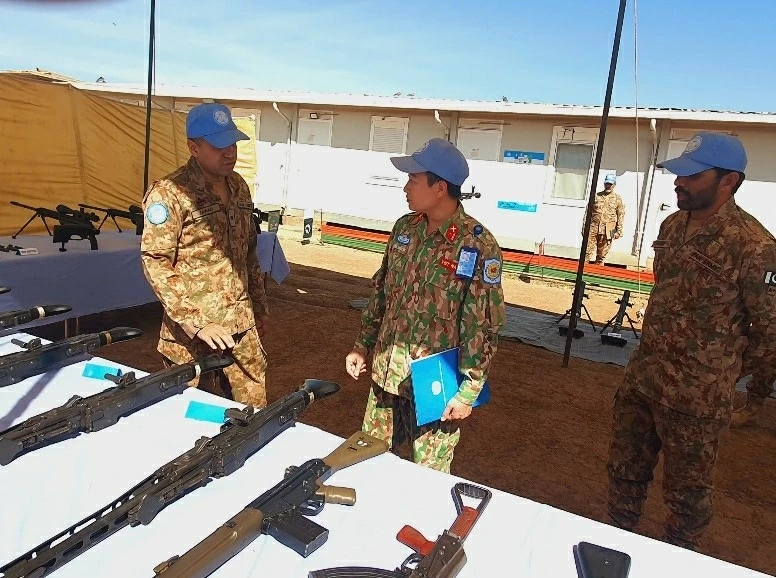 |
| Inspecting weapons and equipment and logistics assurance planning at units. |
The annual troop rotation of contributing countries also adversely affects logistics assurance. Although it is a regular task, the continuous logistics volume with large amounts of personnel and equipment transported across many countries.
For the UNISFA Mission, troop rotation also involves rearranging the entire mission force between two seasons: rainy and dry, to adapt to the actual climate conditions of the area.
These factors place increasing demands on preparation, inter-agency coordination mechanisms, and the proactivity of each functional unit within the entire mission system, where logistics assurance plays a core, essential role.
Therefore, besides thoroughly researching the mission's standard procedures, good preparation and seamless coordination, systematization to achieve consensus on operational standards, and logistics material management processes among multinational units are necessary.
This requires close coordination from the United Nations logistics agency, specifically the Missions Logistics Division. Logistics planning and strict inspection of weapons and equipment status are regular tasks, requiring meticulousness and consistency, especially before troop movements to avoid omissions affecting overall operations.
In some special cases, mission logistics not only measure organizational and operational capacity in complex field and security conditions but also demand high-speed, flexible responses to escalating situations directly affecting the safety of the force.
Due to the nature of operations in conflict-prone areas, limited infrastructure, poor communication systems, and unpredictable security situations, any delays or inconsistencies in logistics assurance can directly affect mission effectiveness and soldier safety.
Timely assurance for units in conflict zones, sudden patrol missions, urgent humanitarian support, or rapid response force deployment in civilian protection requires flexibility, agility in coordination, and logistics assurance organization.
Building the image of Vietnamese logistics officers
In the context of increasingly complex and challenging peacekeeping mission environments, logistics assurance continues to play a key role, contributing to the effective implementation of the United Nations mission.
In Abyei, Vietnamese logistics officers not only strive to uphold the spirit of responsibility and complete professional tasks but also actively promote humanitarian values and high international spirit, truly becoming a bridge between peacekeeping forces and the local community.
Amidst numerous difficulties, the courage, resilience, flexibility, and creativity of the Vietnamese blue beret forces are increasingly affirmed, receiving recognition and high appreciation from international friends.
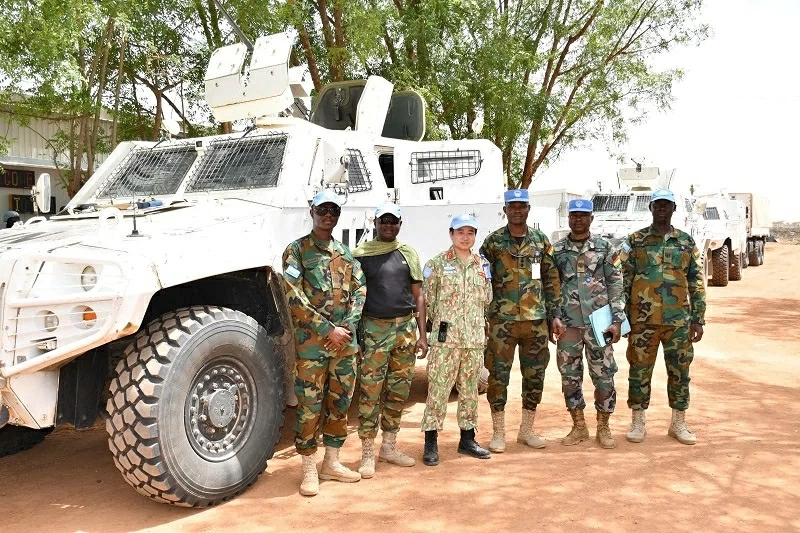 |
| Vietnamese logistics officers with international friends at the UNISFA Mission. |
At the Missions, the image of Vietnamese military personnel is clearly demonstrated with exemplary qualities: steadfast, responsible, professional, and always ready to dedicate themselves for peace.
These efforts have contributed to spreading the image of a dynamic, actively integrating, and responsible Vietnam in international peacekeeping activities.
(*) The first officer from the General Department of Logistics – Technical/Ministry of Defense deployed to the United Nations Peacekeeping Mission as an individual officer in July 2025; currently serving as Acting Head of the Mission's Logistics Office, Team Leader of the Task Force at the UNISFA Mission.


