


Strengthening Vietnam–Philippines Strategic Partnership for robust and effective development in the new phase: Deputy FM Nguyen Manh Cuong
WVR - On the occasion of General Secretary and President To Lam and his spouse's state visit to the Philippines (May 31 - June 1), Member of the Party Central Committee, Permanent Deputy Secretary of the Party Committee of the Ministry, and Deputy Minister of Foreign Affairs Nguyen Manh Cuong shared with the press about the significance and key focuses of the visit.
Latest
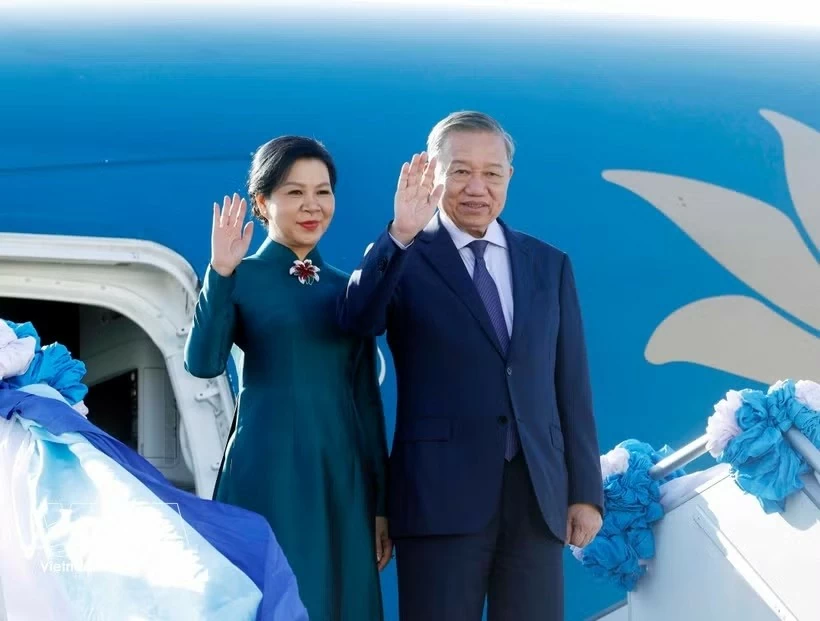 |
| General Secretary and President To Lam and his spouse will pay a state visit to the Philippines from May 31 to June 1. (Source: VNA) |
Could you evaluate the notable developments in the Vietnam-Philippines Strategic Partnership in recent times?
Vietnam and the Philippines are two Southeast Asian nations with a strong traditional friendship, sharing many strategic interests in maintaining peace, stability, cooperation, and development in the region. Since establishing diplomatic relations in 1976, the relationship between the two countries has been continuously strengthened and developed across various fields, becoming deeper and more substantive.
The establishment of the Strategic Partnership in 2015 marked a significant milestone, laying the foundation for comprehensive cooperation in the new phase. In recent years, the Vietnam-Philippines relationship has maintained positive momentum, notably with increased political trust, expanded economic cooperation, and enhanced coordination on regional and international issues.
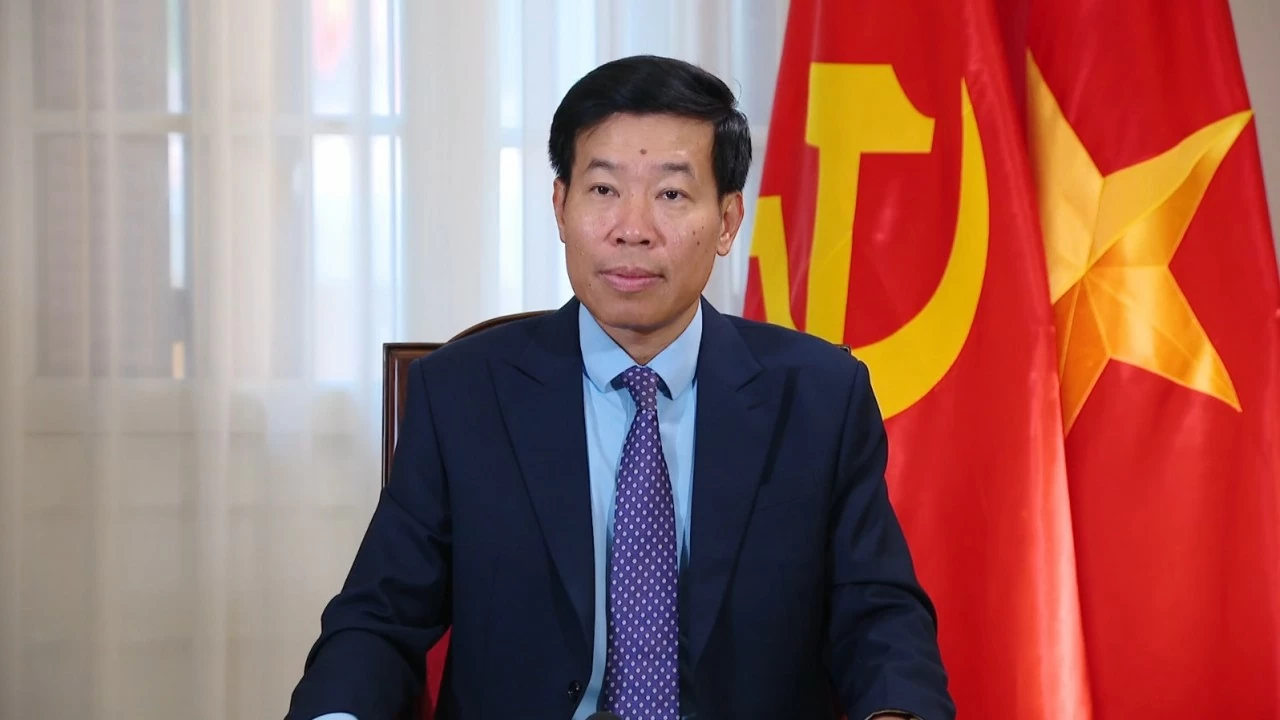 |
| Nguyen Manh Cuong, Member of the Party Central Committee, Permanent Deputy Secretary of the Party Committee of the Ministry, and Deputy Minister of Foreign Affairs. (Photo: Bao Chi) |
Political trust between the two countries has been increasingly consolidated. Both sides regularly maintain high-level visits, contacts, and important bilateral cooperation mechanisms such as the Joint Commission on Bilateral Cooperation, the Defense Policy Dialogue, and the Joint Working Group on Maritime and Oceanic Issues. These mechanisms help the two countries enhance strategic exchanges, share perspectives, and effectively address issues of mutual concern.
Vietnam and the Philippines also closely coordinate at regional and international forums, especially within ASEAN, the United Nations, and other multilateral cooperation mechanisms. Both countries value ASEAN's central role, uphold multilateralism, international law, and aim to build a united, resilient, and sustainably developing Southeast Asia.
Maritime and ocean cooperation continues to be a highlight in the bilateral relationship. Vietnam and the Philippines, both maritime nations, have vested interests in maintaining peace, stability, security, safety, and freedom of navigation in the East Sea. The two countries have promoted dialogue, cooperation, trust-building, and coordination based on respect for international law, particularly the United Nations Convention on the Law of the Sea 1982.
Additionally, defense and security cooperation between the two countries is becoming more substantive. Both sides are enhancing delegation exchanges, training cooperation, experience sharing, and coordination in areas such as maritime security, combating transnational crime, search and rescue, disaster prevention, and responding to non-traditional security challenges. This contributes to strengthening strategic trust and positively impacts regional stability.
Economically, trade and investment relations between the two countries are making significant progress. The Philippines is currently one of Vietnam's important markets within ASEAN, especially in agriculture and food sectors. Vietnam is a key rice supplier to the Philippines, contributing to ensuring food security for the latter while providing a stable outlet for Vietnamese agricultural products.
However, compared to the excellent political relations and the potential of the two economies, economic cooperation between the two countries still has much room for stronger development. Both sides have significant potential to expand cooperation in trade, logistics, high-tech agriculture, digital economy, renewable energy, fisheries, and maritime economy.
Furthermore, people-to-people exchanges, educational, cultural, and tourism cooperation between the two countries are also expanding. These activities contribute to enhancing mutual understanding between the peoples of the two countries, thereby creating a positive social foundation for sustainable and long-term bilateral relations.
In your opinion, how will General Secretary and President To Lam's state visit to the Philippines create new momentum in strengthening political trust and making economic cooperation a more important pillar in the bilateral relationship?
The state visit to the Philippines by General Secretary and President To Lam holds special significance. This is the first visit by our Party's General Secretary to the Philippines, taking place as the two countries are approaching the 50th anniversary of diplomatic relations, and as the Philippines assumes the role of ASEAN Chair in 2026.
The visit demonstrates Vietnam's high regard for the friendship and cooperation with the Philippines, as well as for ASEAN and the Southeast Asian region. It is also an opportunity for high-level leaders of both countries to engage in extensive discussions on major orientations to strengthen the Vietnam-Philippines Strategic Partnership for robust, substantive, and effective development in the new phase.
A key expectation of the visit is to continue consolidating and deepening political trust between the two countries. Amidst complex regional and global developments, enhancing strategic exchanges, maintaining high-level contacts, and coordinating positions are of great importance. This is the foundation for the two countries to continue expanding cooperation across all fields.
Notably, the visit is expected to create new momentum to make economic cooperation a more important pillar in the bilateral relationship. There is still much room for economic cooperation to grow, especially in areas such as trade, investment, logistics, high-tech agriculture, renewable energy, digital transformation, and maritime economy.
In agriculture and food security, Vietnam aims to remain a reliable partner for the Philippines while expanding cooperation into areas such as agricultural processing, fisheries, high-tech applications, and climate change adaptation. These are areas of practical significance for sustainable development and the livelihoods of the people in both countries.
Maritime and ocean cooperation continues to be a very important area. Both countries share common interests in maintaining peace, stability, security, safety, and freedom of navigation in the East Sea based on international law, particularly UNCLOS 1982.
Additionally, both sides expect to expand defense and security cooperation, especially in combating transnational crime, maritime security, search and rescue, disaster response, and addressing non-traditional security challenges. These are areas of direct significance to the security and development of each country.
Another important aspect is enhancing coordination between the two countries within ASEAN and multilateral mechanisms. As the Philippines holds the ASEAN Chair in 2026, the two countries are expected to closely coordinate to strengthen ASEAN unity, promote ASEAN's central role, and foster an open, inclusive, and rules-based regional structure.
The visit will also contribute to promoting people-to-people exchanges, educational, cultural, tourism cooperation, and local connectivity. This is an important social foundation for the sustainable development of Vietnam-Philippines relations in the long term.
It can be affirmed that, with a strong foundation of friendship, increasing political trust, and many open cooperation potentials, this visit will create new momentum, further advancing the Vietnam-Philippines relationship, contributing positively to peace, stability, and development in the region.