


80 Years of Vietnamese Diplomacy: Learning from the Past, Aspiring to the Future, strengthening resolve for a new era
WVR - The scientific symposium “Diplomacy in the Ho Chi Minh Era: 80 Years of Dedicated Service to the Nation” brought together veterans of the diplomatic front to reflect on the glorious traditions of the sector, rekindle pride in its journey, and confidently stride into a new era of prosperous national development.
Latest
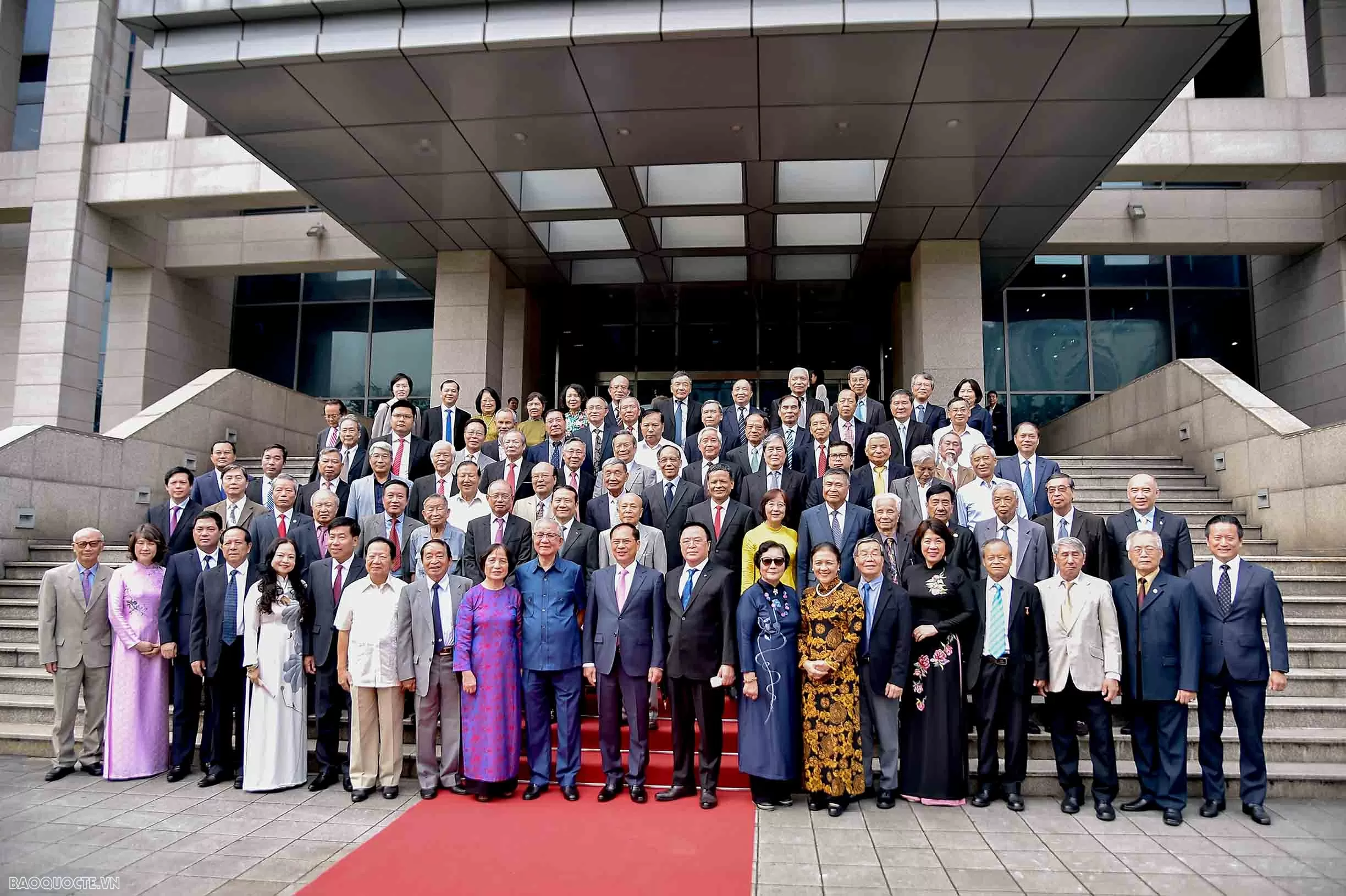 |
| Deputy Prime Minister, Minister of Foreign Affairs Bui Thanh Son, along with other participants, attending the conference on July 28, 2025. (Photo: Quang Hoa) |
Though summer still lingers, the hearts of every diplomat are already stirred toward the historic autumn days of August, marking 80 years of the formation and development of Vietnamese diplomacy (August 28, 1945 – August 28, 2025). Eight decades have been a journey etched with silent contributions, inspiring continued service for national interests.
The symposium “Diplomacy in the Ho Chi Minh Era: 80 Years of Dedicated Service to the Nation” on July 28, with the participation and keynote address of Deputy Prime Minister, Minister of Foreign Affairs Bui Thanh Son, along with more than 400 delegates and nearly 20 academic papers, became a profound scholarly forum that spread the spirit, will, and aspiration to contribute as the sector embraces its new mission in a new era.
Reliving a Glorious Journey
At the event, the Deputy Prime Minister, Foreign Minister emotionally emphasized the message of “dedicated service to the nation” throughout the 80-year journey of Vietnamese diplomacy, recalling the glorious milestones that the entire sector has contributed to the country’s overall achievements.
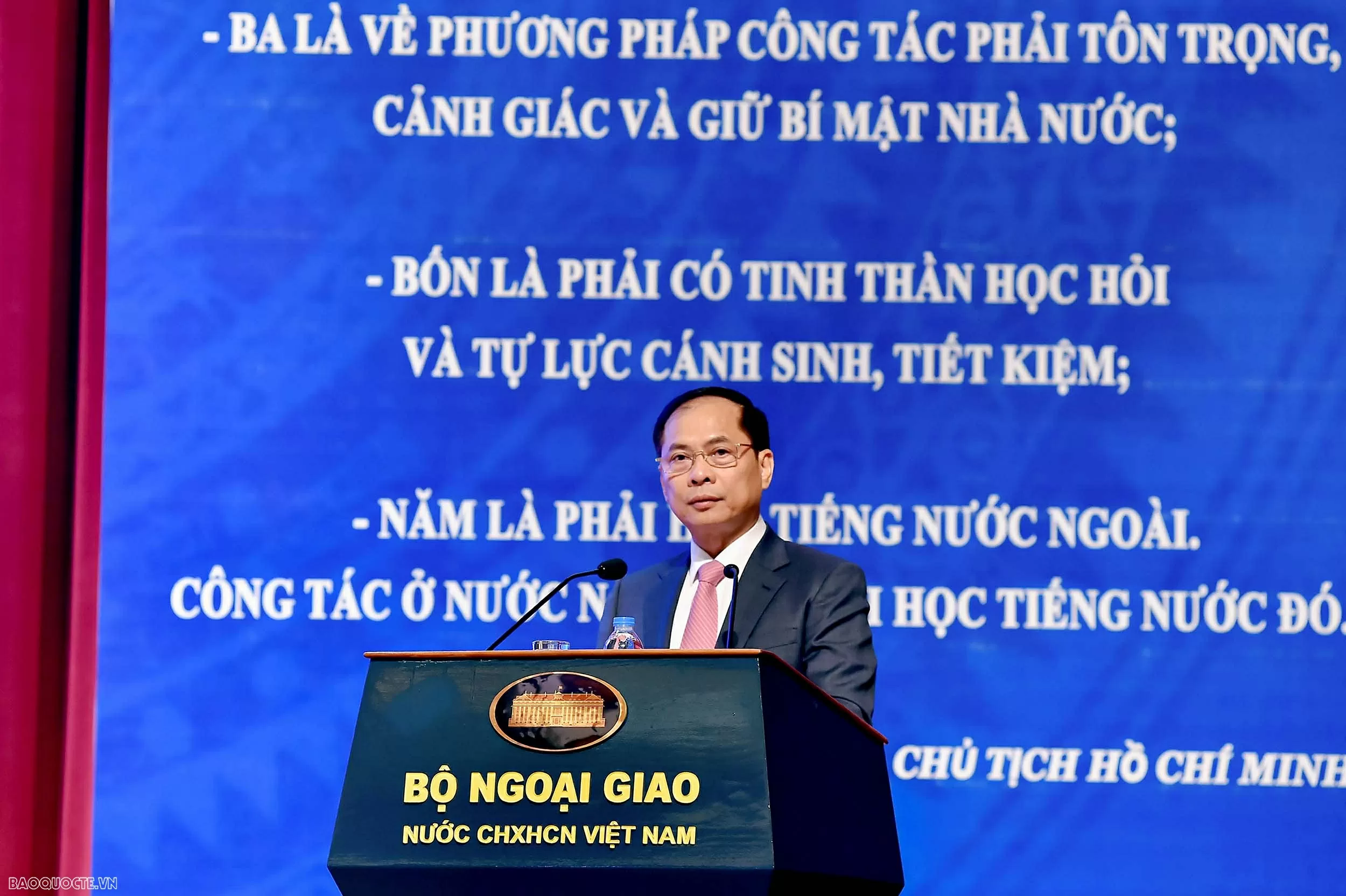 |
| Deputy Prime Minister, Minister of Foreign Affairs Bui Thanh Son deliveres keynote speech at the event. (Photo: Quang Hoa) |
First, Vietnamese diplomacy made valuable contributions to the struggle for national independence and reunification. During the resistance for liberation and reunification, alongside political and military fronts, diplomacy emerged as a critical, strategic force, turning battlefield victories into negotiating-table triumphs and ultimately ending wars.
Second, Vietnamese diplomacy has consistently affirmed its pioneering role in maintaining a peaceful and stable environment, attracting external resources and favorable conditions to serve the two strategic tasks of nation-building and national defense.
Third, diplomacy has played an important role in elevating the nation’s stature—transforming Vietnam from being absent on the world political map into a country with growing influence in global politics, the world economy and human civilization. After eight decades, from being “alone and isolated”, Vietnam has never before possessed such standing, potential, and international prestige as it does today.
Fourth, building the sector and cultivating a diplomatic corps has achieved remarkable progress. From merely about 20 staff members at the beginning, the Ministry of Foreign Affairs today boasts more than 2,000 personnel both at home and abroad, with 98 overseas missions, continuing to expand Vietnam’s diplomatic footprint globally.
The revolutionary diplomacy of Vietnam was born out of the nation’s existential need for independence, defense and development. From the early days of state formation, through wars of resistance to the Doi Moi (Renewal) era and integration, diplomacy has always been at the forefront of political and external relations.
Guiding Principles that Endure
A key highlight of the symposium was the in-depth analysis of the core values of Ho Chi Minh’s diplomatic thought—the guiding foundation for the Party’s foreign policy that enables the transformation of challenges into opportunities and safeguards national interests under all circumstances.
Classical principles such as “unchanging in fundamentals, adaptable in specifics” (di bat bien ung van bien), lessons of independence and self-reliance, and the “five knows” philosophy in relations with major powers remain a compass for the Party and State’s external activities to this day.
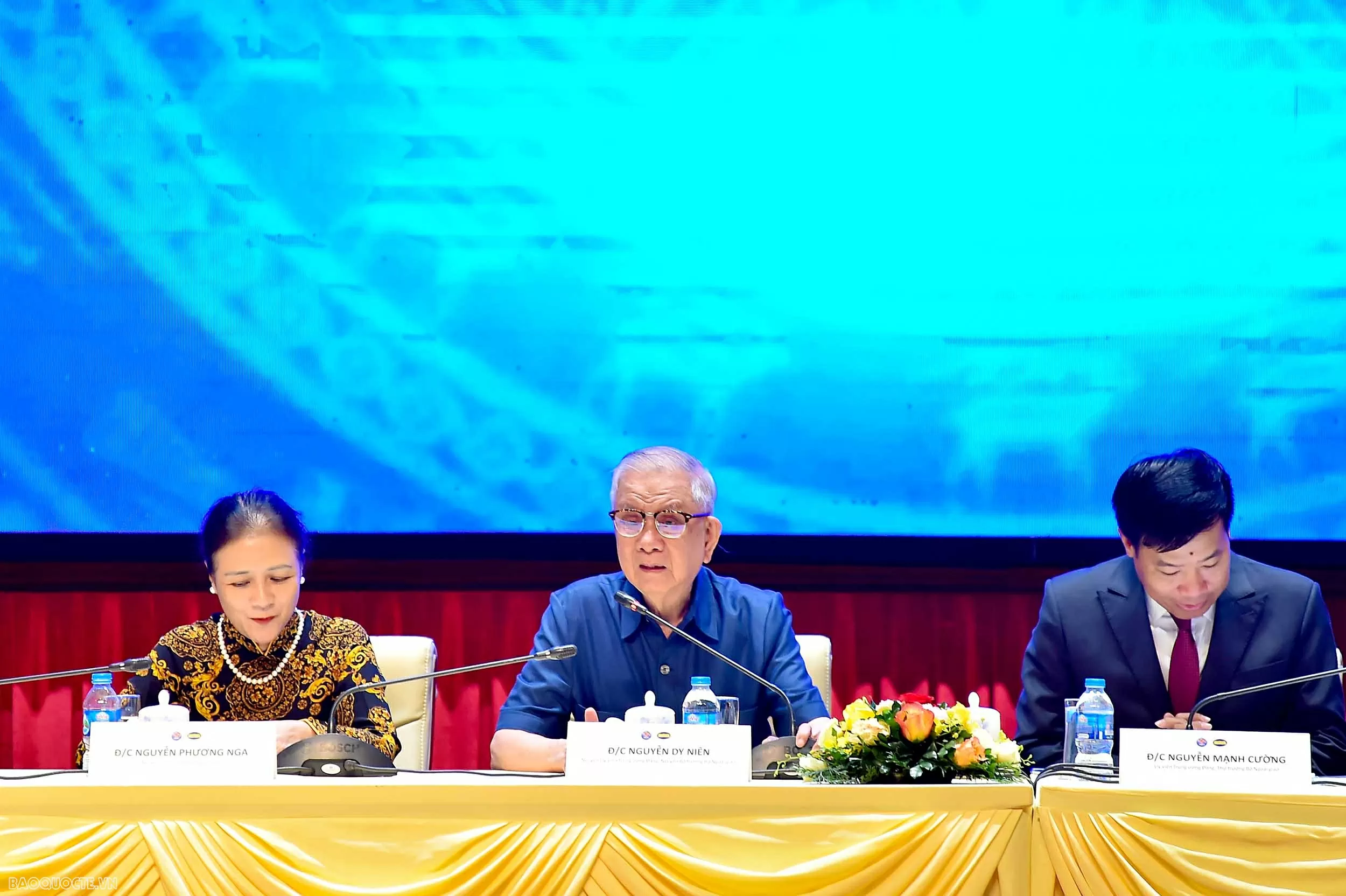 |
| Former Central Committee member, former Foreign Minister Nguyen Dy Nien speaks at the symposium. (Photo: Quang Hoa) |
According to Central Committee member, Deputy Foreign Minister Nguyen Manh Cuong, Ho Chi Minh’s diplomatic thought forged the character and identity of Vietnamese diplomacy: steadfast courage, strategic vision, and extraordinary adaptability to volatile international contexts; persuasive and flexible yet principled foreign policy; harmonious combination of Party, State and people-to-people diplomacy, creating comprehensive strength; a spirit of international solidarity, people-centered principles, humaneness as foundation and justice as a weapon.
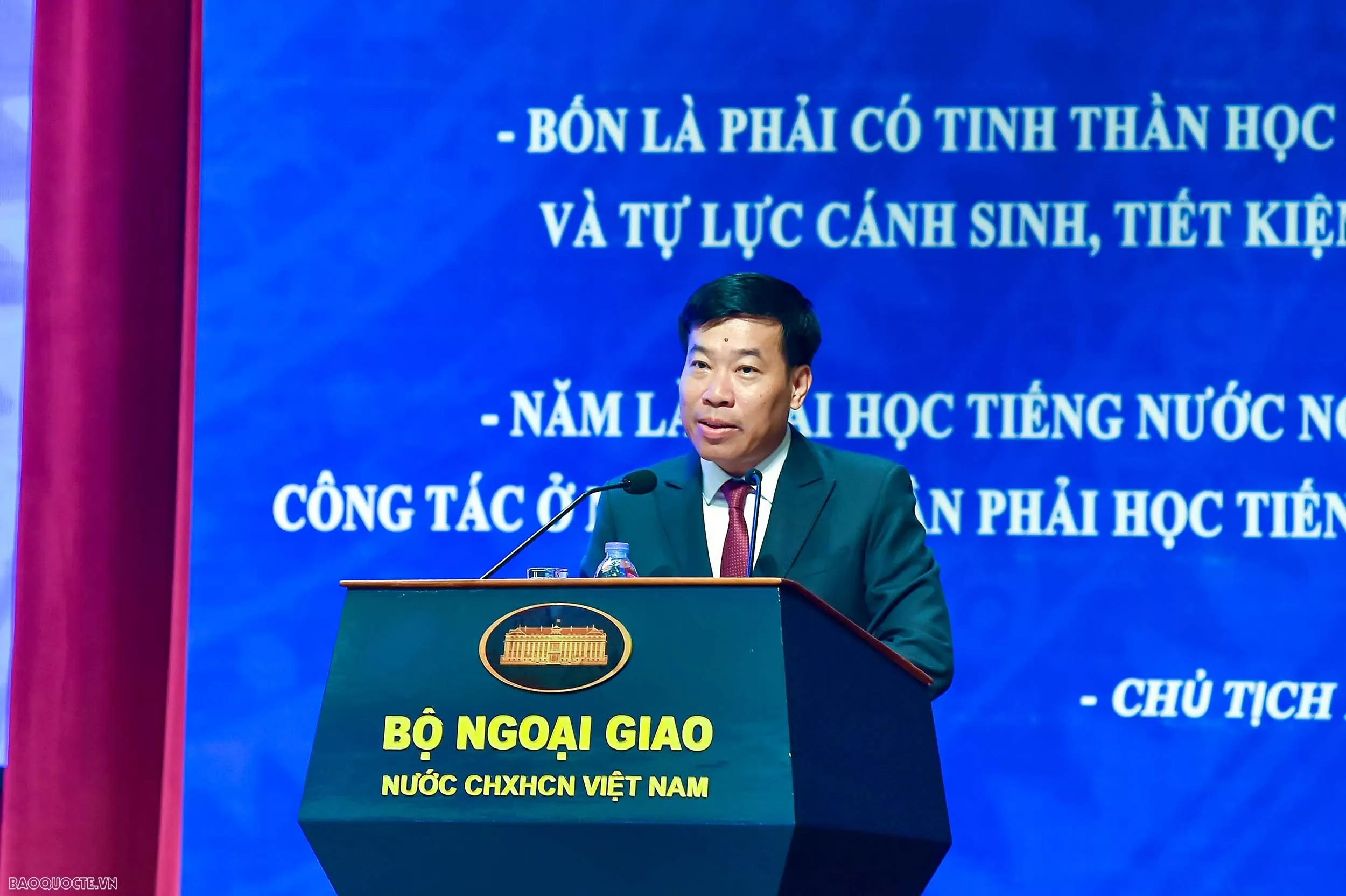 |
| Central Committee member, Deputy Foreign Minister Nguyen Manh Cuong speaks at the event. (Photo: Quang Hoa) |
Former Central Committee member, former Foreign Minister Nguyen Dy Nien expressed deep pride that President Ho Chi Minh not only founded revolutionary diplomacy but also served as Vietnam’s first Foreign Minister. He skillfully and boldly wielded diplomatic tools to resolve challenges, defend the nation, and safeguard revolutionary achievements.
Former Central Committee member, former Head of the Party’s External Relations Commission Hoang Binh Quan expressed gratitude to President Ho Chi Minh, who laid the groundwork for the Party and State’s foreign affairs. He noted that amidst the hardships of the struggle for independence, the diplomatic force was born, standing by the nation for 80 years and contributing to Vietnam’s glorious revolutionary diplomatic history.
Reflecting on Ho Chi Minh’s journey abroad to seek national salvation, former Vice Chairwoman of the National Assembly’s External Relations Committee Ton Nu Thi Ninh emphasized the uniquely Vietnamese approach to diplomacy: “Combining internal strength with external resources, uniting forces, thereby consolidating and elevating our position and power”. This method continues to be effectively applied to complex modern challenges. She stressed that the diplomatic sector must continue offering timely and sound advice—identifying risks and obstacles, while highlighting and seizing opportunities—to craft optimal foreign policy for Vietnam’s rise in the new era.
Continuing the Aspiration, Fulfilling the Mission
As the nation enters a new era of development, General Secretary To Lam has tasked the diplomatic sector with a mission to rise further, shouldering glorious responsibilities. During a working session with the Ministry of Foreign Affairs on August 29, 2024, the General Secretary stressed: “Diplomacy must take the lead in connecting the country with the world and aligning the nation with the trends of the times; enabling Vietnam to actively participate in resolving global issues; preserving and continually nurturing the goodwill of international peoples toward Vietnam; creating new strengths and positions, fostering an international environment favorable to Vietnam’s revolution; and contributing robustly to shaping the country’s image, strength, and position, reinforcing and enhancing Vietnam’s role in global politics, the world economy and human civilization…”
Deputy Prime Minister, Minister Bui Thanh Son affirmed that this serves as both the guiding compass and the profound responsibility entrusted by the Party and State leadership to the diplomatic sector in the coming phase.
“We have every right to be proud of the 80-year tradition of Vietnam’s revolutionary diplomacy; yet this pride is only complete when we transform that tradition into motivation, action and concrete results to serve the nation in the new era”, Deputy Foreign Minister Nguyen Manh Cuong expressed, underscoring the need to turn tradition into renewal and effective action for the new era.
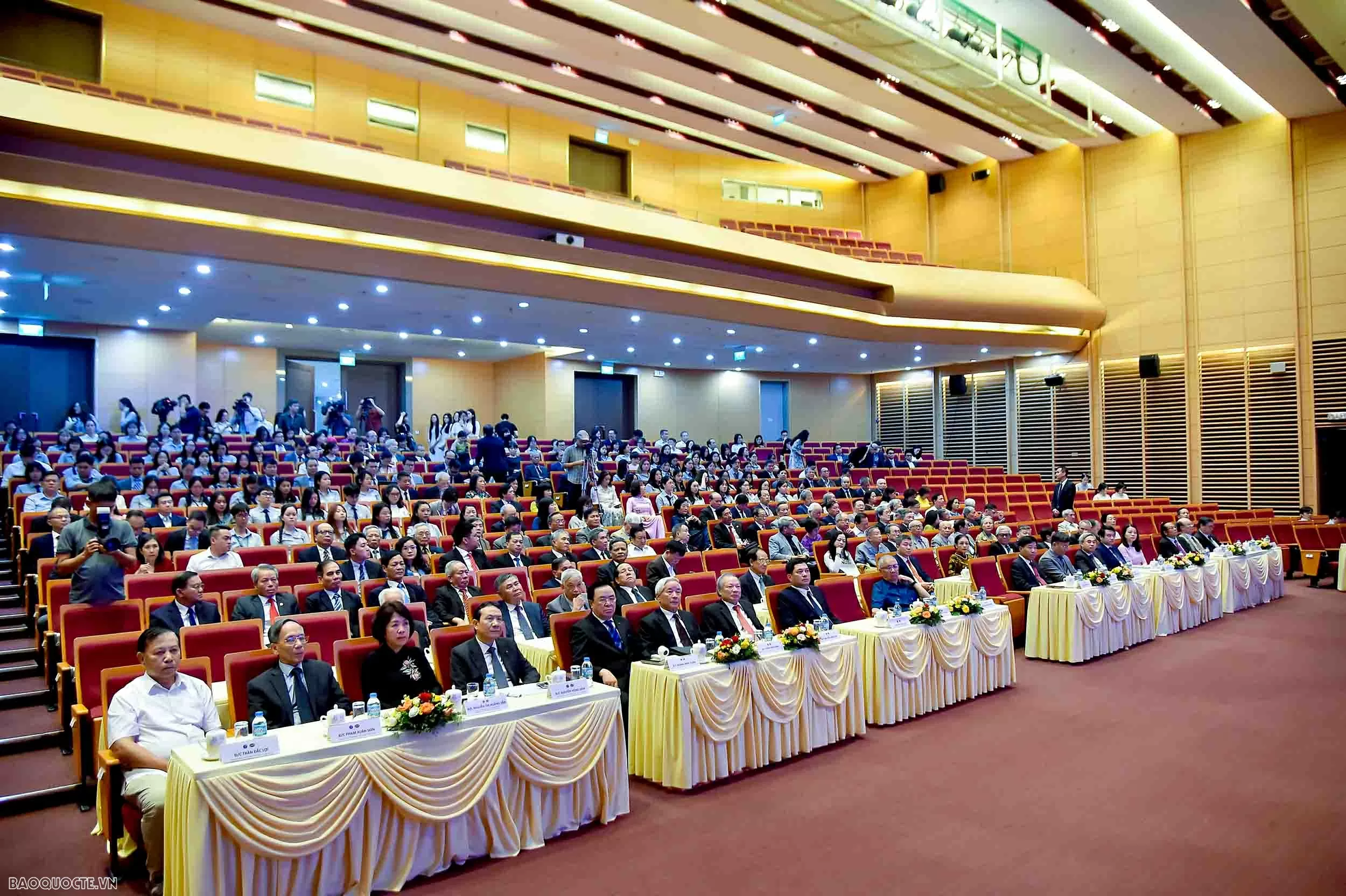 |
| Participants at the event. (Photo: Quang Hoa) |
Accordingly, to successfully achieve strategic goals toward 2045, the diplomatic sector must continue innovating in thinking and implementation; building a diplomatic corps that is both virtuous and competent; strengthening strategic research and proactive policy proposals; while developing modern forms of diplomacy such as digital, economic, science and cultural and green diplomacy.
At the symposium, many veteran diplomats contributed heartfelt perspectives for Vietnam’s new diplomatic journey. Former Foreign Minister Nguyen Dy Nien emphasized that Vietnam must continue to consolidate its stature and strength, which are now peaking thanks to its network of comprehensive strategic partners, strategic partners, and comprehensive partners. Meanwhile, former Deputy Minister of Foreign Affairs Doan Xuan Hung underscored the “priority of priorities” — economic diplomacy in service of development; and former Deputy Minister of Foreign Affairs Dang Dinh Quy highlighted the foremost objective of “preserving a peaceful environment and creating favorable conditions for development”.
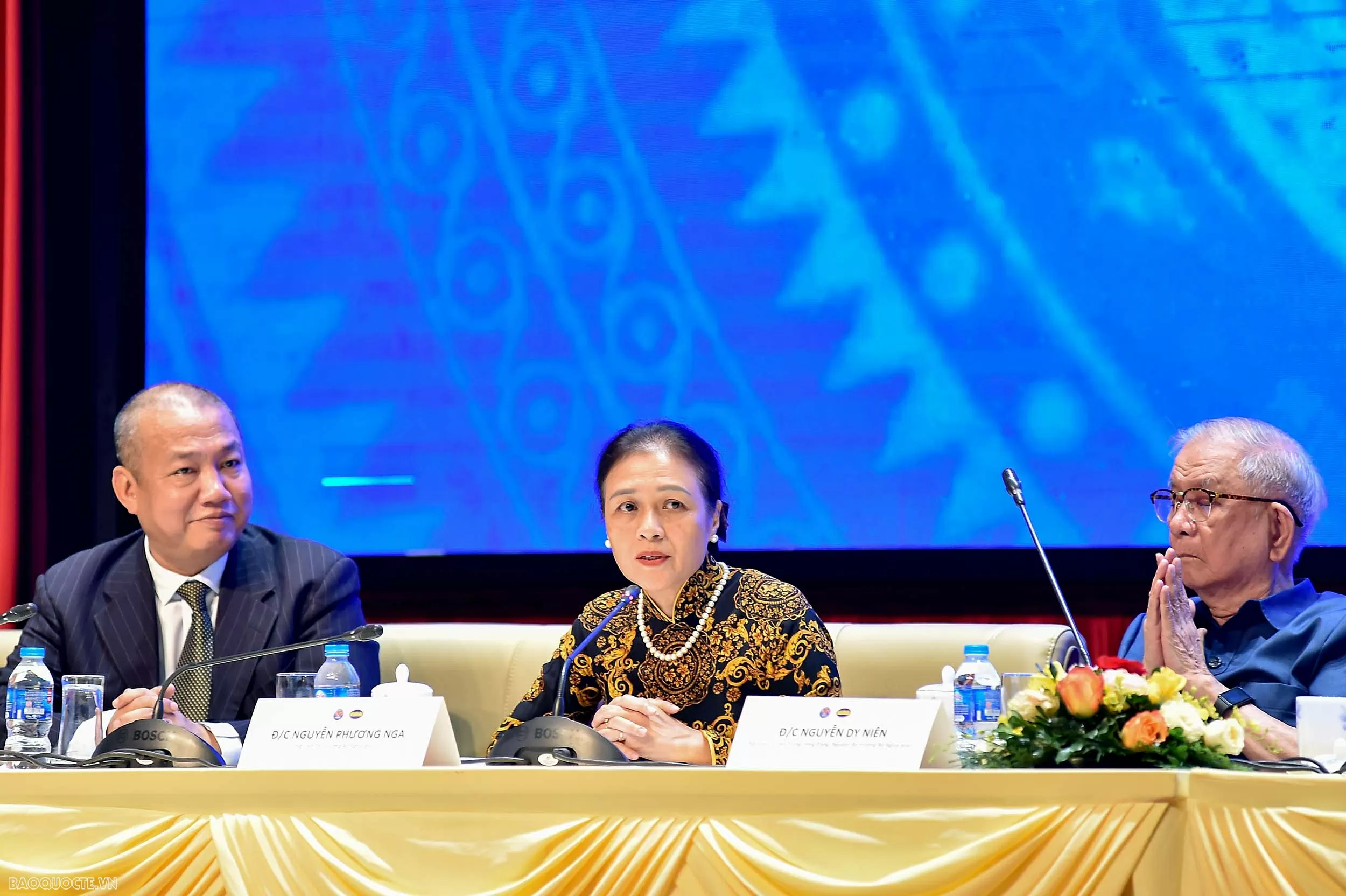 |
| Ambassador Nguyen Phuong Nga, former Deputy Minister of Foreign Affairs, former President of the Vietnam Union of Friendship Organizations, speaks at the symposium on people-to-people diplomacy. (Photo: Quang Hoa) |
President Ho Chi Minh once said that “cadres are the root of all work”, and the heartfelt discussions at the conference also focused on building a corps of diplomatic officials whose capabilities are on par with the region and gradually approaching international standards. Today’s generation of diplomats deeply honours the contributions of their predecessors, particularly the outstanding disciples of President Ho Chi Minh such as Pham Van Dong, Nguyen Duy Trinh, Xuan Thuy, Nguyen Thi Binh and Nguyen Co Thach. They also remember the silent dedication and sacrifice of countless generations of diplomatic officials — the integral forces of revolutionary diplomacy — whose perseverance and resolve forged the spirit that inspires today’s diplomats to continue writing new, glorious chapters in the proud 80-year history of Vietnamese diplomacy.
Carrying forward this proud tradition and indomitable spirit, Vietnam’s diplomatic sector continues to advance confidently on a new journey — the path of “comprehensive, modern, and pioneering diplomacy” — for a strong, prosperous Vietnam with an ever-growing role and stature on the international stage.