




Together with Vietnam, building an environment where every woman and girl can live free from violence: UNFPA Representative
WVR - According to the United Nations Population Fund (UNFPA) Representative in Vietnam Matt Jackson, Vietnam has taken significant steps in recent years to strengthen its systems for preventing and responding to domestic and gender-based violence.
Latest
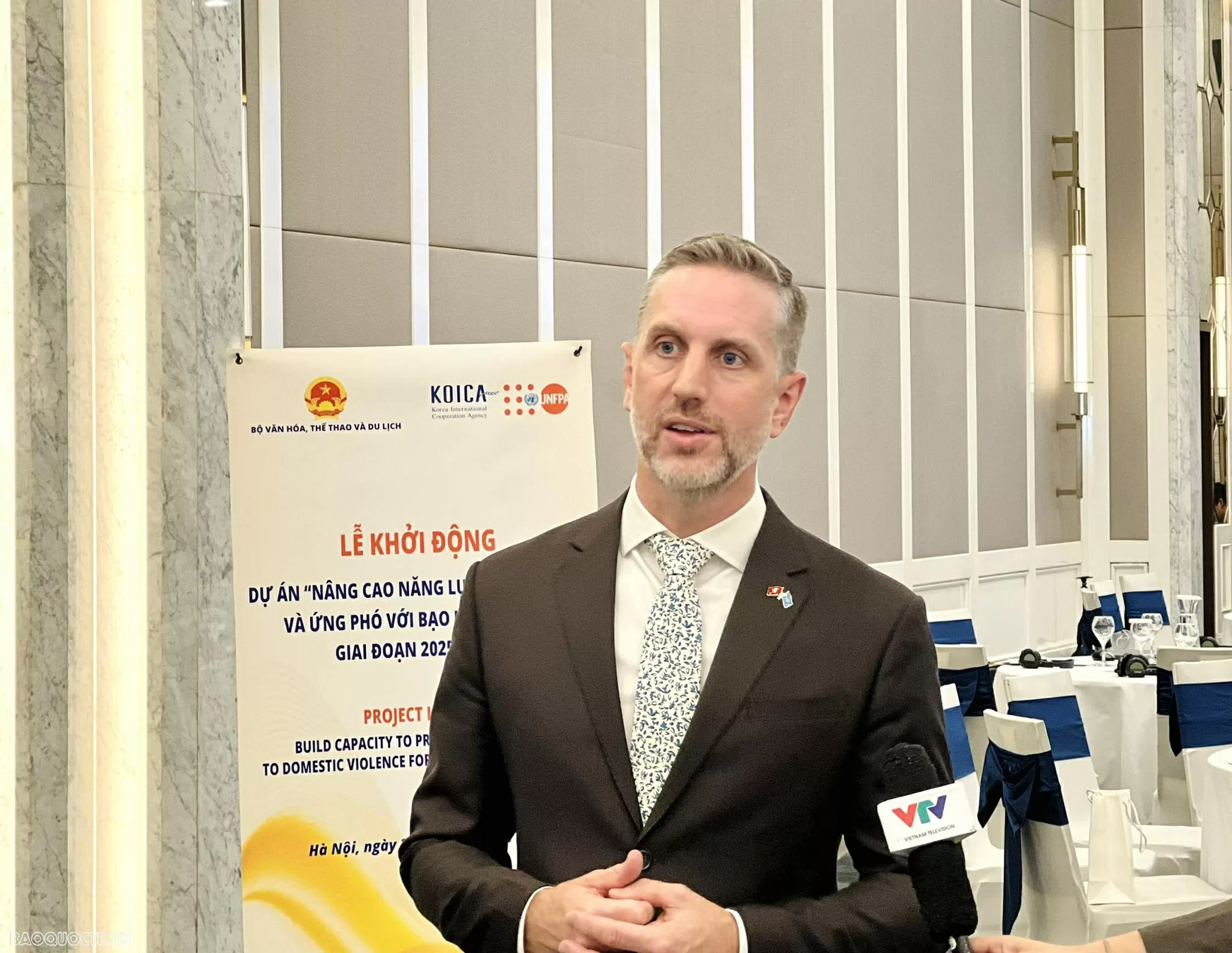 |
| UNFPA Representative in Vietnam Matt Jackson. (Photo: Thu Trang) |
On November 25 in Hanoi, on the occasion of the project launch 'Building capacity to prevent and respond to domestic violence, 2025–2026', the UNFPA Representative in Vietnam Matt Jackson shared his thoughts about Vietnam's efforts to prevent and respond to domestic and gender-based violence.
Given the current situation of domestic and gender-based violence in Vietnam, what efforts has the country made to address the issue and what achievements have these efforts brought about?
Vietnam has taken significant steps in recent years to strengthen its systems for preventing and responding to domestic and gender-based violence.
The amended 2022 Law on Domestic Violence Prevention and Control, together with Decree 76, provides a modern and comprehensive legal framework that places survivors at the centre of the response.
National authorities have also invested heavily in improving coordination across sectors, health, justice, police, social services and grassroots structures so that women and children can access support more quickly and more safely.
Alongside these reforms, the Government has expanded public communication, launched national action months and improved community-level prevention. Multi-agency protection networks are now better organised and service providers have received new training to strengthen case management, counselling and referral pathways.
These combined efforts mean Vietnam now has a stronger foundation for addressing both long-standing forms of violence and emerging challenges linked to digitalisation.
While prevalence remains high, the policy progress and institutional changes over the past few years mark an important shift toward a more effective, survivor-centred system.
What is the key objective of the project launched 'Building capacity to prevent and respond to domestic violence, 2025–2026' and which dimensions of violence does it seek to eliminate?
The project aims to reinforce Vietnam’s domestic violence prevention and response architecture in line with the 2022 law. Its central objective is to build the capacities of frontline service providers, strengthen cross-sectoral coordination and ensure that all survivors, women, girls and vulnerable groups, can access timely, high-quality, confidential support.
A critical focus of the project is recognising that violence today is no longer confined to physical or emotional harm within the home.
As digital technologies rapidly expand, women and girls increasingly face online harassment, digital stalking, threats and the non-consensual sharing of intimate images.
These forms of technology-facilitated gender-based violence (TFGBV) are equally damaging and have become part of the domestic violence landscape. The project therefore addresses both traditional and digital forms of abuse, advancing a holistic response that protects women and girls offline and online.
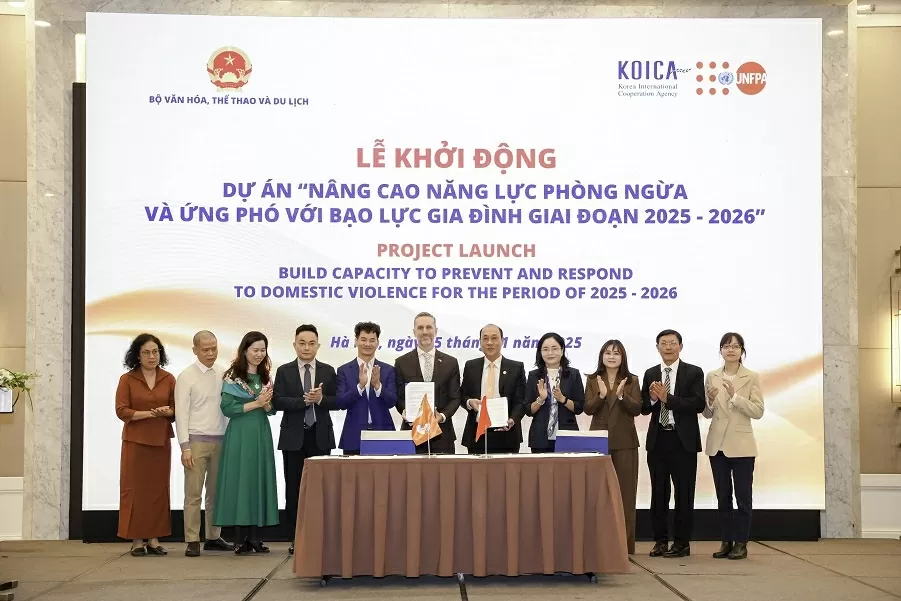 |
| Signing ceremony for project implementation cooperation. (Source: UNFPA) |
How is this project expected to contribute to Vietnam’s broader efforts to end domestic violence, particularly violence against women and girls?
This project arrives at a pivotal moment. Vietnam has put in place strong laws, but implementation requires a workforce with the right skills, tools and systems.
By enhancing the capacity of service providers, strengthening data and monitoring mechanisms and institutionalising evidence-based models, the project helps ensure that the legal framework translates into real protection on the ground.
It also reinforces Vietnam’s broader prevention agenda. Stronger communication and social norm-change efforts will encourage early reporting and help reduce stigma, especially in communities where silence around violence remains the norm.
The project’s emphasis on digital safety fills an urgent gap: as violence adapts to new platforms, frontline actors must be equipped to respond at the same pace.
Over time, these efforts will help Vietnam expand high-quality, survivor-centred services across provinces, making support more accessible to women and girls everywhere.
Looking ahead, how will UNFPA continue to support Vietnam in strengthening its response to domestic and gender-based violence?
UNFPA remains fully committed to supporting Vietnam’s long-term vision of ending all forms of violence against women and girls.
We will continue to work closely with the Ministry of Culture, Sports and Tourism, and other ministries through technical assistance, policy advice and global best practices.
A major priority moving forward will be to help operationalize the national three-digit hotline, strengthen inter-sectoral coordination and improve the quality and reach of essential services.
We will also support the expansion of successful models that have already proven effective in local settings, ensuring they are scaled and institutionalised nationwide.
At the same time, we will deepen our support for tackling technology-facilitated violence, including through digital literacy, safe-technology guidance and better reporting and protection mechanisms.
Ending violence requires sustained investment and societal engagement. UNFPA will continue to bring evidence-based solutions, partnerships and advocacy to help Vietnam build an environment where every woman and every girl can live free from violence, in every space at home, in the community and online.
Thank you very much!