






Multilateral diplomacy affirms Vietnam's position
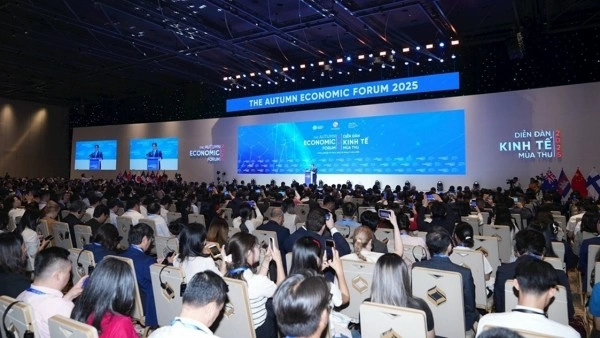
WVR - The significant achievements of multilateral diplomacy are not only reflected in the results of integration or resource mobilization but also in Vietnam's impactful presence on regional and global forums.
Latest
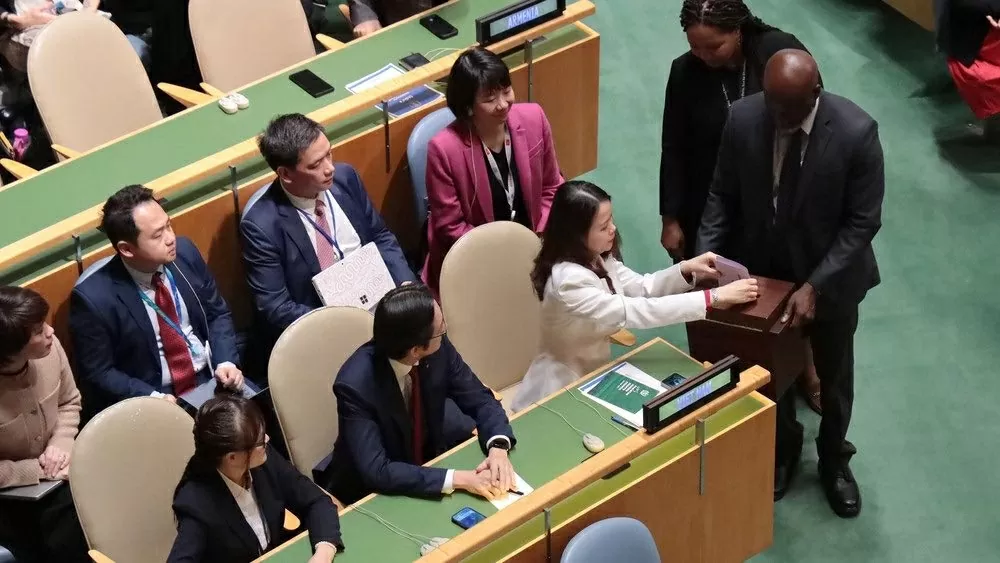 |
| Vietnam was re-elected to the UN Human Rights Council for the 2026-2028 term with the highest votes in the Asia-Pacific group. (Source: Vietnam Delegation to the UN) |
Notable achievements
Over nearly four decades of implementing the Doi Moi policy, Vietnam has achieved comprehensive accomplishments through multilateral diplomacy, evident in three distinct phases.
The 1986-1995 period marked the beginning and the breaking of embargoes, as Vietnam shifted its foreign policy towards openness and gradually re-established important international relations.
The 1996-2006 period marked the second phase of development, with Vietnam enhancing regional integration and gradually stepping onto the global stage as the market economy became more defined and the country's development required expanded international cooperation.
Since 2007, multilateral diplomacy has entered its third phase, linked with comprehensive international integration. With newfound strength and position, Vietnam has transitioned from "participating" to "actively contributing" more deeply in intergovernmental mechanisms, expanding cooperation in new regional structures, and gradually asserting its role in shaping regional and international issues.
To protect national interests and maintain a peaceful, stable environment for development, Vietnam actively participates in regional security mechanisms such as the ASEAN Regional Forum (ARF), East Asia Summit (EAS), and ASEAN Defense Ministers' Meeting Plus (ADMM ), contributing to building a security structure based on cooperation and international law. On the South China Sea issue, Vietnam remains steadfast in its stance based on UNCLOS 1982, garnering international support and promoting substantive and effective COC negotiations. Vietnam's two-time election as a non-permanent member of the United Nations Security Council (UNSC) (2008-2009 and 2020-2021) with high trust votes reflects the international community's confidence in its ability to participate and contribute to addressing global peace and security issues, while enhancing Vietnam's position as a responsible member. Multilateral cooperation in areas such as climate change response, combating transnational crime, cybersecurity, and terrorism highlights the increasingly practical role of multilateral diplomacy in addressing non-traditional security challenges.
Through cooperation with the World Bank (WB), International Monetary Fund (IMF), Asian Development Bank (ADB), and United Nations Development Programme (UNDP), Vietnam accesses preferential ODA funds, technical support, and governance experience to promote institutional reform, infrastructure development, and social capacity building.
In recent years, Vietnam has become one of the leading countries in signing new-generation free trade agreements (CPTPP, EVFTA, RCEP…), thereby expanding economic integration and laying the foundation for institutional reform and growth model transformation. Additionally, establishing diplomatic relations with 195 countries and becoming a member of over 70 international organizations has helped Vietnam build an extensive network of relationships, intertwining multi-layered interests, contributing to maintaining strategic balance and enhancing the national position on the international stage.
Moreover, Vietnam is among the leading countries in early completion of many Millennium Development Goals and actively implementing the Sustainable Development Goals (SDGs) by 2030. Vietnam effectively undertakes responsibilities in important international mechanisms such as the UN Human Rights Council, the Board of Governors of the International Atomic Energy Agency (IAEA), participates in UN peacekeeping forces (since 2014), and becomes a trusted, reputable partner of the UN in this field.
These results demonstrate that Vietnam is not only successfully integrating but is transitioning from a "participant" to an "active contributor", aiming towards the capability to "shape the rules" at the UN and multilateral institutions.
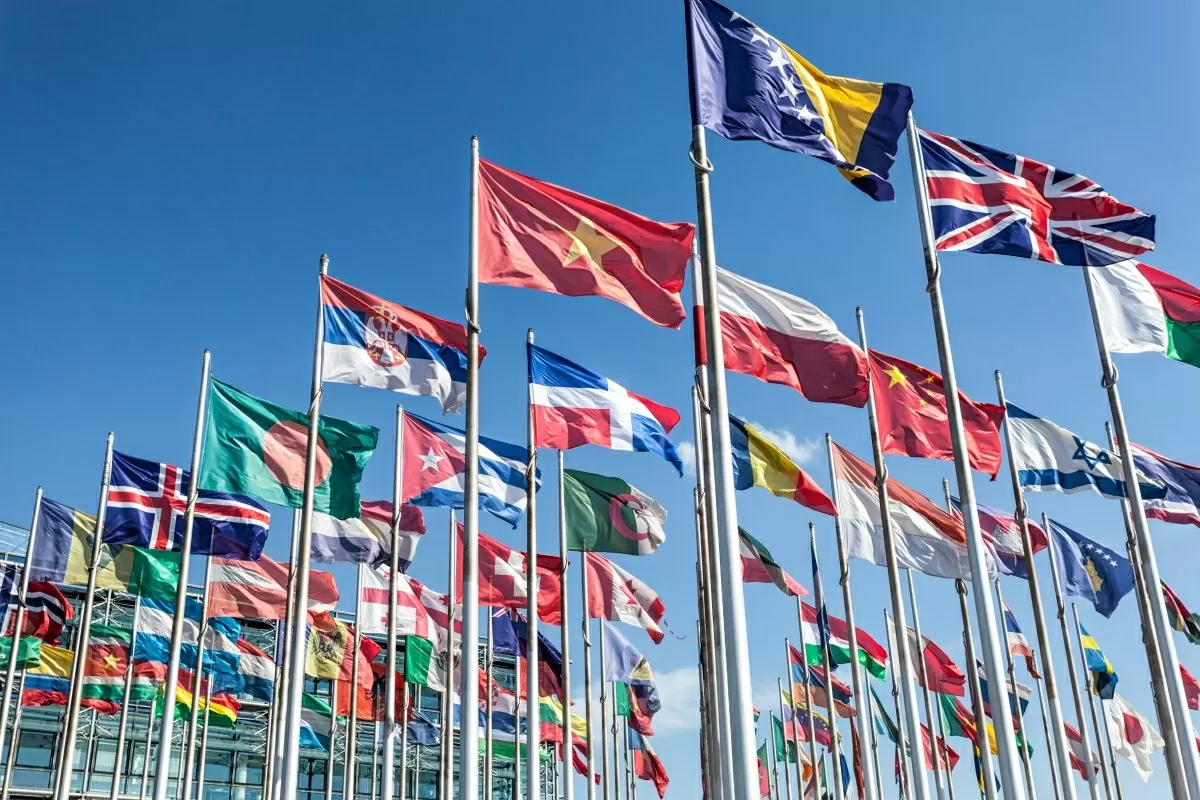 |
| Vietnam has left shaping marks on regional and global forums. Illustrative photo. (Source: iStock) |
Profound marks on the multilateral "stage"
The most significant achievement of multilateral diplomacy is not just in integration results or resource mobilization but in Vietnam's impactful presence on regional and global forums.
At the regional level, Vietnam asserts its coordination and leadership capacity by successfully chairing ASEAN in 1998, 2010, and 2020. Notably, amid the Covid-19 pandemic, Vietnam demonstrated flexible management capabilities, maintaining intra-regional solidarity and promoting ASEAN's central role, thereby affirming its crisis response ability in a complex multilateral environment. Hosting APEC Economic Leaders' Meeting twice (2006 and 2017), organizing ASEM 5 (2004), and many other important events, Vietnam contributes to shaping regional initiatives on infrastructure connectivity, bridging development gaps, digital economy, and inter-regional integration.
Globally, the country gradually asserts its role in shaping international norms and laws. At the UN General Assembly, Vietnam proposed several initiatives that were adopted, such as the International Day of Epidemic Preparedness (December 27) and the International Day of Play (November 6). Through cooperation with UNESCO, WHO, WIPO, ILO, and many other intergovernmental mechanisms, Vietnam effectively promotes its image as a humane and globally responsible nation, with an increasing number of World Heritage dossiers recognized and many development initiatives acknowledged at multilateral forums. Notably, Hanoi became the signing venue for the UN Convention on Cybercrime last October, marking the first time an international convention is associated with Hanoi, showing Vietnam's recognition and role as a creator in cybersecurity and digital governance.
In key UN mechanisms like the UNSC, Vietnam has left marks through important resolutions such as Resolution 1889 (2009) on women, peace, and security, or Resolution 2573 (2021) on protecting essential infrastructure. Vietnam is also a leading country actively participating and contributing to the negotiation process of the UN Convention on Cybercrime (since 2022), and Vietnam's trusted role as the Chair of the NPT Review Conference (2026) marks a new development in coordination and leadership capacity in global strategic arms control mechanisms.
The UN Secretary-General's two official visits during the 2021-2026 term reflect his sincere, profound affection and the level of trust the UN places in Vietnam. These marks show that Vietnam has transitioned to the position of a nation capable of contributing to shaping rules, playing a role, and exerting influence in the reshaping multilateral international order.
Elevating as a strategic driver
Nearly 40 years of renovation, amid profound international changes with increased strategic competition, intertwined traditional and non-traditional security challenges, and digital and green transitions shaping the global order, the continued strengthening and elevation of multilateral diplomacy has become a strategic imperative for Vietnam, reflecting the stature and position of the country.
In terms of mindset, continue to effectively implement the guiding documents of the Party and State on foreign affairs and international integration; consistently pursue an independent, self-reliant, diversified, and multilateral foreign policy. To protect national interests, expand development space, and assert its role in rapidly shifting regional and international structures, multilateral diplomacy must continue to innovate its mindset, shift from "participating" to "actively participating" and "leading", seeking opportunities to play the role of "mediator", "reconciler".
In terms of measures, clearly identify key priorities, enhance in-depth research, and improve the legal framework to effectively implement international commitments. Besides "nurturing" the content and initiatives that Vietnam has prioritized and consistently promoted, Vietnam needs to proactively seize opportunities, be ready to participate, and propose new initiatives suitable to current needs and situations in fields such as green transition, digital transformation, science and technology, AI, energy transition, climate change response, energy security, food security, and other non-traditional security challenges. Demonstrating leadership responsibility in important bodies like the UNESCO Executive Board, UN Women, serving as a member of the Human Rights Council 2026-2028, running for the third time as a UNSC member 2032-2033, and ITLOS Judge, requires leveraging the combined strength of the entire political system, enhancing human resource quality, and strengthening inter-agency coordination.
In terms of implementation, ensure close coordination between internal and external sectors, inter-agency collaboration, especially through regular coordination and exchange mechanisms between ministries, sectors, localities, and enterprises to ensure unity in mindset and consensus in action.
Towards the 50th anniversary of Vietnam joining the UN (2027), multilateral diplomacy needs to continue to be elevated as a strategic driver, contributing to realizing the development aspiration, making Vietnam a high-income developed country, while increasingly proactively and responsibly contributing to peace, cooperation, and sustainable development in the region and the world.


