

Ho Chi Minh’s Thought – The guiding beacon of Vietnamese diplomacy
WVR - Ho Chi Minh’s diplomatic ideology and his diplomatic activities during the difficult yet glorious years of Vietnam’s revolution are an invaluable legacy of the country’s modern revolutionary diplomacy, and a pride of Vietnamese diplomats.
Latest
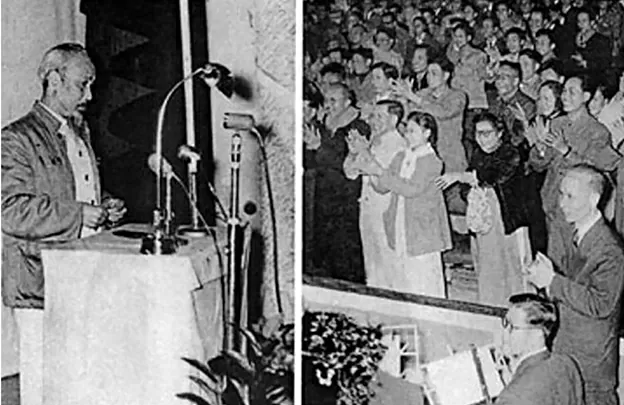 |
| Ho Chi Minh’s Thought – The Enduring compass of Vietnamese diplomacy: President Ho Chi Minh speaks at the Third National Diplomatic Conference held at the Ministry of Foreign Affairs Headquarters (from December 16, 1963, to January 16, 1964). (Archival Photo) |
The Ideological Foundation for Foreign Affairs
Our Party regards Marxism-Leninism and Ho Chi Minh Thought as the ideological foundation and compass for action. This holds significant meaning in shaping sound thinking and providing a theoretical foundation for our nation’s revolutionary path in general and for the renewal (Doi moi) process in particular.
To successfully build and firmly defend the Socialist Republic of Vietnam in an ever-changing world where challenges and opportunities intertwine, the entire Party, people, and military are required to stay resolute in our direction, remain steadfast and composed, act flexibly, seize opportunities, and follow that compass.
Ho Chi Minh’s diplomatic thought holds an important place within his overall ideology. It serves as a lighthouse for modern revolutionary Vietnamese diplomacy. His diplomatic thinking and personal activities during the tough yet heroic times of the revolution remain a precious legacy, a source of pride for diplomats, and the root of confidence in Vietnam’s diplomatic capacity—both past and future.
This body of thought is a system of principles, views, and perceptions about the world and the times, about the nation and humanity, about international strategy and Vietnam’s revolutionary path, about diplomatic strategy and tactics. It aligns with the general line of the Party and is embodied in the foreign policies and activities of our Party and State.
The value and contemporary relevance of Ho Chi Minh’s diplomatic ideology have been proven through the phases of Vietnam’s revolutionary struggle under the Party’s leadership.
Its enduring vitality stems from its deep humanism, from the fusion of Vietnam’s cultural essence with that of humanity, and from the close connection between Vietnam and the world—so that the country is always part of the global community, and its people part of humankind.
National independence linked to socialism, autonomy and self-reliance coupled with solidarity, expanded international cooperation, affirmation of fundamental national rights, promotion of ethics, peace, and goodwill, opposition to wars of aggression, intervention in other nations’ internal affairs, and resistance to power politics and imposition—all of these are the core contents of Ho Chi Minh’s thought on Vietnam’s revolutionary path and diplomacy.
His diplomatic style, methods, and artistry helped these fundamental principles complement and reinforce each other, generating synergy. Ho Chi Minh’s diplomatic philosophy is one of proactivity, initiative, and flexibility, guided by the motto: “Unchanging in principle while adapting to myriad changes”—turning big issues into small ones, and small ones into none. His style embraced principled compromise, skillfully leveraging contradictions within the opposing side, independent and creative thinking, making more friends and fewer enemies, heartfelt diplomacy, and the subtle mastery of the “five knowings”: know yourself, know others, know the times, know when to stop, and know how to adapt.
These methods, styles, and diplomatic artistry of President Ho Chi Minh will forever serve as standards for our diplomatic endeavors.
A Guiding Light
Applying Ho Chi Minh’s diplomatic thought enables us to address international and foreign affairs issues wisely in all global and regional circumstances. Continuously studying, grasping, and internalizing the core principles of Marxism-Leninism and Ho Chi Minh Thought as they apply to diplomacy is pivotal in successfully implementing the foreign policy of our Party and State. Only by harmonizing theory and practice through creative application and continuous development, can we ensure that our understanding and foreign activities remain aligned with the times.
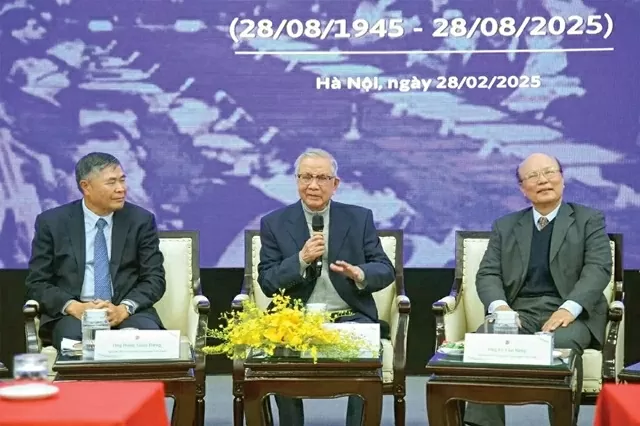 |
| Ho Chi Minh’s Thought – The guiding beacon of Vietnamese diplomacy: Former Foreign Minister Nguyen Dy Nien (centre) shares at the seminar “Vietnamese Diplomacy: 80 Years of Honour and Pride,” on February 28 in Hanoi. (Photo: Phuong Nhi) |
Only with such intellectual equipment can foreign affairs personnel fulfill the missions entrusted to them by the Party, the State, and the people under all circumstances and international conditions.
Ho Chi Minh’s diplomatic thought was shaped and developed alongside the major historical events of the Vietnamese nation and through his direct diplomatic activities. Though the world has changed, Vietnam’s position and power have advanced significantly—along with the remarkable progress of its diplomatic service—the nature of the era and the true nature of its contradictions, reflected in today’s complex and overlapping international relationships, continue to require clarity, vigilance, and flexibility.
Thus, under the Party’s leadership and with the participation of the entire nation in the diverse and multi-layered foreign affairs, applying Ho Chi Minh’s diplomatic ideology remains a key guarantee for Vietnam’s diplomatic success.
By following the light of Ho Chi Minh’s diplomatic thought, the foreign affairs activities of our Party, State, and people in the new phase of the revolution can contribute significantly to preserving a peaceful and stable international environment, while leveraging favorable conditions to effectively serve the dual strategic tasks of nation-building and national defense.
Diversifying, multi-lateralizing international relations, and proactively integrating into the world following the motto: “Vietnam is ready to be a friend and reliable partner to all countries,” based on the principles and traditional values of Vietnamese diplomacy, is a fundamental and long-term orientation of the Party and State's foreign policy. This fully reflects the spirit, principles, and core essence of Ho Chi Minh’s diplomatic thought.
Application in a new context
Equipped with these perceptions and viewpoints, Vietnam’s foreign affairs can adequately, timely, and beneficially address the issues facing the country’s diplomacy in the time ahead—especially issues involving neighbouring countries, major powers, global politics, security, and economic matters, traditional partnerships, and new challenges arising from foreign policy adjustments by partners or from the complex transitions of the global and international landscape in the early 21st century.
Applying Ho Chi Minh’s diplomatic ideology involves shaping foreign policy to serve national interests and securing a stable, advantageous international position for the country in all circumstances. It requires proactive engagement in protecting those interests by harmoniously combining national strength with global trends—the strength of the times. These national interests encompass not only long-term and fundamental goals but also specific, tangible benefits appropriate to each period, context, and partnership.
To both protect and maximize these enduring interests, one must embrace initiative and creativity, sensitivity and flexibility, and at the same time remain principled and timely in seizing opportunities in both perception and execution of foreign affairs.
In the current and upcoming period, Ho Chi Minh’s concept of people-to-people diplomacy and the emphasis on national unity hold particularly practical and timely significance. People-to-people diplomacy has grown strongly, with increasingly diverse and effective forms, becoming an important component of Vietnam’s foreign front. The deeply rooted national and people-centered character has become a hallmark of modern Vietnamese diplomacy.
Foreign affairs have become the mission of the entire Party, with harmonious coordination among ministries, departments, and localities—especially between diplomacy, defense, security, and the economy—playing a vital role. In today’s context, enhancing and improving coordination under the Party’s unified leadership and management is one of the key factors ensuring the successful implementation of Vietnam’s foreign policy.
Our beloved President Ho Chi Minh has passed on. His life, career, and character remain a tremendous asset to our nation. Vietnam’s modern revolutionary diplomacy is honored and proud of its great teacher and the spiritual legacy he has left for the nation and for the diplomatic profession.