





Vietnam's economic growth in first 6 months of 2025: Supply and demand factors create solid growth momentum
WVR - In an interview with The World and Vietnam Report, Ms. Nguyen Thi Huong, Director of the General Statistics Office, under the Ministry of Finance, commented that Vietnam's economic growth in the first 6 months of 2025 was close to the growth scenario target updated in the first quarter. This will reduce pressure on the following quarters and be a positive foundation for growth in the whole year of 2025.
Latest
 |
| Director of the General Statistics Office Nguyen Thi Huong at the interview. (Photo: N.H) |
Vietnam’s economic growth in the first half of 2025 reaches highest level since 2011. What Is your assessment of this result? What are the key drivers of GDP growth in Q2 and the first Half of the year?
Vietnam’s GDP grew by 7.96% in Q2/2025 and by 7.52% in the first six months of the year, marking the highest mid-year growth rate since 2011. Indicators from both the supply and demand sides are showing positive trends.
The 7.52% GDP growth in the first half of 2025 is the result of a comprehensive recovery and development across all economic sectors, supported by stable macroeconomic policies, public investment inflows, foreign direct investment (FDI), a rebound in domestic demand, and effective leverage of international economic integration advantages. The harmonious combination of supply and demand factors has created a strong growth momentum for Vietnam’s economy. Specifically:
From the production perspective, most production activities maintained stability and achieved solid growth across economic sectors and types of ownership. Agriculture, forestry, and fisheries continued to grow steadily. The application of science and technology, along with new crop varieties, played an important role in improving productivity and product quality.
Industry and construction were key drivers of economic growth in Q2 and the first half of 2025. The value-added of the industrial sector increased by 8.07% year-on-year in the first half of the year (with Q2 up by 8.79%).
Construction activities surged due to the strong push for public investment disbursement, significant FDI inflows, signs of recovery in the real estate market, and the Government’s support policies. The value-added of the construction sector rose by 9.62% in the first half (with Q2 up by 9.83%), focusing on major infrastructure projects such as expressways, airports, large bridges, power plants, civil infrastructure, industrial parks, and supporting infrastructure.
Market-based service sectors that support production, exports, and tourism — such as transportation, warehousing, accommodation, and food services — experienced strong growth in the first half. Specifically, accommodation and food services rose by 10.46% year-on-year, while transportation and warehousing increased by 9.82%.
Public service sectors also posted high growth, thanks to the implementation of key initiatives supporting organizational and administrative reforms. Administrative and support services grew by 14.58%; activities of the Communist Party, political and social organizations, state management, national defense and security, and mandatory social protection rose by 13.09%.
From the expenditure perspective, economic growth in Q2 and the first half of 2025 was positively supported by consumption, investment, and external trade. Final consumption in the first half recorded the highest growth in five years, rising 7.95% year-on-year — with government consumption increasing by 14.67% and household consumption by 6.95%.
Tourism continued to grow strongly, both domestic and international. Various stimulus programs were implemented at both the national and local levels. In the first half of the year, Vietnam welcomed 10.66 million international visitors, up 20.7% year-on-year — the highest mid-year figure in several years.
The General Statistics Office updated its 2025 growth scenario as follows: 7.52% for the first half, 8.42% for the second half, and a full-year growth target of 8%.
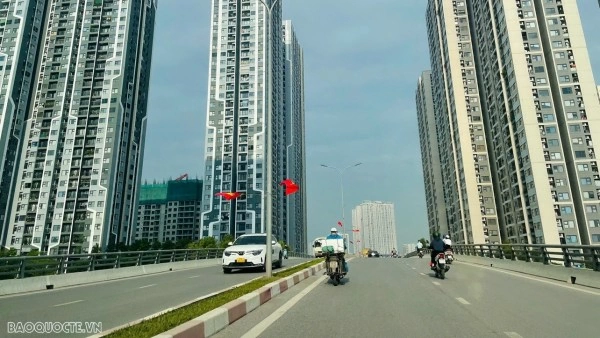
Accelerated disbursement of public investment into key infrastructure projects not only boosted the industrial and construction sectors but also laid the groundwork for enhancing the economy's long-term production capacity.
FDI inflows surged, particularly in new manufacturing projects in high-tech sectors such as semiconductors and artificial intelligence (AI), creating new production capacities, employment opportunities, and knowledge transfer for the economy. As of June 30, total registered FDI reached USD 21.52 billion, up 32.6% year-on-year; disbursed FDI was estimated at USD 11.72 billion, up 8.1% — the highest six-month disbursement in the past five years.
Export activities in the first half of 2025 were vibrant. Total merchandise export turnover reached USD 219.83 billion, up 14.4% year-on-year.
This growth reflects efforts to effectively leverage free trade agreements, expand markets, and enhance the value of Vietnamese exports. It shows that international demand for Vietnamese goods remains strong.
At the local level, 10 out of 63 provinces achieved growth rates exceeding 10% in the first half of the year, including: Bac Giang (14.01%), Quang Ngai (12.4%), Nam Dinh (11.84%), Da Nang (11.7%), Hai Duong (11.59%), Ha Nam (11.09%), Hai Phong (11.04%), Quang Ninh (11.03%), Phu Tho (10.33%), and Vinh Phuc (10.07%).
This year, Vietnam targets an 8% GDP growth. How do you assess the first-half results in relation to this goal?
Vietnam’s GDP growth of 7.52% in the first half of 2025 (with preliminary growth of 7.05% in Q1 and an estimated 7.96% in Q2) is considered positive given the global economic uncertainties.
This result is just 0.38 percentage points below the 7.9% growth target outlined in the 2025 scenario (full-year goal: 8%). Notably, the manufacturing sector grew by 10.11% and the services sector by 8.14%, both surpassing the respective targets of 10.0% and 7.9%. This helps ease the pressure on growth in the remaining quarters and provides a solid foundation for achieving the full-year target.
However, in my view, this is only a necessary condition for meeting the 8% target. To realize this goal, it is essential to fully tap into the remaining growth potential in the second half of the year, and to implement economic policies and measures in a timely, coordinated, and flexible manner.
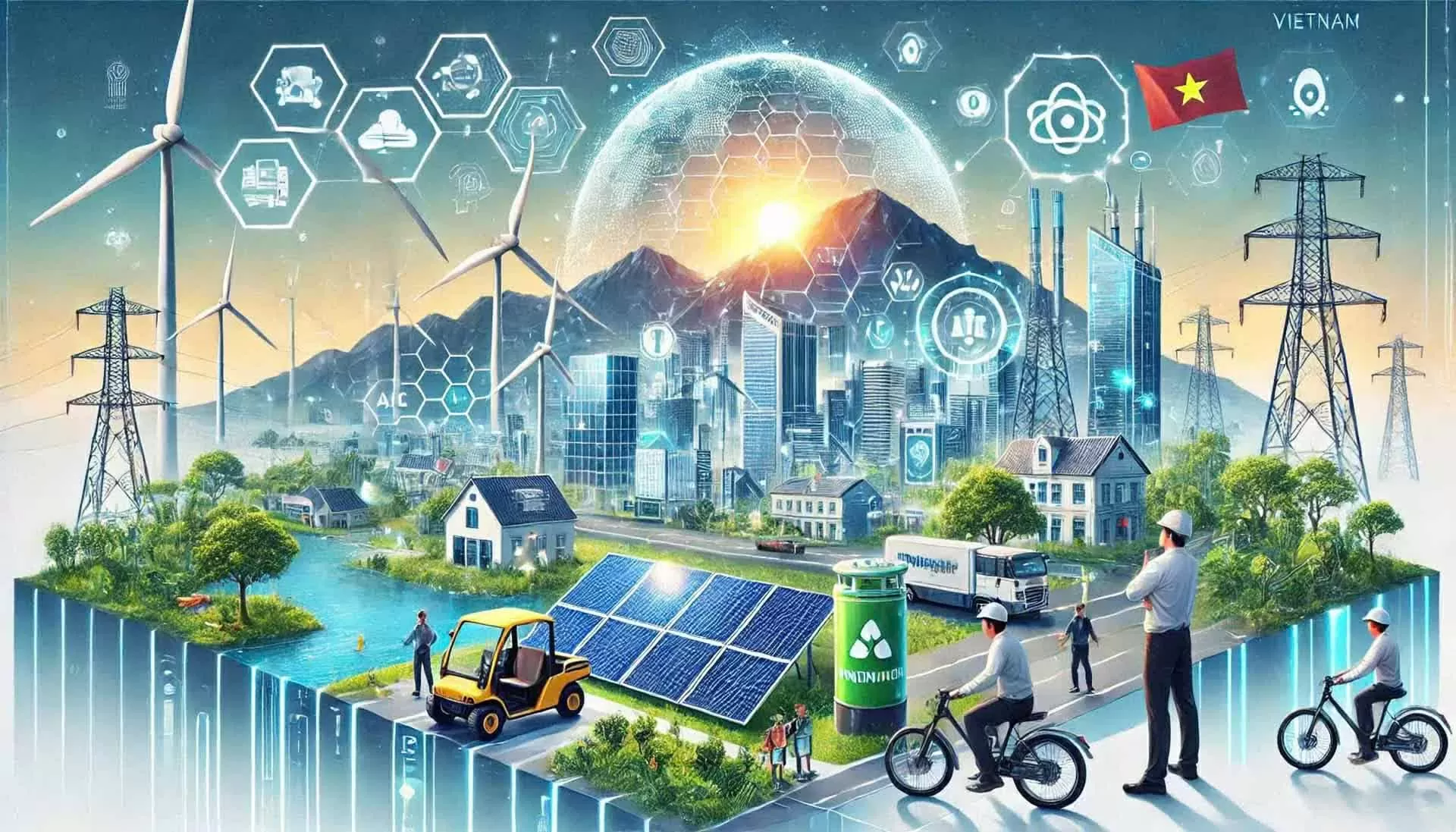 |
| Science and technology, digital transformation and innovation will be key drivers, playing a strategic role in economic growth in the final months of the year. (Photo created by AI) |
What is your assessment of Vietnam’s economic growth potential in the remaining months of the year?
The second half of the year is considered the “home stretch” toward the year-end goal. In my view, the economy still has several growth levers, including:
First, public investment. The Government, ministries, and local authorities are actively implementing policies and measures to accelerate public investment disbursement, aiming for 100% disbursement of the 2025 plan. This will create significant room for economic growth in the second half, particularly through key national infrastructure projects such as expressways, airports, major urban beltways, and energy projects.
Second, science and technology, digital transformation, and innovation will play a strategic and pivotal role. The boom in technology, innovation, and digital transformation presents opportunities for businesses to adopt AI in production, reducing costs, improving labor productivity, and enhancing competitiveness.
Given global economic uncertainties and weak market demand, Vietnam must continue to implement comprehensive and effective measures to strengthen the recovery momentum, maintain macroeconomic stability, and support growth.
Third, credit growth. Targeting a credit growth rate of 16%, with adjustments based on real-time conditions in 2025, will create ample room for economic expansion — mainly by providing abundant capital to stimulate production, business activities, investment, and overall consumption.
Fourth, consumption. This is being supported by a 2% VAT reduction effective from July 1st for many goods and services, along with demand-stimulus trade policies. In addition, the support packages under Decree 178 will help drive consumption, investment, and asset accumulation, thereby supporting economic growth.
Based on these potential drivers, the General Statistics Office projects Vietnam’s 2025 economic growth at 7.52% in the first half, 8.42% in the second half, and 8% for the full year.
So, what challenges does the Vietnamese economy face in the second half of 2025?
Despite positive results in Q2 and the first half, Vietnam’s economy continues to face significant challenges, both external and internal.
Geopolitical tensions are intensifying, becoming more unpredictable and destabilizing. These pose major risks to global trade, investment, supply chains, and commodity prices — indirectly affecting Vietnam’s production and export activities.
Slowing global growth and weak demand for goods: International organizations such as the IMF and World Bank have revised down global growth forecasts for 2025 due to persistent inflation and weak consumption demand — a negative signal for Vietnamese exports.
Exchange rate volatility puts pressure on the cost of importing raw materials and servicing foreign currency debt. Meanwhile, high international interest rates force Vietnam to adopt a more cautious monetary policy stance, reducing the room for loosening measures.
Climate change impacts: Extreme weather in key import markets such as Europe and China is shifting demand for Vietnamese agricultural products. At the same time, stricter environmental, carbon emission, and traceability regulations are making compliance more difficult for Vietnamese exporters.
Industrial recovery remains fragile. While signs of rebound are evident, the pace is still slow and uneven. Sectors such as electronics, textiles, footwear, and wood processing — though still growing — are beginning to lose momentum due to stagnant orders and increasing price competition from other countries.
Public investment disbursement still faces bottlenecks related to land clearance, overlapping legal procedures, and limited local implementation capacity.
Domestic consumption recovery remains subdued, with cautious consumer sentiment. Households are adjusting their spending behavior due to inflation concerns and unstable income recovery.
Legal and regulatory frameworks are improving but progress remains slow, with overlapping and inconsistent policies — especially after the recent administrative unit consolidations.
Low labor costs are no longer a national advantage. The labor force lacks sufficient high-skilled workers capable of adapting to modern technologies, with disparities in quality and training across regions.
Limited capital absorption capacity — particularly among domestic enterprises — along with underdeveloped capital and stock markets, increases pressure on the monetary system.
In the context of the world economy still having many uncertainties and market demand not yet recovering strongly, my point of view is that Vietnam needs to continue to synchronously and effectively implement groups of solutions to consolidate the recovery momentum, maintain macroeconomic stability and promote economic growth. Accordingly, fiscal and monetary policies need to be implemented proactively, flexibly, closely coordinated with other policies, creating favorable conditions for production - business, public investment disbursement and supporting domestic consumption. At the same time, all levels and sectors need to seriously, synchronously and effectively implement tasks and solutions according to the direction of the Government and the Prime Minister in Resolutions, Directives and Official Dispatches.
In light of these challenges, what are the key solutions for Vietnam to achieve its 2025 growth target?
Vietnam should prioritize the following solutions:
Maintain macroeconomic stability to build investor and public confidence. Closely monitor global price movements — especially energy and food — to respond promptly. Continue to pursue a prudent and flexible monetary policy, keeping inflation under the 4.5% target. Ensure exchange rate stability and banking system liquidity.
Promote science, technology, digital transformation, and innovation. Increase investment in R&D, especially in digital technology, biotechnology, new materials, and automation. Strengthen startup and innovation ecosystems. Develop high-quality human resources, vocational training, and digital skills aligned with Industry 4.0 requirements.
Accelerate and ensure the effectiveness of public investment, which remains the top priority and the most important driver of growth. All administrative bottlenecks, land clearance issues, and material supply constraints must be resolved to fast-track major infrastructure projects — particularly key national transportation initiatives. Aim to meet the Prime Minister’s goal of 100% public capital disbursement.
Stimulate exports and maximize benefits from free trade agreements (FTAs). Intensify trade promotion efforts, diversify markets and products, and maintain double-digit export growth to significantly contribute to GDP.
Continue improving the business environment, ensuring transparency, simplifying administrative procedures, and attracting high-quality FDI. Maintain macro and socio-political stability to build trust with investors. Prioritize attracting FDI in high-tech, high-value-added, environmentally friendly industries with strong potential for technology transfer to domestic enterprises. Ensure sustained and stable FDI disbursement as a vital source for production and export growth.
Boost domestic purchasing power through appropriate policies to stimulate aggregate demand and consumption. Expand domestic trade promotion and discount campaigns. Accelerate the recovery of tourism and services, leveraging the sharp increase in international visitor numbers.
Be proactive in responding to global economic fluctuations. Enhance risk forecasting and analysis capacity to deal with external shocks — from geopolitical conflicts and shifting trade policies to commodity price volatility. Develop flexible response scenarios to minimize negative impacts on trade and investment. Diversify trading partners to reduce concentration risks.
Only by doing so can Vietnam's economy remain resilient in the face of challenges, maintain its growth trajectory, and break through in the second half of the year.
Thank you so much!