


Vietnamese Representative Missions create Vietnamese cultural spaces abroad
WVR - From music nights in Bucharest, ao dai showcases in Udon Thani, to dialogues about President Ho Chi Minh's legacy in Tanzania, the Czech Republic, or Pakistan, Vietnamese Representative Missions are broadening their approach to cultural diplomacy. Here, culture has become a medium for meetings, dialogue, sharing, and forging new connections with local audiences.
Latest
Today, Vietnam is present in many cultural spaces, from theaters, museums, academies to community stages and dialogues among young people. In these spaces, culture is increasingly opened up in an interactive manner, allowing the public to directly experience, explore, and connect with Vietnam's values.
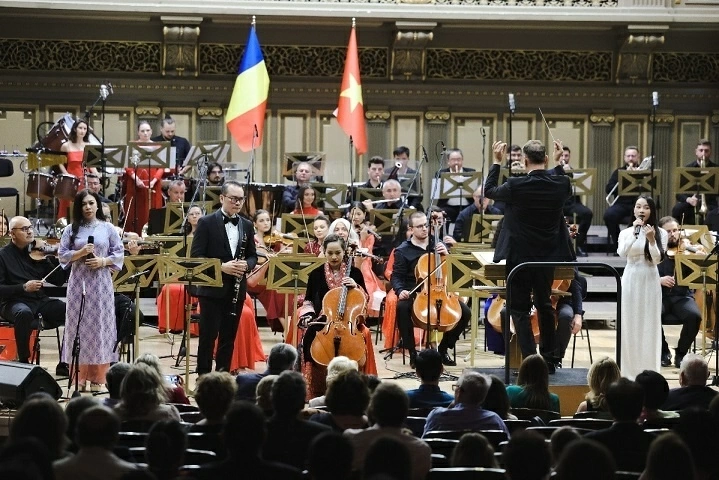 |
| The Vietnam-Romania Friendship Concert, celebrating the 81st anniversary of Vietnam's National Day at the Athenaeum, a cultural symbol of Bucharest, on August 18, 2026. (Source: Vietnamese Embassy in Romania) |
Musical rendezvous
Recently, at the Athenaeum in Bucharest, music became the common language during the Vietnam-Romania Friendship Concert celebrating the 81st anniversary of Vietnam's National Day.
On the same stage, Vietnamese artists performed with the Bucharest Symphony Orchestra and the Placello Quartet. Melodies such as Huong ve Ha Noi, Ha Noi 12 mua hoa, Khat vong que huong, and Return to Sorrento followed one another; the sounds of the dan bau and Vietnamese musical influences were set in an international performance space.
Vietnamese Ambassador to Romania Le Vinh Thang noted that cultural exchanges not only hold value in the arts but also have the potential to pave the way for trade, investment, and tourism, contributing to enhancing the national position and brand. The concert was a heartfelt collaboration between the Vietnamese Embassy, the Romanian Ministry of Culture, and Cello Fundamento Vietnam.
However, the vitality of a cultural program is also measured by audience reactions. Scholar Pavel Suian, author of Vietnam Dieu Ky, shared with Prima News that he was moved by the program and considered it a memorable milestone, deepening relations between the two countries. According to him, maintaining traditional friendship can also drive new developments in economic cooperation.
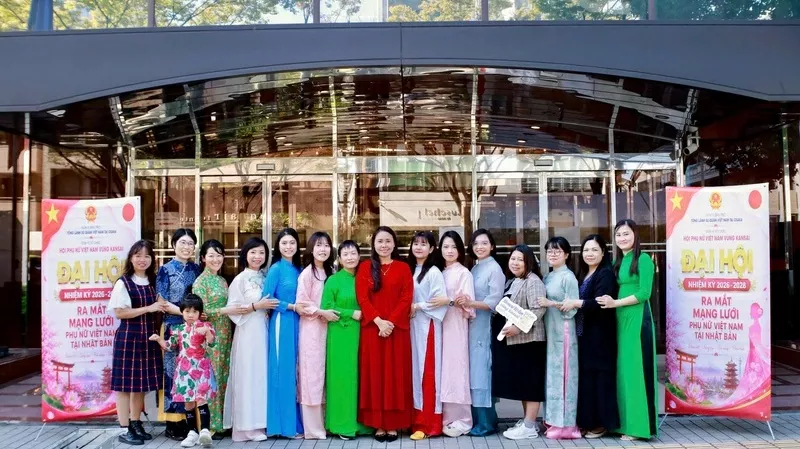
In Udon Thani (Thailand), the chosen cultural material was the ao dai. More than 31 Vietnamese and Thai contestants participated in the first “Vietnam-Thailand Ao Dai Beauty” contest.
With no age limit, the contest saw participation from contestants aged 72 and 76, presenting a distinct image of traditional beauty: the ao dai is not just for one generation or a specific audience but can be a meeting point for various ages.
Vietnamese Consul General in Khon Kaen Dinh Hoang Linh stated that in the 50-year history of Vietnam-Thailand diplomatic relations, culture plays a special role in fostering mutual understanding. Thus, the contest is not merely a performance activity but a form of community exchange. From the ao dai, the cultural story continues through cuisine, music, and both folk and contemporary arts.
In an interview with The World and Vietnam Report, Vietnamese Ambassador to the Czech Republic Duong Hoai Nam also emphasized that these familiar materials help international friends better understand the depth of Vietnamese culture, history, and spirit.
“Through the ao dai, traditional dishes, and folk and contemporary art performances, international friends can better perceive the depth of Vietnamese culture, history, and spirit,” the Ambassador highlighted. This is an effective form of people-to-people diplomacy, contributing to building understanding, goodwill, and connections between Vietnam and host countries.
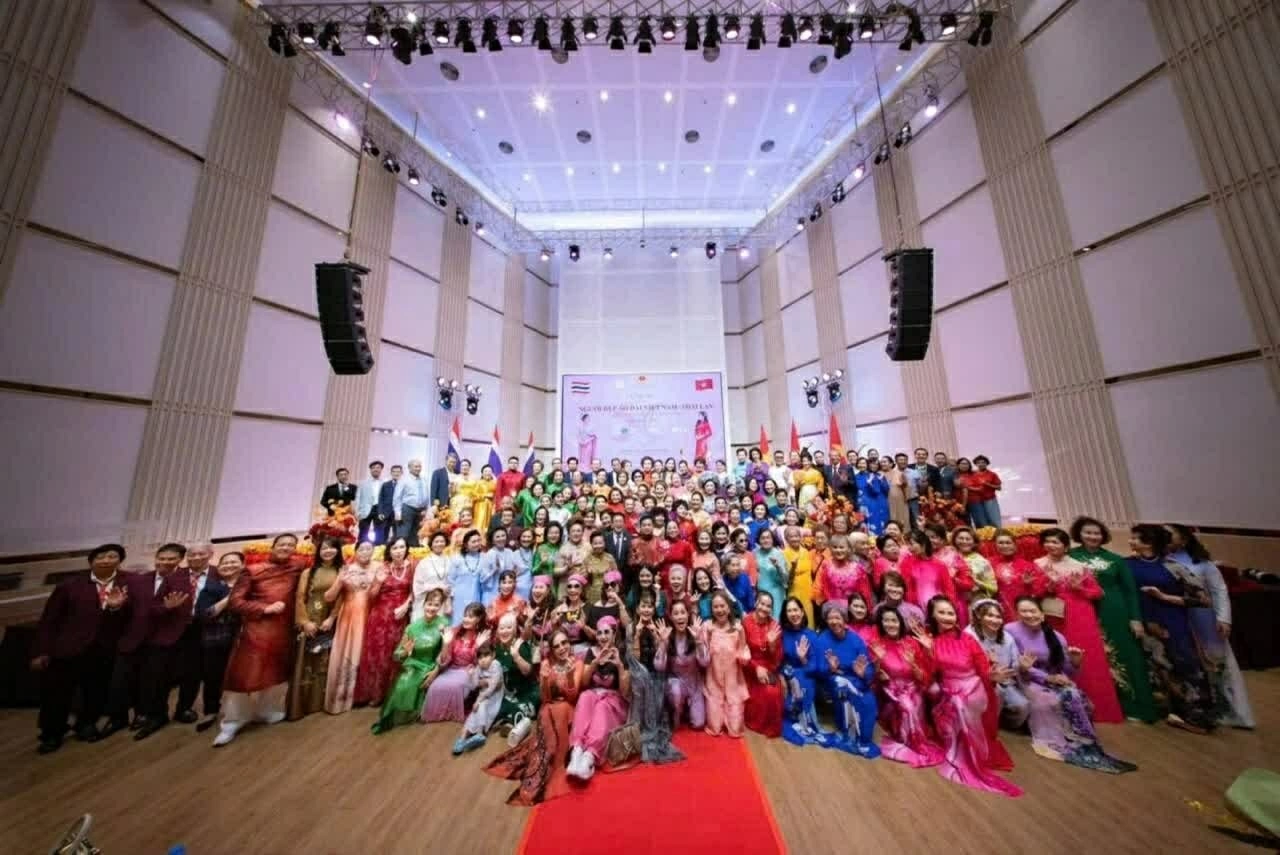 |
| Contestants participating in the first “Vietnam-Thailand Ao Dai Beauty” contest. (Source: Vietnamese Consulate General in Khon Kaen) |
Bringing heritage from display to dialogue
Another approach being implemented by the Representative Missions is transforming heritage and historical stories into dialogue materials with local audiences.
In Dar es Salaam, the Vietnamese Embassy in Tanzania organized a seminar titled “Ho Chi Minh - Heritage Journey: Ho Chi Minh's thoughts and Vietnam-East Africa Development Cooperation”. The program not only introduced President Ho Chi Minh's life and career but also placed these values in discussions among diplomats, scholars, lecturers, businesses, and the younger generation.
The participation of various audience groups created a multi-dimensional forum. From the history of the struggle for independence, delegates moved on to discuss education, research, digital transformation, agriculture, vocational training, and youth connectivity.
Vietnamese Ambassador to Tanzania Vu Thanh Huyen emphasised that the values of national independence, international solidarity, and human progress in Ho Chi Minh's ideology can still be a meeting point with African countries in the current context.
From a historical seminar, the story thus extends to the present: Student and faculty exchange programs, joint research, or youth networks can become long-term connections between Vietnam and the East African region.
This approach is reflected in the exhibition “President Ho Chi Minh - Journey of Connection and Spreading the Spirit of International Solidarity” in Prague (Czech Republic). About 150 images and documents were introduced, including materials about the 1957 visit to Czechoslovakia, when President Ho Chi Minh met the people of Prague, visited workers, and many landmarks of Czechoslovakia. These images not only recount a historical journey of Vietnam but also evoke a shared memory of the two nations, creating a link between past and present.
Diverse ways to tell Vietnam's story
In Pakistan, a book can also become a meaningful cultural exchange space. It was the first time President Ho Chi Minh's work Prison Diary was translated into Urdu and published alongside the English version. The introduction event at the Pakistan Academy of Letters was attended by researchers, writers, poets, translators, Pakistani readers, and diplomatic representatives from various countries.
Chairperson of the Pakistan Academy of Letters Najeeba Arif expressed her emotion when the agency was entrusted with translating and publishing the poetry collection into Urdu, considering it a milestone in cultural, literary cooperation, and people-to-people exchanges between the two countries. Vietnamese Ambassador to Pakistan Pham Anh Tuan hopes that the Urdu version—a widely used language in Pakistan—will help readers, especially the younger generation, understand more about President Ho Chi Minh and Vietnam.
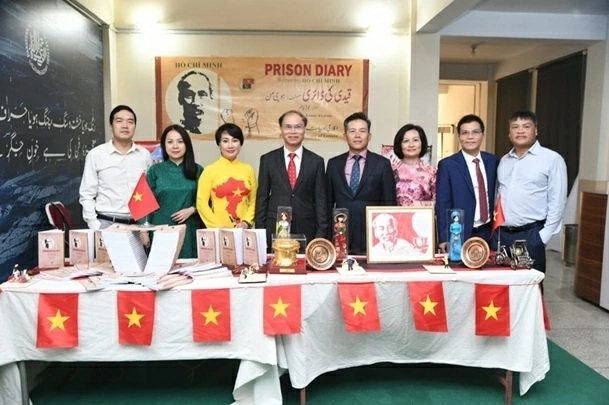 |
| The launch and introduction of President Ho Chi Minh's poetry collection “Prison Diary”, published in both Urdu and English, to a wide audience in Pakistan. (Source: Vietnamese Embassy in Pakistan) |
A memorable moment at the event came from Pakistani writer Imdad Akash. Having visited Vietnam twice and participated in international conferences on literature and art in Vietnam, he spoke of Ho Chi Minh as a symbol of courage, resilience, self-reliance, and the aspiration for independence and freedom. He then quoted, interpreted some poems from the Prison Diary, and recited poetry in Urdu, receiving enthusiastic applause from delegates and guests. This demonstrates that a Vietnamese work, when read in the language of Pakistan, has entered the local cultural life in a different way. It is no longer merely an introduction to Vietnamese literature but a process of translation, reception, and reinterpretation.
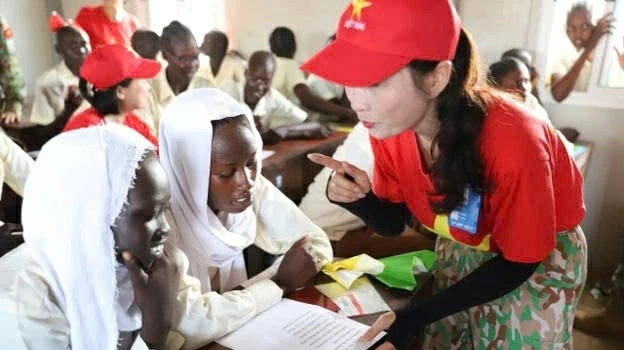
This past August, a special journey named “I Love My Country” was organized by the Vietnamese Consulate General in Luang Prabang (Laos) in collaboration with the Central Vietnam Youth Union, combining traditional education and youth exchange. Nearly 500 children, including orphans, received health check-ups, consultations, medicines, and 440 gifts; youths from both countries exchanged ideas on career building, entrepreneurship, and community security maintenance.
Consul General Vu Ngoc Ly stressed that the program contributes to concretizing the Vietnam-Laos friendship, enhancing people-to-people exchanges, and connecting the youth of the two countries. The authorities and people of Luang Prabang highly appreciated the activity and were moved by the participation of young Vietnamese doctors.
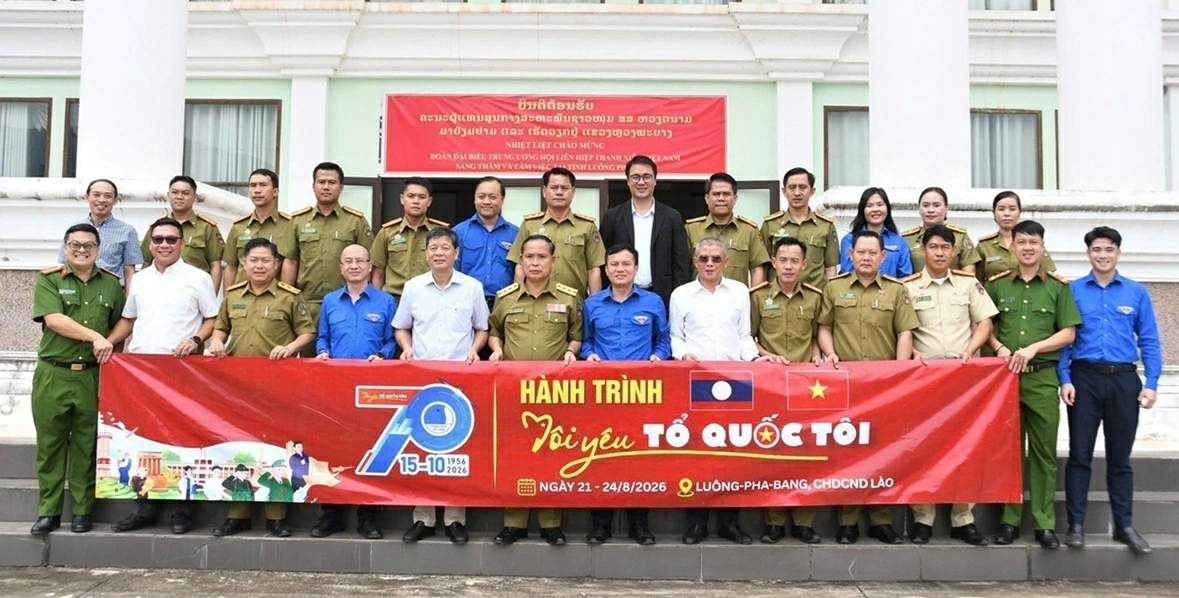 |
| Delegates participating in the “I Love My Country” journey. (Source: Vietnamese Consulate General in Luang Prabang) |
Looking at these stories, it is evident that the “cultural space” in foreign affairs activities is increasingly broadening in both form and approach. This direction aligns with the spirit of Resolution 80-NQ/TW on developing Vietnamese culture in the new era, emphasizing the role of diplomatic missions and the overseas Vietnamese community in promoting national culture.
The cultural diplomacy strategy until 2030, with a vision to 2045, also aims to enhance cultural soft power, actively integrate internationally, and leverage the resources of the Vietnamese Representative Missions. This is the time for the Missions to transcend their role as “diplomatic addresses” and become vibrant cultural spaces—where Vietnam is encountered, felt, and continuously narrated in many different voices.