



General Secretary, President To Lam's visit to France: Creating high-level political momentum
WVR - In an interview with the press ahead of General Secretary, President To Lam's official visit to France, Vietnamese Ambassador to France Trinh Duc Hai emphasised that the Vietnam-France relationship has a special depth, nurtured over generations through historical, cultural, educational, scientific ties, and extensive people-to-people exchanges.
Latest
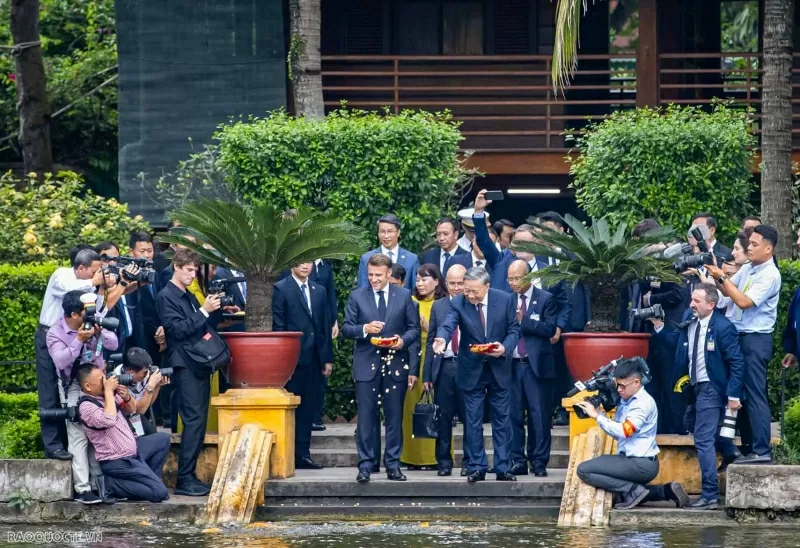 |
| General Secretary To Lam and French President Emmanuel Macron feed fish in the grounds of the Ho Chi Minh Memorial Site, during the French leader's state visit to Vietnam from May 25-27, 2025. (Photo: Nguyen Hong) |
A transoceanic Relationship
Overcoming the vicissitudes of history, the two countries have successfully built a friendship based on equality, mutual respect, and a shared future.
According to the Ambassador, the solid foundation of the Vietnam-France relationship lies not only at the state level but is deeply rooted in the societies of both countries. French culture, language, healthcare, sports, and science have left many positive marks in Vietnam, while Vietnam's land, people, and culture hold a special place in the hearts of the French public.
Among these foundations, education, training, science and technology, and healthcare stand out prominently. France has been a training ground for many generations of intellectuals, experts, engineers, especially leading doctors and medical experts from Vietnam.
The network of Pasteur Institutes in Vietnam, along with the long-standing presence of leading French research institutes such as the French Research Institute for Development (IRD), the French Agricultural Research Centre for International Development (CIRAD), the French National Centre for Scientific Research (CNRS), and the French National Agency for Research on AIDS and Viral Hepatitis (ANRS) provide a solid foundation for scientific and biomedical cooperation between the two countries.
With nearly 6,000 Vietnamese students studying in France, along with exemplary training models like the University of Science and Technology of Hanoi and the French-Vietnamese Center for Management Training, Ambassador Trinh Duc Hai believes this is a valuable foundation that should continue to be promoted and expanded into high-tech fields, specialized healthcare, and the green economy.
Another unique aspect of the bilateral relationship is cooperation in archives and documentary heritage. The archival agencies of both countries are actively sharing, digitizing, and preserving valuable historical documents from the modern era, helping the public, especially the younger generation, gain a deeper and more objective understanding of their shared history.
Sports exchanges have also become a vibrant bridge for people-to-people connections through athlete training programs, expert exchanges, and coordinated event organization.
Additionally, the community of over 300,000 Vietnamese and Vietnamese-origin people deeply integrated in France, along with the cooperative network between localities of the two countries maintained over decades, has brought practical value in fields such as urban planning, heritage preservation, primary healthcare, and community sports.
According to Ambassador Trinh Duc Hai, in the context of international volatility, the mutual understanding and trust fostered over generations are strategic assets for both countries. To further drive bilateral relations, traditional areas of cooperation such as culture, education, healthcare, sports, and science need to be closely linked with new development drivers like digital technology, innovation, and high-quality human resource training in key sectors.
Simultaneously, both countries need to strongly leverage the potential of the Vietnamese intellectual and expert community in France, creating conditions for this resource to directly contribute to the country's strategic breakthroughs. Effectively utilizing social and humanistic foundations will help deepen the Vietnam-France Comprehensive Strategic Partnership, making it more substantive, sustainable, and passed on through generations.
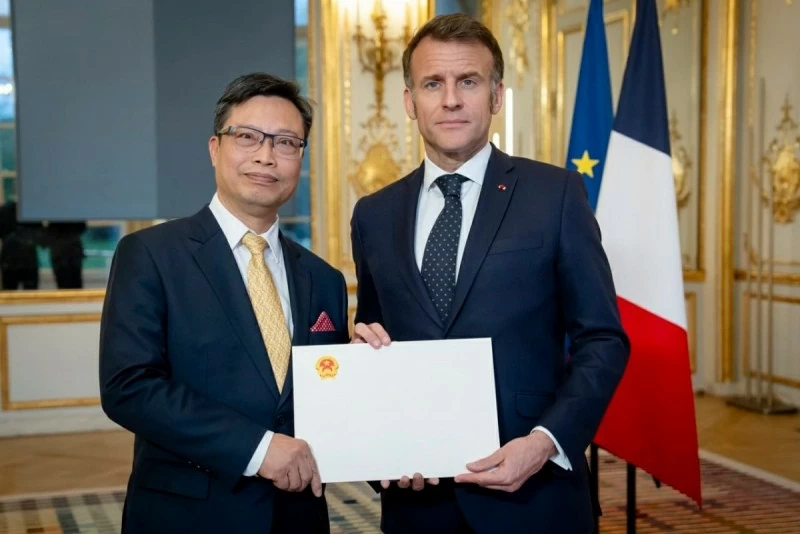 |
| Vietnamese Ambassador to France Trinh Duc Hai presents his credentials to French President Emmanuel Macron. (Source: Vietnamese Embassy in France) |
Enhancing Cooperation Across All Fields
Referring to the series of high-level exchanges between the two countries recently, Ambassador Trinh Duc Hai affirmed that the continuous and vibrant frequency of visits and high-level contacts reflects the strong political determination of the leaders of Vietnam and France.
The historic milestone in October 2024, when the two countries officially upgraded their relationship to a Comprehensive Strategic Partnership, made France the first country in the European Union (EU) to establish this framework with Vietnam.
Subsequently, the high-level visits and contacts in 2025 have provided further impetus to realize the shared vision, transitioning the bilateral relationship from framework establishment and orientation expansion to a phase of turning commitments into concrete cooperative projects, bringing tangible benefits to both sides.
In this process, the Ambassador assessed that the official visit to France and participation in the Space Summit by General Secretary, President To Lam holds special significance. Politically and diplomatically, the visit continues to affirm Vietnam's consistent foreign policy of independence, self-reliance, multilateralization, diversification, proactive and active comprehensive and deep international integration; while also demonstrating Vietnam's regard for France – an important partner in Europe and on the international stage.
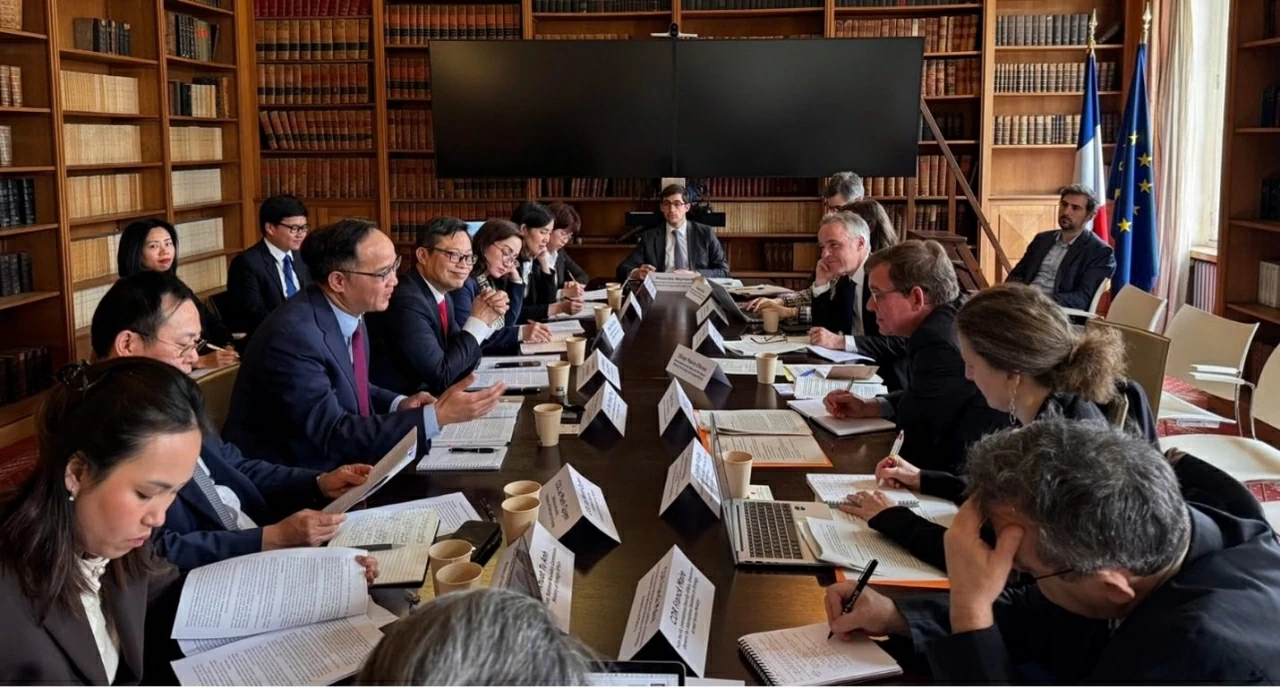 |
| The Vietnamese Ministry of Foreign Affairs and the French Ministry of Foreign Affairs co-organized the second Vietnam-France Maritime Dialogue in Paris, France, on March 6. (Photo: Dinh Chien). |
According to Ambassador Trinh Duc Hai, the visit is an important occasion for the leaders of the two countries to continue to strengthen political trust, enhance coordination of positions at multilateral forums, and create high-level political momentum to resolve obstacles and promote key, long-term cooperative projects.
In terms of economy, trade, and investment, the visit is expected to provide additional momentum for economic cooperation to develop commensurate with the stature of political relations. The focus is on attracting high-quality investment projects with significant technological content from leading French corporations; promoting France to soon complete the ratification of the Vietnam-EU Investment Protection Agreement; as well as supporting the early removal of the “yellow card” IUU warning for Vietnamese seafood. This is also an opportunity for Vietnamese businesses to gain deeper access to the French and EU markets.
Particularly, Ambassador Trinh Duc Hai hopes the visit will mark a significant shift in new strategic cooperation areas, from academic research to joint research and core technology transfer in fields such as artificial intelligence (AI), semiconductors, quantum technology, space, transportation infrastructure, and renewable energy.
Alongside this is the expansion of in-depth cooperation in essential social fields such as preventive healthcare, biotechnology transfer; digitization, preservation, and publication of shared historical archive documents; development of high-performance sports and sports medicine.
Looking further ahead, Ambassador Trinh Duc Hai believes France has many strengths to accompany Vietnam in achieving its long-term development goals. Vietnam is entering a new era of development, aiming to become a developed, high-income country by 2045, with a focus on innovating the growth model based on science and technology, innovation, green transition, and digital transformation.
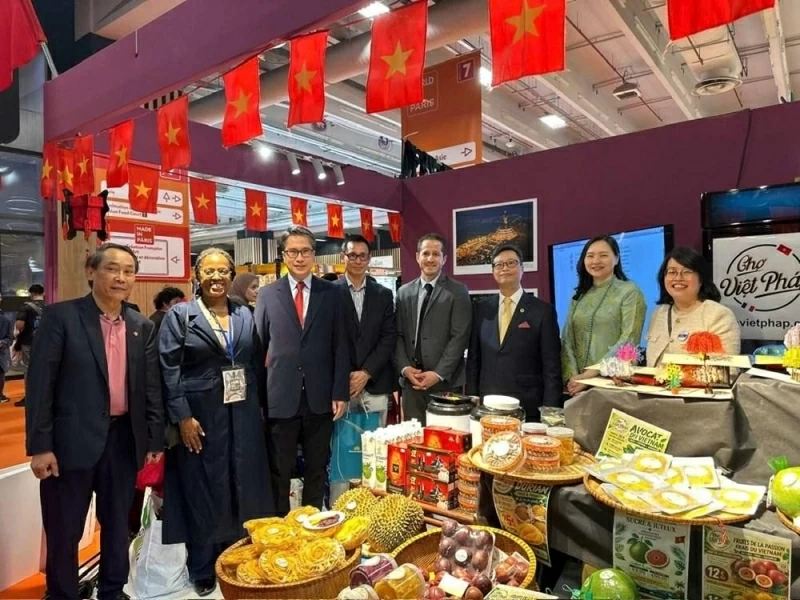 |
| Ambassador Trinh Duc Hai attends the opening ceremony of “Vietnam Space” and visits cultural and tourism promotion activities within the framework of Foire de Paris 2026, on May 4. (Source: Vietnamese Embassy in France) |
As an industrial powerhouse with a leading global research and innovation ecosystem, France is a natural strategic partner with the potential and experience to deeply accompany Vietnam in achieving these long-term development goals.
According to the Ambassador, science and technology, innovation, and digital transformation can become breakthrough pillars in bilateral cooperation. With world-class research centers like Paris-Saclay, CNRS, the French Alternative Energies and Atomic Energy Commission (CEA), and the French National Institute for Research in Digital Science and Technology (INRIA), France has the capability for extensive cooperation with Vietnam in strategic technology sectors such as AI, semiconductors, quantum technology, and information security.
Bilateral cooperation in these fields needs to strongly shift towards joint research, core technology transfer, and the establishment of research and development (R&D) centers in Vietnam, while enhancing linkages between research institutes, universities, and pioneering technology enterprises of the two countries.
In addition to cutting-edge technology sectors, specialized healthcare and biotechnology are areas where France has strengths and can contribute practically to improving the quality of life for the Vietnamese people.
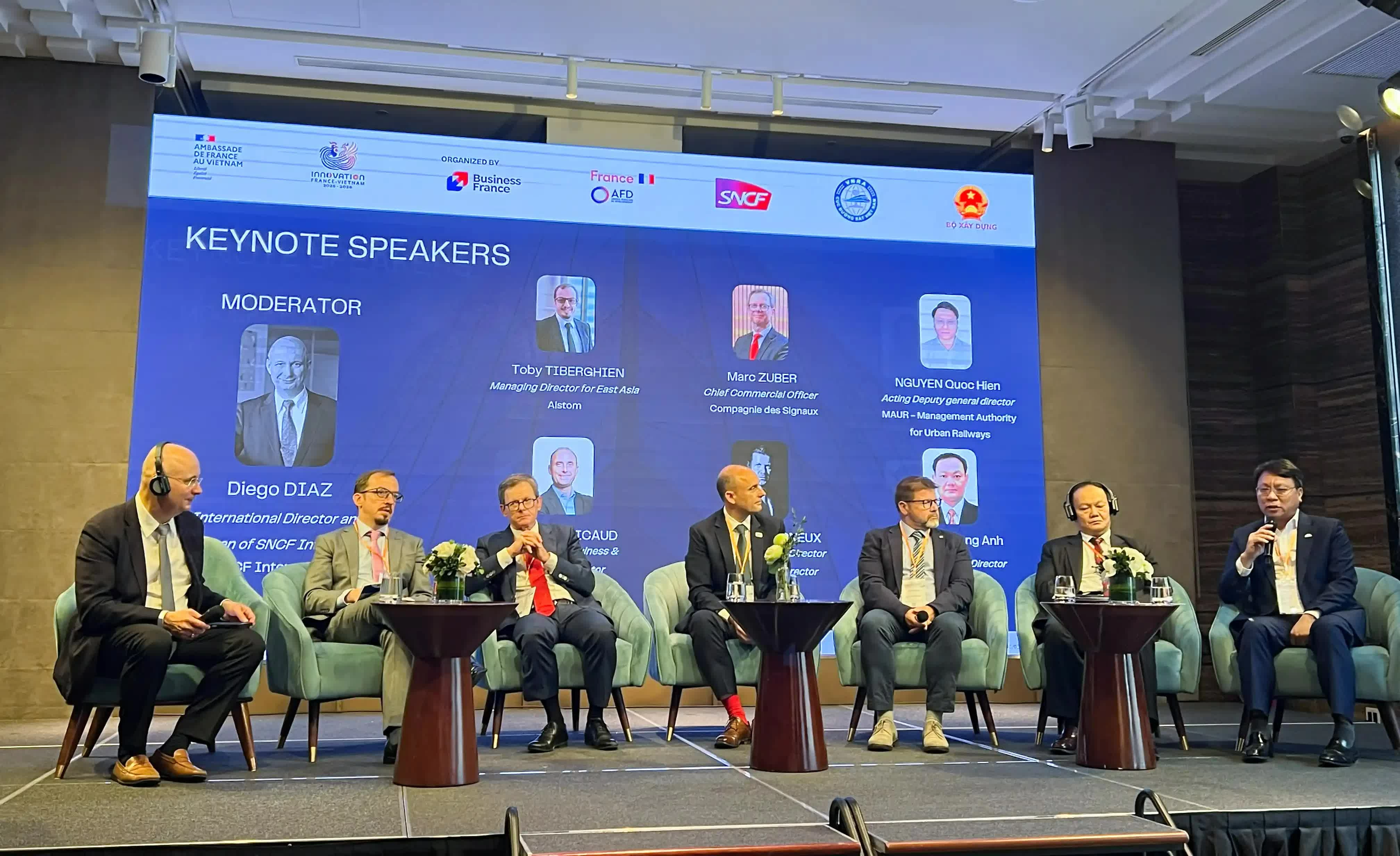 |
| On May 8, the French Embassy in Vietnam organized the Vietnam-France 2026 Railway and Urban Transport Forum, serving as a bridge to promote substantive dialogue among parties, aiming to open up more strategic cooperation opportunities in the modernization of Vietnam's transportation infrastructure. (Photo: Lan Nhi) |
According to Ambassador Trinh Duc Hai, cooperation in transferring techniques for oncology, cardiology, organ transplantation, nuclear medicine, building smart hospitals, and developing the pharmaceutical industry can contribute to modernizing Vietnam's healthcare system.
France's experience in archiving and digitizing documentary heritage can also support Vietnam in building a modern digital archive platform and preserving valuable historical sources. In sports, both sides have significant potential for cooperation in training elite athletes, developing sports medicine, and sharing experiences in building professional sports economic models.
Regarding energy, infrastructure, and strategic industries, Ambassador Trinh Duc Hai believes that major French corporations can participate in important transportation infrastructure projects in Vietnam such as the North-South high-speed railway, urban rail systems, as well as in the industrial supply chain of aviation, remote sensing satellites, and deep processing of strategic minerals.
Throughout these cooperative fields, Ambassador Trinh Duc Hai emphasised that developing high-quality human resources is a key factor and has decisive significance. Infrastructure, technology, or healthcare cooperation projects need to be linked with training Vietnamese experts, engineers, and doctors, thereby not only meeting immediate needs but also contributing to enhancing the country's long-term strategic autonomy.