




Dairy cow farming model: Creating 'skilled farmers', building new-style rural areas
When each participant in the farming model becomes an "expert" in their respective stage, specialization not only enhances productivity and quality but also allows the model to be flexibly expanded, contributing to transforming the rural landscape and promoting sustainable development.
Latest
In traditional farming models, farmers have to juggle too many roles – from land preparation, seed selection, grass planting, to cattle health care, milking, and waste management, leading to a situation of knowing much but mastering none, resulting in inconsistent milk quality.
In contrast, the Linked Feed Chain model (Farmers grow green fodder → Livestock farms → Processing enterprises) has liberated the potential of each link through absolute specialization.
Linked feed chain: The “golden key” for sustainable development
Over the past two decades, Vietnam's dairy farming industry has witnessed a revolution in management thinking and technology application. From small-scale, fragmented household farming with a few cows, relying entirely on agricultural by-products and natural grass, the dairy industry has advanced to an industrial production model, applying digital technology, managing herds with electronic chips, and standardizing international processes.
However, as the national dairy herd size rapidly increases and approaches global standards, Vietnam's agriculture faces a strategic “bottleneck”: the challenge of self-sufficiency in high-quality green fodder.
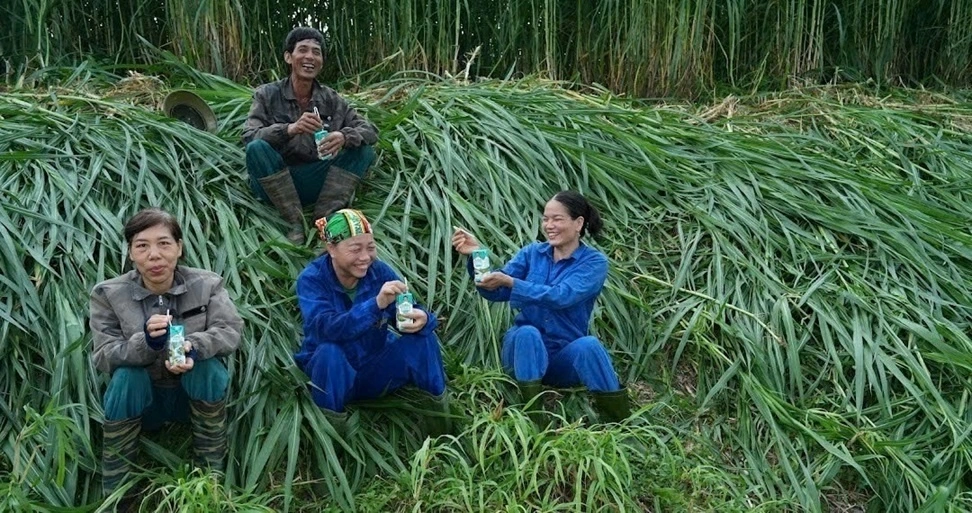 |
| Local farmers specialize in growing grass, ensuring year-round green fodder. |
In the cost structure of dairy farming, feed accounts for 60-70% of production costs. Dairy cows are ruminants, and milk productivity and quality (fat content, protein, milk fat) directly depend on the fresh, nutritious green fodder diet.
Therefore, if reliant on imported materials (such as Alfalfa hay or silage corn bales from abroad), enterprises and farms will face enormous pressure from logistics transportation costs, exchange rate risks, and global supply-demand fluctuations.
Recognizing this challenge, the closed Linked Feed Chain model has emerged as a “golden key”, opening an optimal path for the economic landscape of the dairy industry.
The value of a glass of milk: A blend of farmers' sweat, scientific intelligence, farm discipline, and corporate responsibility
The linked feed chain model in dairy farming is not merely about the usual buying and selling of agricultural products but a tightly knit technical and economic cooperation ecosystem among three main links: Local farmers: Planning and cultivation; Livestock farms: Silage and milk harvesting; Processing enterprises: Trade and distribution.
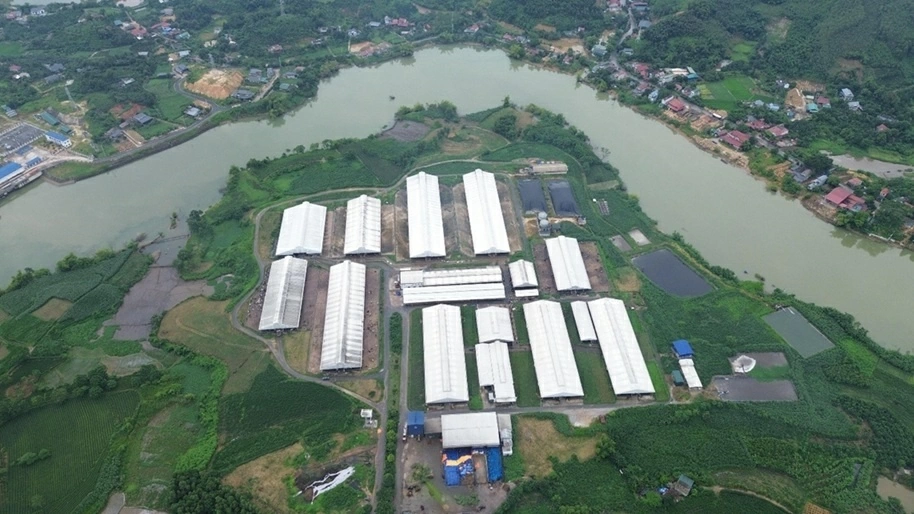 |
| The linked feed chain not only creates feed for dairy cows but also establishes a sustainable production ecosystem. |
Link 1 is the local farmer – the producer of input materials. Farmers convert inefficient rice fields and alluvial land into high-yield short-term crops like Biomass Maize.
The combination of biomass maize and high-yield grass varieties helps balance the nutritional diet, ensuring year-round green fodder supply, reducing the pressure of importing roughage, and increasing autonomy for dairy farms. Additionally, long-term grass fields contribute to soil cover, reduce erosion, retain moisture, and improve soil fertility.
Link 2 is the livestock farm – the technical & procurement center. Dairy farms act as both the purchasing customer and the “technology transfer center”.
Farms provide standard maize seeds, guide farmers in cultivation processes according to VietGAP/GlobalGAP standards, control pesticide residues, and determine harvest timing. Once maize/grass is harvested, farms purchase it on-site at stable prices guaranteed by long-term contracts, then incorporate it into the silage system (Silage) and mix TMR (Total Mixed Ration) to meet nutritional standards for the herd.
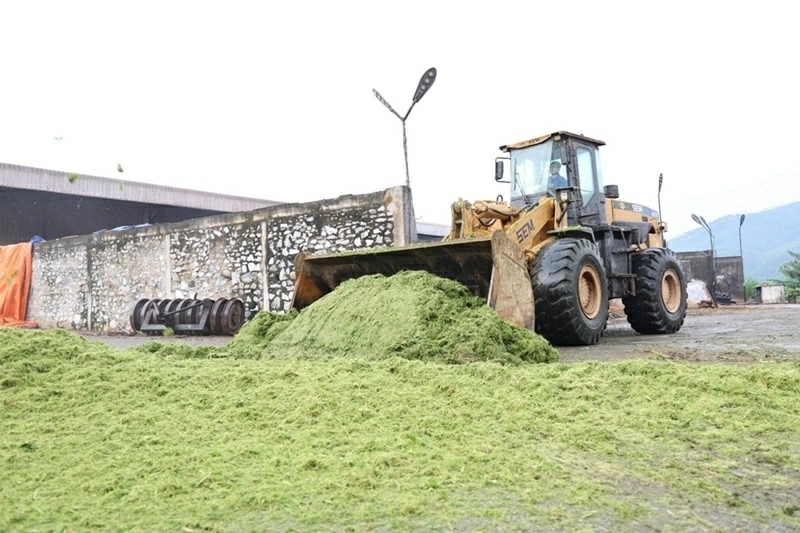 |
| Farms purchase quality feed and mix it to meet nutritional standards for the herd. |
Link 3 is the processing & distribution enterprise – a sustainable commercial output. Enterprises receive pure, high-quality raw milk from farms.
Thanks to good control of input feed quality, the harvested milk has low microbiological content and high nutritional value, enabling enterprises to refine and deeply process it into premium product lines (pasteurized milk, sterilized milk, yogurt, cheese...) with outstanding competitiveness in domestic and international markets.
According to agricultural expert Hoang Trong Thuy: “Building a strong dairy industry requires more than just good cattle breeds or modern factories. More importantly, a sustainable linkage chain from the feed fields to the glass of milk must be established. When farmers, cooperatives, farms, and enterprises share benefits, the dairy industry can develop stably, enhance competitiveness, and reach international markets. This is also a vivid example of modern agricultural economic thinking: Development is not through individual links but through the strength of the entire value chain.”
Fresh milk Kun and the story of farmers creating million-dollar fields in Tuyen Quang
In a strip of alluvial land along the Lo River in Tuyen Quang province, once abandoned and cultivated precariously due to farmers' lack of interest in farming, these lands have now been “revived”, covered in the lush green of Elephant Grass, Mombasa grass fields... This transformation stems from a sustainable consumption linkage chain between farming households and Lof Ho Toan Dairy Farm – the unit providing raw fresh milk for the familiar Fresh Milk Kun product, beloved by millions of Vietnamese children and Tuyen Quang farmers.
Instead of growing corn for grain, which takes 100–120 days to harvest, farmers participating in the linkage chain switch to growing biomass maize, harvested precisely at the “wax ripeness” stage (only 80–85 days). Shortening the cultivation cycle helps farmers increase from 2 to 3–4 crops per year, maximizing land use value and increasing revenue per unit area by 1.5 to 2 times compared to before.
To date, the linkage network of Lof Ho Toan Farm has attracted approximately 1,258 farmer households to cooperate. Each year, the farm directly pays nearly 17 billion VND to purchase tens of millions of kilograms of biomass maize, high-yield grass, and agricultural by-products from the raw material region. This stable cash flow not only “pours” directly into villages but also turns green fodder cultivation into a profession that provides a stable income for thousands of families.
Affirming the economic and social value of the linkage chain, Ms. Mai Thi Hoan, Deputy Director of the Department of Agriculture – Environment of Tuyen Quang province, stated: The model of land consolidation and conversion to green fodder cultivation along the Lo River's alluvial land to supply Lof Ho Toan Dairy Farm is a breakthrough in the province's crop structure transformation. The enterprise's purchase of green fodder creates conditions for farmers to convert part of their land to livestock feed production, increasing the land use coefficient and value per unit area. More importantly, the model contributes to creating a clear economic relationship: enterprises need stable raw materials; farmers need stable output; and rural areas need stable jobs and livelihoods.
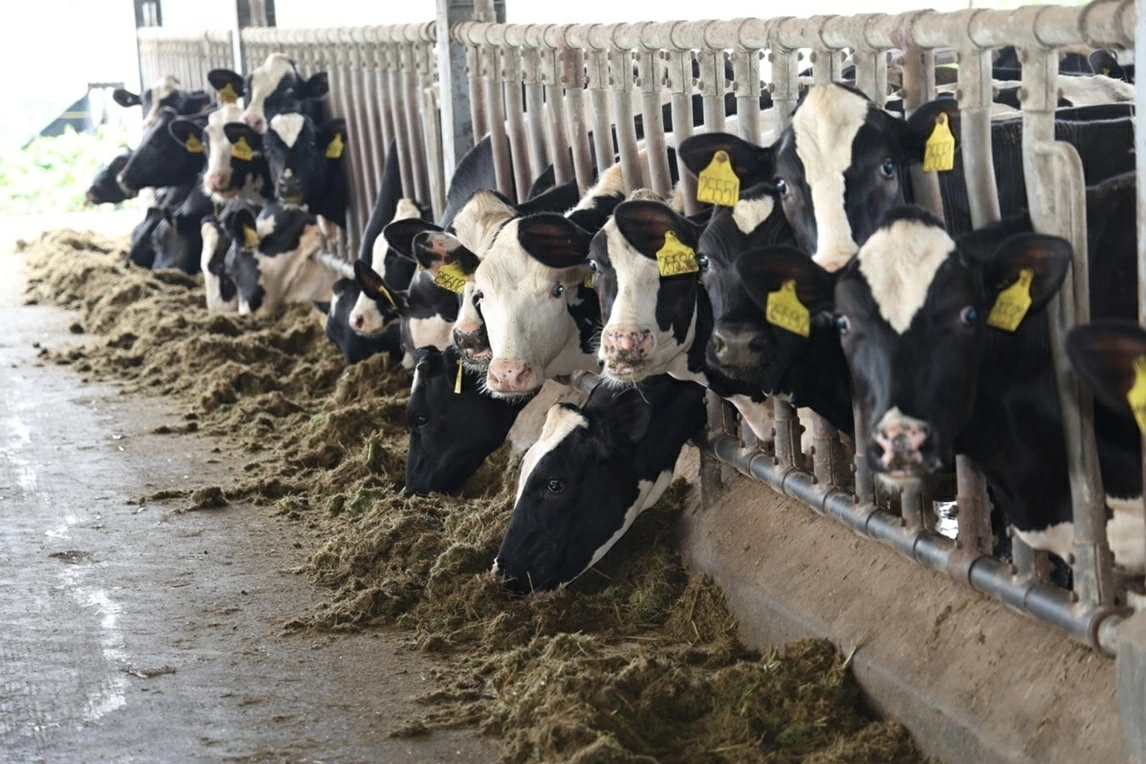 |
| Thanks to good control of input feed quality, the harvested milk has low microbiological content and high nutritional value, enabling enterprises to refine and deeply process it into premium product lines with outstanding competitiveness in domestic and international markets. |
Reflecting on the linked feed chain model in dairy farming, agricultural expert Hoang Trong Thuy noted: For many years, we have often talked about keeping people in rural areas. But to keep them, there must be stable jobs, income, and career development opportunities, leading to sufficiency and wealth. The linked feed chain has contributed to creating that.
Farmers are no longer just seasonal agricultural product sellers but long-term partners of enterprises. The relationship is not just about buying and selling but involves four layers of cooperation: technology, quality, production planning, and benefit sharing. After years of working with enterprises, they will become highly skilled professionals in their chosen field. This is very valuable.