





Vietnamese lychees take root in the Israeli Desert thank to modern agriculture
WVR - In late June and early July 2025, as the Mediterranean breeze sweeps across the northern hills of Israel—carrying golden sunlight and a salty tang—the first vibrant red lychees begin to ripen on a nearly 10-hectare field on the outskirts of HaBonim City.
Latest
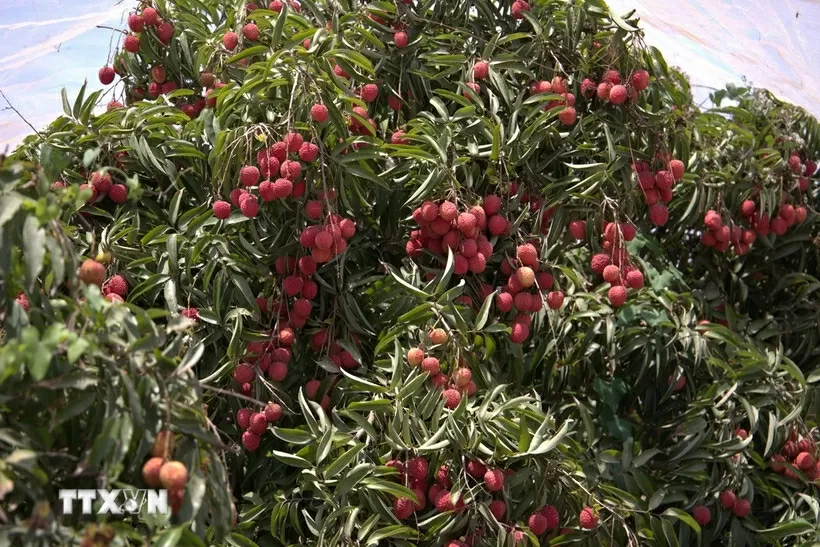 |
| The first clusters of ripening lychees glow bright red across nearly 10 hectares of farmland on the outskirts of HaBonim. (Photo: VNA) |
On the modern farm run by the Bananot Hahof Agricultural Cooperative, lychee season enters its most bustling time of the year—a harvest season that is not only lively but also a testament to nearly a decade-long journey of human resilience in conquering nature.
Uri Shpatz, head agronomist of Bananot Hahof—which has been cultivating the Hong Long lychee variety (also known as U Hong) from Vietnam since 2016—shared that they were not the first to bring Vietnamese lychee to this Middle Eastern country.
According to Uri, this lychee variety was first imported into Israel about 15–18 years ago by the Israeli Lychee Growers Association and the Agricultural Research Organization (ARO). After planting, the lychee trees began producing fruit in the fourth year and reached peak yield after 6–7 years.
Uri Shpatz explained, “Usually, when introducing a new crop to a different region, it takes several years to adapt the cultivation techniques to the local climate and soil conditions.”
From the very beginning, the project faced numerous challenges: arid soil, low rainfall, and highly fluctuating temperatures—all of which go against the ideal growing conditions for lychee, a famously “temperamental” crop known for its slow growth, extended blooming cycle, and extreme sensitivity to temperature, humidity, and pruning.
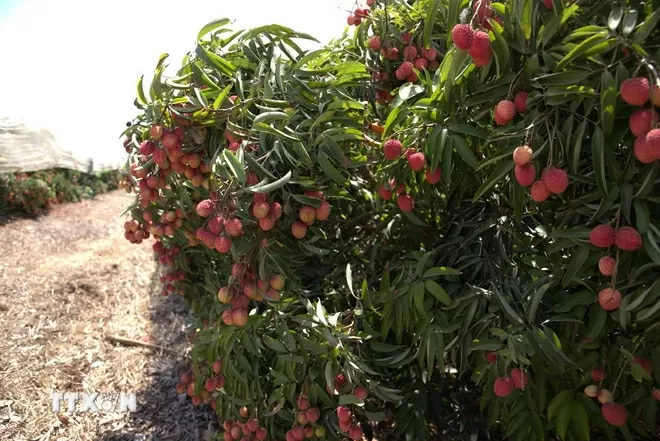 |
| The Hong Long lychee is also highly regarded for its strong vitality, high yield, large fruits, and superior flesh-to-seed ratio. (Photo: VNA) |
The agricultural engineering team at Bananot Hahof patiently experimented and fine-tuned every technical detail—from drip irrigation systems and microclimate regulation to managing flower induction under a special cycle. After 3–4 years, the first stable clusters of lychee began to appear.
According to Uri, “The Hong Long lychee variety gradually adapted and now requires less technical intervention compared to the Mauritius variety we previously cultivated.”
The Hong Long lychee is also highly regarded for its strong vitality, high yield, large fruits, and superior flesh-to-seed ratio. The trust placed in this Vietnamese lychee variety has now paid off.
Today, thanks to microclimate sensors and precision agriculture technologies, each area of the farm is optimized for humidity, light, and temperature. The lychee trees not only survive but also bloom consistently and bear fruit abundantly. The current yield reaches 25 tons per hectare—an astonishing figure for a tree once thought to thrive only in Vietnam’s basaltic red soil.
From late June to mid-July, the farm is cloaked in the vivid red of ripe lychees. Workers swiftly harvest and sort the fruit on site. The lychees are carefully packaged on the same day and transported via refrigerated trucks to Tel Aviv, Haifa, Jerusalem, and even European supermarkets.
Regarding export proportions, Uri noted that figures vary annually based on domestic demand and supply: “If there’s an abundance of local fruit, we will prioritize exports—sometimes most of the yield goes abroad. But in times when domestic prices are higher than export prices, we retain more for local consumption.”
“European customers are enthralled by lychees thanks to their natural fragrance and unique, delicate sweetness,” Uri shared. “But since lychees have an extremely short shelf life after harvest, post-harvest logistics must be meticulously managed and there is no room for error. Our main export markets include Western European countries like Germany, France, the UK, the Netherlands, and Italy.”
In addition to lychees, Bananot Hahof is also a prominent name in banana, pineapple, and grape cultivation—traditional crops of the region. The cooperative mainly partners with top Israeli suppliers such as Netafim, Rivulis, and Metzer. Most banana and pineapple varieties are imported from Ginosar Agro, and some from Rahan Meristems. Notably, the vineyard’s yield of 30 tons per hectare places its grapes among the best in the world.
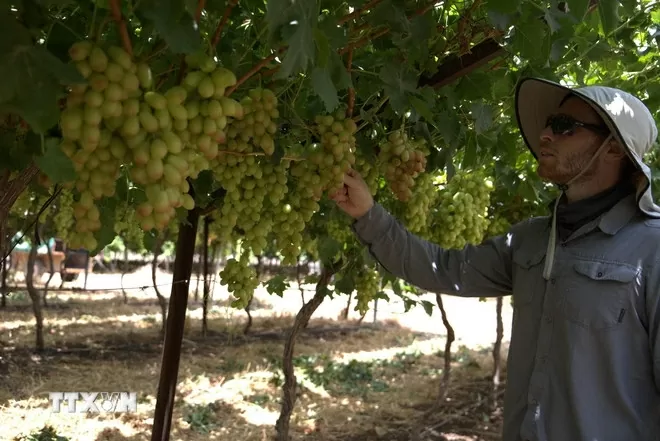 |
| Alongside lychees, the Bananot Hahof farm also grows one of the world’s finest grapes, with yields reaching up to 30 tons per hectare (Photo: VNA) |
Bananot Hahof is a model example of a new-generation agricultural cooperative in Israel—where traditional farming merges with cutting-edge innovation. They are not just producers but also invest heavily in R&D: improving irrigation techniques, using data to control the microclimate, and optimizing every step from cultivation to distribution.
Although the initial investment costs were high, the results have been premium harvests that meet the strictest standards of both domestic and export markets. This is more than just a farm—it is a symbol of innovation, perseverance, and long-term vision in modern agriculture.