


New chapter expected in China–Vietnam community with shared future: CGTN producer
WVR - The state visit to China by General Secretary and President To Lam has attracted widespread attention from the Chinese media. The World and Vietnam Report is pleased to introduce an article by Chu Meng, a news producer at China Global Television Network (CGTN).
Latest
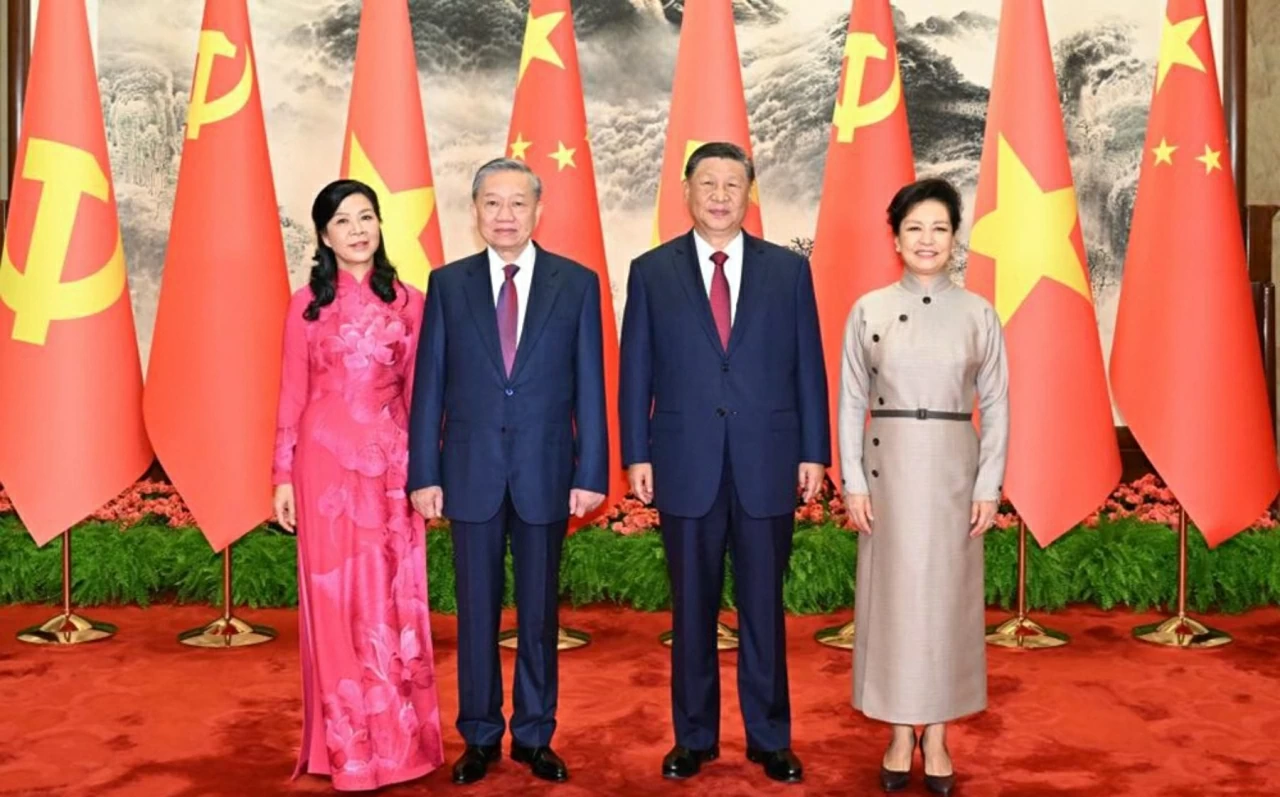 |
| New chapter expected in China–Vietnam community with shared future: General Secretary and President To Lam and his spouse, Ngo Phuong Ly, pose for a group photo with General Secretary and President of China Xi Jinping and his spouse Peng Liyuan, in Beijing, on August 19, 2024. (Source: VNA) |
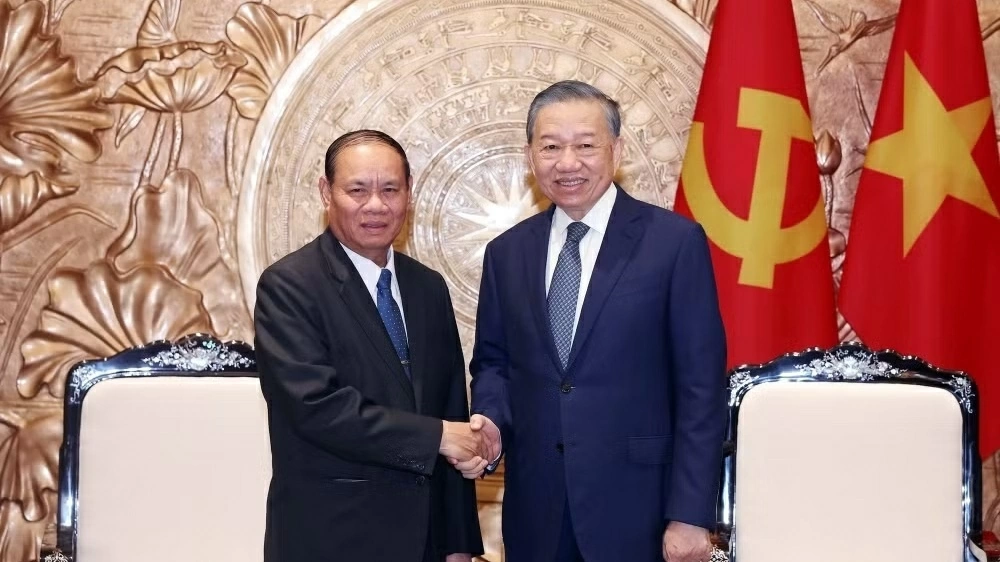
On April 9, China and Vietnam simultaneously announced that To Lam, General Secretary of the Communist Party of Vietnam Central Committee and Vietnamese President, will pay a state visit to China from April 14 to 17, 2026. As To Lam’s first overseas trip following Vietnam’s latest leadership transition, this visit carries both symbolic and strategic weight. It reflects the enduring vitality of traditional party-to-party ties and signals a shared commitment to deepening practical cooperation and advancing common development.
China and Vietnam are neighboring socialist countries who are bound by longstanding historical ties and aligned governance philosophies. Both uphold the leadership of their respective communist parties, while pursuing gradual reform paths suited to national conditions. Against this backdrop, choosing China as the destination of President To Lam’s first foreign visit underscores Vietnam’s prioritization of bilateral relations, and its intent to further consolidate political mutual trust.
Institutionally, the two sides have established the pioneering “3+3” strategic dialogue mechanism covering diplomacy, defense, and public security. This framework enables sustained exchanges on governance, national security, and ideological development, fostering mutual learning in areas such as innovation, social governance, and livelihood improvement. The relationship offers a global model for inter-party relations.
Since launching its Doi Moi reforms in 1986, Vietnam has steadily advanced a socialist-oriented market economy. Recent reforms such as streamlining administrative structures, expanding openness, and investing in high-tech sectors such as semiconductors and artificial intelligence have injected fresh momentum. With robust export performance and notable achievements in poverty reduction, Vietnam is progressing toward its goal of becoming a high middle-income country by 2030.
For its part, China has consistently respected Vietnam’s development path, while acting as a reliable partner through experience-sharing, technical cooperation, and market access. Bilateral economic ties have grown deeply intertwined: China has been Vietnam’s largest trading partner for over two decades, with trade volume approaching $300 billion. Supply chains are closely integrated, and strategic alignment between the Belt and Road Initiative and Vietnam’s “Two Corridors, One Economic Belt” continues to advance, particularly in infrastructure and connectivity projects.
In an era marked by a sluggish global recovery and rising uncertainty, the importance of regional cooperation becomes even more pronounced. This visit is expected not only to reinforce the two sides’ traditional friendship and political trust, but also to unlock broader cooperation in infrastructure, agriculture, the digital economy, and green development. The benefits will extend beyond major enterprises to small businesses, cross-border traders, and young people seeking new opportunities.
Amid accelerating global changes and geopolitical tensions, China-Vietnam cooperation underscores the value of good-neighborly relations and coordinated development. The visit represents both a reaffirmation of political trust and a pragmatic effort to align development strategies, manage differences, and contribute to regional stability. With shared resolve, the two countries are well-positioned to deepen cooperation, safeguard peace in the South China Sea, and promote regional integration. Doing so will deliver tangible benefits to both peoples and contribute to broader global stability.