


U.S. Ambassador Marc Knapper highlights key pillars and future prospects of Vietnam–U.S. relations
WVR - On July 8, US Ambassador to Vietnam Marc E. Knapper highlighted key pillars and future prospects of Vietnam – US cooperation while meeting with the press in Hanoi on the occasion of the 30th anniversary of diplomatic ties (July 12, 1995 - 2025).
Latest
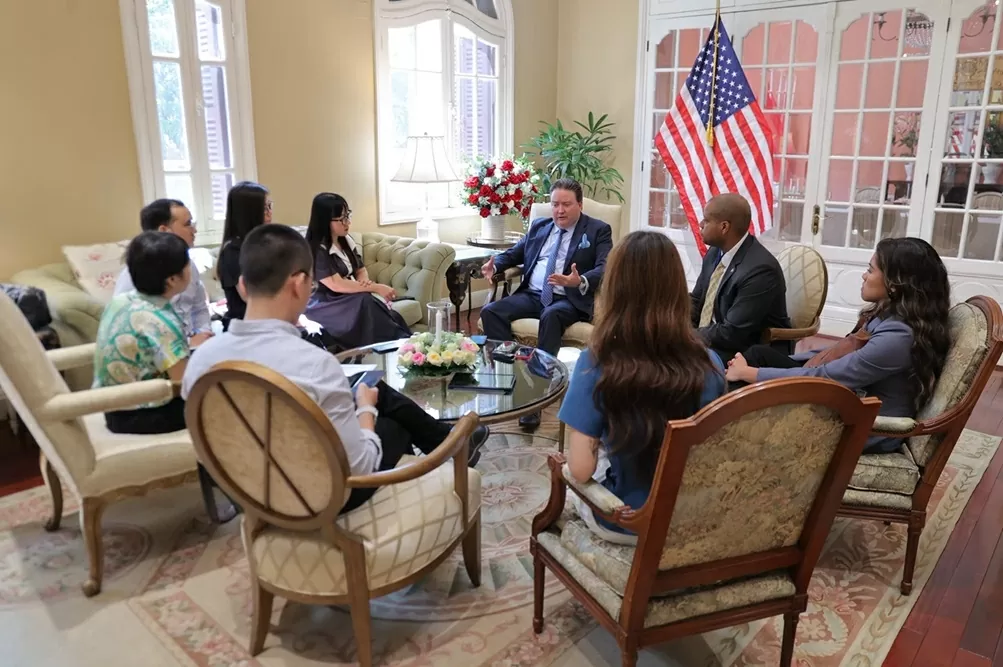 |
| US Ambassador to Vietnam Marc E. Knapper at the meeting with the press. (Photo: Nhat Hong) |
Key pillars of Vietnam – US cooperation
Ambassador Knapper noted that one major pillar is economic relationship. Vietnam is currently the 8th largest trading partner of the United States, and the United States is Vietnam’s largest export market. The US's investment in Vietnam has continued to increase, while Vietnamese investors are increasingly looking for opportunities in the US.
Back in May, the US side hosted the SelectUSA Investment Summit, which welcomed over 100 Vietnamese participants — the largest Vietnamese delegation ever. Ambassador Knapper co-led the delegation with the Vice Minister of Finance. It was the first time a Vietnamese Government official had co-led such a delegation, reflecting the growing importance that Vietnam places on investing in the U.S. That’s just one example of how deep and dynamic our economic partnership has become.
Another vital pillar is education. Vietnam is the sixth-largest source of international students in the U.S., with around 30,000 Vietnamese students currently studying there. If counting shorter-term exchanges like summer programs, homestays, and semester-long stays, the number of Vietnamese who have had exposure to the U.S. education system rises to about 300,000 — a remarkable figure.
The number of American students and academics coming to Vietnam expected to increase. In April, an education delegation consisting of 21 American universities visited Vietnam. Already, 20 of them are actively discussing collaboration with Vietnamese institutions. We hope this will result in more student and faculty exchanges in both directions. Fulbright University Vietnam remains a significant institution supported by both the U.S., and Vietnamese government, including Ho Chi Minh City administration in particular.
The US also committed to support Vietnam’s decision to make English the second official language of its education system. English proficiency unlocks opportunities in tech and education. Various programs — American Centers, YSEALI, Global UGRAD — are committed to supporting Vietnam’s English language goals, the Ambassador said.
Health cooperation has become another key pillar, starting from the partnership with HIV/AIDS treatment through PEPFAR in 2005. However, it has since expanded to include tuberculosis and, more recently, COVID-19. When the pandemic hit, Vietnam provided the U.S. with much-needed masks and protective gear. Later, the U.S. provided Vietnam with 44 million doses of Pfizer vaccines, which covered 22 million people — about one-fifth of Vietnam's population. These efforts laid the foundation for ongoing cooperation in public health and epidemic surveillance, the Ambassador stressed.
Defense ties are also growing stronger, from port visits by U.S. ships to equipment and training support.
In terms of hi-tech and semiconductor cooperation, Ambassador Knapper described the Joint Statement on the upgrade of bilateral ties to a Comprehensive Strategic Partnership in September 2023, signed by Party General Secretary Nguyen Phu Trong and President Joe Biden, which marked a historic “double upgrade” in bilateral relationship, with both sides valuing collaboration in high technology, particularly semiconductors. The two countries recognised Vietnam’s readiness and potential to integrate more deeply into the global hi-tech value chain.
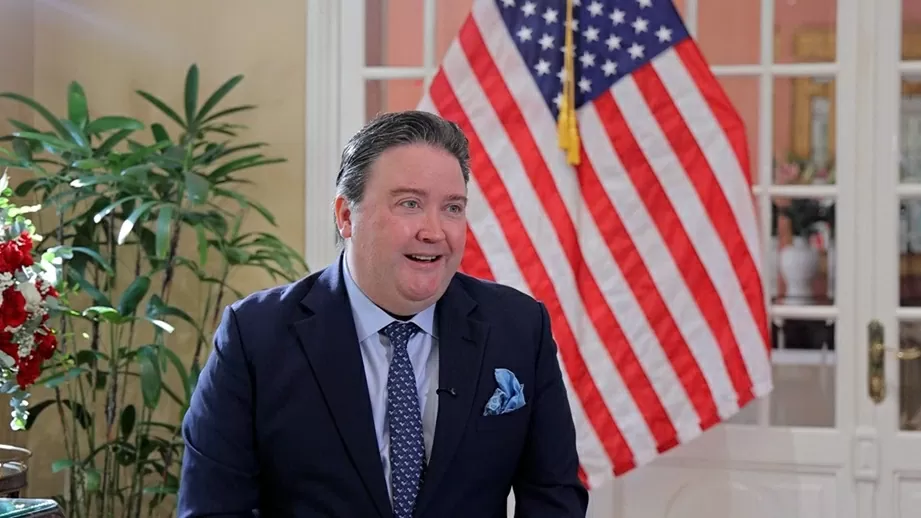 |
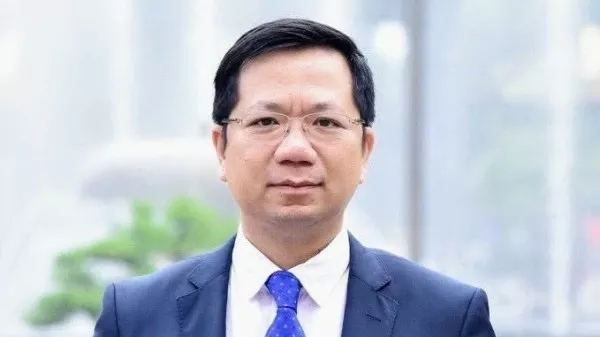
| US Ambassador to Vietnam Marc E. Knapper. (Photo: Nhat Hong) |
In hi-tech collaboration, the US Government is working closely with domestic universities, such as Arizona State University, to partner with Vietnamese educational institutions in developing high-tech curricula, particularly in semiconductors, aiming to build Vietnam’s capacity to train a skilled workforce. Other universities, including Purdue and Portland State, are also engaged in similar efforts.
At the same time, US tech companies are investing in workforce training to meet the growing demand for skilled workers in semiconductor manufacturing and chip design factories, enabling Vietnam to play a more significant role in the global high-tech value chain and realise its ambition to become a global and regional semiconductor hub.
Recent visits by Tim Cook of Apple, Jensen Huang of Nvidia, and Qualcomm leaders, who announced the acquisition of Vingroup’s AI division, underscored the growing interest in Vietnam’s technology future, the Ambassador said.
The US Government, businesses, and education establishments want to become part of Vietnam’s hi-tech future, the diplomat said.
The past three decades have witnessed the expanded and deepened mutual trust and understanding between the two countries, Knapper said, adding that Vietnam and the US have shared common interests and goals, and cooperated with each other to address many issues from healthcare and cybersecurity to combating transnational crimes such as human and drug trafficking.
Future prospects for the Vietnam-US partnership
Regarding orientations for developing the bilateral relations in the coming time, Ambassador Knapper said the US remains committed to fostering a healthy, balanced trade relationship that benefits both nations and supports shared prosperity. The US Government also wants to ensure that US companies would operate in Vietnam on a level playing field, while also creating favourable conditions for Vietnamese firms to successfully do business in the US market.
Vietnam has been proactive and constructive in trade discussions, particularly regarding tariffs. Vietnamese Party General Secretary To Lam was among the first foreign leaders to hold phone talks with US President Donald Trump following the US's announcement of reciprocal tariff policy, the Ambassador noted.
The high-level phone talks between Party General Secretary To Lam and President Donald Trump, along with activities of high-ranking delegations of the two nations, demonstrated that Vietnam-US relationship is at its strongest stage, marked by mutual respect and a shared commitment to advancing the ties for the benefit of both countries' people, he added.
The Ambassador also noted strong optimism among US enterprises regarding Vietnam as a partner, market and production hub, particularly in high-tech manufacturing.
According to the Ambassador, Vietnam’s recent efforts to streamline administrative units and adopt a two-tier local administration model will improve decision-making, project approval, and investment licensing processes.
Vietnam’s focus on empowering its private sector, advancing hi-tech industries, and developing digital infrastructure will make it an even more appealing hub for trade and investment, he said, hoping to see more Vietnamese companies investing in the US.
Ambassador Knapper affirmed that programmes on the settlement of war aftermath, a foundation of political relations between the two countries, have been maintained.
Following a comprehensive review of the US's foreign assistance programmes, projects related to unexploded ordnance (UXO) clearance, dioxin clean-up, and support for those with disabilities, as well as joint search for servicemen missing in action (POW/MIA) from both sides, have all resumed after a temporary pause. These programs enjoy strong support from both the U.S. Congress and the American public, Ambassador Knapper stressed.
In his conclusion, Ambassador Knapper expressed his firm belief in the future of stronger cooperation and development between the two countries.