


Trump tariff cut on Japanese cars poses threat to Hyundai Motor, Kia
U.S. President Donald Trump’s latest move to lower a tariff on Japanese auto imports is feared to weaken the price competitiveness of Hyundai Motor Group, which still faces a higher tariff burden in the world’s largest economy.
Latest
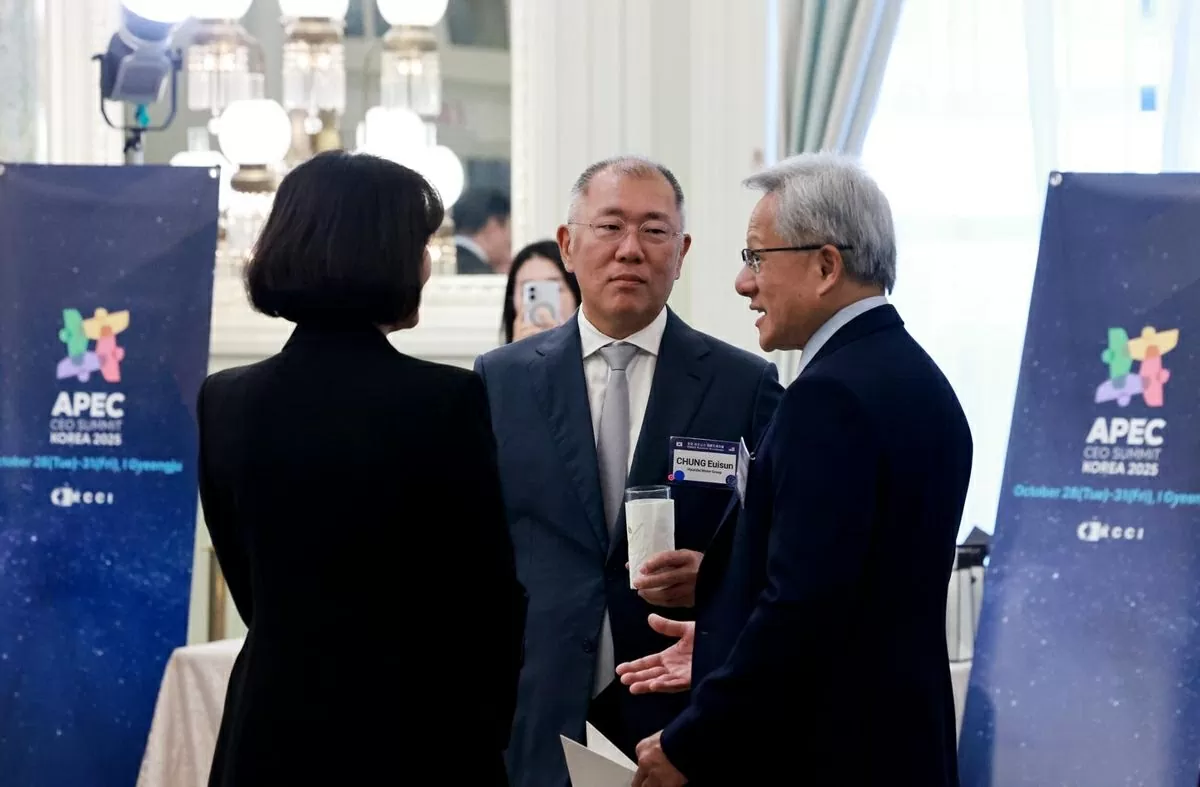 |
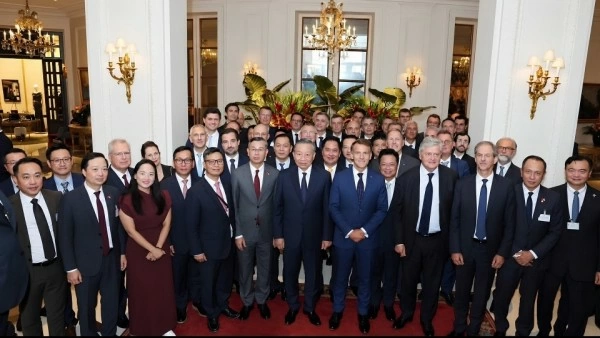
| Hyundai Motor Group Executive Chair Chung Euisun, center, listens as Nvidia CEO Jensen Huang, right, speaks during the Korea-U.S. Business Roundtable at the Willard InterContinental Washington, Aug. 25 (local time). (Source: Yonhap) |
According to the White House Thursday (local time), Trump signed an executive order to cut its tariff on imports of Japanese cars to 15 percent from the previous 27.5 percent. The tariff reduction will take effect seven days after publication of the order.
The order leaves Hyundai Motor, Kia and Genesis at a disadvantage in the U.S., as they remain subject to a 25 percent tariff more than a month after the U.S. agreed to lower the levy on Korean car imports to the same level as Japan.
Korean carmakers are in dire need of receiving the same the same tariff rate so they can minimize the earnings shock and further increase their market share in the U.S. through price competitiveness.
According to data from the Korean carmakers, Hyundai Motor’s export reliance on the U.S. reached 54 percent last year, with that of Kia coming in at 38 percent during the same period.
As both automakers do not have any immediate plans for price hikes in the U.S., they are exposed to a higher risk of shouldering more financial damages due to the 25 percent tariff, compared to their Japanese counterparts.
Hyundai Motor and Kia reported a combined operating profit fall of some 1.6 trillion won in the second quarter because of the tariff shock. As their auto inventories in the U.S. run out of stock, that figure is forecast to grow further in the third quarter unless Trump signs the same order for Korean auto imports soon.
The move to lower Japanese auto tariffs prompted calls for the Korean government to continue persuading the U.S. to take the same step for Korean automakers.
“As evidenced by the steep earnings fall of Hyundai Motor and Kia, the tariff shock has become a pressing issue for the survival of local carmakers,” an auto industry official said.
“Given the strong presence of Japanese brands such as Toyota and Honda in the U.S., the government should take steps for Trump to rapidly sign the order on Korean car imports as well.”
According to data from the Korea Automobile Manufacturers Association, the combined market share for Hyundai Motor and Kia in the U.S. came in at 10.8 percent last year, while that of seven Japanese auto brands, including Toyota and Honda, topped 37 percent during the same period.

| US tariff threat leads Vietnam to seek agricultural growth scenarios As the US has paused its 46% reciprocal tariff on imports from Vietnam, the Institute of Strategy and Policy on Natural Resources and Environment (ISPRONE) ... |
| Vietnamese enterprises urged to adopt strategic measures amid US reciprocal tariff: Workshop in HCM City WVR/VNA - Amid unpredictable fluctuations in US tariff policies, Vietnamese businesses must take a proactive and strategic approach to sustain their exports to this key ... |
| Workshop on leveraging logistics to help Vietnamese exporters navigate US tariff headwinds WVR/VNA - As Vietnamese exporters face formidable challenges from US tariff policies, logistics is emerging as a critical lever to maintain competitiveness in one of ... |
| Kim Long Motor automotive complex in Hue multiplies investment While many areas face challenges in drawing major investment, Hue city is seeing progress with the Kim Long Motor automotive complex, a key industrial project ... |
| Fully autonomous cars not yet suitable for Vietnam’s road conditions: Ministry of Public Security The Ministry of Public Security (MoPS) has proposed fully autonomous motor vehicles should be restricted and require operational permits. |
(Source: Korea Times)