





40 Years of Renewal: Vietnam's economic leap
WVR - After 40 years of Renewal, Vietnam has achieved comprehensive progress in economy, integration, and social welfare, affirming its increasingly high international standing and laying a solid foundation towards the goal of becoming a developed, high-income nation by 2045.
Latest
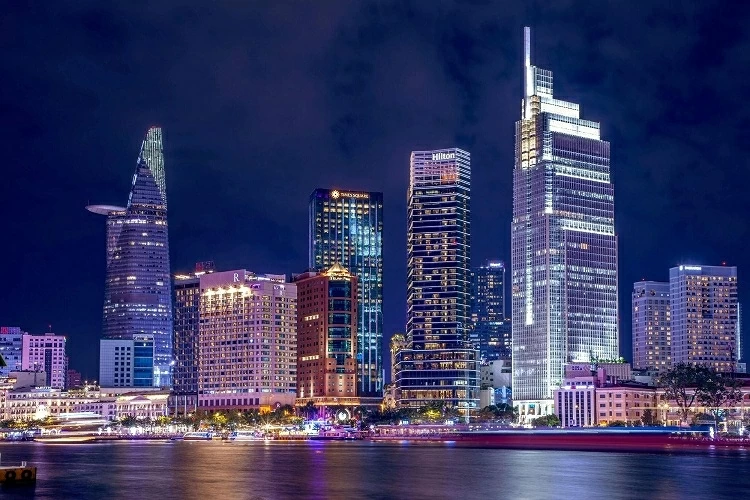 |
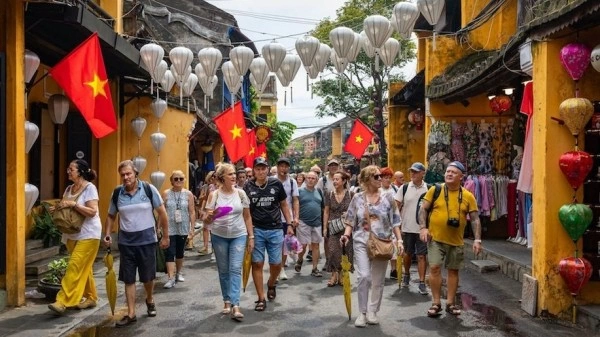
| The Vietnamese economy has improved both quantitatively and qualitatively. (Source: Pexels) |
Economic improvement in quantity and quality
Since the comprehensive Renewal initiative began in 1986, by 2000, Vietnam had transformed from a poverty-stricken nation, overcoming crises and making significant strides in all fields. The economy grew rapidly, deeply integrating with the world, ensuring food security, and becoming a leading rice exporter.
In 1986, Vietnam faced a severe socio-economic crisis with rampant inflation, food shortages, production stagnation, and a challenging life for its people. The GDP scale was only about 8 billion USD, ranking 9th out of 10 in ASEAN, just above Myanmar, with a per capita GDP of around 200-300 USD, among the poorest globally...
In terms of numbers, during the initial reform phase (1986-1990), the average GDP growth was only 4.4%. However, subsequent periods recorded remarkable progress with relatively high growth rates. From 1991-1995, the average GDP doubled, reaching 8.2% per year. From 2001-2005, it was 7.34%, and from 2006-2010, it maintained at 6.32% per year. By 2010, the GDP scale reached $101.6 billion, 3.26 times higher than in 2000.
Moving into the 2011-2020 period, macroeconomic stability was firmly maintained, inflation was controlled and kept low, creating an environment and motivation for socio-economic development. From 2011-2015, the average GDP growth rate was 5.9% per year; from 2016-2019, it was 6.8% per year. Vietnam became one of the highest-growing economies in the region, with the IMF ranking Vietnam among the top 20 economies contributing significantly to global growth in 2019.
Notably, from the early 2020s to now, Vietnam has consistently been among the top economies with the highest growth rates in the region and the world.
By 2025, Vietnam's economy marked new development milestones, with growth rates among the highest in the region and consistently leading globally for five consecutive years. The economic scale is estimated at $514 billion, rising 5 ranks to 32nd globally and 4th in ASEAN. The per capita GDP reached approximately $5,026, placing Vietnam among developing countries with upper-middle-income. The economic structure and growth quality continued to improve positively, while inflation was controlled below 4%.
Additionally, major economic balances were firmly ensured; international trade scale exceeded 930 billion USD, placing Vietnam among the top 20 leading global trade economies. The agricultural share in GDP gradually decreased, reflecting a shift towards modernization. The private sector now contributes over 50% of GDP, creating about 90% of jobs and accounting for 40% of total social investment capital. The state enterprise sector contributes about 28% of total budget revenue, attracting about 0.7 million workers, equivalent to 7.3% of the labor force in the enterprise sector.
Notably, Vietnam has continuously improved in many important international rankings such as the Global Competitiveness Index (GCI), the Index of Economies Contributing Most to Global Growth, the World's Most Livable Countries Index, the Safest Countries Index, the Happiness Index, the Investor Protection Index; the World's Best Countries Index, and the Global Soft Power Index.
Since 2021, Vietnam has officially been classified among economies with "moderate freedom", ranking 90th out of 184 economies worldwide in the Heritage Foundation's Economic Freedom Index (USA). In the World Intellectual Property Organization (WIPO) ranking – a specialized agency of the United Nations, Vietnam ranks 44th – within the confidence interval (from about 42 to 47) of this ranking.
Vietnam is one of the 7 middle-income countries that have made the most progress in the Global Innovation Index (GII) over the past decade, ranking 4th in Southeast Asia, 2nd among 36 lower-middle-income economies, and 44th out of 139 countries and economies in 2024 and 2025.
Vietnam's digital technology industry maintains high growth rates, serving as a foundation for the fastest-growing digital economy in Southeast Asia for the past three consecutive years, with about 20% per year, three times the GDP growth rate.
Vietnam also ranks 30th in the world's most powerful countries ranking, with its AI readiness index ranking 55th globally and 6th out of 10 in ASEAN; Vietnam's postal development integration index, announced in October 2023, increased by 4.5 points, belonging to the group of countries achieving level 6/10, up one level from the previous evaluation and ranked 7th out of 30 in the Asia-Pacific region.
According to StartupBlink, Vietnam's Global Startup Ecosystem Index in 2025 ranks 55th out of 100 countries and territories.
Increasingly consolidated international position
Vietnam is increasingly proactive in comprehensive and deep international integration, becoming a reliable partner and responsible member of the international community, and currently has diplomatic relations with all United Nations members.
Vietnam's defense and security capabilities have been strengthened; national independence, sovereignty, and territorial integrity are maintained; Vietnam's international prestige and position have been enhanced. Vietnam participates in over 500 bilateral and multilateral agreements in various fields, including 17 new-generation free trade agreements (FTAs); it has trade relations and exports goods to over 230 countries and territories; it has 90 bilateral trade agreements, nearly 60 investment encouragement and protection agreements, 54 double taxation avoidance agreements, and many bilateral cultural cooperation agreements with countries and international organizations.
In 2025, Vietnam's import-export turnover exceeded $930 billion, with goods and services exports increasing by 16.27% and a trade surplus marking 10 consecutive years, reaching over $20 billion...
The export commodity structure is shifting towards increasing the proportion of processed goods and decreasing raw exports. Annually, Vietnam has over 30 export items with a turnover of over $1 billion, ranking high globally, such as rice, coffee, pepper, cashew nuts, seafood, textiles, footwear, wood and wood products, mobile phones, computers, electronic products, cameras.
Currently, nearly 30 foreign investment funds are operating in Vietnam. Total ODA from 1993 to now has reached over $80 billion in committed capital, with over $40 billion disbursed. Vietnam is also among the top 10 countries receiving the most remittances globally, with a steady increase over the years.
Notably, Vietnam continuously stands out as the most attractive destination globally for regional and international investment flows due to its stable political environment, young population, impressive economic growth rate, and rapidly increasing middle-income consumer base, with increasingly synchronized and modern infrastructure.
Vietnam is and will increasingly integrate into several new global supply chains in various fields such as industrial production, agriculture, high-tech services, retail, semiconductors, food, warehousing production, finance, and banking...
From being a one-way investment recipient, Vietnam's overseas investment has recently increased rapidly, with thousands of projects and about $20 billion in registered and additional capital. Meanwhile, total FDI from 2021-2025 reached $185 billion, up nearly 9% compared to the previous five-year period and among the top 15 developing countries attracting the most FDI globally.
Improving quality of life
Vietnam officially exited the status of a less-developed country in 2010. By 2012, Vietnam completed all Millennium Development Goals (MDGs) set for 2015 ahead of schedule, recognized by the international community as a bright spot for inclusive development.
According to the United Nations and international organizations, Vietnam is among the 8 countries making the most progress in MDG4 on reducing child mortality and among the 9 countries making the most progress in MDG5 on reducing maternal mortality. Additionally, Vietnam ranks 27th out of 101 developing countries in poverty reduction capacity. The poverty rate significantly decreased from 22% in 2006 to below 10% by the end of 2013.
Not only achieving economic and social progress, but Vietnam also recorded clear advances in sustainable development. According to surveys and assessments by the United Nations, Vietnam's SDG performance index has continuously improved, from 88th position in 2016 to 57th in 2018, reaching 49th place in 2020.
The cultural and social fields have made significant progress in awareness, action, and results; the material and spiritual life of the people continues to improve. The unemployment rate among the working-age population remains below 3%; the average life expectancy is 74.7 years; the rate of trained labor with degrees and certificates is estimated at 29.2%; health insurance coverage exceeds 95.2% by 2025.
On the international stage, according to the United Nations, Vietnam's happiness index in 2025 ranks 46th, up 37 places from 2020; the human development index increased by 18 places, reaching 93rd out of 193 countries and territories; the sustainable development index ranks 51st out of 165, up 37 places from 2016.
These achievements result from the Party's unified and direct leadership of the entire political system, harnessing the strength of the entire people and army in the revolutionary cause, national defense, renewal, and nation-building with perseverance and determination. This creates an important foundation and motivation for Vietnam to rise to sustainable economic development, aiming to become a developed, high-income nation by 2045.