



The Treaty of Amity and Cooperation in Southeast Asia remains one of ASEAN's key foundational documents
WVR - The United Nations General Assembly is expected to adopt a Resolution sponsored by ASEAN countries regarding the Treaty of Amity and Cooperation (TAC) at its 80th session.
Latest
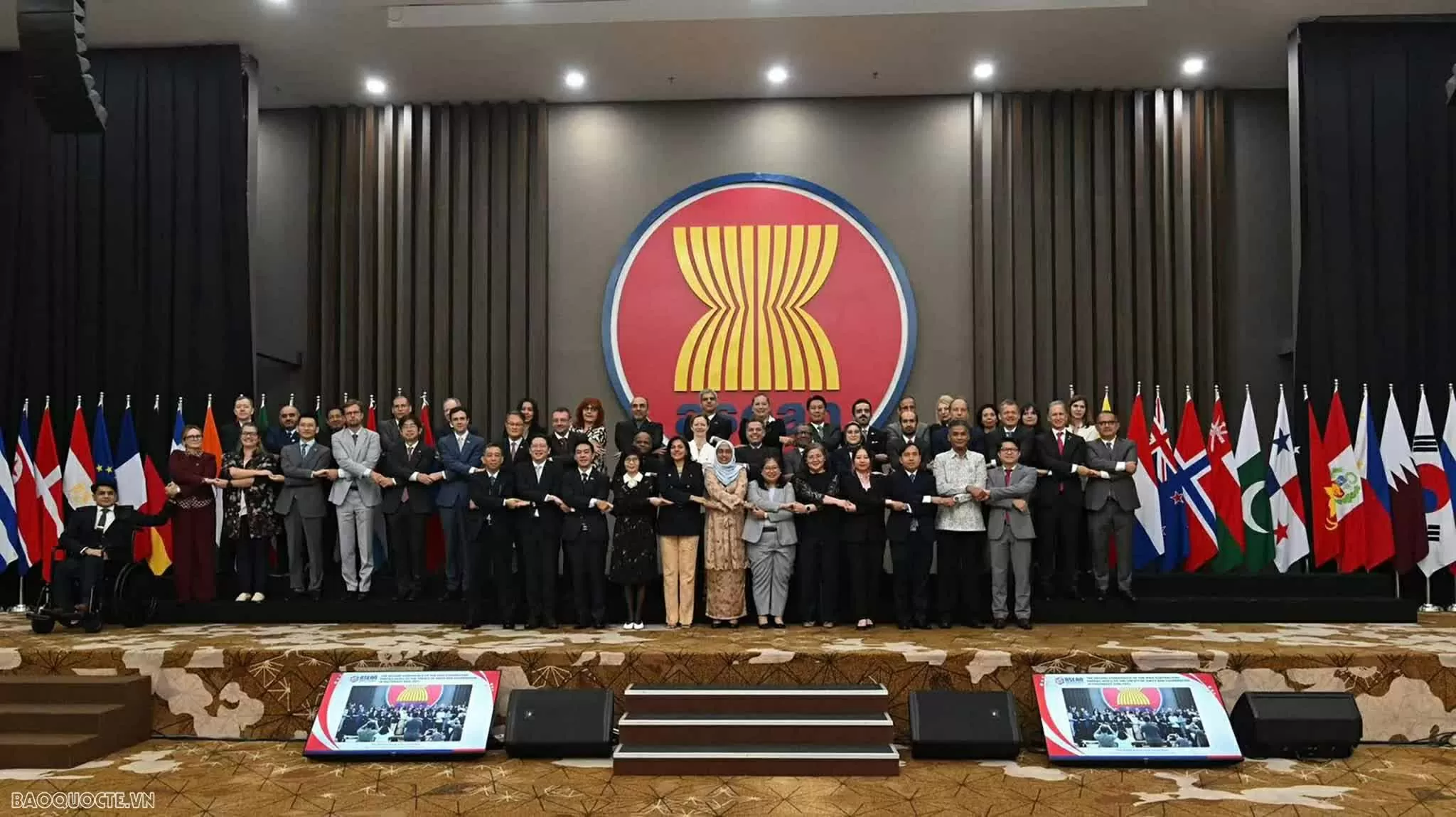 |
| The Treaty of Amity and Cooperation in Southeast Asia remains one of ASEAN's key foundational documents: Delegates attending the Conference. The United Nations General Assembly is expected to adopt a Resolution sponsored by ASEAN countries regarding the TAC at its 80th session. |
On September 18, the second Conference of the Parties to the Treaty of Amity and Cooperation in Southeast Asia (TAC), themed “Challenges and Opportunities – Past, Present, and Future”, was held at the ASEAN Secretariat headquarters in Jakarta, with the participation of ambassador-level representatives from 57 treaty parties.
ASEAN Secretary-General Kao Kim Hourn delivered the opening remarks, and the Malaysian Ambassador to ASEAN chaired the Conference on behalf of the ASEAN 2025 Chair.
The Conference served as an important occasion for ASEAN member states and TAC parties to strongly reaffirm their commitment to the principles of the TAC. It provided a platform to discuss the implementation of the TAC and measures to enhance its relevance and effectiveness regionally and globally, as the 50th anniversary of the Treaty approaches in 2026.
ASEAN countries emphasized that after nearly five decades, amidst complex and unpredictable regional and global developments and challenges to international law, the TAC remains one of ASEAN's key foundational documents. It promotes the spirit of friendship and cooperation, enhances dialogue, builds trust, effectively prevents and manages conflict risks, and contributes to maintaining peace, security, and stability in the region.
Today, the TAC is not only a code of conduct among Southeast Asian nations but has expanded its scope with the participation of many partners from around the world.
Marking the significant milestone of 50 years since the TAC's inception, the United Nations General Assembly is expected to adopt a Resolution sponsored by ASEAN countries regarding the TAC at its 80th session in 2025.
The Philippines, the ASEAN Chair for 2026, also announced plans to organize significant activities to commemorate the 50th anniversary of the TAC and called for active participation from other countries.
Speaking at the Conference, representatives from 35 TAC member countries highlighted the significance and value of the TAC and emphasized the important role of the regional structure with ASEAN at its center.
The six fundamental principles outlined in the TAC—respect for independence, sovereignty, territorial integrity; respect for the national identity of states; the right to exist free from external interference, coercion, or threat; non-interference in each other's internal affairs; peaceful settlement of disputes; and renunciation of the threat or use of force—were reaffirmed by many countries, who called on all parties to adhere to these responsibilities.
TAC member countries also expressed their readiness to seek and promote cooperation opportunities in areas of mutual interest, in line with the spirit of the TAC, effectively utilizing ASEAN-led mechanisms to contribute to the common effort of maintaining peace and stability in the region and effectively addressing both traditional and non-traditional security challenges.
Many countries shared views on issues threatening peace, security, and stability in the region, such as the East Sea, Myanmar, the Korean Peninsula, sovereignty and territorial disputes, along with armed conflicts in other parts of the world. They called for the application of TAC principles and the use of the TAC as a tool to promote the search for peaceful and sustainable solutions to these challenges.
In the afternoon, a Track 1.5 Dialogue Session took place, attended by esteemed diplomats and researchers from the region, discussing ways to uphold and preserve the role and value of the TAC, as well as effectively leveraging the TAC to contribute to maintaining peace, security, and stability in the region.