




Preserving the essence of Hanoi's people in a century-long vision (Part 1): Culture – An enduring strength for the Capital
WVR - Preserving the culture and essence of the elegant and civilized Hanoi people is not merely about looking back at the past with simple pride, but about preparing for the future with today's responsibility...
Latest
 |
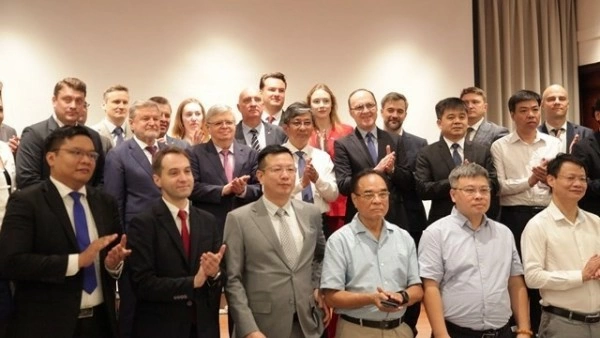
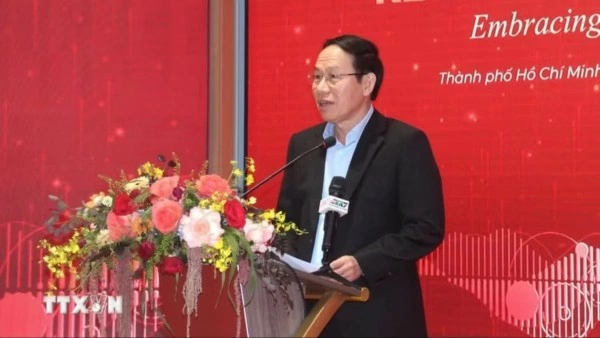
| Chairman of the National Assembly Tran Thanh Man attends the Conference announcing the 100-year master plan for Hanoi Capital and investment promotion in 2026. |
| Hanoi is not only the national political and administrative center, a special urban area rising strongly in the new era, but also a place that converges, crystallizes, and spreads the enduring cultural values of the nation. Thus, preserving the elegant and civilized essence of Hanoi people is not about clinging to a nostalgic beauty, but about building a human foundation for the future of the Capital with a 100-year vision: Modern without losing roots, rapidly developing yet humane, deeply integrated while still rich in Vietnamese identity. Amidst the ups and downs of history, the transformations of the times, and the increasingly modern urban rhythm, the elegant and civilized qualities persistently exist like a cultural undercurrent, creating the unique identity of the Capital. This is not only about behavior, speech, or everyday lifestyle, but also the depth of cultural heritage that is preserved, inherited, and continuously renewed through each generation. Entering a new development phase, with the aspiration to build Hanoi into a cultural - civilized - modern urban area, the elegant essence needs to be recognized as a soft power, a foundational value to shape the future. From this perspective, the World & Vietnam Report conducts a series of articles "Preserving the Essence of Hanoi People in a Century-long Vision", hoping to contribute a voice to the journey of preserving the values that have made the soul of Thang Long - Hanoi, while also opening up reflections on the responsibility to nurture that identity in the development flow of the 21st century. |
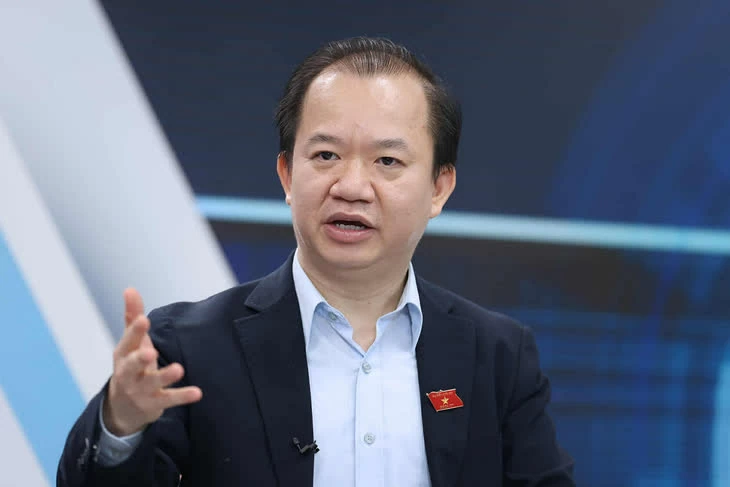 |
| National Assembly Deputy Bui Hoai Son believes that a Capital with a 100-year vision must place culture at the centre of development. (Photo: Courtesy by author) |
Part 1: Culture - An intrinsic strength for the Capital
Preserving the elegant and civilized essence of Hanoi people is not just about maintaining a beautiful conduct or cultural memory of a thousand-year-old Thang Long. In the journey of building a modern, smart, and integrated Capital, it is also the human foundation, the intrinsic strength for Hanoi to develop sustainably. When a 100-year vision is set for the Capital, the question is not just how large Hanoi will grow, but more importantly, what values Hanoi will be remembered for.
Elegance, civility – The soul that shapes Hanoi's identity
Some cities are remembered for their skyscrapers, wide boulevards, and bustling shopping centres. But Hanoi, first and foremost, is remembered for its cultural depth and human essence. It is the gentle speech, measured behavior, subtlety in communication, self-respect in lifestyle, and courtesy in community activities. Hanoi people are elegant not because they are more luxurious than others, but because they know how to live culturally, maintain their dignity, and respect the dignity of others.
This essence did not appear naturally. It has been cultivated over more than a thousand years of Thang Long - Hanoi, from the culture of the capital, village culture, urban culture, intellectual culture, and revolutionary culture. Each of these layers leaves a unique beauty in Hanoi people: Elegant without being flashy, subtle but not pretentious, self-respecting but not closed, compassionate but principled. Therefore, speaking of Hanoi is speaking of cultural heritage; but cultural heritage is not only found in the stone steles of the Temple of Literature, ancient temples, old streets, Hoan Kiem Lake, or the Imperial Citadel of Thang Long. Cultural heritage must be present in daily life: The way people walk on the streets, queue, speak in public, serve tourists, protect the environment, preserve heritage, and behave on social media.
| "When talking about a 100-year vision for Hanoi, we are not just discussing population scale, development space, transportation infrastructure, smart urban areas, or new growth poles. The bigger question is: What kind of city will Hanoi be in the consciousness of Vietnamese people and in the eyes of international friends in a hundred years?". |
During his lifetime, General Secretary Nguyen Phu Trong often emphasized that culture is "the soul of the nation", "as long as culture exists, the nation exists". This thought is very clearly reflected in Hanoi. For the Capital, as long as culture exists, Hanoi retains its soul; as long as the elegant and civilized essence exists, Hanoi retains its unique attraction. If one day Hanoi becomes only more crowded, taller, and wealthier but loses the subtlety, kindness, and sentiment in its people, it will be a loss that no physical structure can compensate for.
We must face the reality: This essence today is facing many challenges. Rapid urbanization, a strong increase in mechanical population, pressures on traffic, environment, housing, employment, services, social networks, and the market economy are profoundly changing urban life. At times, in certain places, elegance is overshadowed by haste; civility is obscured by personal interests; public spaces are encroached upon; traffic lacks courtesy; noise, waste, offensive advertising, and inappropriate behavior on social media are issues that require our reflection.
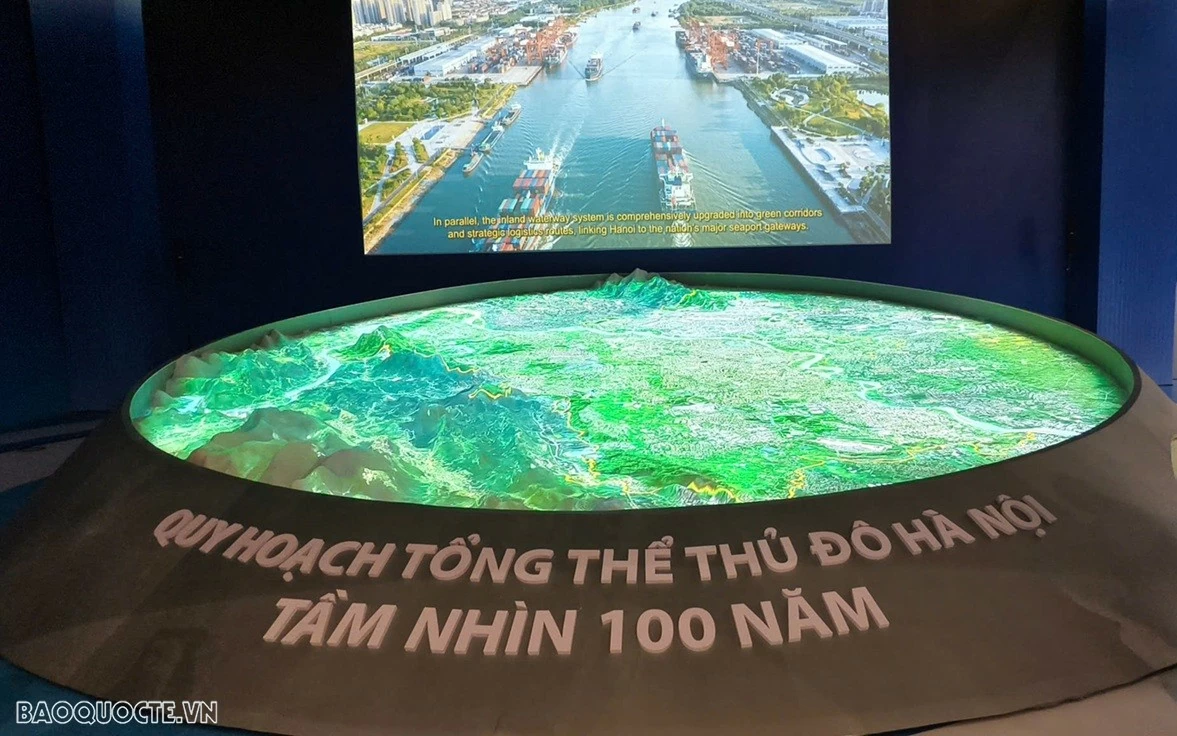 |
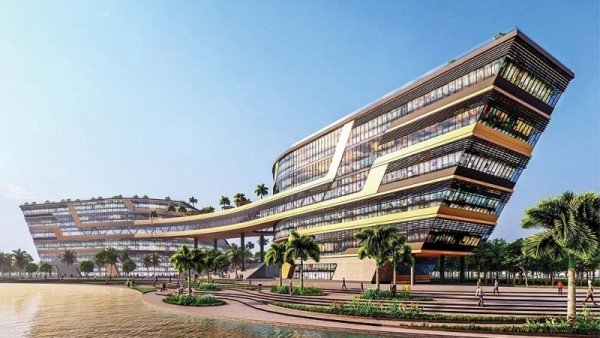
| The 100-year master plan model of the capital at the Hanoi Museum. (Photo: Khai Minh) |
The concern is not that Hanoi is changing. A vibrant city must change. The concern is change without a cultural filter; development without human standards; modernity without elegance; more convenience but less subtlety; expansion but broken urban memory. Therefore, preserving the essence of Hanoi people cannot stop at the call for "speak well, do good deeds", but must become a program to build the people of the Capital in the new era.
Today, elegance and civility are not just about dressing neatly, speaking politely, but also about obeying the law, respecting common spaces, being honest in business, professional at work, responsible in the digital environment, friendly with nature, knowing how to embrace global excellence without feeling inferior about Vietnamese identity. The new era Hanoi people must have both roots and aspirations; be both courteous and dynamic; love heritage but dare to innovate; be proud of the past but capable of stepping into the future.
General Secretary, President To Lam has repeatedly affirmed the need to promote culture as a spiritual foundation, intrinsic strength, and driving force for sustainable development of the country. For Hanoi, this means that preserving the elegant and civilized essence is not an additional task after economic development, but a condition for sustainable development. Culture does not stand outside planning, transportation, education, tourism, technology, environment, or urban governance; culture must permeate all these fields.
To achieve this, the family must be the first cradle. A child learns elegance not from slogans, but from the way adults converse, the way parents interact with neighbours, the way grandparents tell stories about the streets, the way the family maintains meals, greetings, thank yous, and apologies. Schools must teach Hanoi culture not as a dry lesson, but as a living experience: Students should visit monuments, museums, craft villages, theaters; learn how to behave in libraries, on buses, in public places; understand that picking up a piece of trash, giving up a seat, saying a kind word also contributes to beautifying the Capital.
| "The new era Hanoi people must have both roots and aspirations; be both courteous and dynamic; love heritage but dare to innovate; be proud of the past but capable of stepping into the future". |
The residential community must be a space for cultural practice. Each neighbourhood, apartment complex, village within the city, and street within the village needs civilized conventions, but more importantly, these conventions must become a lifestyle. A cleaner alley, a quieter neighborhood, a friendlier apartment complex, a more orderly festival are specific manifestations of an elegant and civilized Hanoi.
Government agencies must set an example. A civilized administration will create civilized citizens. When officials serve the people with respect, listen, act transparently, resolve work on time, and do not cause inconvenience, then public service culture becomes part of the Capital's essence. Hanoi's elegance is not only in the ao dai on the streets, but also in the smile at the one-stop service, in procedures resolved on time, in responsible answers to the people.
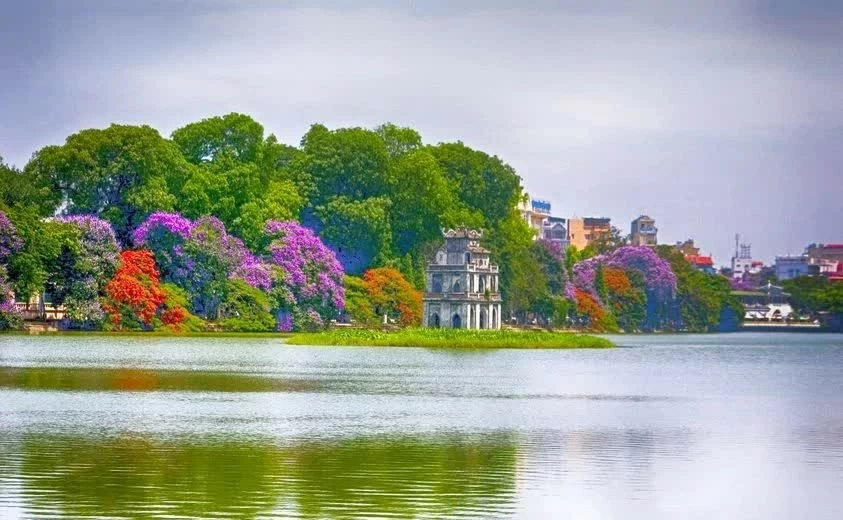 |
| A dreamy, peaceful Hanoi. (Photo: Ngo Minh Chau) |
Building a modern Hanoi on the foundation of culture and people
When talking about a 100-year vision for Hanoi, we are not just discussing population scale, development space, transportation infrastructure, smart urban areas, or new growth poles. The bigger question is: What kind of city will Hanoi be in the consciousness of Vietnamese people and in the eyes of international friends in a hundred years?
General Secretary, President To Lam, when working with Hanoi, opened up the requirement to build the Capital with a long-term vision, worthy of being the development center of the country. This vision cannot only be about land, housing, roads, industry, services; it must also be a vision about culture and people. Hanoi must be stronger, richer, smarter, more creative, while still being Hanoi with its depth, elegance, sentiment, cultural heritage, and humanity.
| "When each Hanoi person knows how to live more elegantly, more civilized, more responsibly, the 100-year vision of the Capital will begin with the small, persistent, and beautiful actions of today". |
A Capital with a 100-year vision must place culture at the center of development. A livable Hanoi cannot exist without cultural spaces. Civilized Hanoi people cannot exist if children lack playgrounds, the elderly lack parks, young people lack creative spaces, artists lack expressive environments, communities lack common spaces, and heritage lacks breathing space. Therefore, each new urban area needs not only housing, shopping centers, parking lots, but also libraries, parks, cultural facilities, playgrounds, walking paths, art spaces, places for people to meet and live kindly with each other.
In this vision, heritage must be seen as a future resource, not a burden of the past. The Old Quarter, Hoan Kiem Lake, the Temple of Literature, the Imperial Citadel of Thang Long, Duong Lam ancient village, craft villages, communal houses, temples, pagodas, festivals, cuisine, traditional arts, community lifestyle... are all valuable assets. But preservation is not about freezing. Preservation is about making heritage continue to live, capable of educating, inspiring, creating livelihoods, developing cultural tourism, creative industries, and nurturing citizen pride.
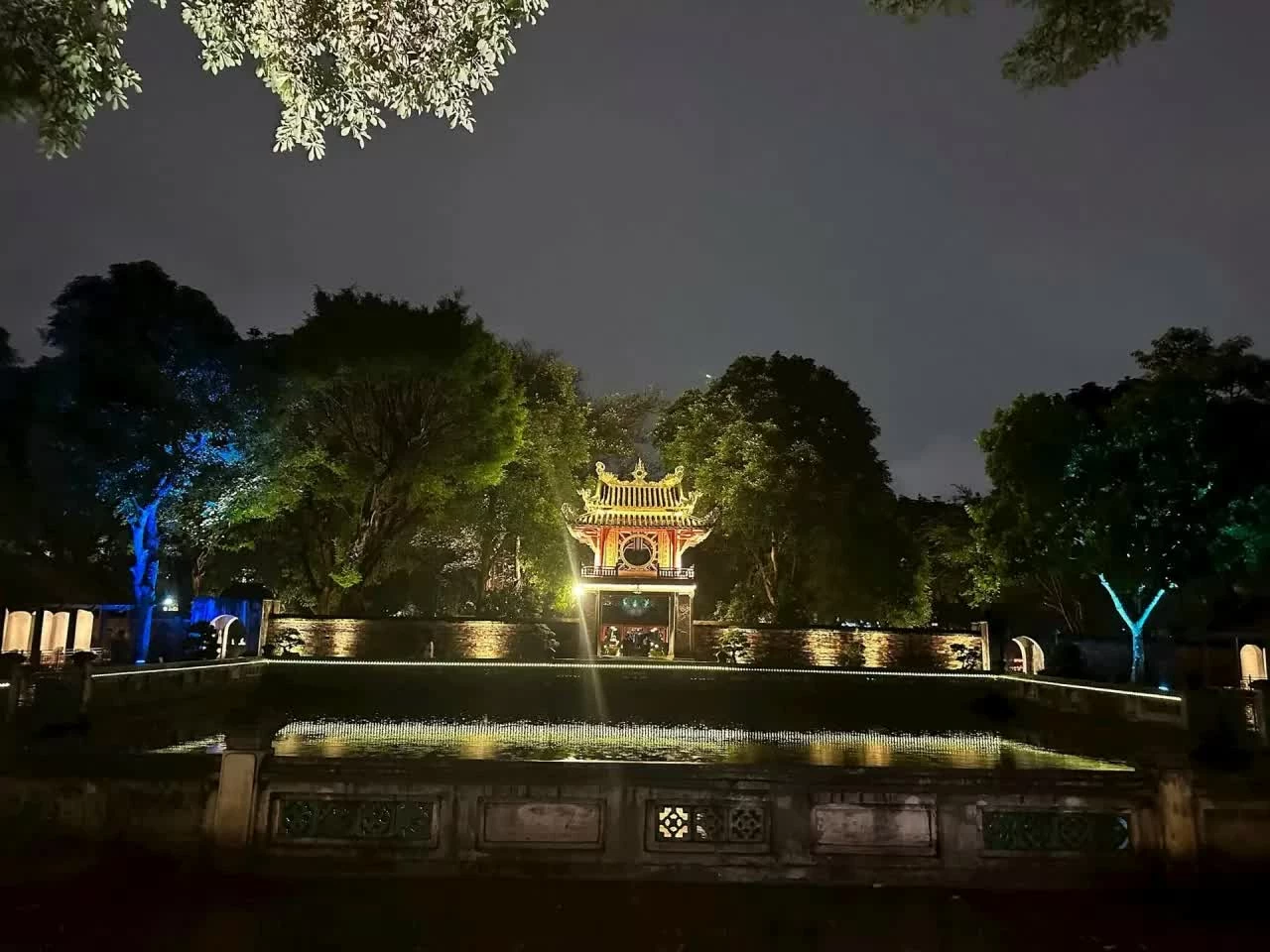 |
| Hanoi's night tourism has seen recent growth. (Photo: Ha An) |
Hanoi needs to turn the values of elegance and civility into an urban brand. This brand does not come from slogans, but from the real experiences of residents and visitors. When someone comes to Hanoi and sees cleaner streets, more orderly traffic, friendlier vendors, more professional services, more respected monuments, more civilized festivals, safer public spaces, that is the most convincing way to promote. A city is beautiful not only because of its scenery, but because the people in that city know how to make others feel respected.
| "A 100-year vision requires Hanoi to prepare a new generation of citizens. This is a generation that knows foreign languages, technology, global skills, but still understands the history of Thang Long; can work in an international environment but still takes pride in Vietnamese, ao dai, pho, com, ca tru, cheo, water puppetry, craft villages; can start a business with artificial intelligence but still bows before a monument". |
Especially in the digital age, Hanoi's essence must also be present in cyberspace. Elegant Hanoi people are not only elegant on the streets but also in every comment, every share, every online debate. Not spreading fake news, not insulting others, not joining in verbal violence, not turning differences into hatred – that is also culture. If in the past, elegance was shown in greetings in the alley, today it is also shown in the digital responsibility of each citizen.
Traffic culture must also become a measure of the Capital's civility. A person who stops before the line, gives way to pedestrians, does not run red lights, does not jostle, does not honk indiscriminately, does not litter the streets... is not only obeying the law but also demonstrating citizen quality. Hanoi wants to become a modern urban area, then traffic culture must be built persistently through education, infrastructure, sanctions, and setting examples.
A 100-year vision also requires Hanoi to prepare a new generation of citizens. This is a generation that knows foreign languages, technology, global skills, but still understands the history of Thang Long; can work in an international environment, but still takes pride in Vietnamese, ao dai, pho, com, ca tru, cheo, water puppetry, craft villages; can start a business with artificial intelligence, but still bows before a monument, is moved by a story about ancestors, feels ashamed when acting unculturally in public.
To have such a generation, a strategy for cultural education in the Capital is needed from an early stage, regularly and attractively. We cannot just hang the slogan "elegant, civilized Hanoi people" and expect behavior to change on its own. It is necessary to bring cultural behavior into schools, offices, businesses, residential communities, digital platforms; to have creative communication programs close to the youth; to honor good people, good deeds, beautiful behavior; while criticizing uncultural expressions with a humane but determined attitude.
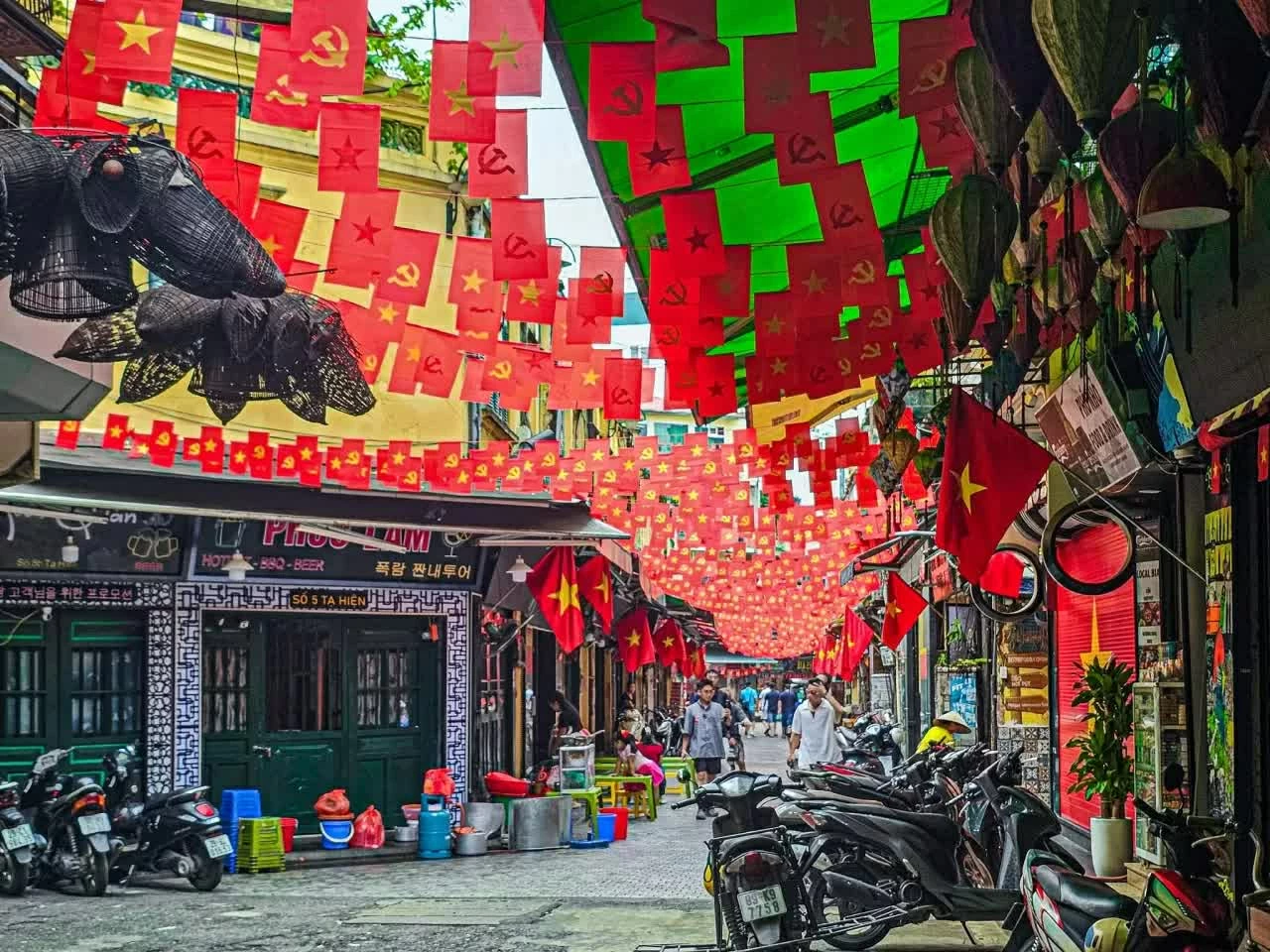 |
| Red flags with yellow stars "dye" the streets red. (Photo: Ngo Minh Chau) |
During his lifetime, General Secretary Nguyen Phu Trong reiterated the thought "culture lights the way for the nation". For Hanoi, culture must light the way for planning, for the economy, for technology, for governance, for urban lifestyle. Without culture, development can be fast but rough; the city can be large but hard to live in. Conversely, when culture becomes the foundation, Hanoi will have its own endurance, attraction, and spread.
From there, preserving the essence of Hanoi people in the new era needs to be implemented through specific actions. First, building elegant and civilized Hanoi people must be considered a strategic task in all development policies of the Capital. Each urban project, each traffic route, each riverside space, each new neighborhood needs to be evaluated not only by economic efficiency but also by cultural impact: does it create more community space, does it protect urban memory, does it make people live more humanely.
| "Hanoi is not only a development centre but also a cultural spread centre. Not only the city of today but a spiritual heritage passed on to future generations". |
Second, a set of cultural standards for the Capital suitable for the new era needs to be built: speaking well, doing right, living kindly, respecting the law, protecting the environment, behaving civilly online, preserving heritage, loving creative labour, being proud of Hanoi. These standards must be concise, easy to remember, easy to do, easy to verify, and practiced regularly.
Third, the role of artists, intellectuals, educators, the elderly, artisans, and reputable people in the community must be promoted. They are the keepers of Hanoi's essence. An artisan passing on a craft, a teacher teaching students to love history, a writer writing about Hanoi, an artist renewing traditional music, an elderly person telling stories about the village and streets to grandchildren – all contribute to preserving the soul of the Capital.
Fourth, elegant and civilized culture must be linked with creative economy and cultural tourism. When Hanoi's subtlety becomes a product of cuisine, design, fashion, music, cinema, performing arts, handicrafts, tourism experiences, culture is not only preserved but also reborn. A creative city must know how to turn identity into value, memory into inspiration, heritage into the future.
Fifth, strong discipline is needed for behaviors that harm urban culture: Damaging monuments, breaking landscapes, causing noise pollution, encroaching on public spaces, offensive advertising, profiteering in festivals, rude behavior, dishonest services to tourists. Culture requires self-awareness, but urban civility also requires law and discipline.
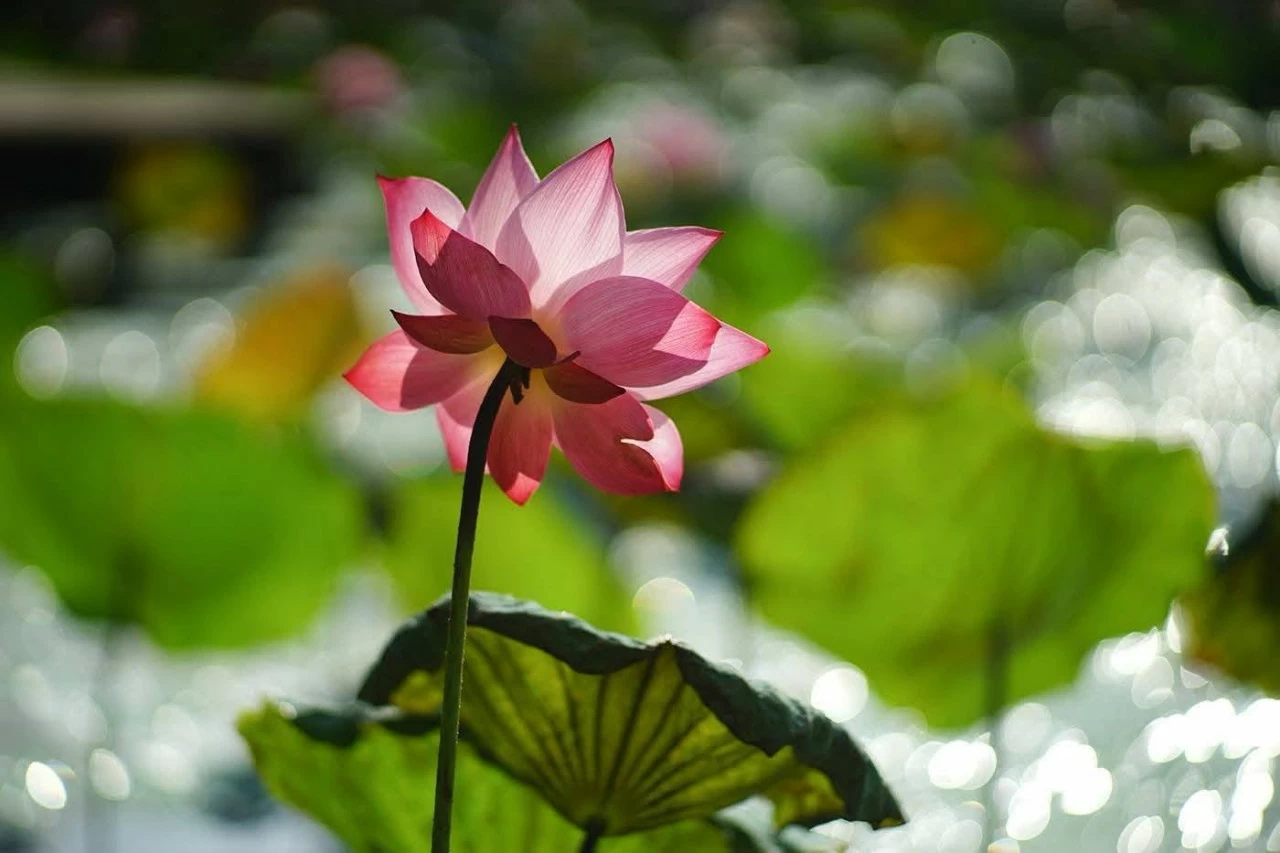 |
| Hanoi is facing a great opportunity. (Photo: Ngo Minh Chau) |
Hanoi is facing a great opportunity. A 100-year vision does not allow us to think short, act hastily, handle each matter separately. A hundred years from now, future generations may not remember each decision today, but they will live in a city shaped by those decisions. If today we place culture at the centre, they will inherit a Capital that is both modern and humane. If today we disregard human essence, they may receive a large city but lacking soul.
Preserving the culture and essence of the elegant and civilized Hanoi people is not merely about looking back at the past with simple pride, but about preparing for the future with today's responsibility. This is the way for Hanoi to step into the new era with the confident stride of a thousand-year-old cultural Capital; the way for each citizen to become a cultural ambassador of the city; the way for amidst the digital rhythm, new boulevards, new urban areas, new creative spaces, we still recognize a deep, kind, elegant, and sentimental Hanoi.
Such a Hanoi will not only be the heart of the nation but also a place that nurtures Vietnamese dignity. Not only a development centre but also a cultural spread center; not only the city of today but a spiritual heritage passed on to future generations. When each Hanoi person knows how to live more elegantly, more civilized, more responsibly, the 100-year vision of the Capital will begin with the small, persistent, and beautiful actions of today.
| Part 2: Planning a city, shaping an essence |