





Preserving the essence of Hanoi's people in a century-long vision (Part 2): Planning a city, forging its character
WVR - Mention Hanoi, and people often think of the word “elegant”. But if elegance is only seen as a relic of the past, we inadvertently narrow the value of a great heritage.
Latest
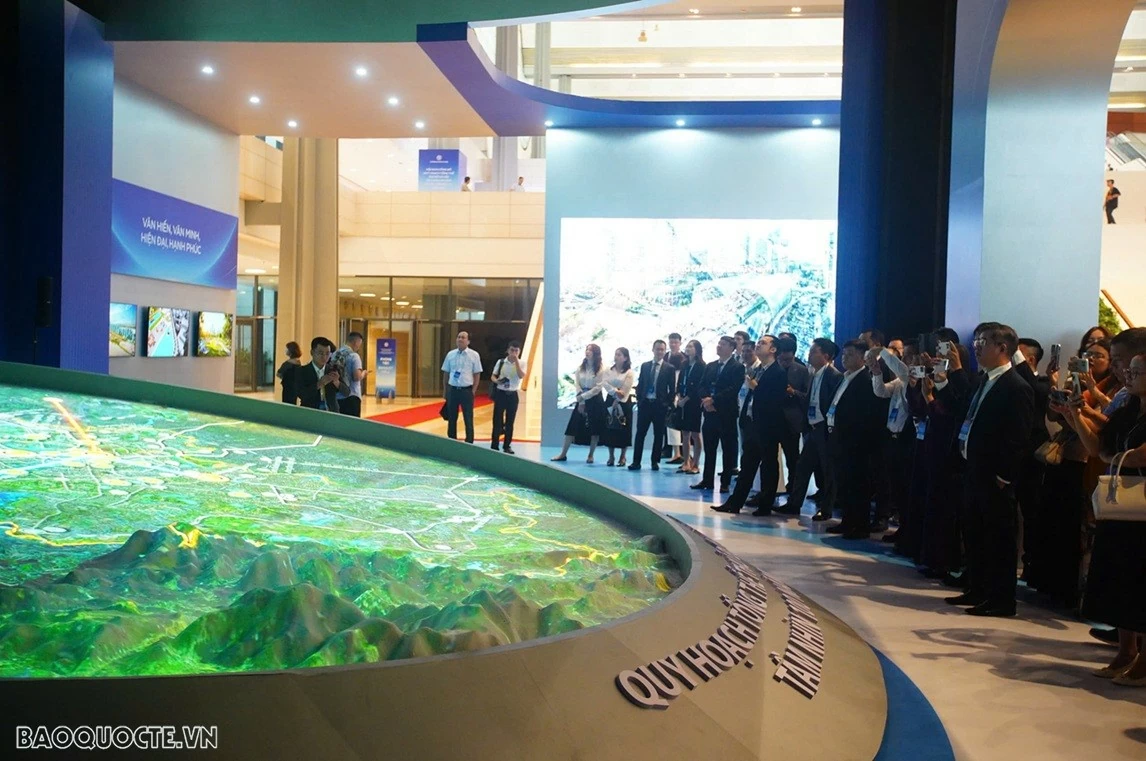 |
| Preserving the essence of Hanoi's people in a century-long vision: People visiting the Master Plan of Hanoi Capital with a 100-year vision displayed on a model. (Photo: Khai Minh) |
A master plan can determine the location of boulevards, urban rail lines, creative centers, and new development spaces of a city. But equally important is determining the essence of the people who will inhabit that city.
The announcement of Hanoi's Capital Plan with a 100-year vision thus holds significance beyond a spatial development project. It is also an opportunity to pose a strategic question: What will define Hanoi a century from now? Perhaps, if planning decides the form of Hanoi, then it is the people who will decide the soul of Hanoi in the next 100 years.
That is why, in the new vision, planning is not just about land, transportation, or infrastructure. Planning is also an opportunity to create a new urban civilization, where the thousand-year-old tradition of elegance becomes a development resource for the Capital in the 21st century.
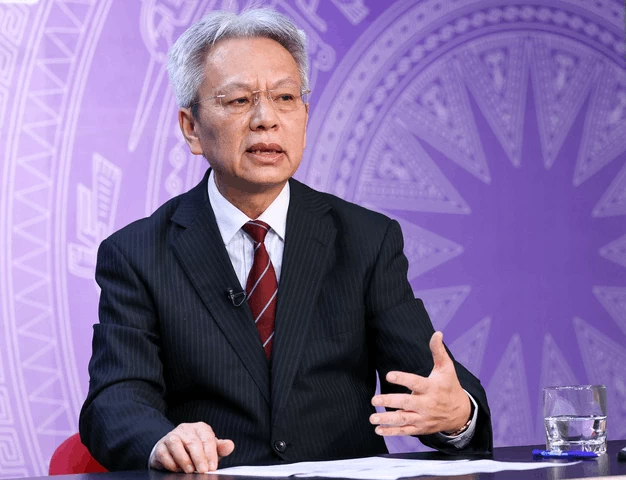 |
| Dr. Nguyen Si Dung. (Source: VGP) |
From a century-long vision to human stature
For decades, Hanoi has faced challenges in expanding space, developing infrastructure, reducing traffic congestion, improving the environment, and meeting the needs of a continuously growing urban area. These tasks remain relevant. But as the Capital sets a 100-year development vision, the focus of planning thinking also needs to expand. The important question is no longer just how big the city will grow, but what the city will become. This is not just a change in scale but a shift in development philosophy.
In the 21st century, a city's competitiveness is increasingly determined by factors previously considered "soft": quality of life, public civility, social trust, governance efficiency, and cultural identity. A city may become wealthier but not necessarily more livable. It may become more modern but not necessarily more beloved. Conversely, a city that preserves and continuously enriches its cultural values will create sustainable appeal for residents, investors, and international friends.
For Hanoi, this holds particular significance. As the Capital of the nation, Hanoi not only represents Vietnam's level of development but also its image in the eyes of the world. Every public space, every public service, every friendly smile, every civil behavior on the streets contributes to the impression of a nation. In other words, the essence of Hanoi people is not just a cultural value but also a development resource.
Therefore, planning Hanoi with a 100-year vision cannot merely aim to create a larger city. More importantly, it is about creating a city where people live more civilized lives, behave more kindly, and together build a more proud community. Ultimately, planning a city is preparing for the future of space. Creating people is preparing for the future of the city itself.
 |
| Delegates attending the Conference experiencing the Hanoi Investment Map software. (Photo: Khai Minh) |
Elegance from beautiful memories to development resource
Mention Hanoi, and people often think of the word “elegant”. But if elegance is only seen as a relic of the past, we inadvertently narrow the value of a great heritage. Elegance is not just about dress, speech, or demeanor. It is a value system formed over thousands of years of history: moderation in behavior, sophistication in perception, respect for relationships, a spirit of learning, respect for others, and responsibility to the community.
These values have shaped Hanoi's unique identity—a city that embraces the finest qualities from across the country while preserving its own distinctive character. Elegance, therefore, is not the privilege of any particular group or generation, but a cultural standard that everyone who lives in Hanoi can learn, uphold, and enrich.
| “Planning Hanoi with a 100-year vision cannot simply be about building a bigger city. More importantly, it is about creating a city where people can live more civilized lives, treat one another with greater kindness, and together build a community they are proud to call their own.” |
In the increasingly fierce competition among cities worldwide, this essence holds new significance. If infrastructure is the "hard capital" of development, then culture is the "soft capital". While bridges, roads, or urban areas create the city's appearance, it is the people who create the city's appeal. A tourist may forget the name of a street but will long remember the friendliness of the locals. An investor may not remember the height of a building but will remember how the government serves and the cultural environment the city fosters.
In this sense, elegance is no longer just a cherished quality of Hanoi people but has become a competitive advantage for the Capital in the era of integration. That is why preserving and promoting the elegant essence should not only be seen as a cultural task. It is also a development strategy, for a city can import technology, attract investment, or build modern structures in a short time. But no nation can import cultural identity and human essence.
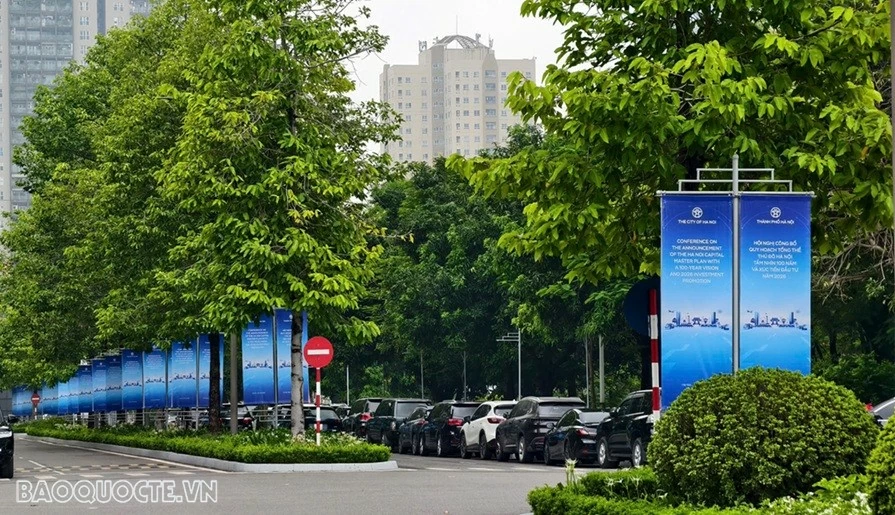 |
| The simultaneous organization of the 2026 Investment Promotion Conference and the announcement of the Master Plan of Hanoi Capital with a 100-year vision is considered an event connecting the past, present, and future of the Capital. (Photo: Khai Minh) |
This is an asset that can only be nurtured by history, sustained by education, protected by institutions, and passed down through generations. And it is this that will be the most sustainable asset Hanoi carries into the next 100 years.
All cultural values share a common rule: No value exists solely through praise, and the elegance of Hanoi people is no exception. Over the years, much has been said about building elegant and civilized Hanoi people. This is a correct and necessary policy, but reality also shows that if it stops at calls or campaigns, it is not enough to form sustainable changes in social behavior. Because people do not only behave according to what they are advised but also according to the environment they live in.
| “To plan a city is to prepare for the future of its space; to cultivate its people is to prepare for the future of the city itself.” |
A city with heavy traffic pressure, limited public spaces, a fast-paced life, and increasingly loose social relationships is very likely to create daily life collisions. In such cases, cultural standards formed over many generations also face the risk of erosion.
This does not mean Hanoi is losing its essence but shows that essence is not a self-preserving heritage. It needs to be nurtured in every family, formed in schools, reinforced by the community, spread through media, and protected by a social environment that encourages beauty, kindness, and the spirit of the rule of law.
In other words, elegance is not the result of reminders but of a cultural ecosystem. To make Hanoi people more elegant, living elegantly must first become the most natural and convenient choice. This is the mindset that a Capital in the 21st century needs to aim for.
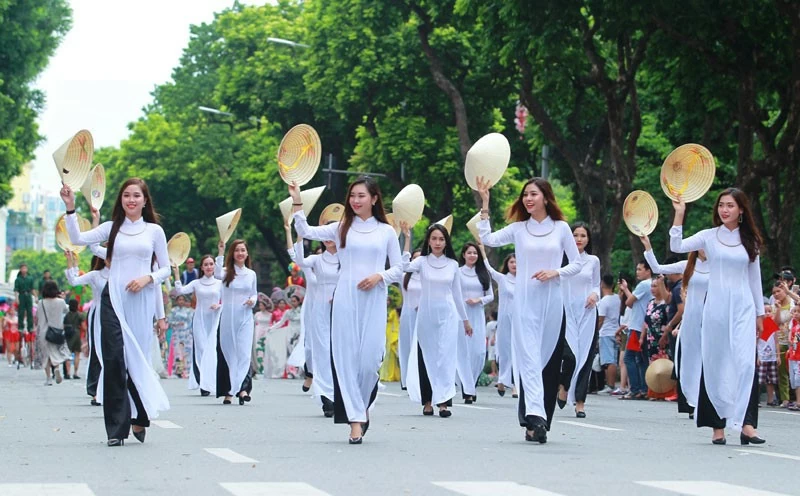 |
| Building elegant and civilized Hanoi people is a long-term process. |
The Hanoi Plan is also a cultural project
This is perhaps one of the most important ideas of modern urban planning. A city is not only created by architectural works but also by the behaviors that space encourages people to perform daily.
A wide sidewalk encourages people to walk. A convenient metro line fosters a culture of queuing. A beautiful park creates community gatherings. An open square nurtures civic spirit. A transparent administration forms a culture of respecting the law. Thus, space is never neutral; it quietly shapes how people interact with each other.
| “In the 21st century, the strength of a capital city is measured not only by the size of its economy or the pace of its urbanization, but also by its ability to nurture citizens who live with civility, respect their community, and work together to preserve their city's identity. That is the most enduring foundation for a Hanoi envisioned to thrive over the next 100 years.” |
Therefore, planning Hanoi with a 100-year vision should not only be understood as planning land, transportation, or architecture. More profoundly, it is about planning a culture of living.
In other words, urban planning is also behavior planning. A city that wants its citizens to walk more must create streets worth walking on. To encourage public transportation use, a city must provide a convenient public transport system. To foster civilized behavior, a city must create well-managed and attractive public spaces for everyone to share. To ensure citizens trust the law, the government must enforce it fairly, transparently, and consistently. This is the difference between management thinking and creation thinking. Management often starts by asking people to change. Creation starts by changing the environment to make it easier for people to change.
From this perspective, the Hanoi plan is not just a construction project; it is also a cultural project. Each metro station is not just a place to transport people from point A to point B but a place to cultivate a culture of punctuality and queuing. Each park is not just a green space but a space for people to learn to share and respect each other. Each square is not just an architectural work but a place to enrich urban memory and community pride. A civilized city is not where people are required to behave beautifully but where every city design helps people want to behave beautifully. That is the depth of planning in the 21st century.
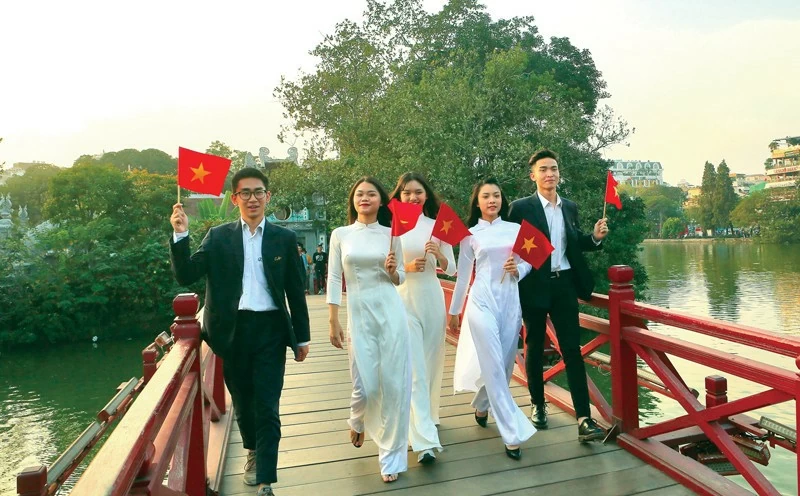 |
| When talking about Hanoi people, the first quality that comes to mind is elegance. |
Shaping essence through urban cultural policy
If planning shapes the form of the Capital, then cultural policy shapes the soul of the Capital. Therefore, in a 100-year vision, Hanoi needs to consider shaping the elegant, civilized essence as a component of its development strategy. This requires a coordinated combination of multiple policies.
First is the education of civic culture from family and school, so that values such as respecting others, preserving shared spaces, complying with the law, and behaving humanely become natural habits.
Next is building quality public spaces, as these spaces will nurture community culture, encourage healthy lifestyles, and create conditions for civilized behaviors to form daily. Equally important is building a service-oriented, professional, and transparent administration. When citizens are treated with respect, they will also learn to respect the community and public institutions.
| “If today's generation can leave behind a Hanoi where people still smile at each other, preserve beauty, and live worthy of the thousand-year-old Capital, that will be the most sustainable work.” |
Finally, urban civility should be considered a measurable development indicator. Alongside economic growth or environmental quality, Hanoi can fully monitor indicators reflecting urban cultural quality, such as citizen satisfaction levels, public space quality, law compliance awareness, or civility in public behavior.
When cultural values are managed with scientific thinking, they will no longer be encouraging slogans but become specific goals of the development process. This is also the necessary transition from preserving a tradition to creating a development capability.
Because in the 21st century, the strength of a Capital is not only measured by economic scale or urbanization speed. That strength is also measured by its ability to create citizens who live civilly, respect the community, and together preserve the identity of their city. That is the most sustainable foundation of a Hanoi with a 100-year vision.
100 years from now, many of today's structures may have been replaced. Boulevards will continue to expand, new bridges will extend, and today's technologies will become history. But if today's generation can leave behind a Hanoi where people still smile at each other, yield to one another, preserve beauty, and live worthy of the thousand-year-old Capital, that will be the most sustainable work. Because planning a city is creating space for the future, while shaping an essence is giving a soul to that future
| Final Part: Building elegant Hanoi people in the new era |