



Hanoi City materialises Resolution 80-NQ/TW: Creating development momentum from culture
The action program of the Hanoi Party Committee to implement Resolution No. 80-NQ/TW of the Politburo has established a new approach: positioning culture as a development pillar, an intrinsic resource, and a soft power of the capital in the new era.
Latest
Placing Culture at the Heart of Development Strategy
According to the action program of the Hanoi Party Committee, implementing Resolution No. 80-NQ/TW dated January 7, 2026, of the Politburo on the development of Vietnamese culture, culture is identified not only as a spiritual foundation but also as a driver of development, closely linked to the socio-economic goals of the capital.
This approach clearly reflects a shift in mindset from “cultural management” to “cultural development creation”, where the State plays a guiding role, establishing an environment and mobilising social resources.
The program aims to build Hanoi into a cultural and creative hub with regional influence, featuring a diverse and modern cultural ecosystem while maintaining the Thang Long – Hanoi identity. Additionally, culture is integrated into development strategies across urban planning, education, industry, and tourism.
Notably, the human factor is placed at the centre. Building the cultural values and standards of elegant and civilised Hanoians is considered the foundation for creating a healthy social environment and sustainable development.
 Activating Heritage, Expanding Creative Spaces
One of the major orientations of the action program is to effectively leverage Hanoi's rich cultural heritage system.
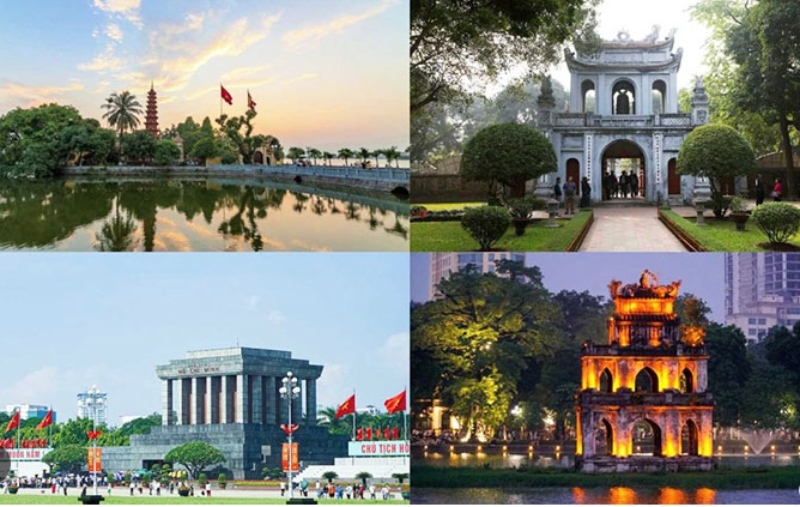
Instead of merely focusing on preservation, the city aims to exploit heritage values as a development resource. Areas such as the Thang Long Imperial Citadel, the Temple of Literature – Quoc Tu Giam, the Old Quarter, and traditional craft villages are being developed to become cultural and creative spaces linked to tourism and experiential activities.
Simultaneously, new creative spaces will be formed on the foundation of heritage and cultural industries, connecting central areas with potential localities like Son Tay, Ba Vi, Dong Anh, and Soc Son to create a multi-centre creative network.
The program also emphasises building cultural data infrastructure, digitising heritage, and developing digital cultural platforms. This is an important step to enhance management efficiency while expanding cultural access for citizens amid digital transformation.
Developing Cultural Industries into a Key Economic Sector
A consistent highlight is the orientation to develop cultural industries into a key economic sector of the capital.
Accordingly, Hanoi will focus on developing potential fields such as cinema, performing arts, creative design, digital content, and advertising, while establishing large-scale cultural industry centres that serve as nuclei in the creative ecosystem.
The action program also addresses the completion of a synchronised cultural market, including the stages of creation, production, distribution, and consumption of cultural products. Promoting public-private partnership (PPP) models, establishing creative support funds, and preferential policies for enterprises are identified as important solutions to mobilise social resources.
Additionally, Hanoi aims to organise large-scale cultural and artistic events, develop cultural tourism and the night economy, thereby increasing economic value and enhancing the capital's attractiveness.
International Integration, Enhancing the Capital's Soft Power
The action program of the Hanoi Party Committee particularly emphasises the role of international integration in cultural development.
The city will strengthen cooperation with cities in the Creative Cities Network and promote artistic, human resource, and technology exchanges in the cultural industry sector.
International experience shows that cities like Seoul, London, and Singapore have succeeded in building creative ecosystems through the combination of public policy, enterprise capacity, and innovation. In this, the State plays a creative role, while the market acts as a driver.
From this practice, Hanoi aims to develop cultural products with unique brands, capable of competing and participating in the global value chain, while promoting the image of a “City for Peace” and a “Creative City” to the international community.
From Orientation to Implementation: The Need for Synchronisation and Determination
It is evident that the action program implementing Resolution 80-NQ/TW has set a comprehensive cultural development framework, from institutions and resources to the implementation organisation.
However, to turn these goals into reality, it is necessary to ensure synchronised coordination across levels and sectors; promote the roles of enterprises and the community; and establish comprehensive monitoring and evaluation mechanisms.
Diversifying investment resources, promoting socialisation, and linking cultural development with digital transformation and innovation will be decisive factors for the strategy's success.
In this flow, culture is not only a spiritual foundation but is also becoming a new development resource, contributing to enhancing the capital's position and competitiveness in the coming period.
| Key Focuses of Hanoi Party Committee's Action Program
- Materialising Resolution 80-NQ/TW, establishing culture as a development pillar - Developing cultural industries into a key economic sector - Activating heritage values, developing creative spaces - Promoting digital transformation and building cultural data - Enhancing international integration, boosting the capital's soft power |
|
Hanoi – The City of Runners
On weekend mornings around Hoan Kiem Lake, West Lake, or along central streets, it's not hard to spot hundreds, even thousands, of people jogging. From ... |
|
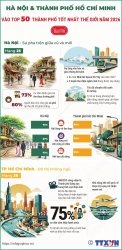
Hanoi and Ho Chi Minh City make the list of Best Cities 2026
Hanoi ranks 25th, described as “a blend of old and new” and undergoing an “astonishing transformation”; while Ho Chi Minh City secures the 38th spot, ... |