


From Ben Nha Rong to Vietnam’s vision in a changing world: Reflections on President Ho Chi Minh’s legacy
WVR - The departure from Ben Nha Rong of the young Nguyen Tat Thanh not only paved the way for national liberation but also left a valuable lesson on integration and sustainable development.
Latest
115 years ago, on June 5, 1911, from Ben Nha Rong(Nha Rong Wharf), the young Nguyen Tat Thanh set out to find a path to save the country. This departure not only opened the path to national liberation but also left a significant lesson for today: To save the country, one must understand the world; to safeguard the nation, one must be self-reliant; to develop, one must combine national strength with the strength of the times. As Vietnam enters a new era of development, this spirit continues to illuminate the journey of integration, innovation, and the aspiration to build a prosperous and happy nation.
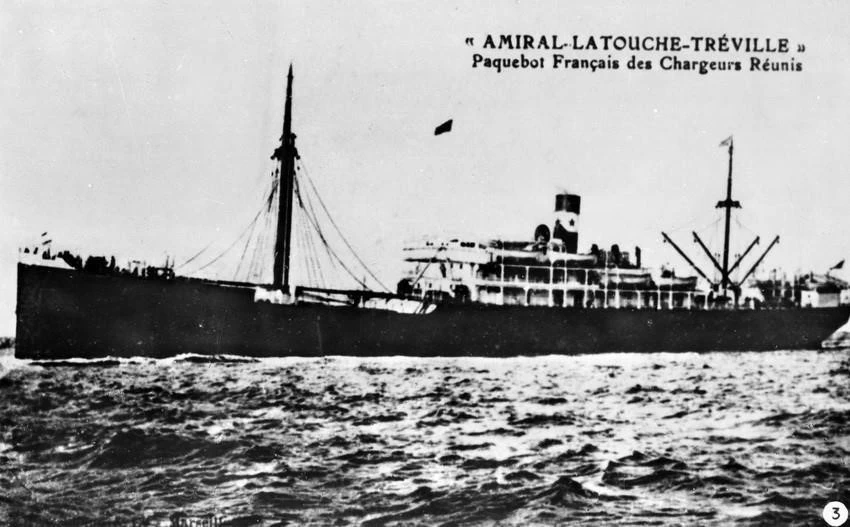 |
| Living in a context of lost country and broken home, the young Nguyen Tat Thanh early understood the country's plight and the people's suffering. He decided to find a new path to drive out the French colonists to save the country and its people. In the photo: The Latouche Treville ship that took the patriotic young Nguyen Tat Thanh to find a way to save the country from Ben Nha Rong on June 5, 1911. (Photo archive: VNA) |
Departing to understand the world, returning to save the nation
There are departures that do not take one away from the homeland but bring the homeland deeper into one's heart. On June 5, 1911, from Ben Nha Rong, the young Nguyen Tat Thanh boarded a ship to find a path to save the country. He departed when the country was still in the long night of slavery, when the people were suffering, and when the early 20th-century paths to save the country, though filled with patriotism, had not yet found the right solution for the nation's destiny.
He did not leave to seek a personal future. He left with a big question: How can Vietnam achieve independence, how can the Vietnamese people gain freedom, how can everyone have food, clothing, and education? This question was the pain of a nation that had lost its sovereignty, but it was also the beginning of a vision beyond its time. He understood that to find a path for Vietnam, one must go out into the world; to liberate his nation, one must understand the era he lives in; to absorb the essence of humanity, one must first have independent thinking and national pride.
The greatness of this departure was not just in patriotism. Patriotism had burned in many generations of Vietnamese. What was greater was that he turned patriotism into action, turned national pain into the wisdom to find a path, turned the aspiration for liberation into a correct revolutionary method. He traveled across many continents, lived among the poor working people, witnessed the injustices of the colonial world, and realized that Vietnam's independence was linked to human rights, freedom, and the pursuit of happiness.
From today's perspective, that journey also leaves a profound lesson on integration. Ho Chi Minh was a Vietnamese who went out into the world with labour, with the will to learn, with the ability to dialogue with many cultures, with a simple yet great personality. He absorbed the essence of humanity but did not mechanically copy it. He understood the world but did not lose Vietnam. He went far, but every thought, every choice, every action ultimately focused on the homeland, on the people.
This is also the source of a very distinctive Vietnamese foreign policy: independent, self-reliant but open; steadfast in principles but flexible in methods; prioritizing national interests but always linked with peace, cooperation, and development of humanity. Vietnam cannot develop if it isolates itself, but it cannot go far if it loses itself. Integration is not dissolution. Opening up is not dependency. Learning from the world is to enrich the intellect, the courage, and the identity of Vietnam.
Looking back 115 years, Ben Nha Rong is not just a historical location. It is a symbol of a nation that knows how to find a way in the most challenging times. From there, a patriotic young man opened the path that led Vietnam from slavery to independence, from losing the country to mastering its destiny, from being forgotten on the world political map to becoming a nation with increasing position, prestige, and responsibility in the international community.
In the article “Ho Chi Minh's light guides our path”, General Secretary, President To Lam emphasized that Ho Chi Minh's ideology is “the spiritual foundation, the guiding torch, the compass” for every victory of the Vietnamese revolution. This message reminds us that learning from him today is not just recalling the past, but continuing his spirit of finding a way in new conditions: daring to think new, daring to do new, daring to overcome old paths, placing national interests and the happiness of the people above all else.
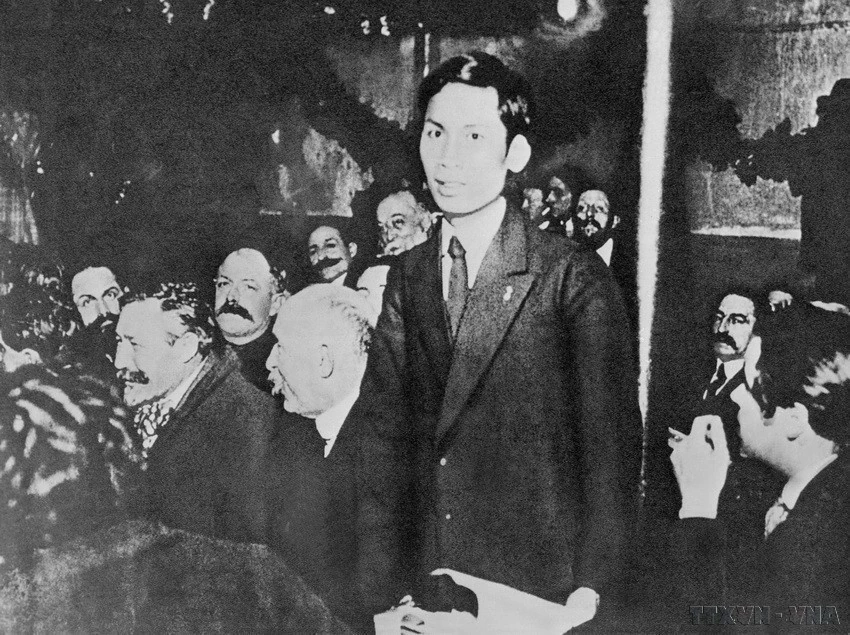 |
| Nguyen Ai Quoc (President Ho Chi Minh) speaking at the Congress of the French Communist Party held in the city of Tours. He was the first Vietnamese to become a Communist and is considered one of the founders of the French Communist Party (December, 1920). (Photo archive: VNA) |
Continuing the spirit of "finding a path" in a new era of development
If the big question of 1911 was how to free the nation from slavery, the big question today is how to develop Vietnam quickly and sustainably, without falling behind, without falling into the middle-income trap, without losing identity in integration, and without being passive in the face of unpredictable global changes.
Today, the country has unprecedented achievements, potential, position, and international prestige. Vietnam is an independent, unified nation, deeply integrating, actively participating in multilateral mechanisms, expanding relations with international friends, and increasingly contributing to peace, stability, and development in the region. But the more position we have, the more alert we must be; the more opportunities we face, the more we must choose the right path; the deeper we integrate, the more we must maintain self-reliance.
The world today is changing rapidly. Strategic competition among major countries, regional conflicts, climate change, supply chain shifts, digital transformation, artificial intelligence, green economy, and non-traditional security are fundamentally changing the development environment of each nation. In this context, Ho Chi Minh's spirit of "finding a path" is not only historically significant but also has profound contemporary value. We must continue to find a way in development, find a way in renewing the growth model, find a way in building a modern institution, find a way in developing people, science and technology, culture, and national soft power.
At the 23rd Shangri-La Dialogue in Singapore (May 29), General Secretary, President To Lam delivered a noteworthy message about "Proactively Creating Peace - Stability - Development in a World of Many Changes"; while warning of the three major crises facing the world today: the erosion of international law, the crisis of the development model in the context of slow growth and climate change, and the crisis of trust among nations.
This message is very close to Ho Chi Minh's spirit: Peace is not naturally available but must be created; development cannot be sustainable without fairness, trust, and rules; integration cannot succeed if nations do not respect each other, respect independence, sovereignty, international law, and each other's legitimate interests. Vietnam goes out into the world not only to seek opportunities for itself but also to contribute to the shared values of humanity: peace, cooperation, dialogue, sustainable development, and human dignity.
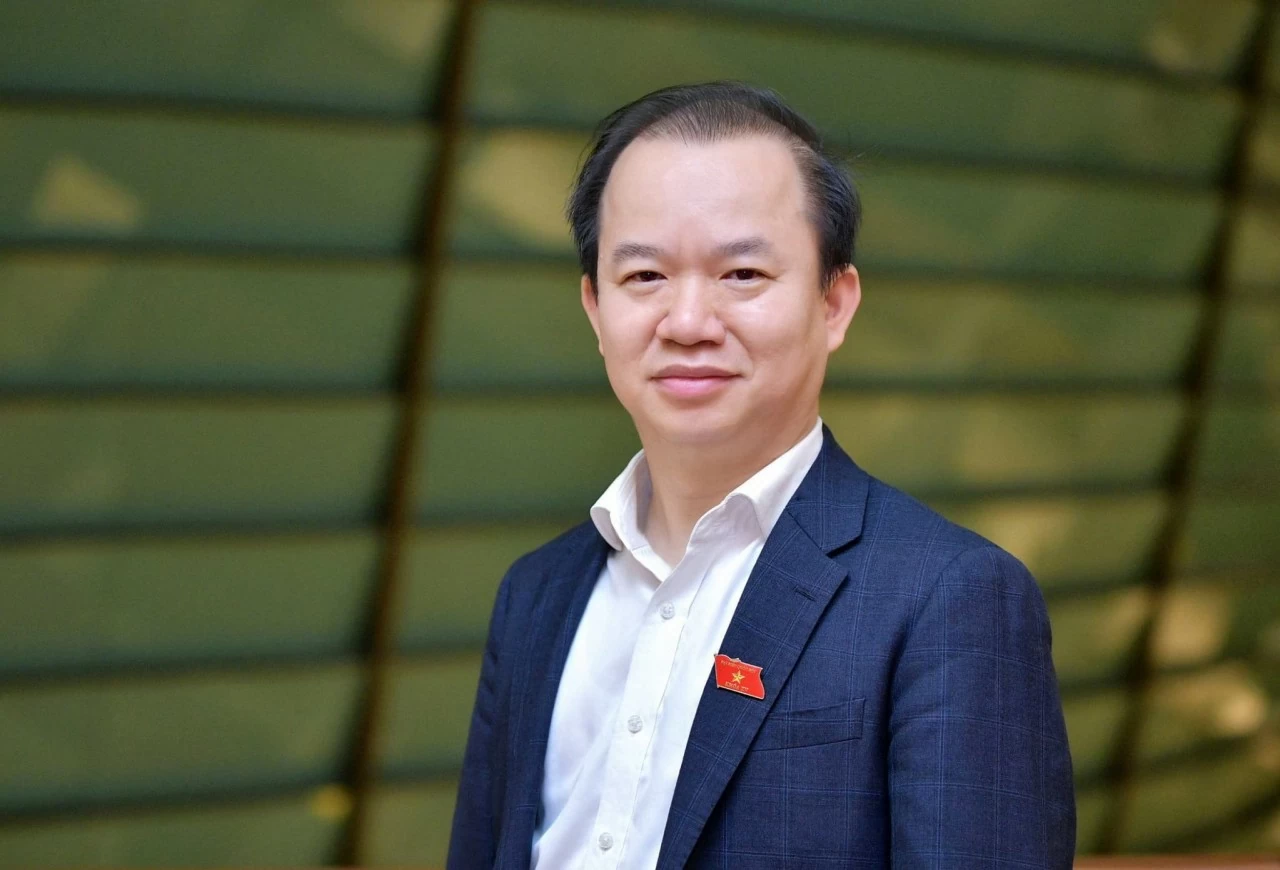 |
| National Assembly deputy Bui Hoai Son. (Source: National Assembly) |
This is the new stature of Vietnam today. From a nation that once sought international support for the cause of national liberation, Vietnam is becoming a country actively participating in creating a peaceful, stable, and cooperative environment. From a country that suffered many losses due to war, Vietnam deeply appreciates the value of peace. From a once impoverished nation, Vietnam understands that development must be inclusive, humane, and leave no one behind. From a nation with a tradition of peace-loving, Vietnam has a responsibility to contribute to building trust, promoting dialogue, reducing tensions, and resolving disagreements by peaceful means.
In this journey, Vietnam's strength lies not only in its economy or geopolitics. That strength also lies in Vietnamese culture, character, historical memory, the aspiration for peace, and the ability to connect tradition with modernity, between the nation and the era. A strong Vietnam in the new era is not only a Vietnam with high growth, modern infrastructure, and advanced technology, but also a Vietnam with culture, responsibility, constructive voice, trusted, loved, and respected by international friends.
Every Vietnamese today can be a continuation of the Ben Nha Rong spirit. A dedicated diplomat safeguarding national interests while building trust with international friends. A businessman bringing Vietnamese brands to the world with quality, credibility, and decent business culture. A Vietnamese intellectual contributing to human knowledge. An artist spreading Vietnamese identity through creative language. A student, a worker, an overseas Vietnamese living beautifully abroad is also contributing to the image of Vietnam.
The spirit of patriotism in the new era is not only about being ready to sacrifice when the country needs it but also about the ability to make the country stronger in peacetime. It is about serious learning, creative labour, serving the people, respecting the law, preserving culture, protecting the environment, building social trust, mastering science and technology, bringing Vietnamese products, knowledge, and values to the world. This is how each person creates their own "Ben Nha Rong" of today – where we decide to overcome the ordinary, the old paths, and narrow interests to live and work for something greater.
Commemorating 115 years since Ho Chi Minh set out to find a path to save the country, the most meaningful thing is not just remembering a historical journey but continuing to embark on new paths. Embarking on paths in development thinking. Embarking on paths in institutional innovation. Embarking on paths in science and technology. Embarking on paths in international integration. Embarking on paths in foreign culture. Embarking on specific actions so that Vietnam is not only a country known to the world but also a country trusted, loved, and respected by the world.
From Ben Nha Rong in 1911 to Vietnam today is the journey of a nation that knows how to rise above its fate. From Vietnam today to a prosperous and happy Vietnam in the future will be the journey of a nation that knows how to combine traditional strength with modern aspirations, national strength with the strength of the era, independent self-reliance with open integration. On this journey, Ho Chi Minh's light still guides the path; the aspiration for a strong Vietnam remains our sacred promise to him, to history, and to the future.