


Post-merger Bac Ninh: A ‘super industrial province’ with a multi-tiered ecosystem
WVR - The merger of Bac Ninh and Bac Giang provinces is expected to pave the way for the emergence of a large-scale electronics manufacturing hub with regional-level capabilities. This represents a positive signal for the local economy, unlocking breakthrough opportunities for success and shaping a prosperous future.
Latest
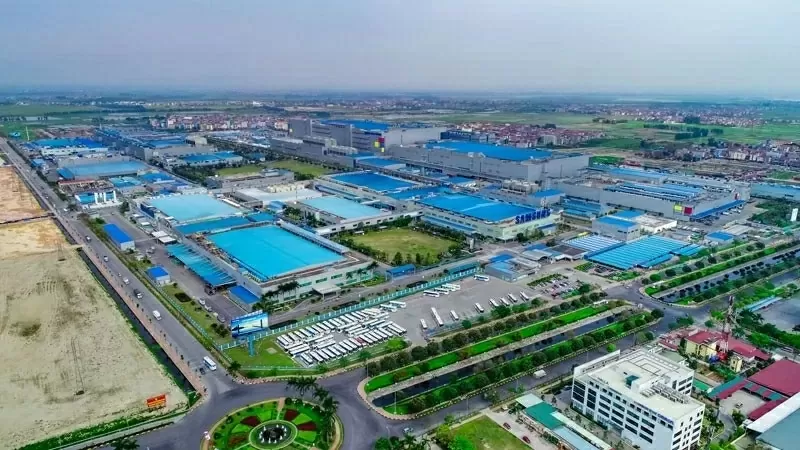 |
| Post-merger Bac Ninh: Que Vo Industrial Park, Bac Ninh. (Source: VnEconomy) |
According to Conclusion No. 127-KL/TW of the Politburo, the proposed merger will result in a new administrative unit with a total area of over 4,700 km² and a population of more than 3.6 million people—nearly three times the current minimum standard for a province.
The administrative center will be located in Bac Giang City.
A hub for tech "Eagles"
The new Bac Ninh province will become home to leading global technology "eagles," well-positioned to become the number-one electronics industrial center in both Vietnam and Southeast Asia.
For years, Bac Ninh has served as Vietnam’s “electronics capital,” attracting major tech giants such as Samsung, Canon, Amkor, and Foxconn.
Currently, the province has 16 industrial parks, with 12 in operation and an occupancy rate exceeding 62%. Its modern infrastructure and strong governance capacity are also highly regarded.
According to the Bac Ninh Department of Planning and Investment, in the first half of the year, the province approved 124 new foreign direct investment (FDI) projects with a total registered capital of nearly USD 659 million. It also adjusted capital for 79 existing projects, resulting in an additional USD 2 billion. Compared to the same period in 2024, FDI inflows into Bac Ninh have increased 2.5 times.
Meanwhile, Bac Giang is emerging as a "rising star" in supporting industries. The province has 16 industrial parks, 55 industrial clusters, and a wide array of large-scale electronic component manufacturing plants. It has become a magnet for major corporations such as Foxconn, Luxshare ICT, JA Solar, and Hana Micron—generating hundreds of thousands of jobs and making a significant contribution to the country’s export turnover.
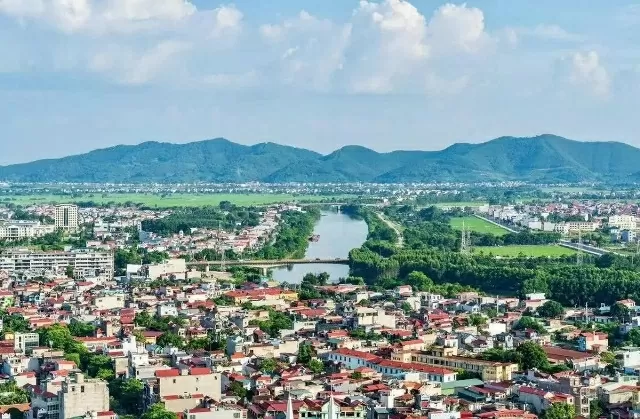 |
| Post-merger Bac Ninh: A corner of Bac Giang City (Photo: Nguyen Ke). |
The merger of Bac Ninh and Bac Giang not only expands the industrial land reserve but also enables infrastructure synchronization, thereby facilitating the development of supply chains and interconnected industrial zones to meet the increasingly stringent demands of manufacturing enterprises.
The expanded population, land area, and management capacity of the new Bac Ninh will serve as a powerful catalyst to attract investors to pour capital into the development of large-scale infrastructure, industrial zones, services, commerce, and modern urban areas.
In addition, major transport routes such as the Bac Giang–Lang Son Expressway, Noi Bai–Ha Long Expressway, Ring Road 4, National Highway 18, along with new connectivity axes like Provincial Road 295B, Nhu Nguyet Bridge, and the access road to Gia Binh Airport, will form a flexible inter-regional transportation network. This network will provide maximum support for industrial production, cargo transport, and the development of satellite urban areas.
This infrastructural synchronization also helps ease pressure on Hanoi's core infrastructure, paving the way for businesses to relocate factories and warehouses to the Bac Giang–Bac Ninh area—where land is abundant and costs are more affordable.
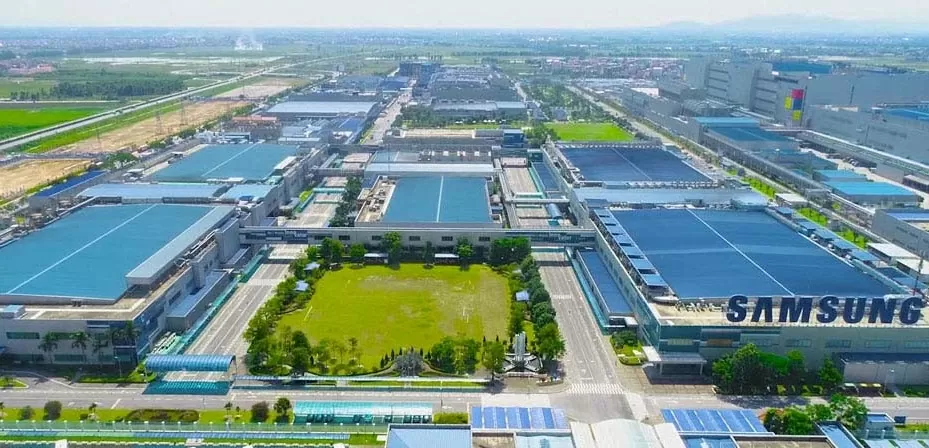 |
| Bac Ninh has long been known as Vietnam’s “electronics capital,” serving as a hub for major technology corporations such as Samsung, Canon, Amkor, and Foxconn. (Photo: Dau Tu Newspaper) |
A promising new phase of development
As two major industrial hubs in Northern Vietnam, Bac Ninh and Bac Giang will not only become a stronghold for manufacturing and production, but also open up a promising new phase of development for real estate and infrastructure project developers.
As FDI continues to pour into the region, nearly 30 active industrial parks and clusters in Bac Giang—such as Quang Chau, Van Trung, and Song Khe–Noi Hoang—and the expansion of Bac Ninh's “high-tech industrial belt” to the east are expected to drive soaring demand for housing and serviced apartments to accommodate foreign experts, skilled engineers, and mid- to senior-level managers.
Against this backdrop, enterprises with strategic vision, the capacity to develop large land banks, and experience in executing large-scale integrated urban projects will gain a distinct competitive edge.
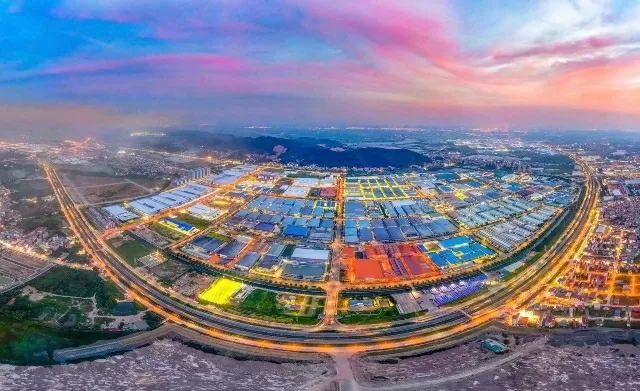 |
| Post-merger Bac Ninh: Panoramic view of Van Trung Industrial Park, Bac Giang.. |
According to Mr. Nguyen Van Dinh, Chairman of the Vietnam Association of Realtors (VARS), the merger of Bac Giang and Bac Ninh will accelerate the formation of a "super industrial province" with a multi-tiered ecosystem comprising production, logistics, commerce, services, and urban development.
Among these, industrial real estate will be the most direct beneficiary—especially as new FDI-attraction policies are introduced.
Mr. Nguyen Van Dinh remarked: “This is a valuable opportunity, but not for those looking to speculate. Choosing projects with well-structured planning, full legal documentation, and clearly developed infrastructure will be the key to ensuring safety and maximizing returns in the medium to long term.”