


FM Le Hoai Trung: Advancing Vietnam-Singapore comprehensive strategic partnership in a more substantive and effective manner
WVR - The official visit to Singapore and co-chairing of the first Vietnam-Singapore Strategic Dialogue by Standing Member of the Communist Party of Vietnam (CPV) Central Committee's Secretariat Tran Cam Tu was highly successful, achieving the set objectives with numerous specific outcomes.
Latest
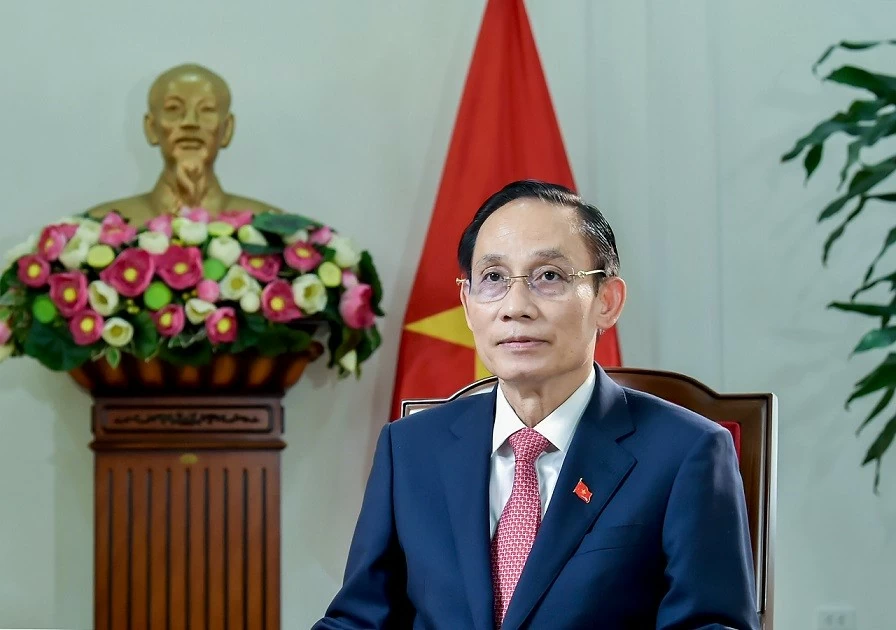 |
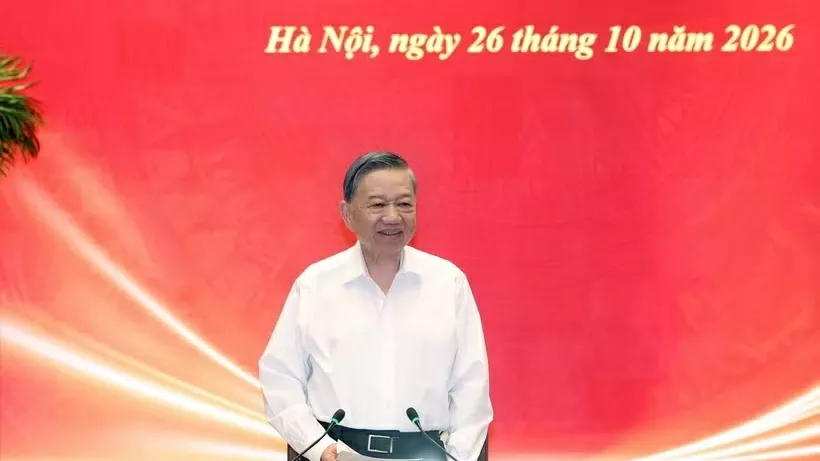
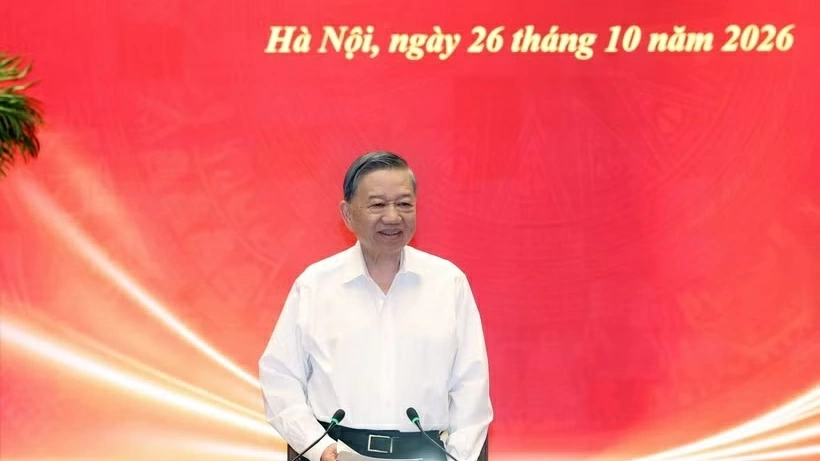
| Politburo Member and Minister of Foreign Affairs Le Hoai Trung answers media questions. (Photo: Quang Hoa) |
Politburo Member and Minister of Foreign Affairs Le Hoai Trung answered media questions regarding the outcomes of the visit.
Foreign Minister, could you highlight the standout results of Standing Member of the Secretariat Tran Cam Tu's official visit to Singapore and the first session of the Vietnam-Singapore Strategic Dialogue?
The official visit to Singapore and the co-chairing of the first Vietnam-Singapore Strategic Dialogue by the Standing Member of the Secretariat was highly successful, achieving the set objectives with numerous specific outcomes.
Firstly, it is evident that both the Singaporean Government and the People's Action Party highly valued the visit and the strategic dialogue mechanism between the two parties. Singaporean leaders warmly and respectfully welcomed the Standing Member of the Secretariat and our Party delegation.
The Standing Member of the Secretariat had a very substantive and diverse working program, including extensive discussions with the highest leaders of the Singaporean Government and the People's Action Party, such as President Tharman Shanmugaratnam, Prime Minister and Secretary-General of the People's Action Party Lawrence Wong, Speaker of Parliament Seah Kian Peng, Chairman of the People's Action Party Desmon Lee, Senior Minister and Coordinating Minister for National Security and Minister for Home Affairs K. Shanmugam. The Standing Member of the Secretariat also visited and observed activities at the People's Action Party's grassroots level.
Secondly, the Standing Member of the Secretariat and Singaporean leaders engaged in open and trustworthy discussions on various cooperation topics between the two countries and between our Party and the People's Action Party of Singapore, agreeing on many important directions to further strengthen Vietnam-Singapore cooperation. Both sides emphasized the implementation of commitments and agreements between the high-level leaders of the two countries, deepening the comprehensive strategic partnership for the benefit of the peoples of both countries, and for peace, stability, and development in the region and the world.
Thirdly, the first Vietnam-Singapore Strategic Dialogue—the first strategic dialogue mechanism our Party has established with a foreign political party, co-chaired by the Standing Member of the Secretariat and the Deputy Secretary-General of the People's Action Party—was very effective and substantive.
This is an early and concrete implementation of the high-level agreements reached during the visit to Singapore last May by General Secretary and President To Lam, in line with the “action” mindset—transforming will into action, decisions into results, as clearly stated by the General Secretary and President.
Furthermore, this strengthens the party-to-party relationship, setting a general direction for Vietnam-Singapore relations, especially in key strategic areas, creating conditions for more comprehensive cooperation between the two countries.
Both sides exchanged and shared many strategic issues of mutual concern regarding human resource training and technology connectivity; emphasized the importance of enhancing mutually beneficial cooperation and political trust; and agreed on the Conclusion of the First Strategic Dialogue with overall cooperation directions to strengthen relations between the two parties and countries, including specific cooperation plans and projects such as the 2027-2029 Cadre Training Cooperation Agreement and the Joint Declaration on Strategic Technology Connectivity.
Both sides also agreed to continue the second session of the Strategic Dialogue in Vietnam in 2027.
The first session of the Vietnam-Singapore Strategic Dialogue mechanism has contributed to opening a regular and direct exchange channel for leaders on both sides to share views and exchange experiences on strategic and current issues.
With the important results achieved, the visit has effectively contributed to strengthening the close ties between the two parties and countries, laying a solid political foundation to further advance the comprehensive strategic partnership between Vietnam and Singapore in a more substantive and comprehensive manner.
Could you elaborate on the significance of the cooperation documents on training and technology connectivity signed during this Strategic Dialogue?
As I mentioned, both sides have agreed on the 2027-2029 Cadre Training Cooperation Plan and the Joint Declaration on Strategic Technology Connectivity. These are key areas for the long-term development in the new phase for both Vietnam and Singapore.
Sharing a common understanding of the importance of high-quality human resources to meet the rapid and sustainable development needs of each country, based on increasing political trust, leaders on both sides agreed to maintain, expand, and elevate cadre training cooperation programs with a very specific implementation plan for the 2027-2029 period, making this field a pillar in bilateral relations.
Notably, for the first time, both sides have a Joint Declaration on Technology Connectivity Strategy, emphasising co-creation, co-research, and co-development cooperation, aiming towards an innovation ecosystem; enhancing connectivity in strategic technology fields, digital transformation, and digital economy; connecting research centers, enterprises, universities, and innovation organizations; leveraging the complementary strengths of both economies.
This affirms the commitment to making science, technology, and innovation cooperation a key pillar of Vietnam-Singapore relations. These contents reflect the determination of the leaders of both countries to realize the shared vision of making Vietnam and Singapore leading strategic technology partners in Southeast Asia.
Could you outline the directions for implementing the results achieved during the recent official visit?
Based on the important results achieved during the visit, both sides need to closely coordinate, with relevant Vietnamese agencies taking the initiative, embracing the “action” mindset, to focus on organizing and implementing the plans promptly.
Firstly, it is necessary to develop an early and effective implementation plan from the outset for the agreed contents on cadre training cooperation for the upcoming 2027-2029 period. At the same time, both sides need to enhance exchanges and sharing so that Vietnam can practically and effectively learn from Singapore's experience in building an internationally-standard public policy training school in Vietnam. These are very important and practical contributions to building high-quality human resources for the country's development in the new phase.
Secondly, promote the implementation of the state-enterprise-research institute connectivity model in important cooperation fields between the two countries, such as data economy, semiconductors, biotechnology, digital government, digital health, AI, and VSIP; gradually shift cooperation towards fields with higher technology, knowledge, and added value content, in line with Vietnam's new development needs and leveraging Singapore's strengths. Clearly define specific programs and projects with clear timelines and outputs to maximize the potential and complementarity between the two economies.
The higher goal is for both countries to aim to create a synergistic innovation ecosystem, where entities from both countries can co-research, co-develop, and co-produce—jointly creating technology, products, services, and new business models. Vietnam and Singapore will not only receive or exchange technology but can also jointly create value to serve the development needs of both countries.
Thirdly, to ensure the results of the visit truly materialize, it is important to ensure the synchronized participation of ministries, sectors, localities, and the business community. With the new development mindset and requirements of the country, ministries, sectors, and localities need to fully grasp the common understanding of the high-level leaders of both countries, maximize the cooperation focal points agreed upon by both sides, turning agreements into specific programs, plans, and projects for their respective fields and localities, with clear objectives, timelines, and responsibilities, measuring effectiveness and the benefits for people and businesses.
On the foundation of high political trust, with the complementary strengths of both economies, we expect agencies, localities, and businesses from both countries to build new cooperation models, products, and values, bringing practical benefits to the development of both countries.