



Resolution No. 23-NQ/TW marks a new shift in Overseas Vietnamese affairs: Deputy FM Le Thi Thu Hang
WVR - On the occasion of the issuance of Resolution No. 23-NQ/TW by the Politburo concerning the work with overseas Vietnamese in the new context, Deputy Minister of Foreign Affairs Le Thi Thu Hang shared about the new perspectives, policies, and key tasks to ensure the swift implementation of the Resolution.
Latest
Deputy Minister, Resolution No. 23-NQ/TW was issued after more than 20 years of implementing Resolution No. 36-NQ/TW. Could you please elaborate on the significance and the prominent new perspectives and orientations in the work with overseas Vietnamese as outlined in the Resolution?
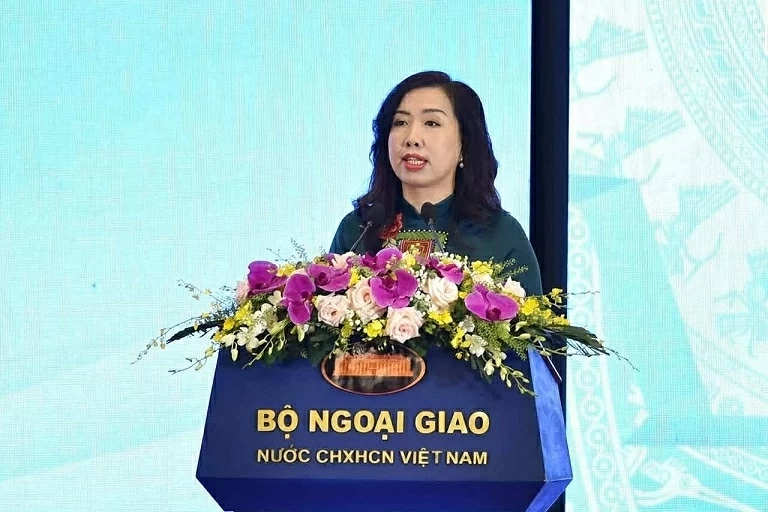 |
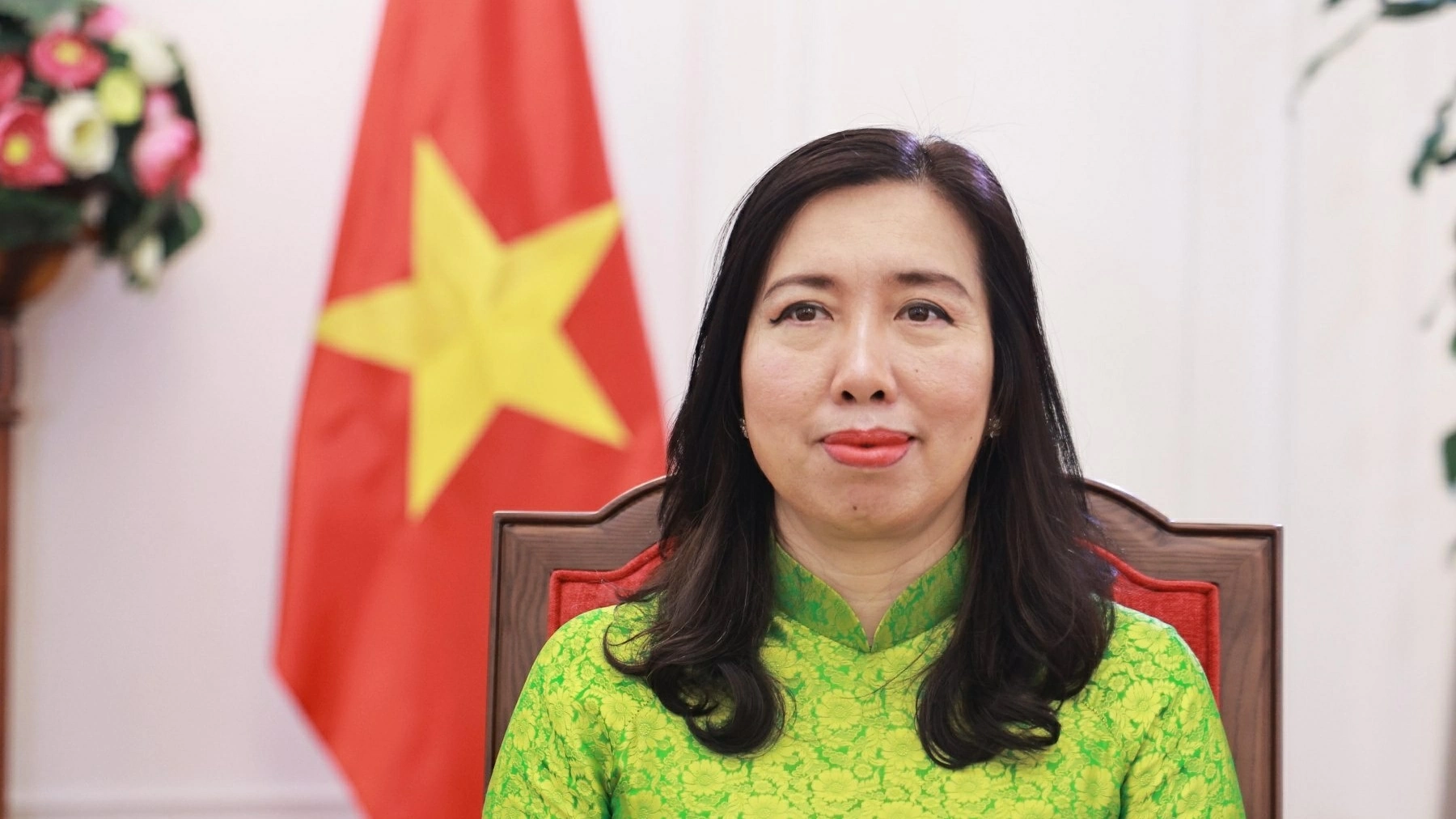
| Deputy Minister of Foreign Affairs Le Thi Thu Hang. (Photo: Thanh Long) |
Resolution No. 23-NQ/TW holds significant importance in terms of politics, foreign affairs, and national development in the new phase.
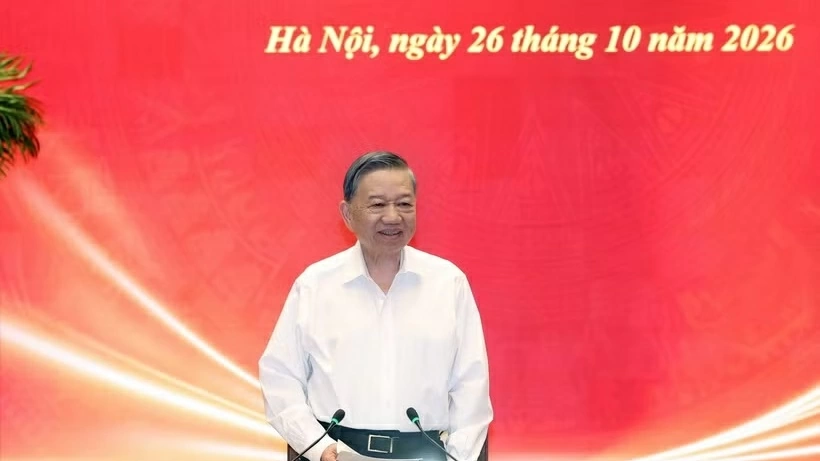
Firstly, the issuance of Resolution No. 23-NQ/TW by the Politburo on the work with overseas Vietnamese, after more than 20 years of implementing Resolution No. 36-NQ/TW and other directives by the Politburo and the Secretariat, signed by General Secretary To Lam on August 2, 2026, demonstrates the deep, consistent, and continuous attention of the Party and State towards the overseas Vietnamese community. This affirms that the work with overseas Vietnamese always holds a crucial position in the strategy of national unity, and is an integral part of the national development strategy, enhancing the comprehensive national strength in the new phase.
Secondly, the Resolution consistently reaffirms the Party and State's policy of national unity. Overseas Vietnamese are an inseparable part of the Vietnamese ethnic community; the Resolution also emphasizes the spirit of national harmony, setting aside the past, looking towards the future, respecting differences that do not conflict with national interests, thereby further strengthening the bond between compatriots at home and abroad, increasing consensus, and promoting the strength of national unity.
Thirdly, the Resolution is significant in updating and perfecting the Party's policy towards the overseas Vietnamese community, aligning with the new development context of the country and the maturity of the community. It accurately reflects the position, role, and increasing contribution of the overseas Vietnamese community to the cause of building, developing, and defending the homeland.
Fourthly, the Resolution provides an important political foundation for various levels and sectors to continue perfecting mechanisms and policies, building a united and developed overseas Vietnamese community with solid legal status, successfully integrating into the host country, preserving national cultural identity and the Vietnamese language; while creating a favorable environment for overseas Vietnamese to act as a bridge of friendship, promote the country's image, and participate more deeply in the country's development fields, especially in science and technology, innovation, investment, business, and international integration.
Among the many new contents of the Resolution, I would like to highlight two strategic new perspectives.
Firstly, elevating the awareness of the position and role of overseas Vietnamese. For the first time, the Resolution identifies overseas Vietnamese not only as an inseparable part of the Vietnamese ethnic community but also as one of the important strategic resources contributing to enhancing the comprehensive national strength. This marks a new development in the Party's thinking, affirming that national strength is not only derived from domestic resources but also from the intellect, potential, reputation, and network of over 6.5 million Vietnamese worldwide. Compatriots are not only a bridge between Vietnam and the world but also a force that accompanies and directly participates in the cause of building, developing, and defending the homeland.
Secondly, innovating the approach to the work with overseas Vietnamese. Resolution No. 23 clearly demonstrates the requirement for a strong innovation in the method of implementing the work with overseas Vietnamese towards accompanying, creating mechanisms, and promoting the role of overseas compatriots. The State not only plays the role of mobilizing, gathering, and supporting the community but also proactively creates an environment, mechanisms, and favorable conditions for overseas Vietnamese to participate more deeply in the cause of building and defending the homeland.
In this spirit, the work with overseas Vietnamese in the coming time needs to be implemented with a community-centered approach, focusing on connection and resource mobilization. The Resolution places the work with overseas Vietnamese within the overall strategy of national unity and closely links it with the tasks of economic-social development, science-technology, innovation, digital transformation, culture, foreign affairs, and national defense from early on and from afar.
Another important orientation is to continue affirming that the work with overseas Vietnamese is the responsibility of the entire political system, requiring synchronized and close coordination among committees, ministries, sectors, localities, and Vietnamese representative agencies abroad. This creates a favorable environment for the overseas Vietnamese community to stay connected with their homeland, while strongly promoting their role as one of the important strategic resources of the nation, accompanying the country in its fast and sustainable development, contributing to enhancing the national position and comprehensive strength.
The Resolution identifies overseas Vietnamese as “one of the important strategic resources” of the country; it calls for “elevating the mindset from mobilizing, gathering, and caring to accompanying, creating mechanisms, and mobilizing resources.” According to you, how will this perspective bring about changes in the development and implementation of policies towards the overseas Vietnamese community in the near future?
The most important new point is that the Resolution clearly defines the innovation in thinking and the method of implementing the work with overseas Vietnamese, from mobilizing, gathering, and caring to accompanying, creating mechanisms, and mobilizing resources. This is not only a change in approach but also an elevation in the awareness of the role of the overseas Vietnamese community in the new development phase of the country.
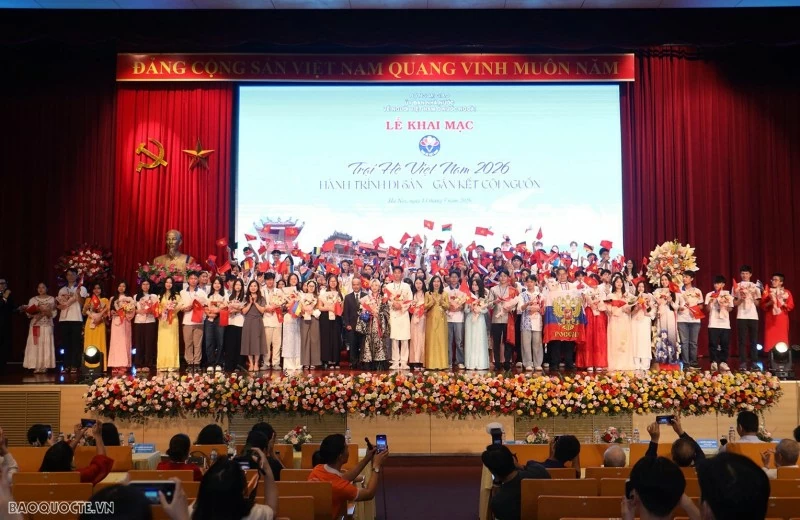 |
| Delegates attending the Vietnam Summer Camp 2026 with the theme “Heritage Journey Connecting Roots”. (Photo: Thanh Long) |
Firstly, accompanying means that the Party and State continue to fully fulfill their responsibility to care for, protect the legitimate rights and interests of overseas Vietnamese; coordinate to ensure security and safety for citizens; support the community in stabilizing their lives, integrating, and developing in the host country; preserving the Vietnamese language, national cultural identity, and strengthening ties with the homeland. If previously the focus was mainly on care and support, now accompanying needs to be implemented throughout the community's development process, considering the community's development as part of the country's development.
Secondly, creating mechanisms is a very important new requirement of the Resolution. Instead of just stopping at mobilizing, gathering, and caring, the State needs to proactively perfect institutions, policies, and a favorable environment for overseas Vietnamese to have conditions to participate in the country's development process. This includes perfecting mechanisms to attract and utilize intellectuals, experts, entrepreneurs; creating favorable conditions for investment, business, and innovation; expanding channels for overseas Vietnamese to participate in scientific research, technology transfer, policy consultation, and national development programs.
Thirdly, mobilizing resources is not only understood as mobilizing financial resources but more broadly as fully utilizing the resources of the overseas Vietnamese community, including knowledge, technology, management experience, international networks, reputation, and the community's position in the host country. The Resolution's identification of overseas Vietnamese as “one of the important strategic resources” requires ministries, sectors, and localities to proactively build specific programs, projects, and cooperation mechanisms so that these resources are connected and utilized more effectively for the process of integration, building, and developing the country.
It can be said that the new point of the Resolution is elevating the mindset from caring to accompanying, from mobilizing to creating mechanisms and mobilizing resources. Accordingly, policies towards overseas Vietnamese in the near future will not only aim to support and connect the community but also focus on creating a favorable environment and mechanisms for overseas Vietnamese to participate more deeply in the process of integration, building, and developing the country; while effectively promoting the community's role as one of the important strategic resources of the nation.
The Resolution emphasizes the spirit of national harmony, eliminating prejudice, setting aside the past, and looking towards the future; it also affirms that the Party and State always listen to constructive contributions for national interests. According to you, what significance does this message hold in consolidating the national unity bloc?
Firstly, this message continues to affirm the consistent policy of our Party and State on national unity, in which the overseas Vietnamese community is an inseparable part and an important resource of the Vietnamese nation. This inherits the spirit of Resolution No. 36-NQ/TW, while being developed to suit the new context and new development requirements of the country.
The Resolution's continued emphasis on the spirit of national harmony is very important in consolidating social consensus, strengthening the bond between compatriots at home and overseas Vietnamese. Harmony does not mean eliminating differences in circumstances, experiences, or viewpoints, but respecting differences that do not conflict with national interests, aiming towards the common goal of building a developed, strong, and prosperous Vietnam.
In my opinion, a very noteworthy point of this Resolution is the broader expansion of the space for unity, gathering, and mobilizing resources of the overseas Vietnamese community based on national interests and the aspiration for national development. When the common goal is prioritized, we will have the conditions to gather more affection, intellect, experience, and resources of Vietnamese people worldwide for the cause of building and defending the homeland.
Moreover, the Resolution's affirmation of the spirit of listening, dialogue, and valuing constructive contributions for national interests reflects the openness, receptiveness, and responsibility of the Party and State towards the overseas Vietnamese community. It sends a clear message that every Vietnamese, wherever they are, can contribute to the country in different ways; and ideas, initiatives, and suggestions stemming from a sense of responsibility towards the homeland are valued and facilitated for promotion.
I believe that when Vietnamese people at home and abroad share the aspiration for national development, aim towards national interests, and feel they are part of Vietnam's future, the national unity bloc will be increasingly consolidated, becoming a great strength for the country to develop rapidly and sustainably in the new era.
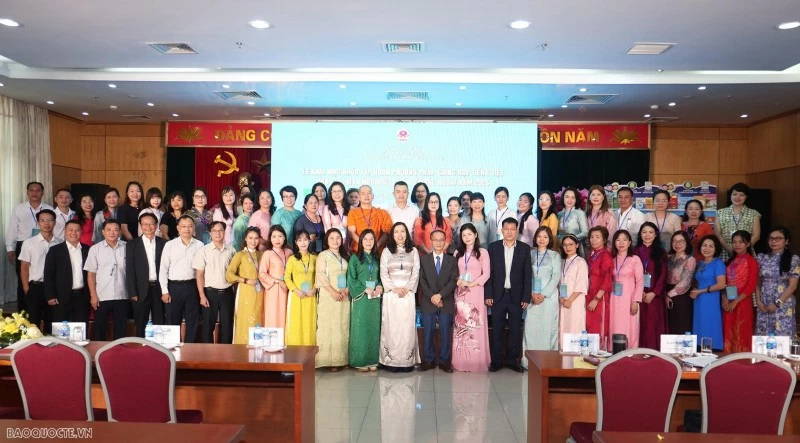 |
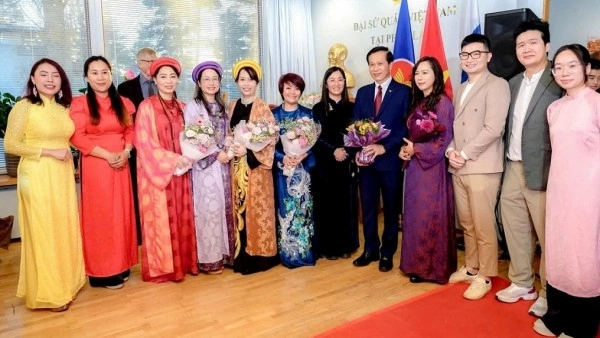
| Deputy Minister Le Thi Thu Hang taking a commemorative photo with delegates attending the opening of the Vietnamese language teaching training course for overseas Vietnamese teachers in 2026. (Photo: Thanh Long) |
To ensure Resolution No. 23-NQ/TW is swiftly implemented, according to you, what are the key priority tasks that the Ministry of Foreign Affairs and the State Committee for Overseas Vietnamese will focus on in the near future?
The most important thing after the issuance of Resolution No. 23-NQ/TW is to quickly transition from awareness to action, from policy to specific programs, plans, and results. This is not only the task of the Ministry of Foreign Affairs or the State Committee for Overseas Vietnamese but the collective responsibility of the entire political system.
For the Ministry of Foreign Affairs and the State Committee for Overseas Vietnamese, the focus in the near future will be on four key tasks.
Firstly, enhancing information dissemination, propaganda, and thorough understanding of the Resolution. The goal is to create consensus in awareness and action across levels, sectors, localities, Vietnamese representative agencies abroad, and the overseas Vietnamese community regarding the perspectives, goals, and tasks outlined in the Resolution. It is important that each agency and unit clearly defines its responsibilities and concretizes the Resolution into practical tasks and action programs.
Secondly, promptly institutionalizing and concretizing the Resolution into programs, plans, and implementation mechanisms. The Ministry of Foreign Affairs is leading the development of the Government's Action Program and the Ministry of Foreign Affairs' implementation plan; while coordinating with ministries, sectors, and localities to review and perfect mechanisms and policies, creating a more favorable environment for overseas Vietnamese to connect, contribute, and participate in the country's development process.
Thirdly, building mechanisms and ecosystems to connect overseas Vietnamese resources. The focus is on forming databases, networks of experts, intellectuals, scientists, entrepreneurs, and young Vietnamese globally; establishing platforms to match supply and demand, enhancing the connection of these networks with the development needs of ministries, sectors, localities, enterprises, research institutes, and universities in the country, thereby transforming potential into cooperation programs, investment projects, technology transfer, and innovation activities.
Fourthly, strongly innovating the method of implementing the work with overseas Vietnamese in the spirit of accompanying, creating, and mobilizing resources. Vietnamese representative agencies abroad need to play the role of connecting Vietnamese resources in their localities; proactively discover, gather, and connect overseas experts, scientists, entrepreneurs, intellectuals with domestic development needs. The overarching spirit is to shift from organizing activities to creating long-term connection mechanisms; from mobilizing, gathering to accompanying, supporting, and mobilizing resources.
I believe that with the synchronized involvement of the entire political system, close coordination among ministries, sectors, localities, and the accompaniment of the overseas Vietnamese community, Resolution No. 23-NQ/TW will soon be implemented, creating substantial changes in mobilizing overseas Vietnamese resources to serve the cause of building and defending the homeland in the new development phase.