




Overseas Vietnamese community in Indonesia: Preserving Vietnamese flavours in the Land of a Thousand Islands
WVR - As the year draws to a close, the atmosphere of Tet is palpable in Vietnamese restaurants named YEU SAIGON GROUP in Indonesia. For the Vietnamese community living and working here, these are rare emotional anchors amidst the rhythm of life away from home. For local diners, it's a gateway to Vietnamese culture through cuisine.
Latest
Behind this space is a journey spanning over a decade by Ms. Le Thi Tuyet Mai, a Vietnamese woman who embarked on a venture from a simple dream of bringing her homeland's cuisine to international friends.
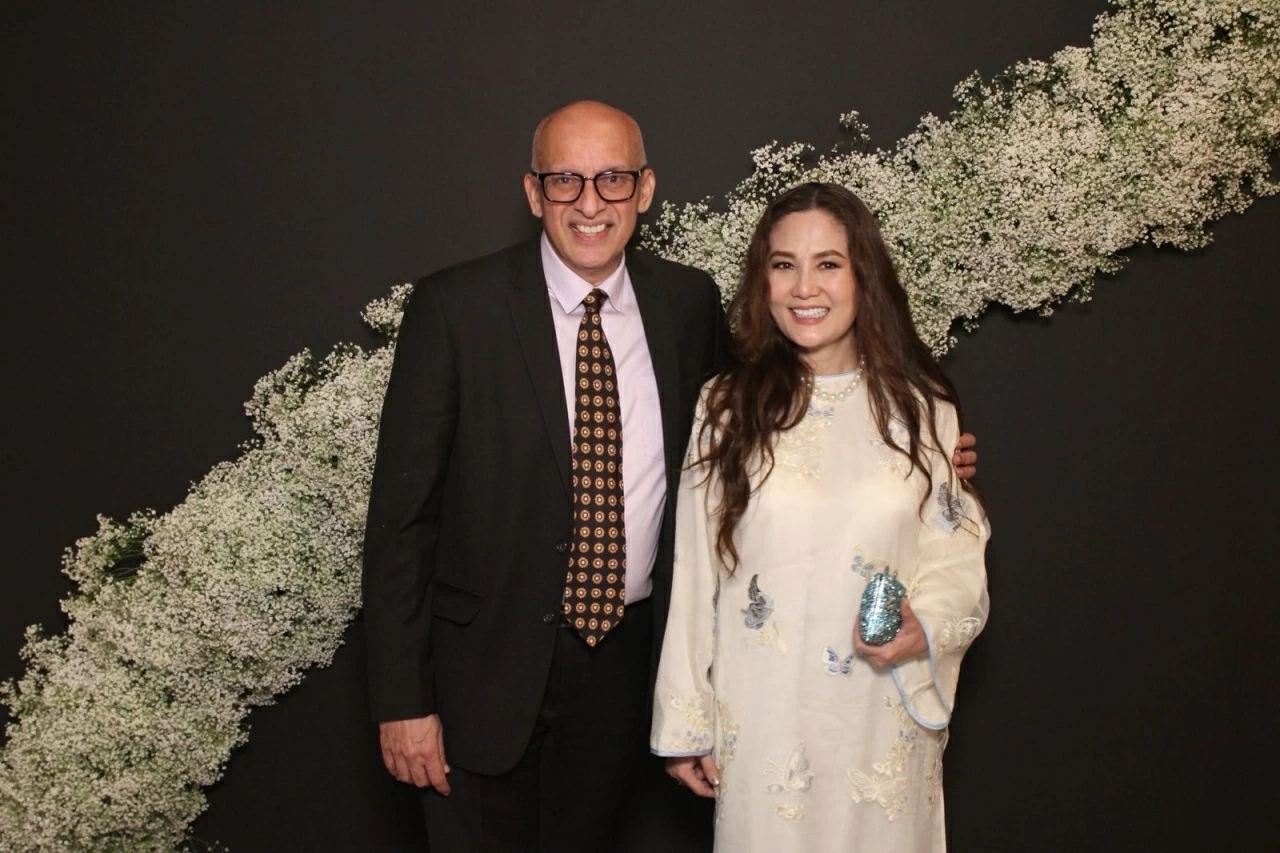 |
| Ms. Le Thi Tuyet Mai and her husband. (Photo: Courtesy by author) |
The soul of Vietnamese cuisine
In 2015, during her initial trips to Indonesia, Ms. Mai quickly recognized the gap for Vietnamese cuisine in this populous and promising market.
“I am a great lover of cuisine, especially Vietnamese cuisine. When I came to Indonesia, I dreamed of opening a Vietnamese restaurant here to introduce my homeland's dishes to the people of this archipelago,” she shared.
However, this dream was not easy. Cultural barriers, taste preferences, supply chain challenges, and competitive pressures made the entrepreneurial journey abroad even more arduous.
“I couldn't build this dream alone until I met my husband – who has been a source of strength and has accompanied me throughout this journey,” she said.
From the first restaurant, YEU SAIGON GROUP gradually expanded its scale and has now developed into a system of 45 stores in many major cities across Indonesia. But notably, despite the growing scale, the culinary philosophy she pursues remains unchanged.
Growing up in a family that valued cooking, Ms. Mai was early on taught the foundational knowledge of Vietnamese cuisine by her grandmother and mother, from selecting ingredients, and preparation to secret recipes to preserve the soul of the dishes. The strictness of her grandmother and mother has become a guiding principle for her throughout the journey of building the restaurant system as it is today.
She stated: “Vietnamese cuisine, although simple, is sophisticated, flexible yet not overly modified, and deeply regional. In a multicultural culinary environment like Indonesia, the biggest challenge is not to make the dish 'strange' to suit local tastes, but to integrate Vietnamese dishes without losing their essence. I always remind the chefs to preserve the traditional flavours so that Vietnamese cuisine retains its unique identity when compared with other culinary cultures.”
In reality, Indonesians have become somewhat familiar with Vietnamese cuisine through their travels and business trips to Vietnam, which has become an advantage for YEU SAIGON GROUP to more easily access the market.
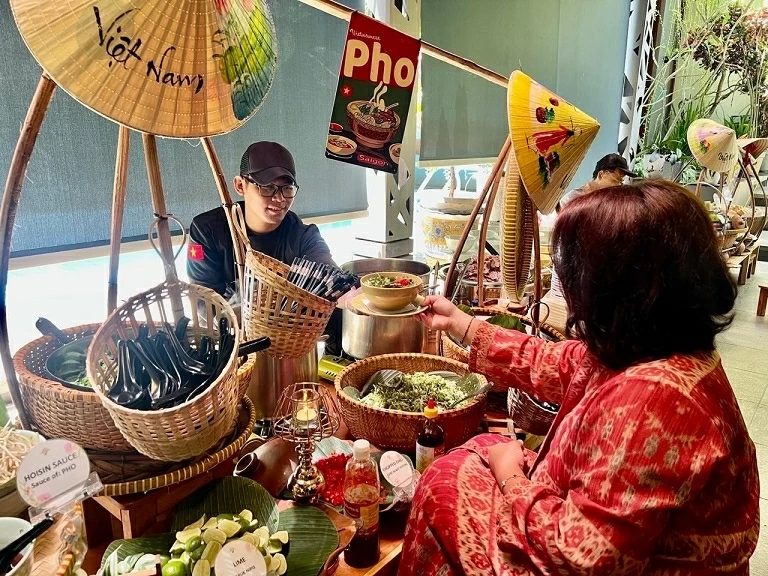 |
| Vietnamese pho stall at the restaurant. (Photo: Courtesy by author) |
Secrets from the herb garden
If Vietnamese cuisine values the harmony of five flavours: sour, spicy, salty, sweet, and bitter, along with the freshness of herbs, Indonesian cuisine leans towards strong, spicy flavours with many spices like ginger, lemongrass, and turmeric. The challenge is to harmonize these two worlds of taste.
Ms. Mai believes the key lies in traditional cooking techniques and the core spices of Vietnam. “We retain fish sauce, shrimp paste, and distinctive herbs. The important thing is to adjust the level of seasoning, not to change the essence of the dish,” she emphasized.
To increase flexibility, the restaurant system prepares additional Vietnamese-style chili sauces and satay, allowing Indonesian diners to adjust the spiciness while maintaining the original flavour. This approach respects local tastes while preserving the spirit of Vietnamese cuisine.
In Vietnamese cuisine, herbs are not just a side component but the soul of the dish. A salad without Vietnamese coriander, pho without cinnamon, sawtooth coriander, or rice paddy herb feels incomplete, yet many of these distinctive herbs are not readily available in Indonesia.
Driven by the desire to maintain this identity, she and her husband decided to establish a private herb garden for YEU SAIGON GROUP. Farms are invested in to grow distinctive Vietnamese herbs, while staff are trained in cultivation techniques to ensure a stable and high-quality supply.
Not only serving immediate needs, this model also demonstrates a long-term commitment to quality and sustainable development – factors increasingly important in the modern culinary industry.
In the early days, winning over Indonesian diners was not easy. However, through perseverance and a commitment to quality, Ms. Mai's restaurant gradually established a solid position.
Today, the system has become one of the top choices when Indonesians want to enjoy Vietnamese dishes. Specifically, the pho dish alone serves over 200,000 customers each month.
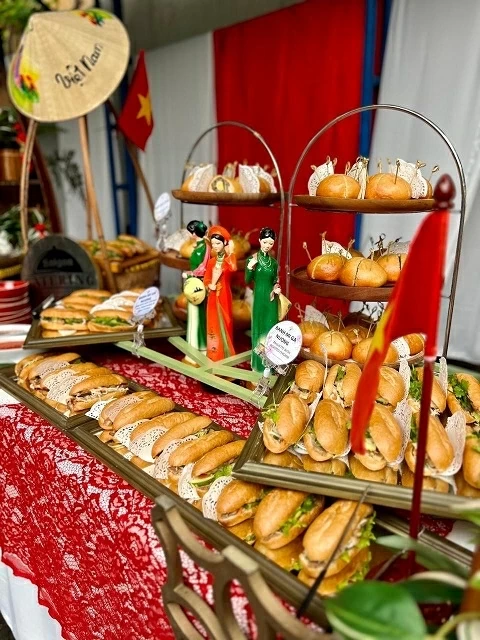 |
| Vietnamese banh mi introduced to diners at the restaurant. (Photo: Courtesy by author) |
What makes the profession even more rewarding are the positive feedbacks from diners. “Many Indonesian families share that their children eat more vegetables when dining at Vietnamese restaurants,” she recounted.
Many diners consider Vietnamese dishes healthy, balanced, and easy to eat in modern life. This recognition is also reflected in the fact that many Indonesian media outlets and television stations have come to interview, viewing the restaurant as a prime example of the success of Vietnamese cuisine in the international market.
The anchor for Vietnamese abroad
If cuisine is a cultural connector, then the Lunar New Year is when this connection is most evident. Every Tet, the entire YEU SAIGON GROUP restaurant system is adorned with apricot blossoms, peach blossoms, red couplets, plays spring music, recreating the traditional Vietnamese Tet atmosphere.
The Vietnamese kitchen team prepares traditional Tet dishes, tailored to each restaurant model, such as chicken sausage, bitter melon stuffed with chicken, and chicken-stuffed banh chung. Along with that are promotional programs, complimentary dishes, decoration services, and home delivery, helping the Vietnamese Tet atmosphere spread more widely in the community.
“We want to bring the spirit of reunion and togetherness of Vietnamese Tet to the Vietnamese community and the Indonesian people,” she shared.
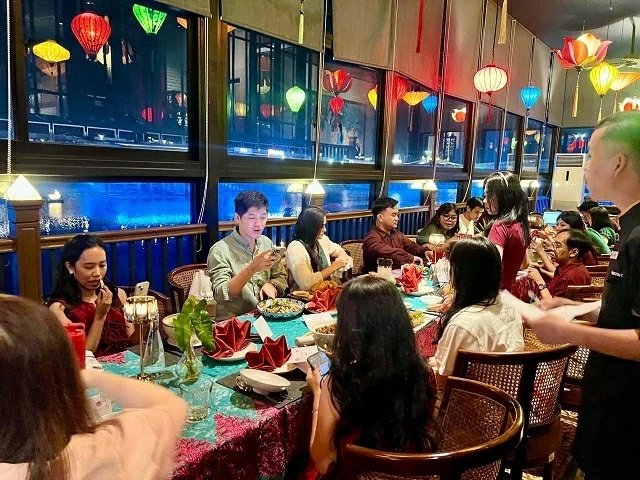 |
| Vietnamese culinary space in Indonesia. (Photo: Courtesy by author) |
For Ms. Mai, cuisine not only meets material needs but also essential spiritual needs. Each dish carries memories, and just a taste can bring back feelings of childhood and homeland.
In a foreign land, meeting fellow countrymen with shared tastes creates a special bond, turning meals into a warm community space. Sharing Vietnamese dishes with Indonesian friends is also a way for Vietnamese abroad to express cultural pride, contributing to affirming the presence of the Vietnamese community in the host country.
Notably, many diners, after experiencing Vietnamese cuisine, have chosen Vietnam as a destination for their next trips, demonstrating the spread of cuisine as a “cultural ambassador”.
“Cuisine is the anchor that connects Vietnamese to their roots, and also the glue that bonds the community in Indonesia,” Ms. Mai affirmed, expressing her pride in contributing to strengthening the friendship between the two countries through Vietnamese meals and Tet celebrations in the land of a thousand islands.