





AI and Vietnam’s next development chapter: Managing disruption, seizing opportunity
Vietnam has reached another decisive moment in its development journey.
Latest
 |
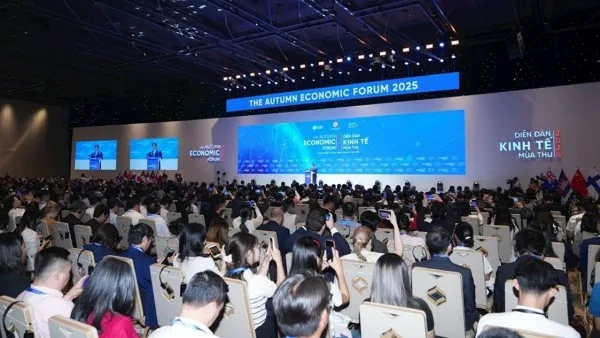
| AI does not only change how goods are produced; it reshapes how decisions are made, how knowledge is generated and how institutions function. (Photo: VNA) |
After decades of industrialisation, global integration and digital expansion, the country now faces a new wave of transformation driven by artificial intelligence. Unlike previous technological shifts, AI does not only change how goods are produced; it reshapes how decisions are made, how knowledge is generated and how institutions function.
For Vietnam, this transformation presents a dual challenge. It offers the possibility of higher productivity, new industries and technological leadership. At the same time, it raises questions about employment, education quality and social cohesion.
The issue is therefore not whether AI will affect Vietnam, but how the country will shape its impact in line with its long-term development strategy. For policymakers, the key is to treat AI not as an IT topic, but as a development question. Vietnam has shown, through digital legislation, that it can create anchors for technology - without losing the long view.
AI as a driver of Vietnam’s long-term competitiveness
Vietnam’s economic journey is at a turning point.
The promise of AI is here, but so is the very real challenge of getting the workforce ready. It’s impressive that three-quarters of the nation’s businesses are already using AI. But here’s the catch: a great skills gap could stop this progress in its tracks.
This isn’t just a problem for companies; it’s a national issue. We could see a large part of the workforce left behind in a world that’s quickly becoming automated.
The stakes are high. On the one hand, the World Bank found that places in Vietnam using more robots saw worker incomes go up by 5%. That’s a clear sign AI can boost both productivity and pay. But there’s another side to this story. Projections show that up to 57% of workers in Southeast Asia - millions of jobs in Vietnam - are at risk.
This is especially true for the manufacturing and service jobs that have been the backbone of Vietnam's economy. The heart of the matter is a severe lack of skilled people. A whopping 75% of Vietnamese companies say not having enough AI skills is a major roadblock, according to a 2025 government report. And to make things more complicated, only about 28% of the country’s 53 million workers have any formal training certificate.
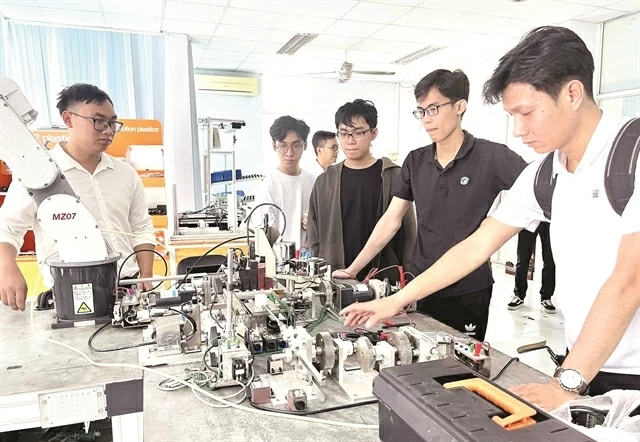 |
| The promise of AI is here, but so is the very real challenge of getting the workforce ready. (Photo: VNA) |
Disruption potential and the human factor
This disruption could pour fuel on the fire of existing inequalities. A stark 39% income gap already separates urban and rural workers, and a 25% gender wage gap persists across the economy. Without intervention, AI’s tendency to reward high-skilled workers while replacing low-skilled, routine tasks could deepen these social fractures.
“The challenge is not just about technology; it’s about people,” says Quynh Phuong Nguyen, a finance and fintech educator who has trained numerous Vietnamese companies on AI adoption. “From my on-the-ground work with local firms, I see a significant gap between the ambition to adopt AI and the practical skills to manage it.
Many businesses are struggling to move beyond basic applications because their teams lack the data literacy and analytical capabilities to truly leverage AI for strategic advantage.”
The core of the problem is a critical shortage of skilled talent. A staggering 75% of Vietnamese businesses cite a lack of necessary AI skills in the workforce as a major barrier to adoption, according to a 2025 report from the Ministry of Information and Communications. This is compounded by the fact that only 28.3% of the country’s 53-million-strong labour force holds a formal training certificate.
Not only factory jobs: Why professional work and academia are also at risk
One important point many AI enthusiasts still underestimate is that, as AI automates more and more core processes currently performed by humans, entire occupational profiles can shrink—or disappear. This is especially true in fields where rule-application, pattern recognition, and document-heavy workflows dominate: tax advisory services, parts of legal practice, financial and risk analysis, and compliance functions.
We have already seen how the relevance of university programmes in interpreting and translation has declined. In many cases today, people begin with an AI system for a legal first check or a translation draft. The results are not always correct and can be error-prone.
But if we compare today with five years ago - when the human factor still had a far higher weight - and project the next ten years, traditional models of “expert work” will need to be questioned.
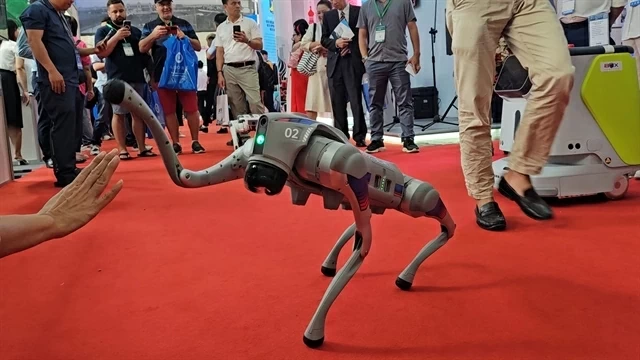
The same logic applies to physical work. A human needs rest phases and may work eight hours - sometimes more - but there is a biological limit. A robot can work 24/7. And progress in robotics, including humanoid robotics, is accelerating. In the long run, this changes cost structures, safety expectations, and labour demand across industries.
Higher education is a frontline
Universities and business schools are already becoming a frontline of this transition. Both authors observe a dual pattern among students: on the one hand, responsible use of tools like ChatGPT can reduce time spent on repetitive tasks and increase quality through better structuring, language support, and idea testing.
On the other hand, a portion of students use AI to shortcut learning, resulting in AI-generated or AI-assisted academic work that looks polished but lacks depth.
The broader trend is a widening spread between brilliant students and the trailing quartile. A likely institutional response is to strengthen oral components - more live problem solving, more defence of arguments, more discussion-based examinations. In universities and in many other fields, it will be necessary to react quickly to avoid obsolescence.
For Vietnam, this is not an abstract debate: it is a competitiveness issue tied to the country’s future intellectual capital.
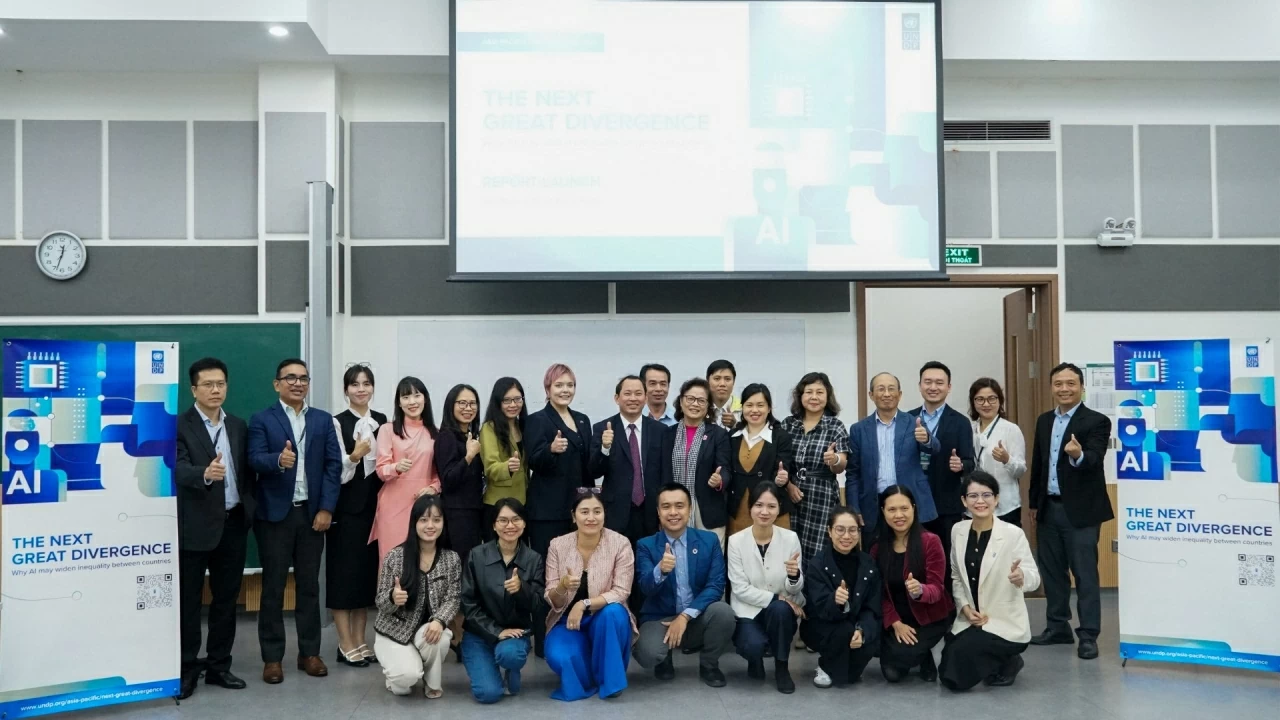 |
| A workshop on AI of UNDP Vietnam. (Photo: UNDP Vietnam) |
Human capital at risk? Safeguarding agency in the AI era
While the potential is enormous, Vietnam should also reflect on societal risks. In his recent work on the “singularity” debate, futurist Ray Kurzweil warns that rapid technological advances can lead to human complacency, loss of creative agency, and ethical voids if left unexamined.
In Vietnam’s context, there is a growing risk that digital tools - especially AI - could displace critical thinking, particularly in education. Students may increasingly rely on AI to produce academic work, bypassing the learning process itself. If left unchecked, this could undermine not only academic integrity but also Vietnam’s future intellectual capital.
Kurzweil also warns against unregulated machine intelligence outpacing human oversight. Vietnam must not only regulate digital assets; it must also shape digital behaviour - fostering a society where technology serves people, not replaces them.
If AI presents systemic risks, it simultaneously presents a historic opportunity for structural upgrading at the national scale.
From digital adoption to technological leadership
Vietnam is not destined to follow the technological pathways of older industrial economies step by step. Its comparative advantage lies in leapfrogging - using artificial intelligence not merely to optimise existing industries, but to enter advanced technological ecosystems at an early stage of their global formation.
This requires a shift in perspective. AI should not be viewed only as a productivity tool for factories or back offices. It should be treated as foundational infrastructure for entirely new value chains. Beyond traditional manufacturing, Vietnam could strategically position itself as a regional hub for: (i) Advanced robotics and autonomous production systems; (ii) AI-driven engineering, simulation and digital design services; (iii) Space-related technologies and satellite-enabled applications; (iv) Next-generation digital infrastructure and intelligent systems.
| More from WVR |
 Vietnam expected as destination for AI development in 2025: Media Vietnam expected as destination for AI development in 2025: Media |
Global pioneers such as SpaceX illustrate how rapidly space technology has moved from state-dominated prestige programmes to commercially viable industries.
Vietnam does not need to replicate such models. But it can identify strategic niches within satellite services, AI-based geospatial analytics, advanced materials, robotics components, and upstream engineering services.
The objective is not symbolic ambition. The objective is ecosystem building. Vietnam has already demonstrated - since Doi Moi - that regulatory boldness, institutional reform, and openness to private-sector dynamism can transform economic structures. The Law on Digital Technology Industry provides further evidence of Vietnam’s capacity to design adaptive legal frameworks for emerging technologies
If Vietnam combines regulatory sandboxes, targeted innovation zones, internationally aligned digital standards, and talent-focused education reform, it can position itself as a jurisdiction where future industries are not only assembled, but conceptualised, tested and scaled.
In an era of exponential technological change, countries that shape ecosystems - rather than merely supply labour - will capture long-term strategic value. Vietnam has the institutional coherence and demographic dynamism to be among them.
Leapfrogging is not a slogan
Since the industrial revolution, we have learned to stop thinking about progress in linear terms. Each new technology wave is an exponential function, and AI makes the curve steeper than anything in the past 200 years. Even sectors once perceived as distant - such as space-enabled analytics - are becoming commercially accessible.
This is precisely where Vietnam can set strong accents through technology openness and by attracting future-oriented industries. Leapfrogging in the AI era does not mean copying frontier technologies.
It means shortening development cycles by combining regulation, education reform and ecosystem-building. Countries that move early into emerging governance frameworks will shape standards rather than follow them.
At Techfest Hanoi 2025, the message from entrepreneurs and policy stakeholders was not “AI for its own sake,” but “AI that raises productivity, supports green transition, and builds scalable companies.”
The most convincing voices combined ambition with realism: Vietnam needs not only talent, but also market infrastructure, governance and financing channels that turn innovation into internationally competitive products. That spirit - pragmatic, forward-looking, and execution-oriented - should guide the AI-jobs agenda.
 |
| If Vietnam manages to align innovation with inclusion - ensuring that productivity gains translate into broader opportunities rather than deeper divides - AI can become a new chapter in its development story. (Photo: VOV) |
Vietnam’s advantages: Optimism, math strength, and policy capacity
Despite the challenges, Vietnam holds a unique set of advantages. Its population is not only young but also remarkably optimistic about AI, with 81% of Vietnamese viewing the technology positively—the highest rate in the Asia-Pacific region. This enthusiasm, combined with a strong foundation in mathematics education and a stable, forward-looking government, creates fertile ground for a successful digital transformation.
A coordinated policy response: Skills, safety nets, and smart adoption
So, what needs to happen to truly ride this technological wave?
This isn’t a time for small tweaks. It calls for a bold, all-in national strategy. The country must launch a massive effort to upskill and reskill its people, strengthen the social safety nets for those whose jobs are displaced, and pour strategic investment into its digital backbone.
“Look, a wait-and-see approach just won’t cut it. That’s a luxury Vietnam can’t afford,” argues Prof. Dr. Andreas Stoffers, a professor of international management with deep experience in Southeast Asia. “What we need is a system-wide, nationally-led push.
The government, private companies, and our schools have to come together on a powerful national skills plan, maybe taking a page from Germany’s successful dual training system. This isn’t just about changing a few university classes. It’s about a fundamental overhaul - embedding AI in the curriculum, scaling up vocational training with real industry credentials, and getting easy-to-use online learning out to the entire workforce.”
In practice, this could mean establishing a national upskilling fund, expanding unemployment insurance to cover workers in transition, and providing financial incentives for small and medium-sized enterprises to adopt AI and train their employees. It also means encouraging regulatory sandboxes where new AI-enabled business models can be tested under supervision - fast, but responsibly, with learning loops between innovators and regulators.
A confident conclusion for Vietnam
We do not aim to spread science fiction, nor to paint a pessimistic future for Vietnam.
The purpose is to strengthen sensitivity for developments that are already unfolding. Vietnam has proven its technology openness more than once. The task now is to connect to this legacy with focus and speed - while keeping ethics, education quality, and social cohesion in view.
The future will be shaped by faster and faster leapfrogging. If Vietnam invests in skills, builds institutions that reward responsible innovation, and sets clear rules that protect human agency, the country can turn AI into an accelerator of inclusive prosperity - rather than a driver of division.
AI will not determine Vietnam’s future on its own. The decisive factor will be how education reform, ethical regulation, and social protection evolve in parallel with technological adoption. If Vietnam manages to align innovation with inclusion - ensuring that productivity gains translate into broader opportunities rather than deeper divides - AI can become a new chapter in its development story.
The country has navigated transformative change before. With strategic coordination and societal consensus, it can do so again.

| Vietnam promotes the development of offshore hydrogen production Green hydrogen production using offshore wind turbines is an optimal solution that many countries around the world have applied in their energy transition. Vietnam also ... |
| Vietnam has a prime opportunity to lead in attracting technological 'eagles' The interest of tech giants in Vietnam is palpable. |

| Trend of green economic development in Vietnam The trend of green economic development to protect the environment and promote sustainable development is requiring a mechanism to encourage businesses to invest in green ... |

| Vietnam turns to nuclear technology for development Vietnam eyes to harness the power of nuclear technology to develop the healthcare, industrial and agricultural sectors amidst increasingly stringent requirements from local consumers and ... |

| Digital banking services in Vietnam make remarkable development More than 87% of Vietnam’s adult population now hold payment accounts at banks while many credit institutions are processing more than 95% of transactions through ... |