



Overseas Vietnamese director: Returning home through the bridge of cinema
WVR - Living in Poland, Vietnamese-origin director and screenwriter Anna Fam-Rieskaniemi chooses a unique path, rich in introspection and a quest for identity.
Latest
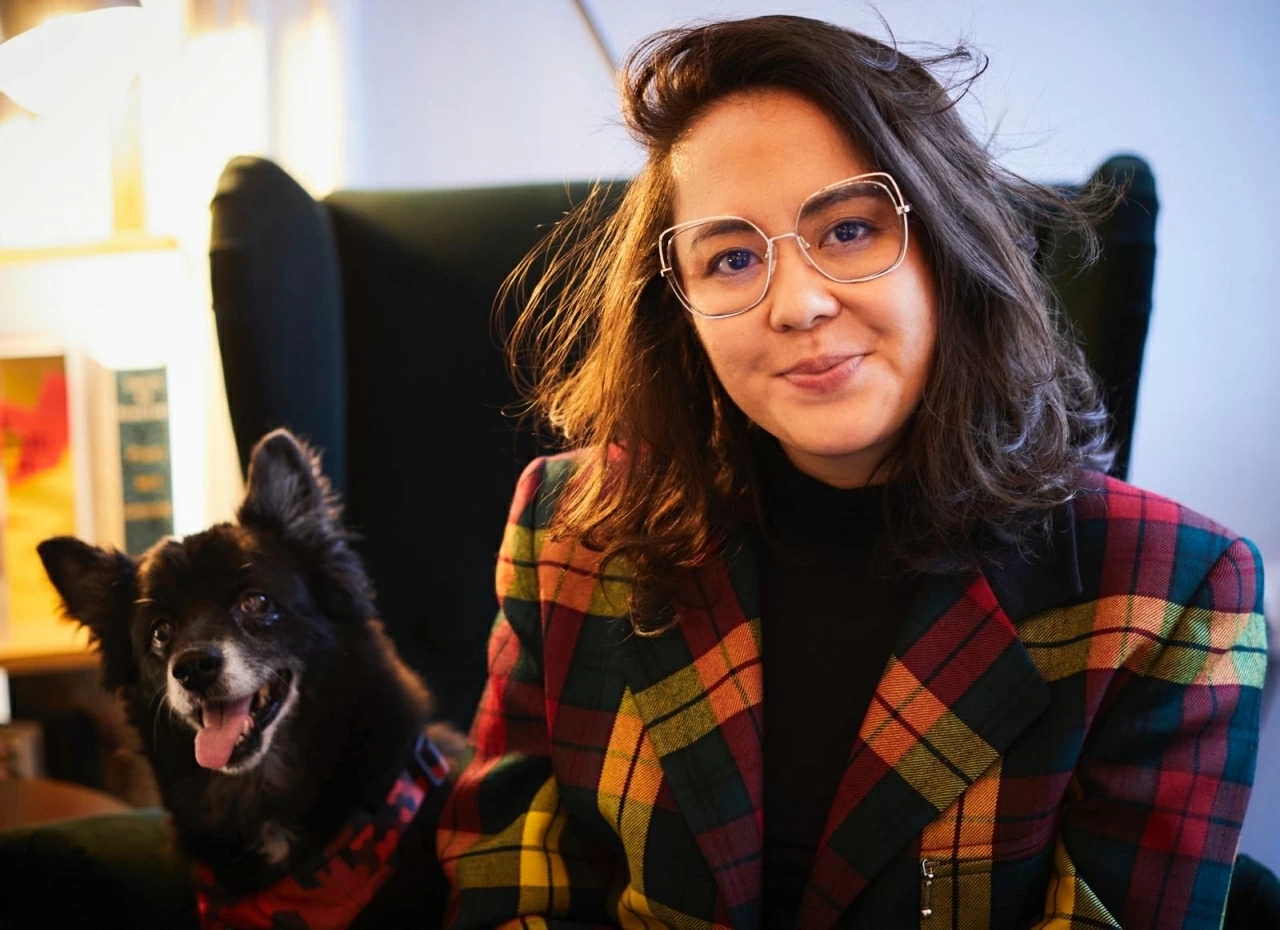 |
| Director and screenwriter of Vietnamese origin, Anna Fam-Rieskaniemi. (Photo: Mateusz Skwarczek) |
In a conversation with The World and Vietnam Report she doesn't dwell much on her achievements or cinematic art but takes the interlocutor through the experiences of a filmmaker living amidst diverse cultural spaces. Her film Entropia and her journey back to Vietnam demonstrate that cinema is not only a creative language but also a way for people to converse with their roots, themselves, and the contemporary world.
How has the social and cultural environment in Poland influenced your decision to pursue a career in cinema?
Living in Poland has given me the time and distance needed to listen to the world around me and to myself. But more importantly, cinema has provided me with the opportunity to return to Vietnam and present my film to the audience back home.
For me, filmmaking is not just a profession but a bridge that allows me to return, carrying stories shaped by very personal experiences. Living between different spaces, questions of identity and belonging have gradually become central to my thoughts and creations.
Growing up between Vietnamese and Polish cultures, how has this personal experience influenced your views on identity, family, and roots?
Living between two cultures is no longer uncommon in the context of increasing interaction and mobility. However, Vietnamese identity remains distinctly present within me.
Growing up between Vietnam and Poland has instilled in me an appreciation for both cultures, which are not opposing but coexist. Yet, I always feel a deeper longing for Vietnam, partly because I haven't had the chance to fully engage with daily life there. This distance makes the connection more profound and poignant.
For me, identity is something we carry from our family, but it is also shaped by the environment in which we grow up. When these two worlds are very different, the question of belonging becomes more complex.
Personally, I don't feel like a stranger in either Vietnam or Poland. That feeling only arises when I face strangers who question my identity simply because I don't fit their familiar stereotypes.
At those times, I wonder why my identity and sense of belonging are questioned based solely on appearance. Nevertheless, this is a positive experience as it helps me understand myself and how society operates more deeply.
Where did the idea for the film "Entropia" originate, and what experiences led you to turn this story into a cinematic work?
Entropia began from an indescribable feeling. It is a state of imbalance when one doesn't fully belong anywhere. I wasn't searching for a grand story but started from the very small movements within the inner self. I believe that only by delving into the inner world can the film convey what I want to tell.
From these reflections, I began to question why the experiences of a generation have never been fully portrayed on screen?
The character May in the film seems to represent many young Vietnamese in Europe. In your opinion, what challenges does this generation face in their daily lives?
To date, there hasn't been a film that truly reflects the experiences of the second-generation Vietnamese in Poland.
With Entropia, I aim to fill that gap. I am also the first Vietnamese in Poland to receive official financial support to make a film, which is significant not only for me but also for the community.
May is not an isolated case. This character reflects the experiences of many young Vietnamese in Europe, who grow up amidst family expectations, cultural differences, and emotions that are hard to articulate.
Their lives often unfold in silence, but that silence contains many internal conflicts. The "in-between" state is both fragile and creates a unique sensitivity.
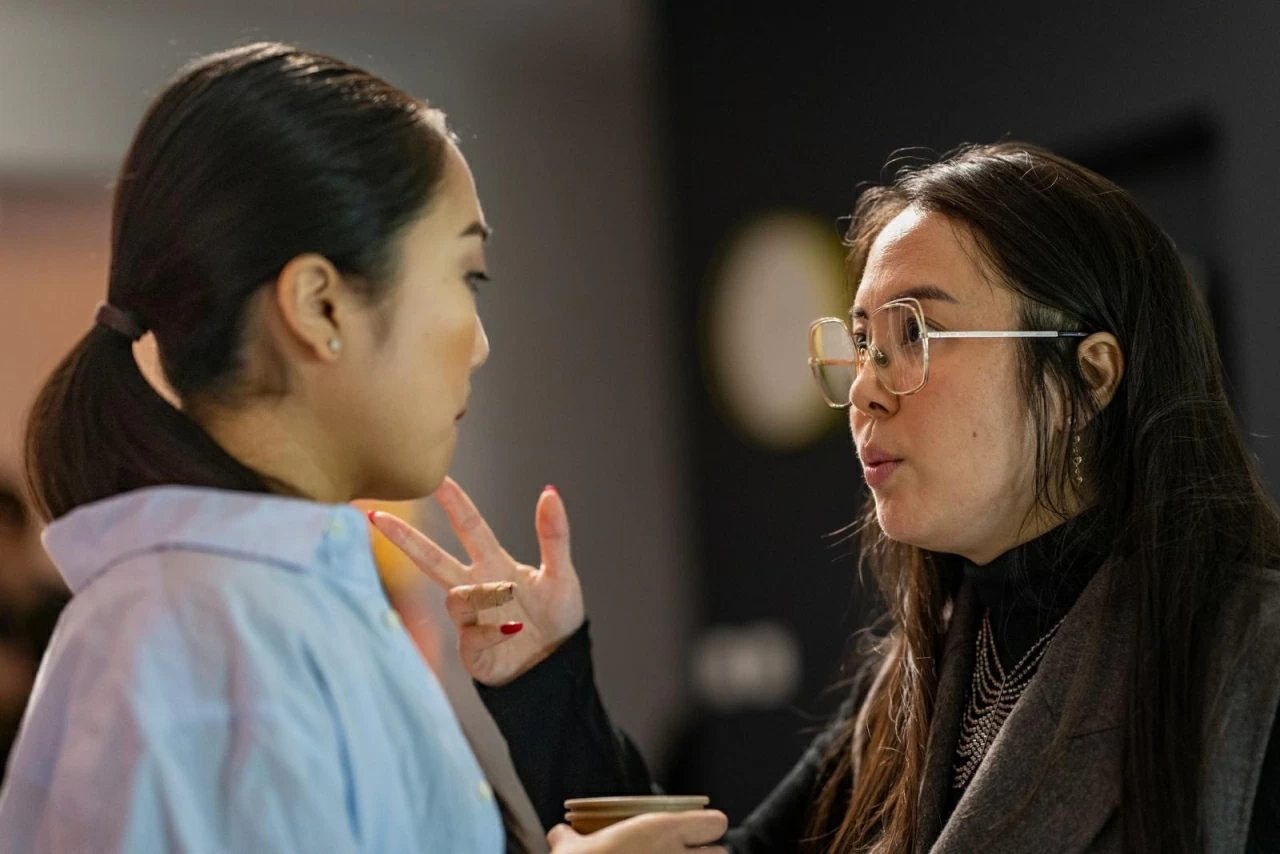 |
| Anna Fam-Rieskaniemi directing performances in the film. (Photo: Maciej Jabłoński) |
How do you evaluate the current filmmaking environment in Poland, especially the opportunities for young directors and voices from immigrant communities?
I am always drawn to spaces of intersection where cultures touch each other. Filmmaking "in-between" is not always a safe choice, as not everyone has access or is heard from that position. But I believe contemporary cinema needs such perspectives because today's life no longer has clear boundaries as before.
Poland is a country with many institutions supporting artists, especially young filmmakers. One of the important entities is Studio Munka, which provides young directors with the opportunity to make their debut films in a professional environment.
I am fortunate to have this opportunity and always feel grateful. Each year, only about 4-6 directors nationwide are selected to participate in the program, making it a very valuable and highly competitive opportunity.
What surprised you about the Polish audience's reaction after watching "Entropia," and how do you perceive their empathy with the story and identity of the Vietnamese community?
The reaction of the Polish audience to Entropia exceeded all my expectations. The film was screened as a standalone show, which is very rare for a short film.
Tickets sold out almost immediately, and the organizers quickly added more screenings. Many said they had never seen a short film receive such attention.
For me and the crew, there is no greater joy than seeing a theater full of audiences. It is a moment when filmmakers feel that their work has been heard.
On your filmmaking journey in Poland, what challenges have you had to overcome to assert your personal voice in a diverse cinema landscape?
The biggest challenge for me is perhaps accepting that I don't easily fit into any existing mold. Working across multiple cultural contexts means constantly facing uncertainty. But over time, I've learned that it's from this instability that a personal voice gradually forms.
Can you share your feelings about returning to your homeland to attend the Polish Film Week in Vietnam 2025, especially with your film being introduced to a wide audience at home?
Returning to Vietnam to introduce Entropia is a very special experience. It is not just a professional event but a moment when my creative journey reconnects with its roots. Sharing the film with the home audience gives me a sense of a gentle return through cinema.
In the future, do you plan to continue exploring themes related to migration, identity, and the Vietnamese community, or expand into new creative directions?
In the future, I want to continue making films that exist in this "in-between" space. Entropia employs a dual narrative and restrained dialogue. Perhaps that is the only way for the main character's story to be told truthfully.
I don't see this as a limitation but as a creative language. I have many more stories to tell, and Entropia is just the beginning.
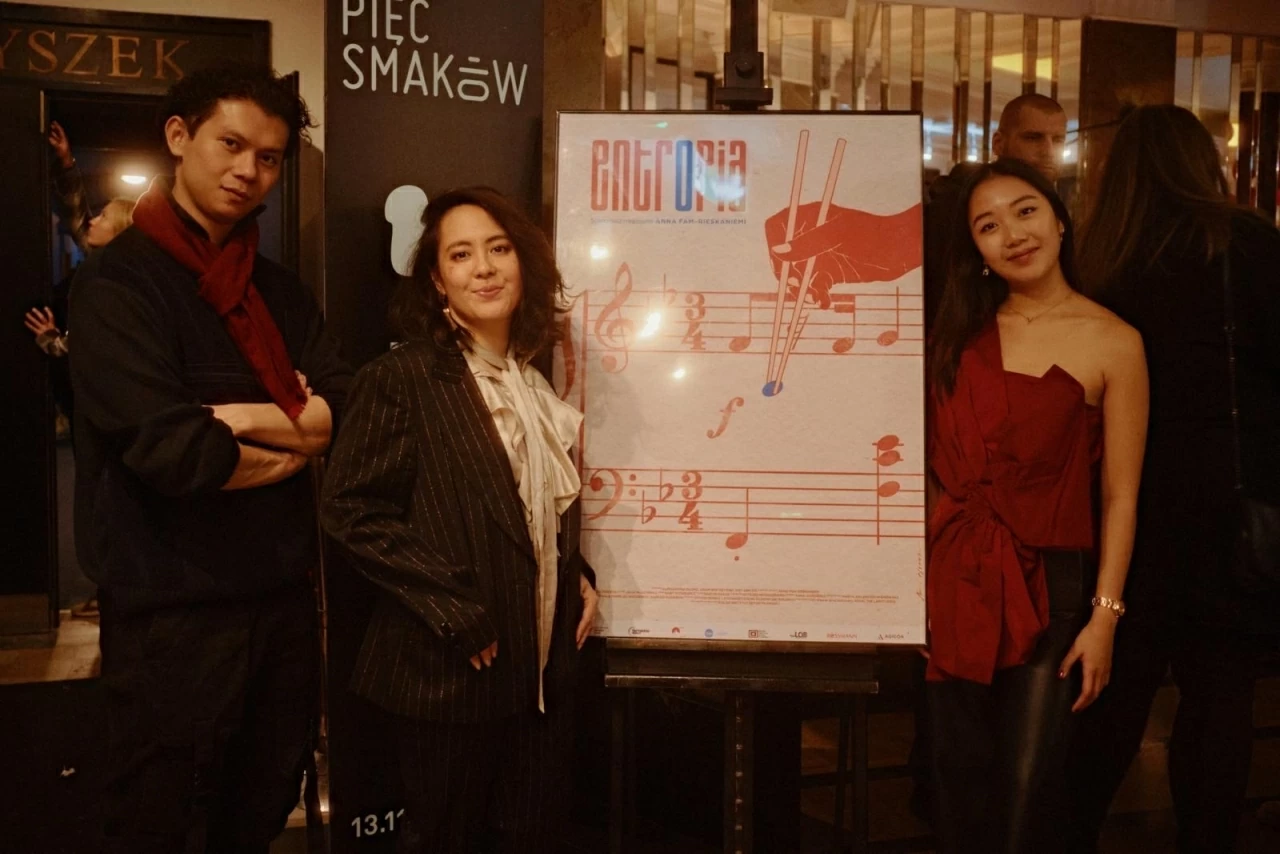 |
| Director Anna Fam-Rieskaniemi with the cast in the film "Entropia". (Photo: Kacper Mik) |
| Anna Fam-Rieskaniemi graduated from the University of Warsaw with a major in Polish Philology (Polonistyka) and studied at the film school named after renowned Polish director Andrzej Wajda. Her works focus on people, identity, and experiences living between multiple cultures. The short film Entropia about the Vietnamese community in Poland has been screened at many prestigious international film festivals in Europe, the United States, Canada, and Vietnam, receiving significant attention from audiences and experts. This year, the film won the Director's Award at the "Cinema Without Borders" Film Festival held in Los Angeles (USA). Anna Fam-Rieskaniemi is currently developing new film projects in Europe and Asia. |