




Building Vietnam's national brand:
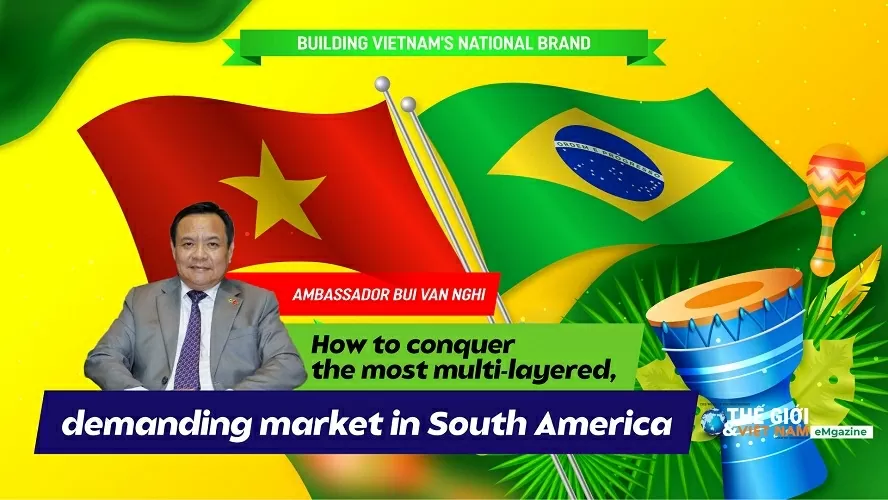
Ambassador Bui Van Nghi: How to conquer the demanding, multi-layered market in South America
WVR - Vietnamese Ambassador to Brazil Bui Van Nghi believes that Vietnamese enterprises should focus on building a national brand and product story to ensure Vietnamese goods are well-positioned in Brazil – a gateway market with great potential in South American market.
Latest
|
Vietnamese Ambassador to Brazil Bui Van Nghi believes that Vietnamese enterprises should focus on building a national brand and product story to ensure Vietnamese goods are well-positioned in Brazil – a gateway market with great potential in South America.
 |
On November 6, the first shipment of 24 tons of Vietnamese tilapia was exported to Brazil through the JBS Food Group. Could you share more about the process and significance of this activity?
Firstly, it can be said that the shipment of 24 tons of tilapia exported to Brazil this time is the first container in a total of 32 containers, equivalent to 700 tons of tilapia that JBS Group – Brazil's largest food group and one of the world's leading food processing companies – has officially ordered from Vietnamese enterprises.
This is the result of a meticulous, serious, and continuous preparation process between the management agencies and businesses of the two countries, as well as the close support of the Vietnamese Embassy in Brazil over the past time.
To achieve this result, both sides have gone through many technical steps regarding quarantine, quality standards, cold transport procedures, market testing, and supply capacity assessment.
JBS – a company with a production network of 150 factories and 280,000 employees worldwide – sets very high requirements for product quality. The fact that Vietnamese enterprises can meet all these stringent standards is clear evidence of the maturity of Vietnam's seafood industry, especially its competitiveness in demanding markets in Latin America.
In terms of significance, this event not only marks a commercial success but also holds long-term strategic value for Vietnam-Brazil relations.
This is the first concrete result following the commitment to open the agricultural market that Prime Minister Pham Minh Chinh and Brazilian President Lula da Silva agreed upon during their meeting on the sidelines of the expanded BRICS Summit in Rio de Janeiro in July 2025.
The two countries have decided to further facilitate the flow of agricultural trade: Vietnam opens its beef market to Brazil, while Brazil opens its market for Vietnamese tilapia, tra fish, and basa fish.
Therefore, this shipment of tilapia symbolizes trust, mutually beneficial cooperation, and a determination to promote agricultural trade in a way that harmonizes interests.
This not only opens up export growth opportunities for Vietnamese agricultural and seafood products to Brazil but also sets the stage for expansion into the entire South American market through JBS's distribution system, including supermarkets, HORECA channels, and the group's product introduction centers.
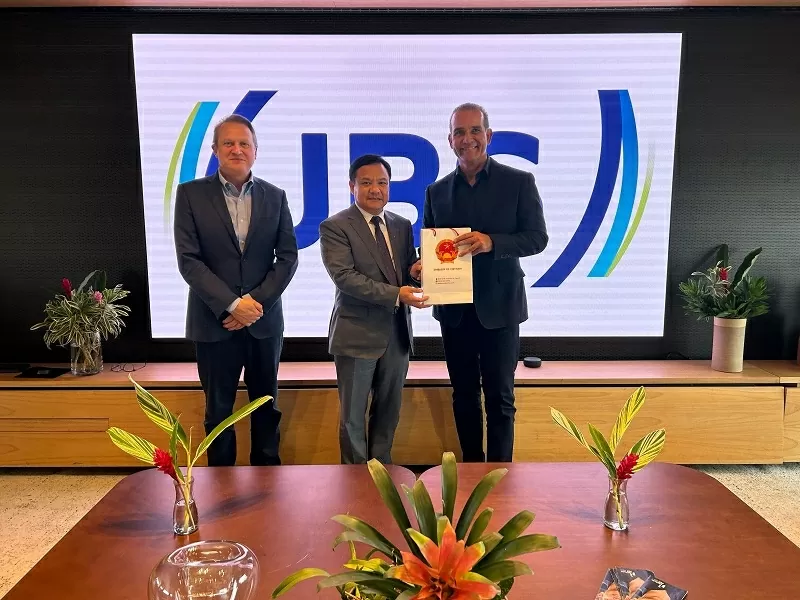 |
| Ambassador Bui Van Nghi works with JBS Group. (Source: Vietnamese Embassy in Brazil) |
 |
What is the consumer preference of Brazilian consumers for imported seafood products with clear branding?
The consumer preference of Brazilians for imported seafood products is developing in a more professional and selective direction.
Although Brazil has a significant advantage in agriculture and livestock, domestic seafood production still does not meet the demand of the market of over 200 million people. Especially in major cities like São Paulo, Rio de Janeiro, or Brasília, consumers with high incomes are very interested in imported seafood products with stable quality, clear branding, and transparent international standards.
In this context, Brazilian consumers increasingly prioritize products with HACCP, ASC, BAP certifications, sustainable farming processes, transparent traceability, and distribution through reputable systems like JBS, Carrefour, GPA, or Assaí.
Products with clear branding often build special trust, as people emphasize food safety, freshness, nutritional benefits, and convenience in processing. This explains why imported items like Chilean salmon, white fish from Europe, or shrimp from Ecuador have secured a strong foothold in this important market, considered a gateway with great potential in South America.
For Vietnam, this is a significant opportunity, as Vietnamese seafood – especially tra fish, basa fish, tilapia, and shrimp – is of good quality, with stable supply capacity and competitive pricing.
When packaged according to international standards, with eye-catching packaging design, clear origin labeling, and distributed through major groups like JBS, Vietnamese products can fully meet the modern consumption trends in Brazil.
On the part of the Embassy and the Vietnam Trade Office in Brazil, we identify understanding and analyzing the consumer preferences of Brazilians as a meaningful task to support Vietnamese enterprises in penetrating deeper into this market.
The Embassy, along with the Trade Office, has been working closely with Brazilian regulatory agencies, major distribution groups, industry associations, and localities to provide market information, introduce Vietnamese products to the right partners, promote brand promotion, and remove technical barriers in the import process.
We also actively connect businesses from both countries through trade promotion seminars, working directly with major supermarket chains and importers to help them better understand the quality, production processes, and supply potential of Vietnamese seafood.
These activities not only help Vietnamese products be recognized as a reliable source but also contribute to meeting the exact needs and preferences of Brazilian consumers.
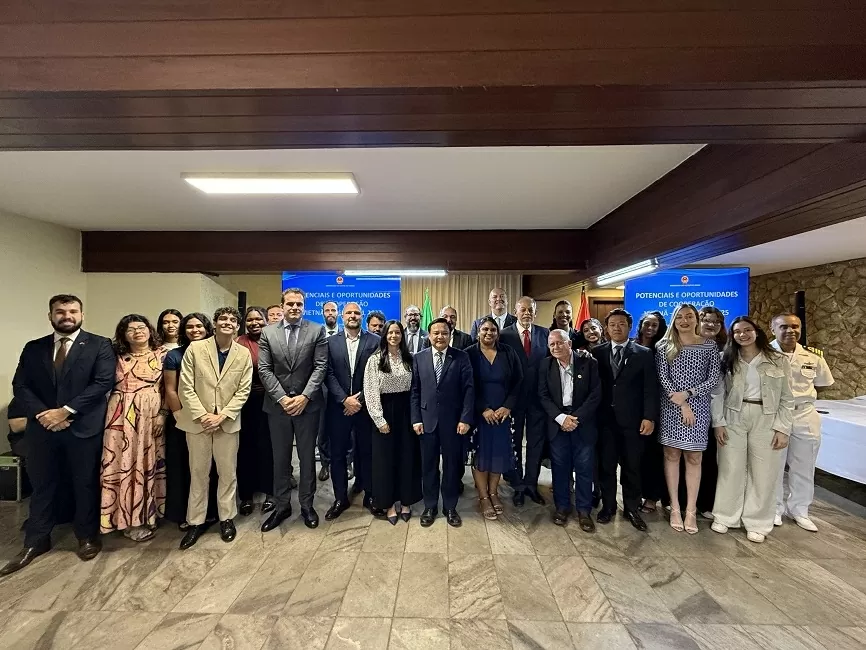 |
| Vietnamese Embassy in Brazil organized a workshop on the potential and opportunities for cooperation between Vietnam and MECOSUR. (Source: Embassy of Vietnam in Brazil) |
 |
From a regional perspective, could the Ambassador share the efforts Vietnam needs to make for seafood products to access the goods and services market in Brazil?
From a regional perspective, I believe that for Vietnamese seafood products to more robustly access the goods and services market in Brazil – a vast, multi-layered market with stringent requirements – Vietnam needs to implement several important efforts in a coordinated manner.
Firstly, we need to continue standardizing and improving product quality according to the standards required by Brazil and the South American market.
This is a crucial factor, as Brazilian authorities strictly control food safety, animal quarantine, traceability, and processing procedures. Meeting all standards like HACCP, ASC, BAP will help Vietnamese seafood shorten the dossier appraisal time, reduce the risk of technical barriers, and create initial trust for partners.
Secondly, Vietnamese enterprises need to pay more attention to brand building, upgrading packaging, clearly labeling in Portuguese, and investing heavily in promotional activities in the local market.
Brazilian consumers place great emphasis on branding and transparent information; products with professional, easily recognizable packaging introduced through reputable systems will be accepted more quickly.
Thirdly, it is necessary to expand direct cooperation with major distribution groups in Brazil.
The import of tilapia by JBS and its promotion through supermarket systems and HORECA channels is a very important step. In the future, Vietnamese enterprises can leverage Brazil's 200 million population network by cooperating with groups like Carrefour, GPA, Assaí, or food suppliers for hotel-restaurant chains.
This requires perseverance, good preparation in supply capacity, and the ability to meet large, stable orders.
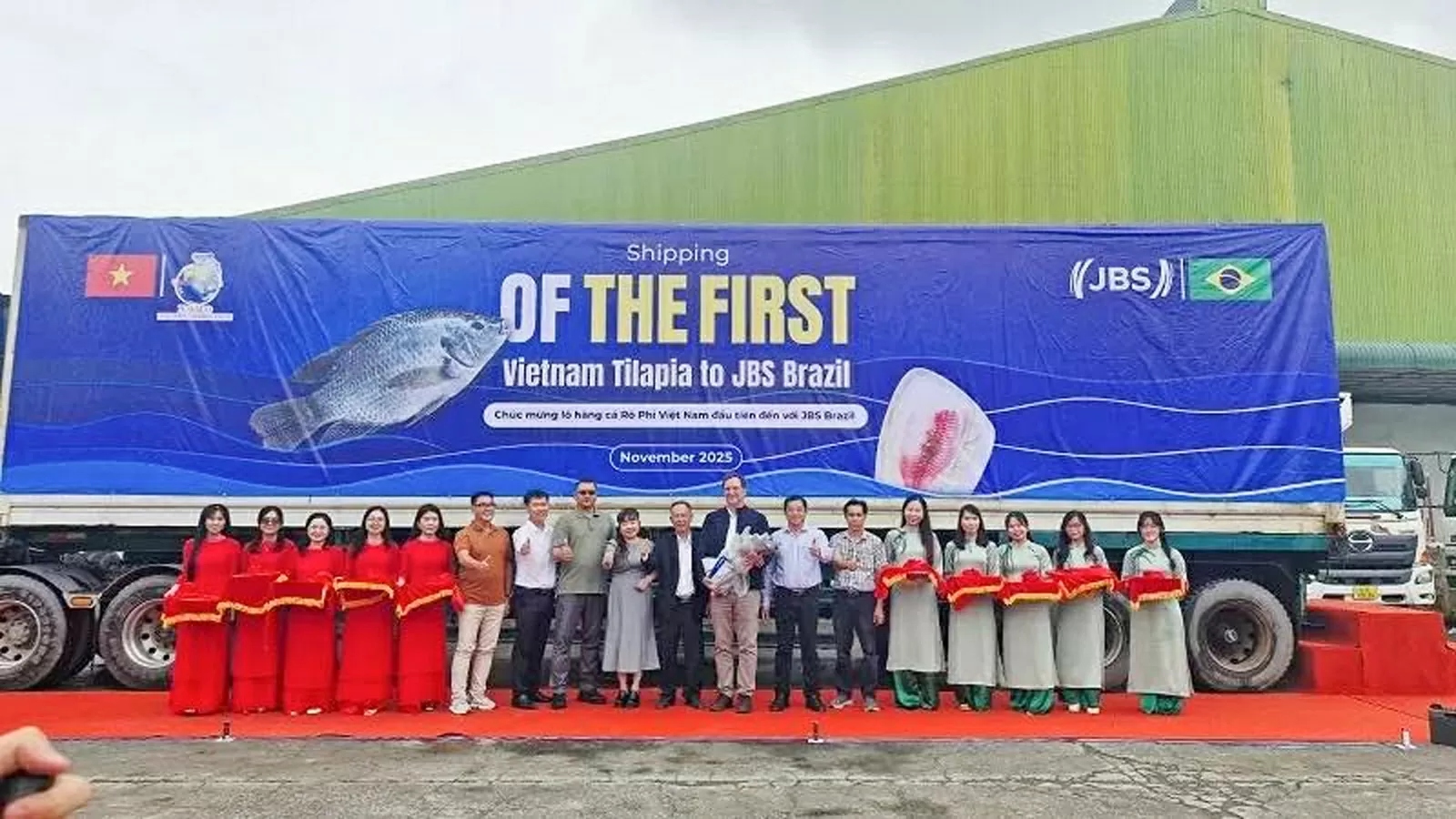 |
| The first shipment of Vietnamese tilapia exported to Brazil, November 6, 2025. (Source: Vietnamese Embassy in Brazil) |
For our part, the Vietnamese Embassy and Trade Office in Brazil always identify supporting enterprises in accessing the market as a focal point in economic diplomacy. We regularly communicate with Brazilian ministries and sectors to resolve issues related to quarantine and import procedures, while connecting Vietnamese enterprises with major distribution groups and reputable import partners.
The Embassy also proactively coordinates with the Vietnam Trade Office in São Paulo to provide market information, organize promotional activities, consult businesses, and accompany them in trade events to ensure Vietnamese products are appropriately present and recognized.
More importantly, the two countries are actively promoting negotiations towards a Trade Agreement between Vietnam and MERCOSUR. When the Agreement is signed, opportunities for Vietnamese seafood – from tra fish, basa fish, tilapia to shrimp – will expand significantly thanks to tariff preferences and transparency in trade procedures. The Embassy is closely coordinating with agencies from both countries to promote this process.
With concerted efforts from the State, enterprises, and active support from the Representative Agency, I believe that Vietnamese seafood can firmly establish its position in the Brazilian market – the second-largest market in the Americas and an important gateway to South America.
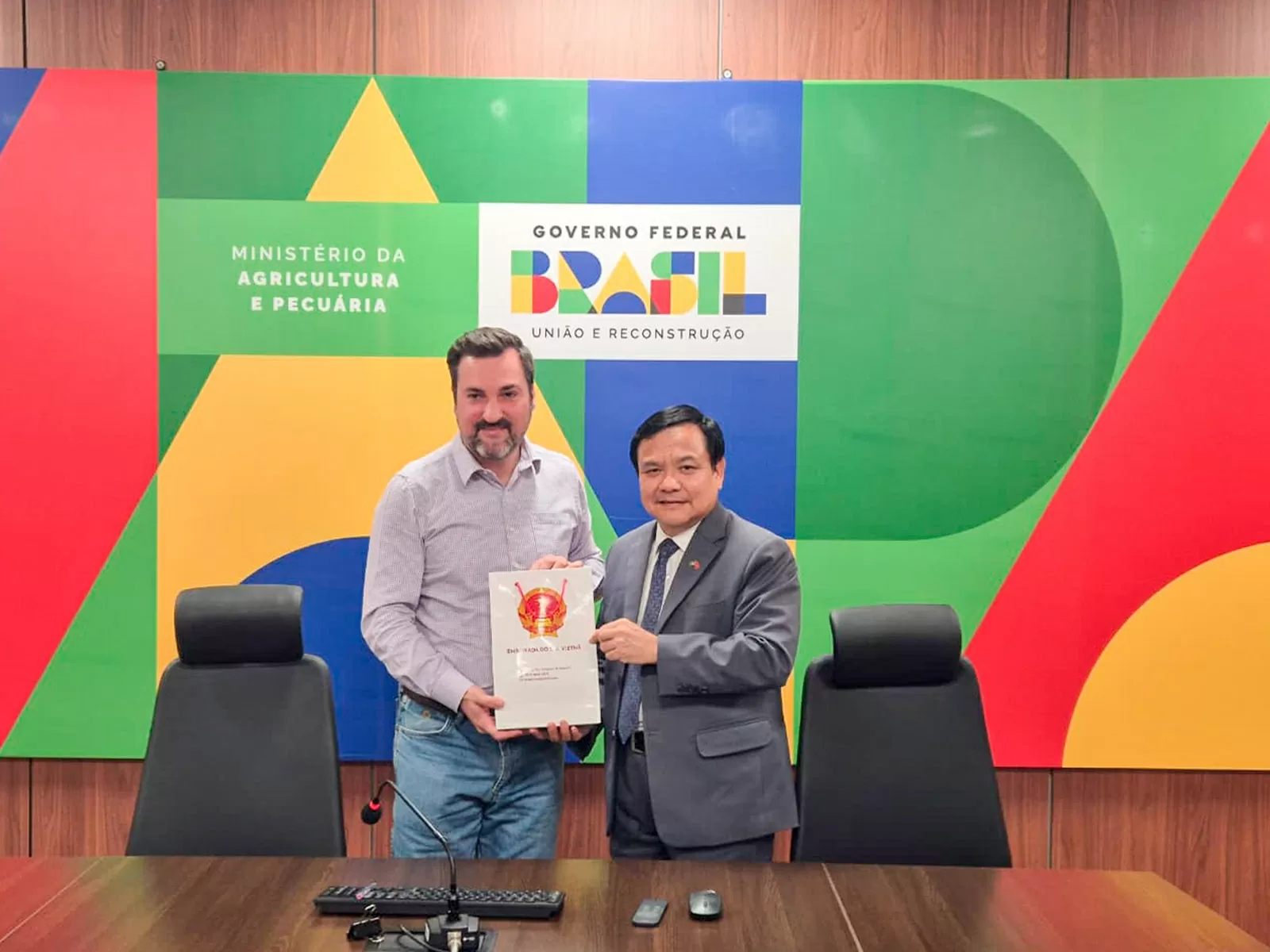 |
| Ambassador Bùi Văn Nghị working with the Deputy Minister of Agriculture on International Relations and Trade. (Source: Vietnamese Embassy in Brazil) |
|
Specifically, we will deeply research the production and export potential of agricultural products such as rice and corn – items that Brazil also produces strongly in states like Rio Grande do Sul, Tocantins, Maranhao, Matto Grosso – to find different product segments (varieties, quality) that can complement the Brazilian market based on the similarity and mutual support of tropical climate demands between Vietnam and Brazil, but with opposite seasons across different geographical regions.
In Brazil and countries where the Embassy is concurrently accredited, such as Suriname and Guyana, we will actively seek long-term cooperation opportunities in aquaculture and rice production.
Instead of transporting products and services from Vietnam to the region, we can move towards establishing joint ventures between Vietnamese enterprises and local agricultural production companies in production, processing, opening, or cooperating to establish chains of stores, shopping centers, culinary restaurants, and beverage outlets with a standard Vietnamese brand to serve local consumption-export needs, as well as export products and services to accredited countries, including South America and North America.
At the same time, we will learn from Brazil's ethanol production experience to apply it to Vietnam to serve the need for bioenergy conversion, and conversely, share Vietnam's sustainable aquaculture development experience.
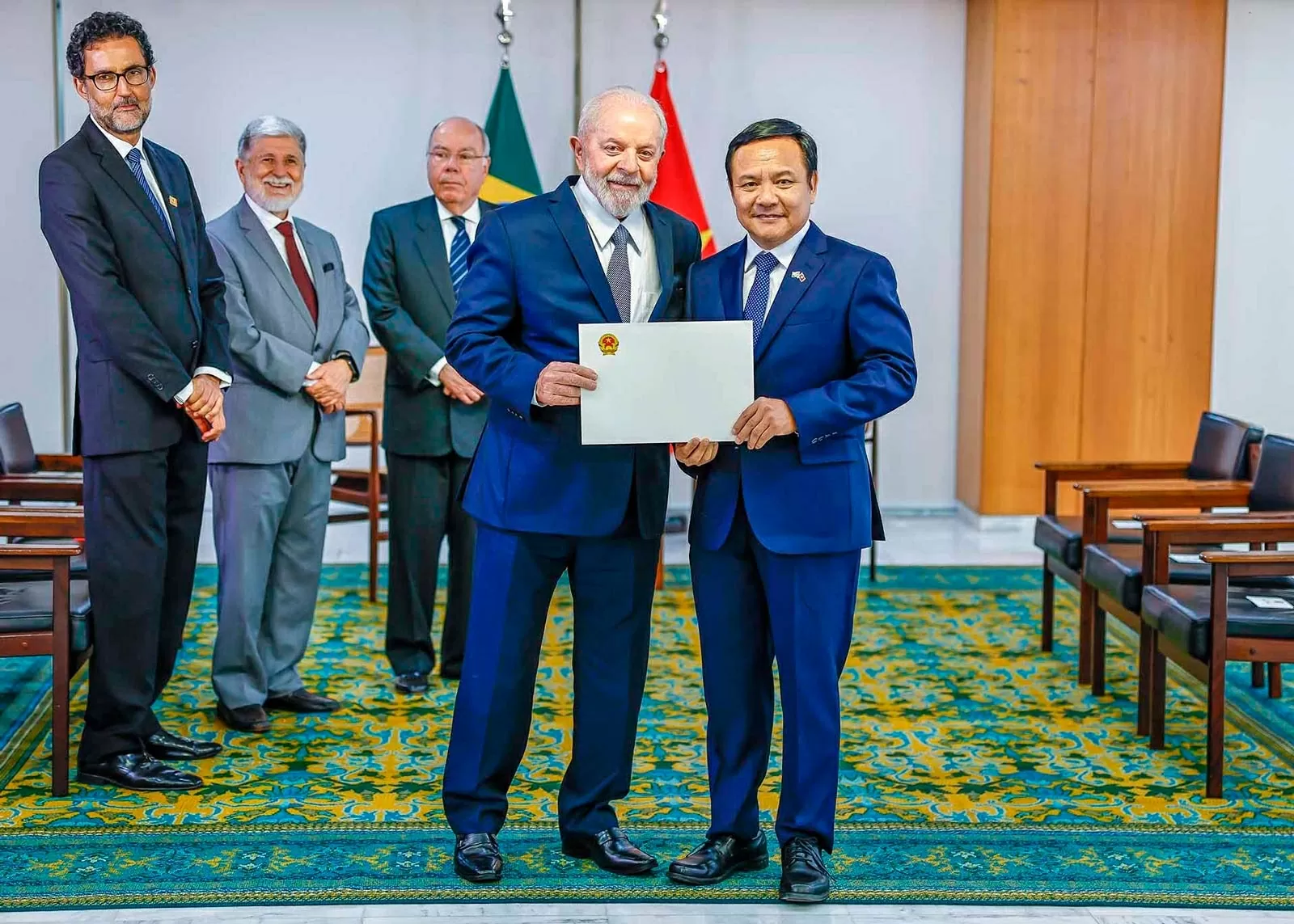 |
| Vietnamese Ambassador to Brazil Bui Van Nghi presenting the Letter of Credentials to President Lula da Silva. (Source: Vietnamese Embassy in Brazil) |
 |
What plans does the Vietnamese Embassy in Brazil have to continue promoting its role as a bridge in boosting sustainable seafood exports to this gateway market in South America?
In the coming time, the Vietnamese Embassy in Brazil will continue to promote its role as a bridge, proactively implementing several key orientations to boost sustainable seafood exports to the Brazilian market and expand into the South American region.
Firstly, the Embassy will enhance market information work, promptly updating changes in quarantine regulations, technical standards, traceability requirements, labeling, and tax rates by each state of Brazil.
We will closely coordinate with the Ministry of Agriculture and Environment, along with distribution associations and major supermarket systems, to support Vietnamese enterprises in early access, reducing risks when entering the market.
Secondly, the Embassy, along with the Trade Office, will build plans to promote business-to-business (B2B) connections.
We will plan to organize trade promotion events, especially seafood-themed ones, direct trade seminars between Vietnamese enterprises and major Brazilian import and distribution groups such as JBS, Grupo Pão de Açúcar, Carrefour Brazil…
At the same time, the Embassy will coordinate with Trade Offices in the South American region to expand the connection network to Argentina, Chile, Peru – markets with increasing seafood import demand.
The Embassy is very hopeful and trusts Vietnamese enterprises with their strengths and aspirations to develop and reach out to the vast ocean, having plans, focusing resources on accessing, exploring, and capturing new, potential markets in Brazil and Latin America in the country's new development phase, the era of strong and prosperous national development.
In this, we will particularly focus on researching Brazil's demographics to understand specific customer segments, including product segments for the Asian community consumers such as Vietnamese, Chinese, Japanese, Korean, Indian… with tens of millions of consumers, diverse, having a fondness and habit of consuming Vietnamese products.
Based on that, the Embassy will orient high-quality, green, clean Vietnamese products, from seafood, agricultural products, processed foods, OCOP products…, to handicrafts, directly serving the large Asian community in Brazil, through specialized distribution channels, to optimize export value and build the Vietnamese brand in this customer segment.
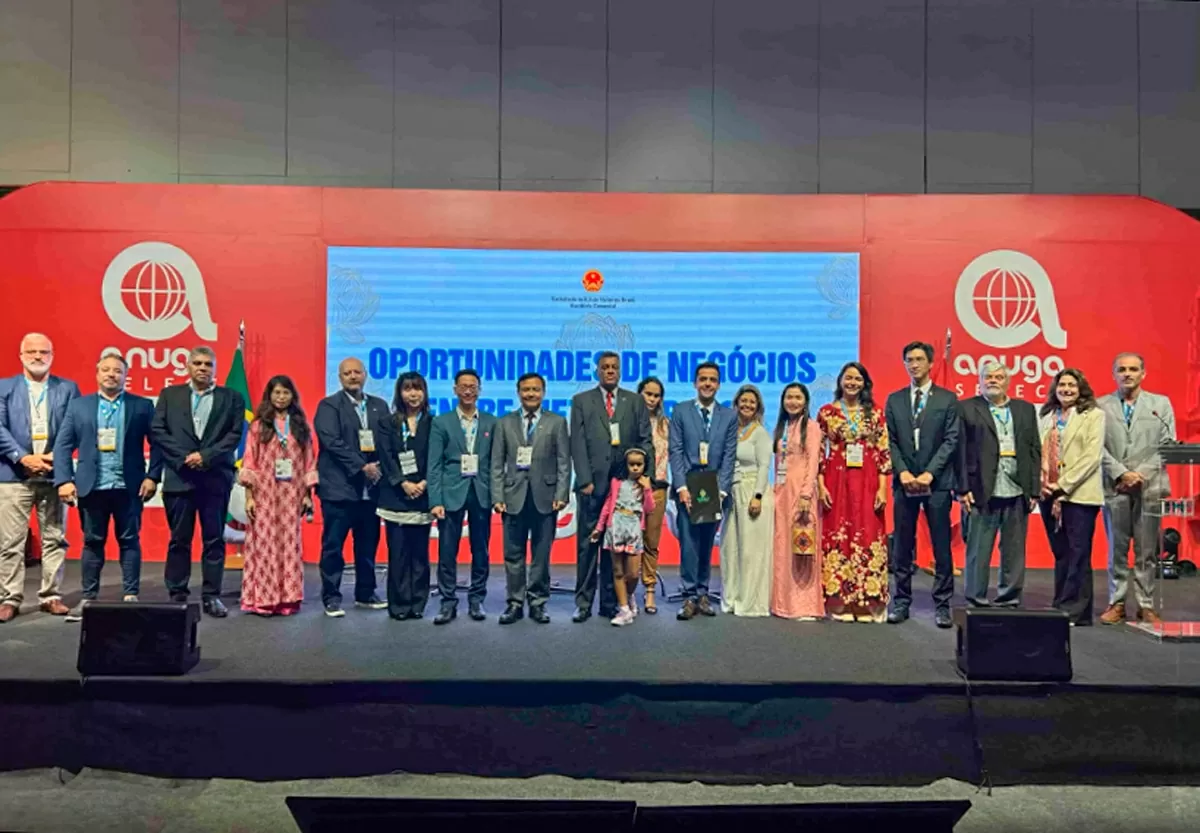 |
| Trade Opportunities Seminar between Vietnam and Brazil held in São Paulo, April 2025. (Source: Vietnamese Embassy in Brazil) |
So how should businesses connect with such practical programs, Ambassador?
On the business side, to connect with these programs, I recommend:
Firstly, proactively registering with the Embassy and Trade Office to be included in the list of potential enterprises participating in promotion activities in 2025-2026.
Secondly, thoroughly preparing capability profiles, information on production processes, quality standards, and sustainability certifications (ASC, BAP…) to meet Brazil's high requirements, while researching product types with differences in quality and form compared to Brazil's domestic products.
Thirdly, building a brand and product story – increasingly important factors for Brazilian consumers, especially products serving the Asian community.
Fourthly, focusing on after-sales service and technical support after import, as Brazilian partners highly value stability and long-term companionship.
The Embassy commits and is always ready to accompany and provide maximum support for enterprises and localities to bring seafood and agricultural products, as well as gradually expand the introduction and promotion of OCOP products, high-quality handicrafts from Vietnam to maintain their position in Brazil – a gateway market with great potential in South America.
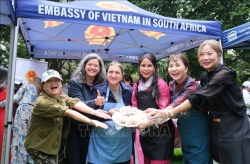
| Vietnamese cuisine captivates international friends in South Africa On November 7, at the garden within the premises of the Vietnamese Embassy in Pretoria (South Africa), members of the International Diplomatic Spouses Association in ... |
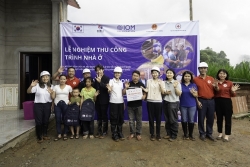
| South Korea provides 1 million USD in urgent support for typhoon relief in Vietnam through IOM WVR - On November 21, the government of the Republic of Korea has announced a contribution of 1 million USD to support emergency response operations ... |
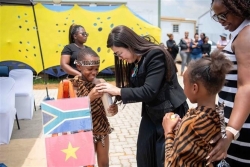
| PM’s spouse presents gifts to residents of Tsakane community in South Africa Within the framework of Prime Minister Pham Minh Chinh’s trip to attend the G20 Summit and conduct bilateral activities in South Africa from November 21–23, ... |
| Ambassador Dang Minh Khoi congratulates Lao Ambassador to Russia Siphandone Oybuabuddy WVR - On the occasion of the 50th National Day of Laos (December 2, 1975-2025), representatives of the Vietnamese Embassy in Russia visited the Lao ... |
| Ambassador Hoang Huu Anh: Paving the way for Vietnamese products to enter the Middle Eastern market WVR - “To pave the way for Vietnamese agricultural products to enter Saudi Arabia in particular and the Middle East in general, Vietnamese products need ... |