





Identity – The 'fingerprint' of Vietnamese brands on the international stage
WVR - According to MSc. Le Dung, Vietnam's strengths lie in its culture of valuing connection, its creativity in limited conditions, its flexible adaptability, and its unique humanity. When businesses incorporate these elements into their products, services, and brand storytelling, they create a distinctive "fingerprint" in the international market.
Latest
 |
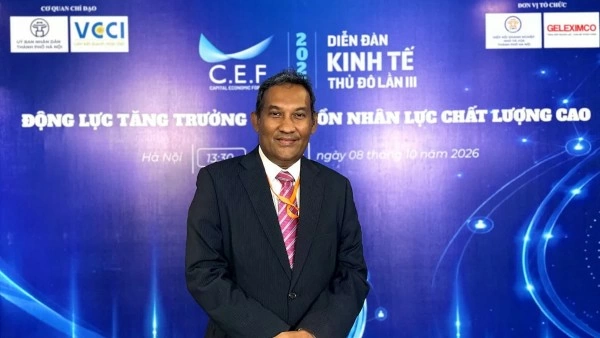
| Identity – The 'fingerprint' of Vietnamese brands on the international stage: MSc. Le Dung, Director of the Institute of Business Intelligence, CEO of DGroup Human Resource Training & Development JSC, Deputy Secretary General of the Hanoi Young Entrepreneurs Association, Chairwoman of the CEO Club 1983, asserts that identity is the factor that helps Vietnamese brands remain distinct. (Photo: Thanh Long) |
In the context of increasingly fierce global competition, building a national brand is no longer just a matter for individual businesses but has become a strategic issue for the entire economy. Product quality is a necessary condition, but brand mindset, identity, positioning strategy, and management capability are sufficient conditions for Vietnamese brands to sustainably reach the world. Accompanying this journey is the indispensable role of brand strategy training and consulting experts, who directly help businesses unlock their mindset, standardise systems, and enhance competitive capabilities.
World and Vietnam Report had a conversation with MSc. DN Le Dung – Director of the Institute of Business Intelligence, CEO of DGroup Human Resource Training & Development JSC, Deputy Secretary General of the Hanoi Young Entrepreneurs Association, Chairman of the CEO Club 1983.
With over 17 years of experience in training, coaching, and accompanying thousands of entrepreneurs across the country, Le Dung is considered one of the prominent figures in the fields of management training, brand building, and Vietnamese business development.
What are the core criteria that a Vietnamese business needs to meet to positively contribute to building the National Brand in the context of global competition?
From my observations while working with businesses, I believe there are three foundational elements that are essential for a Vietnamese brand to align with the National Brand: competitive strength, a sense of responsibility, and how businesses preserve and express their Vietnamese identity in their development journey.
The first thing to mention is internal strength. A business can only step onto the international stage when its internal capabilities are solid: product quality is consistently maintained, innovation is continuous, and the management system approaches international standards. A brand representing the nation needs to showcase something outstanding, not just settle for "meeting requirements".
The second factor relates to social responsibility, which was sometimes overlooked in the past but has now become a very clear measure. Participating in the National Brand is not just about growth or profit but also about a business's commitment to sustainable development, the environment, and the community. Adhering to ESG principles, maintaining transparency, and upholding integrity in business all contribute to building trust, which is an integral part of a nation's image.
The third factor, which I believe is increasingly important, is Vietnamese identity. In a saturated global market, the world seeks differentiation. Vietnamese businesses have a very interesting advantage: We possess a culture rich in humanity, resilience, and creativity. The challenge is how to transform these qualities into recognisable values. A brand that meets international standards but retains its simplicity, sophistication, and Vietnamese spirit creates its own unique appeal. However, to achieve this, businesses must choose between blending in for easy integration or maintaining their identity for long-term advantage. It's not easy.
And when these three factors converge, businesses not only build their own brand but also contribute to telling the story of a modern, trustworthy, culturally rich Vietnam, an image that international friends can remember and cherish.
Many businesses still confuse product promotion with brand building. From a training perspective, what is the biggest limitation in the brand mindset of Vietnamese businesses?
From a training perspective, I see the biggest limitation in the brand mindset of many Vietnamese businesses is that they still view branding as a marketing story, primarily revolving around advertising and product communication.
Meanwhile, brand building is a much longer journey. It starts with the story of who the business wants to become, what value it brings, and what customers will remember it for. Many businesses spend a significant amount on promotion, but when asked, "What makes your brand different?", the answer is still quite vague.
The confusion between "selling products" and "building a brand" often leads businesses to fall into the trap of constantly pushing advertising to maintain sales. Whereas if the brand is strong enough, customers will come on their own because they trust the value the business creates, not just the advertising message.
Another limitation is that many businesses still see branding as an "outer shell": Logo, colour, slogan. These are important, but are just the most visible parts. The core of the brand lies in product quality, the way the business treats its customers, internal culture, the leadership team's decision-making process, and its commitment to keeping promises.
When businesses understand that a brand is everything customers feel, not just what the business says, the mindset will change. And when leadership changes mindset, the team will follow. At that point, the brand is truly built on a solid foundation, not just erected through short-term advertising campaigns.
To meet the standards set by the National Brand program, where should businesses start: Product quality, technology, or management systems, madam?
From my experience working with many businesses, I believe that choosing "where to start" should not be seen as a single-answer problem. The three factors: product quality, technology, and management systems are tightly interconnected. However, if forced to mention a "starting point", businesses should begin with product quality–service, as it directly touches the customer.
A good product is the foundation for building a business's reputation. When quality is stable and recognised by the market, all subsequent technology or management efforts can realise their value. Without quality, everything else is just "decoration".
However, in today's context, relying solely on quality is insufficient. Technology helps businesses standardise production, enhance customer experience, optimise costs, and increase the speed of innovation. Technology also creates sustainable competitive advantages, which the National Brand particularly values.
And to operate both of these factors, the management system must be professional enough. A business with good products but weak management struggles to maintain long-term quality; with good technology but lacking a management mindset, it struggles to maximise its value. Management is the "backbone" that ensures major strategies are executed thoroughly.
In other words, businesses can start with product quality, but to go the distance and meet the standards of the National Brand, they must upgrade all three factors in a synchronised manner. Only then will the brand be competitive and maintain its position in a globalised environment.
In your consulting and training work, what do you see as the biggest barrier preventing businesses from actively participating in the National Brand: Leadership mindset, financial resources, human resources, or the commercial environment?
In the process of consulting and training, I find that the barriers businesses face each have some "truth" when considered individually: lack of finances slows progress; lack of human resources leads to uneven implementation quality; a volatile business environment always creates pressure. However, if we weigh all these factors to determine which one is most decisive, I still believe that the leadership mindset is the root of all issues.
Because finances can be raised, human resources can be trained, and the market can be adapted to, but the leader's mindset cannot be replaced. How leadership perceives branding – whether it's seen as a cost or an investment; whether the National Brand is seen as a procedure or an opportunity, is the point that determines whether a business dares to step forward or just follows old inertia.
I've met many businesses with quite good resources, but they stop at "how to sell products", never asking "how to become a trustworthy Vietnamese brand". When the mindset is not open, programs like the National Brand are easily misunderstood as formalities, as costly, and as unnecessary. And from there, businesses limit themselves without realising it.
Conversely, there are also small-scale businesses with very progressive leadership. They don't have many resources, but they understand that brand building is an accumulation journey, a process of renewing quality, standardising management, and building reputation. The right mindset helps them gradually overcome other barriers.
In a dialectical sense, leadership mindset is not the only barrier, but it is the "dominant" barrier. Because when the mindset is clear, businesses will know how to reorganise resources, attract talent, choose the right investment direction, and especially maintain long-term development discipline, a necessary condition to participate in the National Brand.
Therefore, to enter a larger playing field, the first thing is not "how much money you have", but whether the business dares to change its management mindset. When the mindset foundation is solid, all remaining difficulties have solutions, although not immediately, but they are certainly achievable.
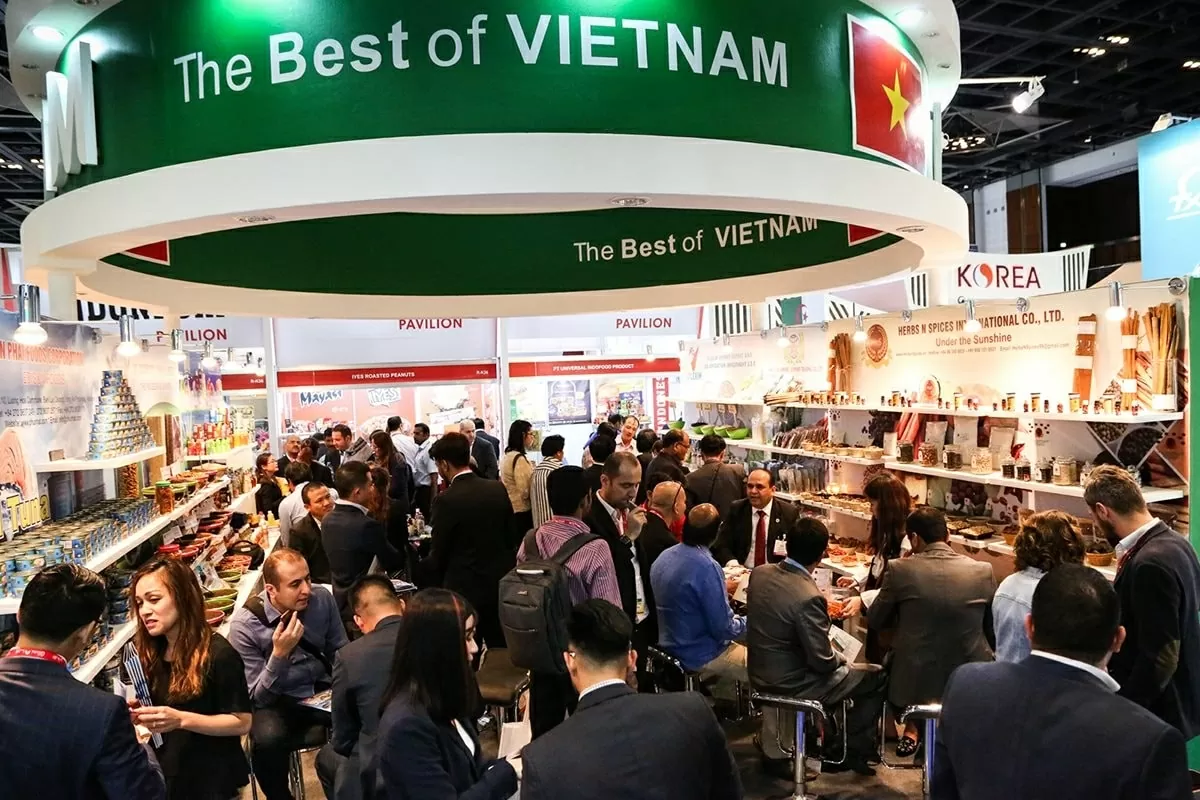 |
| In the context of increasingly fierce global competition, building a national brand is no longer just a matter for individual businesses but has become a strategic issue for the entire economy. (Source: Saigon Entrepreneur Magazine) |
With the context of green transformation – digitalisation and transparency requirements from the international market, what long-term strategy do you propose to help businesses build a brand with "Vietnamese essence" while still meeting global standards?
I believe that to build a brand that embodies "Vietnamese quintessence" while meeting global standards, businesses need to pursue a long-term strategy based on three directions: Building a sustainable foundation, proactively transforming, and maintaining identity as a unique competitive value.
First, businesses must choose the path of sustainable development as a commitment, not a temporary trend. The international market is increasingly demanding transparency, responsibility, and ESG standards, and this cannot be addressed through technical manoeuvres. A Vietnamese business aiming for the long haul needs to build transparent management capabilities, standardise processes, invest in technology to reduce emissions, save resources, and create products aligned with "greening" thinking. This is the starting point for Vietnamese brands to step into the world without feeling "out of place".
Alongside this, digital transformation is not just about applying software or new technology. More importantly, it helps businesses modify their operations, decision-making processes, and customer care. A modern brand is one that knows how to leverage data to gain a deeper understanding of the market, utilises technology to enhance the experience, yet retains a human touch, sophistication, trustworthiness, and integrity, which many international customers highly value in Vietnamese businesses.
And the final factor, which helps Vietnamese brands remain distinct, is identity. In the age of globalization, anything too similar is quickly forgotten. Vietnam's strength lies in its culture of valuing connection, creativity in limited conditions, flexible adaptability, and unique humanity. When businesses incorporate these elements into their products, services, and brand storytelling, they create a distinctive "fingerprint" in the international market. But identity only truly holds value when it is based on quality and modern management; otherwise, it remains merely decorative.
In other words, the long-term strategy for Vietnamese businesses to be both "very Vietnamese" and "globally standard" is not to chase international standards, but to elevate themselves to a new standard, where sustainability, transparency, technology, and identity blend together. When businesses are confident in their internal strength and clear about their core values, the brand naturally establishes a more convincing presence in the global market.
How do you assess the role of human resource training, particularly for mid-level management, in promoting Vietnamese identity and values within corporate brands?
After many years of training, I've come to realise a very clear point: if leadership sets the vision, mid-level management is the force that turns that vision into daily, concrete actions. Therefore, discussing the integration of Vietnamese identity and values into branding without acknowledging their role is a significant oversight.
Leadership can discuss Vietnamese culture, responsibility, or humanity, but it is mid-level management that conveys these values to employees, customers, and partners through every small decision. They are the "real face" of the brand in the eyes of the market. And only when they understand and believe in these core values can the brand be consistently represented.
Training, therefore, does not stop at management skills or professional competence. More importantly, it helps them understand the essence of the brand, why the business has chosen this path, and their role in preserving its identity. Many businesses fail in brand building not because of a lack of strategy, but because the mid-level team does not have a "common language", nor are they equipped with the mindset to spread internal culture externally.
From a dialectical perspective, training human resources, especially mid-level management, is not just an operational support activity; it is a strategic lever. When mid-level management is properly trained, businesses will have a team that knows how to work efficiently, but more importantly, they will have a force that understands how to protect Vietnamese values in products, services, and market communications.
I always believe that a strong brand is not built from beautiful slogans, but from how each person in the business lives with those values. And mid-level management is the most powerful influence to make that a reality.
Finally, in your opinion, what is the brand value system that Vietnamese brands need to clearly define to optimise national brand communication?
When discussing the Vietnamese brand value system, I believe the important thing is not to create a very long list, but to identify values that can become the nation's "soft power", qualities that when the world looks at Vietnam, they feel trust and interest. Based on my experiences with domestic businesses and international partners, I have identified three value groups that need to be clearly defined.
First, the spirit of creativity and adaptability. Vietnam is a country that consistently innovates under limited conditions, which creates flexibility, a willingness to try, and a readiness to change. This is a competitive advantage that many developed countries lack. If exploited, Vietnamese businesses can position themselves as brands that continuously improve and are unafraid to enter new fields.
Second, a culture of responsibility and integrity in business. Vietnamese people are often sincere and value relationships. When systematised into brand value, this becomes a "trust marker" highly valued by international customers: keeping commitments, prioritising ethics over profits, and transparency in operations. In an era where businesses are scrutinized as "global citizens", integrity and responsibility become invaluable assets.
Third, humanistic identity, rooted in Vietnamese culture. This is the "soul" that many Vietnamese brands have yet to fully exploit. This identity is not only reflected in images or stories, but also in how businesses demonstrate care for people, the community, and the environment. When a brand embodies a humanistic spirit, from its products to its services, it creates a more lasting positive emotion than any advertising campaign.
On a national level, if these three value systems are clearly established and uniformly implemented, they will help the Vietnamese National Brand take on a more distinct shape: a creative, trustworthy, culturally rich, and people-oriented country.
Businesses should not only "talk about values" but truly live with them. When values become actions, Vietnamese brands will naturally have a stronger persuasive power on the international stage.
Thank you very much, madam!