







Digital transformation – A milestone in diplomatic achievements
WVR - “Digital transformation is not just a tool to support professional activities; it is increasingly becoming a new method of organization and operation for the sector, directly contributing to enhancing the quality of strategic advisory, the effectiveness of leadership, management, and the ability to execute foreign affairs tasks in the new context.”, emphasised Deputy Foreign Minister Le Anh Tuan.
Latest
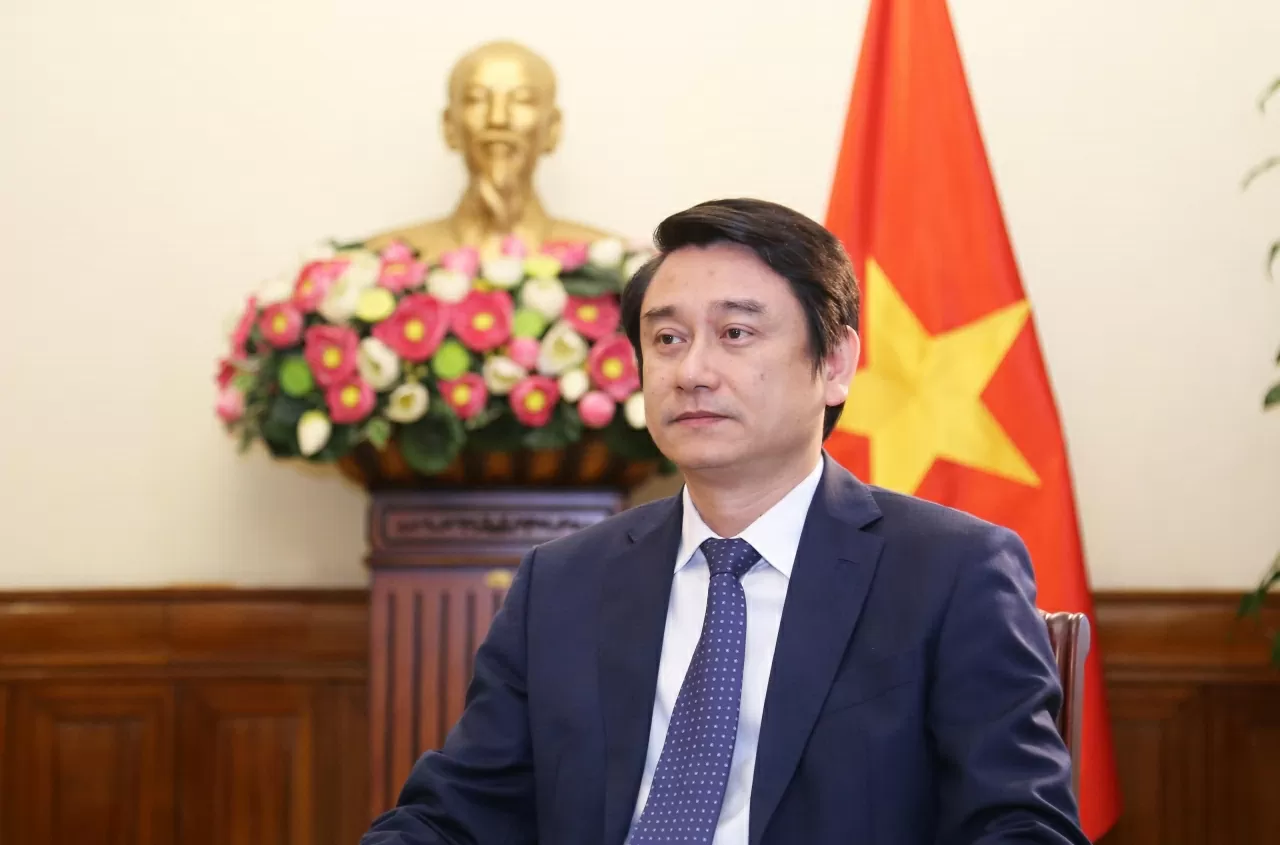 |
| Deputy Minister of Foreign Affairs Le Anh Tuan. (Photo: Thanh Long) |
The year 2025 marks a particularly significant phase in the country's deep international integration process.
Amidst the rapidly evolving, complex, and unpredictable global and regional landscape, with intertwined traditional and non-traditional security challenges, Vietnam's foreign affairs have achieved remarkable results.
These achievements contribute to maintaining a peaceful and stable environment, effectively leveraging external resources for national development, while enhancing Vietnam's prestige and position on the international stage.
Within this overall picture of foreign achievements, the digital transformation efforts of the Ministry of Foreign Affairs have left a clear mark. Digital transformation is not just a tool to support professional activities; it is increasingly becoming a new method of organization and operation for the sector, directly contributing to enhancing the quality of strategic advisory, the effectiveness of leadership, management, and the ability to execute foreign affairs tasks in the new context.
An essential requirement and timely decisions
Today, digital transformation has become an essential trend in all areas of social life, serving as a crucial driver for renewing growth models, enhancing productivity, efficiency, and national competitiveness. In the field of foreign affairs, the demand for digital transformation is even more urgent, linked to renewing thinking, working methods, and ways of implementing tasks.
Especially after the Politburo issued Resolution No. 57-NQ/TW on December 22, 2024, regarding breakthroughs in the development of science, technology, innovation, and national digital transformation, digital transformation has been prioritized since early 2025, with a demand for decisive, synchronized, and substantive implementation. This strategic orientation has long-term significance, providing an important political foundation for ministries, sectors, and localities, including the Ministry of Foreign Affairs, to promote digital transformation in conjunction with fulfilling assigned political tasks.
To swiftly bring the policy and urgent requirements of digital transformation into the Ministry's practical work, and thereby quickly achieve specific results, the Minister has shown special attention and directly provided many close directives as a guide and action target for the Ministry's units. This has also been a significant motivation for the recent transformations in the Ministry of Foreign Affairs' digital transformation efforts.
Concrete, substantive results
It can be affirmed that 2025 is a year marking a clear impression of digital transformation efforts in the Ministry of Foreign Affairs, with many concrete, substantive results.
First, administrative reform linked with digital transformation continues to achieve important progress. By 2025, 100% of administrative procedures under the Ministry of Foreign Affairs' management have been integrated into the Ministry-level Administrative Procedure Resolution Information System and connected with the National Public Service Portal. The digitization of the process of receiving, processing, and returning results has contributed to improving service quality for citizens and businesses, enhancing transparency, reducing time and costs, and improving state management efficiency in foreign affairs.
Additionally, the Ministry of Foreign Affairs has put into operation and gradually perfected digital platforms serving management, administration, and internal governance, such as the electronic portal, document management and administration system, and the Ministry's data integration and sharing platform. These systems contribute to comprehensively digitizing work processes, enhancing connectivity and interoperability between domestic units and Vietnamese representative agencies abroad, effectively supporting advisory work, situation handling, and organizing foreign affairs activities in new conditions.
The development, completion, and gradual exploitation of specialized software and databases continue to be promoted in a focused, unified manner, directly serving state management of foreign affairs, specialized operations, and administrative reform. This is also an important foundation for gradually enhancing analytical and forecasting capabilities, supporting foreign policy planning in the medium and long term.
Along with digital transformation, the work of ensuring cryptography, safety, and information security continues to be seriously and synchronously implemented, ensuring the confidentiality, integrity, and smoothness of information and data serving foreign affairs activities. Digital transformation also contributes to enhancing the effectiveness of foreign information work, helping to promptly and accurately convey the foreign messages of the Party and State, spreading the image of a proactive, modern, and deeply integrated Vietnamese diplomacy.
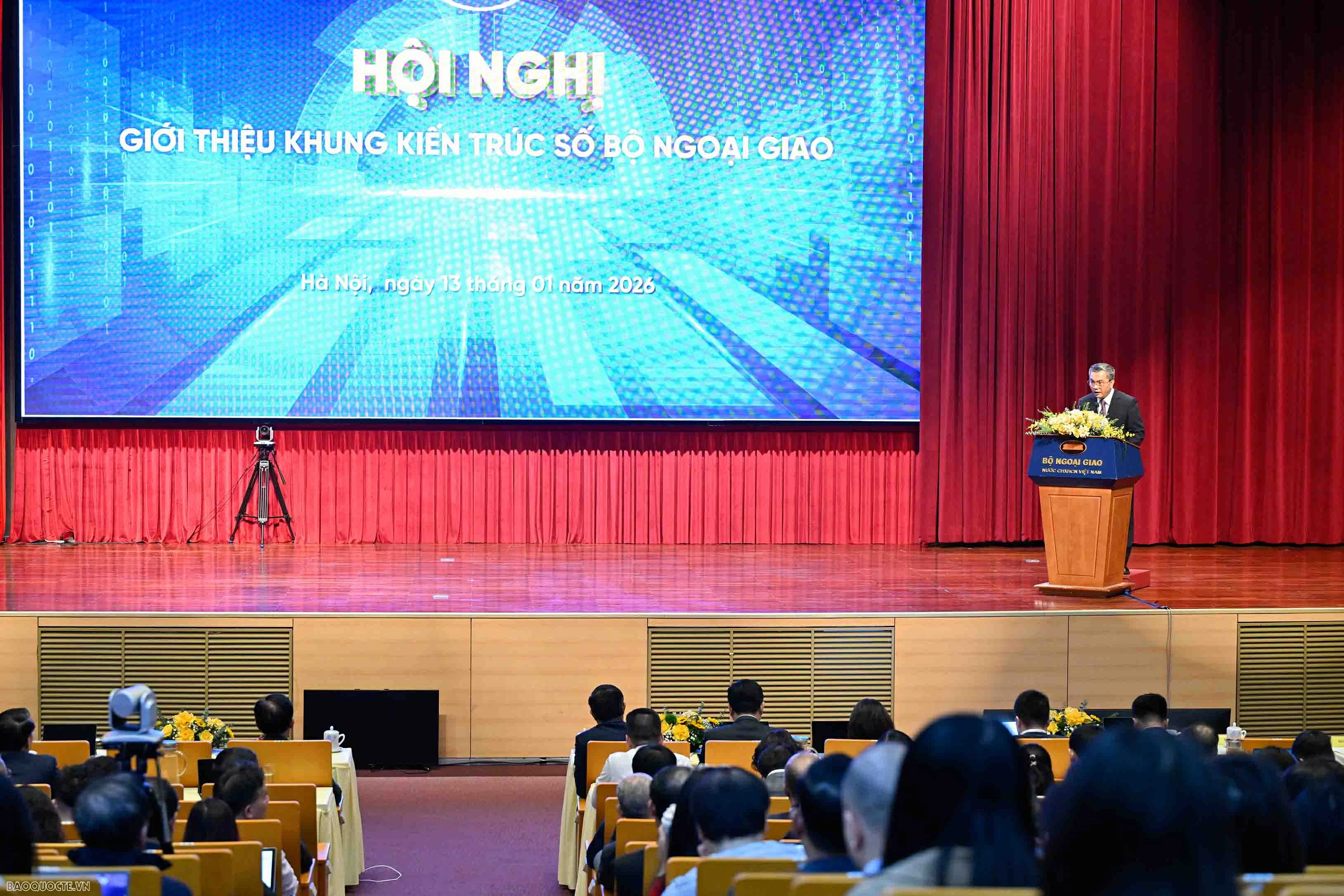 |
| The Ministry of Foreign Affairs organizes a conference to introduce the Ministry's Digital Architecture Framework on January 13, 2026. (Photo: Nguyen Hong) |
Promoting a leading, creative role in national digital transformation
In addition to promoting internal digital transformation, the Ministry of Foreign Affairs has proactively played a leading, creative diplomatic role in promoting national digital transformation through foreign affairs and international cooperation activities. In 2025, topics on digital transformation, digital economy, digital government, data, artificial intelligence (AI), and cybersecurity have been increasingly substantively integrated into bilateral and multilateral foreign affairs activities, thereby expanding cooperation space, effectively leveraging international resources, experience, and knowledge for national development. Simultaneously, the Ministry of Foreign Affairs has closely coordinated with other ministries and sectors to promote policy dialogue and exchange experiences on institution building, digital infrastructure development, data governance, and ensuring information safety and security.
Through the network of Vietnamese representative agencies abroad, research, forecasting, partner connection, cooperation attraction, investment, and support for implementing international cooperation initiatives and projects on digital transformation continue to be promoted. This contributes to enhancing the endogenous capacity of the economy while affirming Vietnam's role, position, and prestige in emerging, potential-rich fields of the digital era.
Foundational decisions
The year 2025 also marks foundational decisions with strategic, long-term significance for the digital transformation process of the Ministry of Foreign Affairs. The consolidation of the Steering Committees on administrative reform, digital transformation, and Project 06 into a unified Steering Committee has contributed to streamlining the apparatus, enhancing synchronization, unity in directing, coordinating, and implementing tasks related to digital governance and serving citizens and businesses.
Notably, on December 31, 2025, the Ministry of Foreign Affairs issued Decision No. 4818/QD-BNG on the issuance of the Ministry's Digital Architecture Framework. This serves as an overall, unified orientation for developing, managing, connecting, and operating the entire sector's information systems, databases, and digital platforms, ensuring alignment with the Vietnam Digital Government Architecture Framework while meeting the specific requirements of foreign affairs work.
Along with approving the Digital Transformation Strategy and the Ministry of Foreign Affairs' Data Strategy until 2030, the issuance of the Digital Architecture Framework has laid an important foundation for developing digital infrastructure, centralized data, enhancing analytical and forecasting capabilities, promoting digital diplomacy, and ensuring information security and safety in the new development phase.
Entering 2026, the Ministry of Foreign Affairs is determined to continue promoting digital transformation in a deep, substantive direction, focusing on data as the center, closely linked with ensuring cryptography, safety, and information security, following the Minister's directive.
The focus is on continuing to review, standardize, connect, and share data between information systems, enhancing data governance capabilities, gradually forming a diplomatic data ecosystem, effectively serving strategic advisory work, state management, and foreign affairs activities.
| The digital transformation achievements in 2025 have affirmed the increasingly important role of digital transformation and data in enhancing the effectiveness of foreign affairs, making a practical contribution to the country's overall foreign achievements. With high political determination, unified leadership from the Ministry, and synchronized participation from the entire sector, digital transformation will continue to become the primary working method, contributing to building a professional, modern, safe, and effective Vietnamese diplomacy in the digital era. |


