
From Democratic Republic to Socialist Republic: Vietnam's Diplomacy 1945-2025
Vietnam has had a consistent foreign policy of promoting and defending its independence, sovereignty and territorial integrity to promote national socio-economic development over the last eight decades. This remarkable consistency is a legacy of President Ho Chi Minh's leadership that shapes Vietnam's Diplomacy today.
Latest
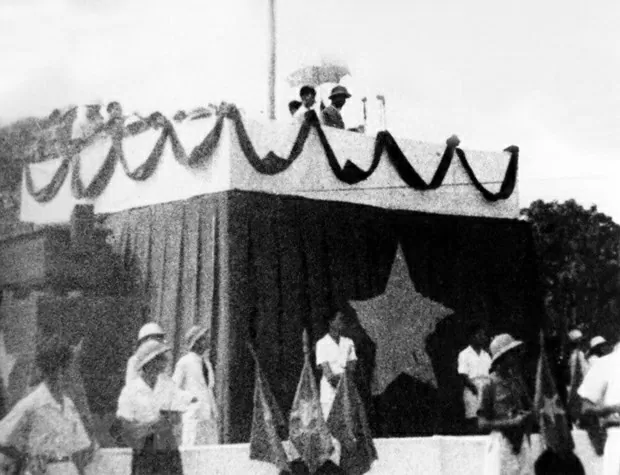 |
| President Ho Chi Minh proclaimed the Declaration of Independence on September 2, 1945 at Ba Dinh Square, Hanoi, giving foundation to the Democratic Republic of Vietnam, opening a new era in the history of the nation. (Archival photo) |
It is important to note that President Ho Chi Minh's guidance was based on pragmatism and Vietnam's national interest and not rigid ideology. That is why his guidance is referred to as President Ho Chi Minh's Thought. President Ho Chi Minh stressed the importance of self-reliance. For example, he said: "We must rely on our potentialities. Our diplomacy will thrive when our potentialities are strong. Potentiality is the gong and diplomacy is its sound. Big gong makes big sound". In particular, Ho Chi Minh stressed the importance of studying history and foreign languages. This gave birth to Vietnam's professional diplomatic corps.
Vietnam's diplomatic strategy was guided by key precepts in Ho Chi Minh's Thought: first, maintain national unity; second, clearly distinguish friends from enemies; third, expand international solidarity; fourth, make more friends, less enemies; and fifth, treat Asian countries as brothers and the five powers as friends.
After each conflict, Vietnam won a diplomatic victory because of its military success and practical diplomacy. After the defeat of the French army at Dien Bien Phu, Vietnam was partitioned at the seventeenth parallel by the 1954 Geneva Conference and the Democratic Republic of Vietnam was established in the north.
After the failure of the United States in South Vietnam, the 1973 Paris Conference brought about a ceasefire and the withdrawal of all U.S. military forces. The Vietnam People's Army defeated the Saigon regime in April 1975 and Vietnam was unified as the Socialist Republic of Vietnam in 1976.
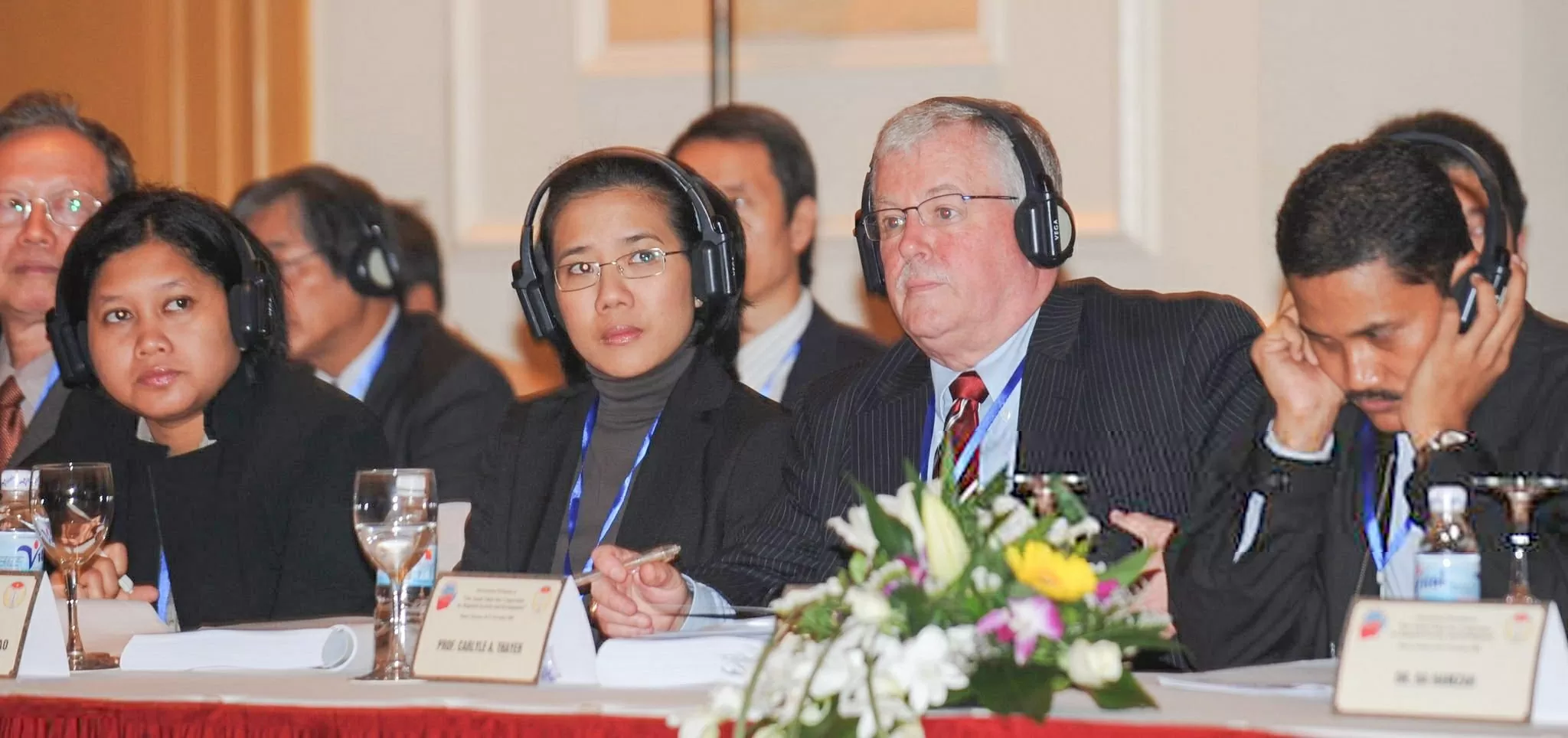 |
| Professor Carlyle A.Theyer (second from right) believes that Viet Nam's diplomacy over the past 80 years has made great contributions to the Nation. (Source: Getty Images) |
Finally, Vietnam prevailed in its protracted conflict with the Khmer Rouge in Cambodia. In September 1989, Vietnam withdrew all its military forces from Cambodia. Two years later, in October 1991, the Paris Conference on Cambodia brokered a political settlement that ushered in an era of peace. Vietnam was now able to give priority to socio-economic development.
As the conflict in Cambodia entered its final phase, Vietnam began looking towards the future. In December 1986, the Sixth National Congress of the Communist Party of Vietnam (CPV) adopted a policy of renovation or Đổi Mới. General Secretary Truong Chinh's Political Report called for the expansion and heightening of the effectiveness of external economic relations thus initiating the process of regional and international integration.
In a landmark development, in May 1988, the CPV Politburo issued Resolution No. 13, "On the Tasks and Foreign Policy in the New Situation." This resolution declared "economic weaknesses, political isolation, and economic blockade are major threats to our country's security and independence." Resolution No. 13 now gave priority to developing "a strong economy, a sufficiently strong national defence, and expanded international cooperation."
Resolution No. 13 used the term national interest for the first time. The new emphasis was "to maintain peace, take advantage of favourable world conditions" in order to stabilize the domestic situation and set the base for economic development over the next ten to fifteen years.
Resolution No. 13 called for a multi-directional foreign policy toward the goal of having "more friends, fewer enemies". It also stressed the need of not only resolving the Cambodian conflict but also normalizing relations with China and the United States, and strengthening ties with ASEAN, Japan, and European countries.
Resolution No. 13 is now widely recognized as a major milestone in the transformation of Vietnam's external relations under "Đổi Mới". Every national party congress since then has reaffirmed and supplemented this new diplomatic orientation. For example, the Political Report delivered at the CPV's Seventh National Congress in June 1991 affirmed that Vietnam would "diversify and multilateralize economic relations with all countries and economic organizations…"
The Political Report also declared, "We stand for equal and mutually beneficial co-operation with all countries regardless of different socio-political systems and on the basis of the principle of peaceful co-existence." Priority was given to relations with the Soviet Union, Laos, Cambodia, China, Cuba, other "communist and workers' parties," the "forces struggling for peace, national independence, democracy and social progress," India, and the Non-Aligned Movement.
Finally, the Political Report set the objective of developing friendly relations with the countries of Southeast Asia and the Asia-Pacific, mutually beneficial cooperation with northern and Western European countries, Japan and other developed countries. and to normalize relations with the United States.
The next evolution of Vietnam's foreign policy came at the CPV's Eighth National Congress held in mid-1996. Delegates from the ruling parties of Cambodia, Malaysia and Singapore attended for the first time. The Political Report noted that the "scientific and technological revolution was developing at an increasingly rapid pace, thereby accelerating various production forces and the process of globalisation of the world economy and social life."
The Political Report elevated the importance of "strengthening our relations with neighbouring countries and ASEAN member countries, to constantly consolidate our ties with traditional friendly states, and attach importance to our relations with developed countries and political-economic centres in the world..."
The CPV's Ninth National Congress, held in April 2001, reaffirmed that "Vietnam wants to be a friend and a reliable partner to all nations" by diversifying and multilateralizing its international relations with priority on developing relations with "socialist, neighbouring and traditional friendly states.".
The CPV's Tenth National Congress convened in Hanoi in April 2006. According to the Political Report, Vietnam will "carry out the foreign policy of openness, multilateralisation and diversification of international relations. To proactively integrate into the international economy and, at the same time, expand international co-operation in other domains."
After the congress, two inter-related themes became increasingly prominent in Vietnam's foreign relations: proactive international integration and the diversification and multilateralization of relations through strategic and comprehensive partnerships.
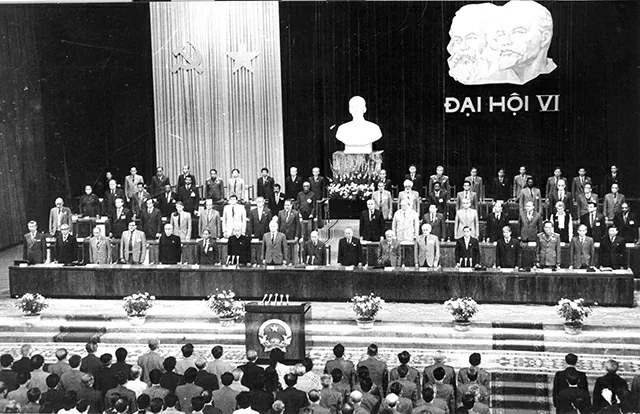 |
| Vietnam initiated the Renovation policy (Đổi Mới) at the 6th Party Congress (December 1986). (Source: VNA) |
The CPV's Eleventh National Congress in January 2011 expanded the Tenth Congress' remit on international economic integration to fulfilling commitments under a new-generation free trade agreements. The Eleventh Congress reaffirmed the importance of "strategic partners and major powers" in Vietnam's development and introduced a new element – participation in multilateral defence and security mechanisms, particularly ASEAN and United Nations peacekeeping operations for the first time.
The CPV's Twelfth National Congress in 2016 introduced the concept of comprehensive diplomacy based on three pillars for the first time – party diplomacy, state diplomacy, and people-to-people diplomacy. The Congress also called for international economic integration through the Comprehensive and Progressive Trans-Pacific Partnership Agreement (CPTPP), Regional Comprehensive Economic Partnership (RCEP) and the European Union - Vietnam Free Trade Agreement (EVFTA).
CPV's Thirteenth National Congress in 2021 reiterated Vietnam's decades long commitment to a foreign policy of independence, self-reliance, diversification and multilateralization, and being a friend, a reliable partner, and an active and responsible member of the international community. In a new development, the Congress underscored the important contribution of the foreign sector in formulating a comprehensive national strategy for Vietnam and reaffirmed Vietnam's commitment to the "Four No's" defense policy.
In sum, eighty years of Vietnam's diplomacy have raised its prestige and stature in the international community as a growing middle power. Over this period Vietnam has exchanged diplomatic relations with 194 states. Vietnam has been elected twice as a non-permanent member of the UN Security Council. Vietnam has served as ASEAN Chair three times. Vietnam has become the tenth BRICS partner. Vietnam has expanded its network of comprehensive, strategic, and comprehensive strategic partnerships to thirty-five countries. Vietnam has trade agreements with over sixty countries and economies and is a member of seventy multilateral institutions.
*Emeritus Professor, University of New South Wales, Canberra, Australia
 | Paris Agreement 1973: A milestone in Vietnam's diplomacy On January 27, 1973, the Paris Agreement ending the war and restoring peace in Vietnam was signed in the French capital. The agreement was the ... |
 | Foreign scholars hail Viet Nam's foreign policy The current foreign policy of Viet Nam, based on the foundation of understanding, compassion, mutual respect, and mutual interests, not only introduces the image of ... |
 | Bamboo diplomacy - A legacy of Vietnam Bamboo holds a significant place in Vietnamese history, culture, and people's daily lives, symbolising strength, flexibility, and resilience. |
 | 80 Years of Vietnamese Diplomacy: Learning from the Past, Aspiring to the Future, strengthening resolve for a new era WVR - The scientific symposium "Diplomacy in the Ho Chi Minh Era: 80 Years of Dedicated Service to the Nation" brought together veterans of the ... |
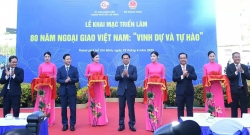 | Opening of photo exhibition '80 years of Vietnamese diplomacy: Honor and pride' The exhibition showcases 80 photographs, including 60 highlighting milestone achievements of Vietnam's diplomacy. |