





Equality, unity, and mutual support among ethnic groups for development
WVR - Ho Chi Minh's Thought on ethnic issues has become fundamental principles in the strategy for implementing the ethnic policies of the Party and the State, creating a strong bond among the 54 ethnic groups, forming a unified bloc, leading our revolution to significant victories.
Latest
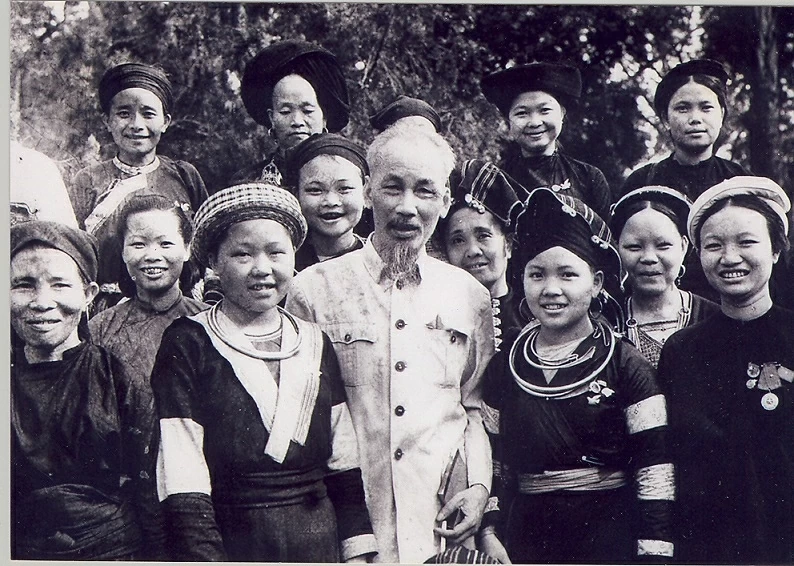 |
| During his lifetime, President Ho Chi Minh always emphasized and thoroughly practiced the right to equality among ethnic groups. (Archival photo) |
Ho Chi Minh's thought on equality, unity, and mutual support among ethnic groups
With deep understanding of the ethnic situations worldwide, particularly in the East, and especially in a multi-ethnic nation like ours, President Ho Chi Minh early recognized the disparities in socio-economic development levels among our ethnic groups. The colonial and imperialist "divide and rule" policy had fractured the unity and bond among ethnic groups to execute their sinister schemes.
Therefore, President Ho Chi Minh always emphasized and thoroughly practiced the right to equality among ethnic groups. At the Conference of Vietnamese Ethnic Minority Representatives on December 3, 1945, he stated: “Our minority brothers will receive: Ethnic equality. The government will abolish all old regulations, and rectify previous inequalities.”
This was affirmed by the absolute trust of ethnic minorities in our country in Ho Chi Minh's policies. They overcame hardships and sacrifices, enthusiastically participating in the revolution during the long resistance against French colonialists, turning ethnic minority areas into solid revolutionary bases protecting the Party and President Ho Chi Minh.
In the Report on the Draft Amendment to the Constitution at the 11th session of the National Assembly, First Legislature of the Democratic Republic of Vietnam on December 18, 1959, he stated: “Our country is a unified nation comprising many ethnic groups. All ethnic groups living in Vietnam are equal in rights and obligations.”
In a speech at the Conference of Women Cadres in the Mountainous Region on March 17, 1964, he affirmed: “Since the revolution succeeded and the resistance won, the Party and Government have ensured gender equality and ethnic equality...”
Like the ideology of equality, the ideology of ethnic unity emerged from the harsh realities of colonized people's lives. According to President Ho Chi Minh, unity is not a tactic but sincere, genuine, and tight-knit; it is not imposed but requires true democracy; it is not a strategy but a long-term policy.
Speaking to the people of Yen Bai Province on September 25, 1958, he emphasized: “In the past, colonial feudalists divided us, divided ethnic groups to oppress and exploit us. Now we must unite tightly. For example: 10 ethnic groups in the province are like 10 fingers. If you spread 10 fingers and break each one, is it easy to break? If you clench all 10 fingers tightly, can they be broken? That is... why we must unite tightly among ethnic groups.”
In a talk with the people, soldiers, and officials in Yen Chau, Son La on May 8, 1959, he said: “Like a bundle of sticks, each one can be broken. Now united like this, can anyone break them? People must unite tightly like this fist.”
He also wrote in a letter to the Southern Ethnic Minority Congress in Pleiku on April 9, 1946: “Rivers may dry up, mountains may erode, but our unity will never diminish.”
In many speeches and writings, President Ho Chi Minh paid great attention to mutual support and assistance among ethnic groups. He reminded and instructed the military, civilian, government, and Party officials to always love the ethnic people, regularly care for their lives, and consider the interests of ethnic groups in all actions.
During a visit and work session with the people and officials of Cao Bang Province on February 21, 1961, he said: “Ethnic people, regardless of size, must love and help each other, unite tightly like family members to build the common homeland, build socialism, and ensure happiness and prosperity for all ethnic groups.”
He constantly reminded the majority ethnic group and minority ethnic groups, as well as among minority ethnic groups themselves, to consider each other as compatriots, siblings in one house, to help each other, share in both prosperity and hardship.
Ho Chi Minh's ideology on equality, unity, mutual support, and helping each other develop among ethnic groups did not form overnight but went through a process of supplementation, perfection, and enhancement to become a unique component of the ideological legacy he left for today's and future generations.
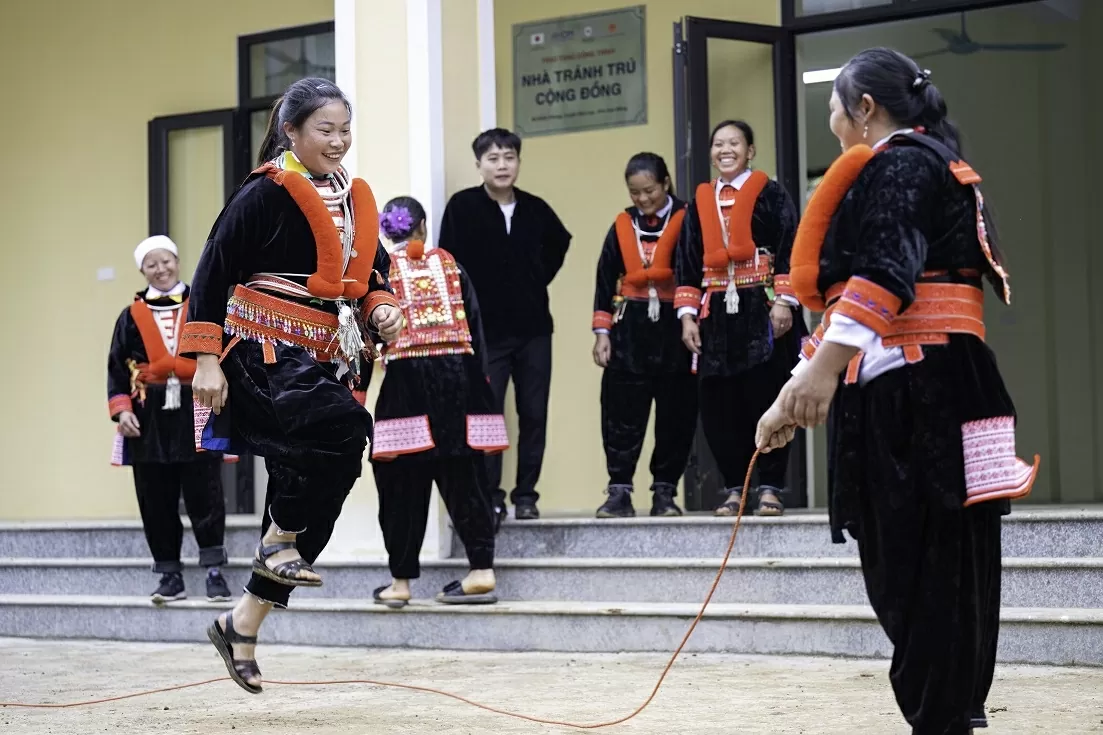 |
| Efforts from central to local levels have created significant transformations in socio-economic development, gradually changing the face of rural mountainous areas, improving the material and spiritual life of ethnic minorities. (Source: IOM) |
Ensuring equality, respect, and mutual development among ethnic groups
The 2013 Constitution affirms: “Ethnic groups are equal, united, respectful, and help each other develop; all acts of ethnic discrimination and division are strictly prohibited.... The State implements comprehensive development policies and creates conditions for ethnic minorities to promote their internal strengths, developing alongside the nation.”
Our Party and State have issued numerous guidelines and policies to consistently implement ethnic policies according to Ho Chi Minh's ideology: “Equality, unity, mutual support, and development among ethnic groups” to innovate the content, methods, and organizational measures for implementing ethnic policies, especially in executing the resolutions of Party Congresses over 95 years since its establishment.
The documents of the 13th Party Congress affirmed: “Ensuring equality, respect, and mutual development among ethnic groups. Paying attention to the specific characteristics of each ethnic minority region in planning and implementing ethnic policies.”
Implementing the 13th National Party Congress Resolution, the Politburo issued specialized resolutions on regional development, including areas with large ethnic minority populations such as: Resolution No. 11-NQ/TW, Resolution No. 26-NQ/TW, Resolution No. 23-NQ/TW... on socio-economic development directions, ensuring national defense and security in certain regions until 2030, with a vision to 2045.
Under the leadership of the National Assembly Party Delegation, the 14th National Assembly issued Resolution No. 88/2019/QH14 and Resolution No. 120/2020/QH14 on June 19, 2020: Approving the investment policy for the National Target Program on Socio-Economic Development in Ethnic Minority and Mountainous Areas for 2021-2030.
The program aims to: “Gradually narrow the living standards and income gap of ethnic minority and mountainous areas compared to the national average; by 2025, reduce 50% of particularly difficult communes, villages, and hamlets; by 2030, basically eliminate particularly difficult communes, villages, and hamlets.”
The total funding for the 2021-2025 period is at least 137,664 billion VND, including: central budget: 104,954 billion VND; local budget: 10,016 billion VND; policy credit capital: 19,727 billion VND; other legal mobilized capital: 2,967 billion VND, focusing on targeted and sustainable investment, prioritizing the most difficult communes, villages, and hamlets; addressing the most urgent and pressing issues; prioritizing support for poor households and the most disadvantaged ethnic minority groups. Ensuring transparency, democracy, promoting the ownership and active participation of the community and people; promoting the spirit of self-reliance among ethnic minorities.
The synchronized implementation of three national target programs: (i) National Target Program on Sustainable Poverty Reduction for 2021-2025, (ii) National Target Program on New Rural Development for 2021-2025, (iii) National Target Program on Socio-Economic Development in Ethnic Minority and Mountainous Areas for 2021-2025.
The national target programs with projects, policies, and investments in ethnic minority and mountainous areas are significant, contributing to exploiting the potential and advantages of ethnic minority and mountainous regions, promoting economic development, ensuring social security; gradually narrowing the living standards and income gap of these regions compared to the national average; reducing the number of particularly difficult communes and villages; contributing to comprehensive development in education, training, health, culture, maintaining political security, social order and safety, ensuring national border security; strengthening the great unity bloc of ethnic groups, enhancing the trust of ethnic minorities in the Party and State.
The issuance of the National Target Program by the National Assembly with substantial investment for ethnic minority and mountainous areas, despite limited national budget, demonstrates the superiority of our socialist regime in implementing equality among ethnic groups and regions. Based on the guidance and requirements of the central government, provinces/cities benefiting from the program have promptly issued documents to implement policies, guide, and urge the execution of the programs.
In localities, under the leadership and direction of party committees, the management of governments, the coordination of the Front and mass organizations at all levels, and the efforts and endeavors of ethnic minorities, significant transformations have been achieved in socio-economic development, gradually changing the face of rural mountainous areas, improving the material and spiritual life of ethnic minorities, such as: 98.4% of communes have roads to the commune center; 100% of communes have access to the national power grid; the percentage of households using electricity is 93.9%; telephone networks, radio, television, and Internet have developed and are no longer unfamiliar to ethnic minority regions.
Household amenities for ethnic minorities have improved, with many households owning televisions, radios, computers (desktops, laptops), landlines, mobile phones, tablets... Among them, televisions have become a common household item for ethnic minority families in both rural and urban areas, with 81.5% of households using them.
The percentage of ethnic minority households using landlines, mobile phones, and tablets is 92.5%. The percentage of households using refrigerators is 54.5%; the percentage using air conditioners is 6.6%. The percentage of ethnic minority households owning motorcycles, motorbikes, electric bicycles, and electric scooters is 89.1%. The percentage of households owning cars is 2.1%.
This reality has proven the effective implementation of the basic principles of ethnic policies according to Ho Chi Minh's thought, especially the principles of equality, unity, respect, and mutual support for development among ethnic groups.
| Currently, in localities, up to 98.4% of communes have roads to the commune center; 100% of communes have access to the national power grid; the percentage of households using electricity is 93.9%; telephone networks, radio, television, and Internet have developed and are no longer unfamiliar to ethnic minority regions. |


