




Digital-era governance: Nordic approaches provide practical insights for Vietnam.
WVR - On March 18, the 9th Annual Nordic Seminar was held at the Ho Chi Minh National Academy of Politics with the theme “Effective Decentralization in the Digital Era – Sharing Experiences between Vietnam and Nordic Countries”.
Latest
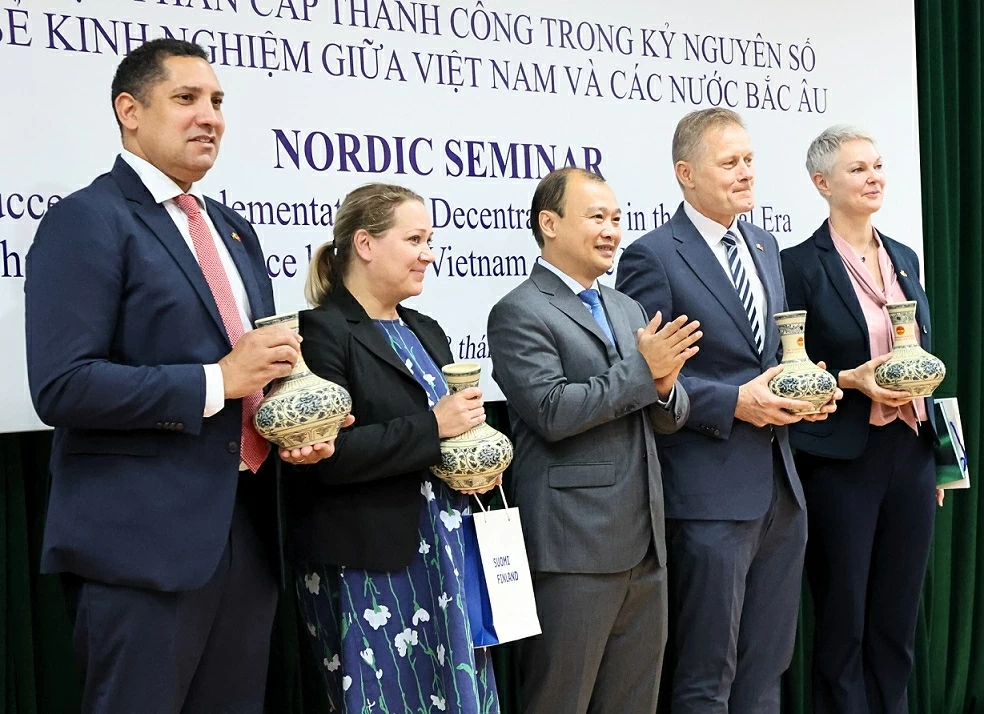 |
| Assoc. Prof. Dr. Le Hai Binh (center) presents a souvenir to representatives of the Embassies of four Nordic countries. (Source: Organizers) |
In celebration of Nordic Day (March 23), the event organized by the Ho Chi Minh National Academy of Politics in collaboration with the Embassies of four Nordic countries, Denmark, Finland, Norway, and Sweden, provided an opportunity for policymakers, experts, and partners to exchange lessons, discuss solutions, and promote cooperation to support effective local governance and sustainable development in Vietnam.
As Vietnam accelerates administrative reform, digital transformation, and decentralization to enhance public service quality, the experiences of Nordic countries, which have successfully combined decentralized governance with advanced digitalization, offer many practical insights.
Decentralization and data-driven governance
Speaking at the seminar, Assoc. Prof. Dr. Le Hai Binh, Member of the Party Central Committee and Standing Vice President of the Ho Chi Minh National Academy of Politics, affirmed a strong and decisive spirit spreading throughout Vietnam's political system: “Localities decide, localities act, localities take responsibility”.
“The core of decentralization is not merely in transferring power but in designing an institutional system and operating a policy framework that ensures a balance between power control and promoting the dynamism, creativity, and autonomy of localities; between decentralization and national unity,” emphasized Assoc. Prof. Dr. Le Hai Binh.
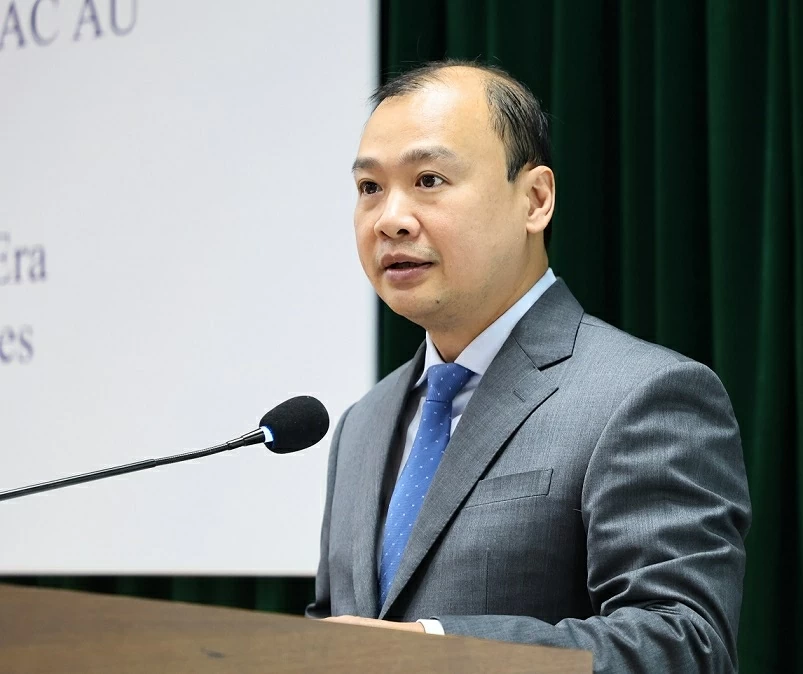 |
| Assoc. Prof. Dr. Le Hai Binh, Member of the Party Central Committee, Standing Vice President of the Ho Chi Minh National Academy of Politics, speaks at the seminar. (Source: Organizers) |
The alignment in modern governance thinking was clarified by Vietnamese and international speakers through the concept of “Data-Driven Decision Making”.
Ms. Pham Thi Ngoc Thuy, Director of the Office of the Private Economic Development Research Board, outlined Vietnam's decentralization roadmap linked with efforts to reform administrative procedures and enhance local execution capacity.
Sharing the same view, Assoc. Prof. Dr. Tran Quang Dieu, Director of the Center for Technology and Digital Transformation, emphasized that in the digital era, data serves as the “guiding system” helping managers make objective decisions and minimize subjective errors.
Experience from Ms. Kiann Stenkjær Hein, Head of the Danish Climate Data Agency, shows that building a transparent decision-making process based on seamless information flows between central and local levels creates a governance system that is not only effective but also highly adaptable to market and climate fluctuations.
Digital transformation and social welfare
One of the key topics of the seminar was the lessons on building a care economy and welfare state on a digital foundation. For Nordic countries, digitalization is not just a technical tool but a means to realize social equity.
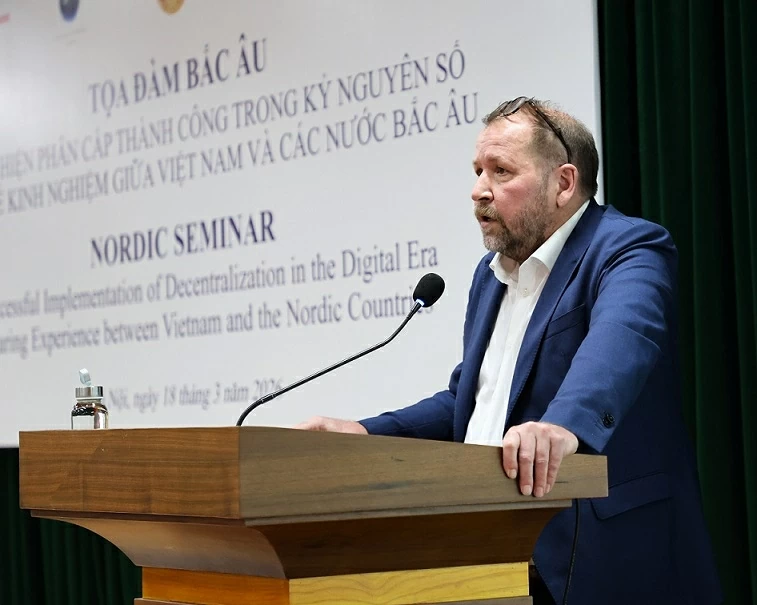 |
| Speaker Are Haug presents a paper on the digital welfare system at the seminar. (Source: Organizers) |
Mr. Are Vegard Haug, a scientist at the Norwegian Institute for Welfare Research (NOVA), presented how Norway integrates digitalization into health and social security policies.
The use of centralized digital IDs and shared database systems has streamlined cumbersome administrative procedures, making it easier for citizens to access welfare.
This is a valuable suggestion for Vietnam as it accelerates digital transformation in the health and social insurance sectors to adapt to the rapidly aging population.
However, Nordic countries also warn of the risks of the digital divide – a challenge that all developing countries face.
Professor Gunnar Andersson, Stockholm University, Sweden, and Finnish Ambassador Pekka Voutilainen both emphasized the role of education and universal digital skills training.
With 82% of the population possessing basic digital skills, Finland has created a highly adaptive society where technology does not create division but becomes a bridge connecting communities.
Maintaining social equity in the digital era requires inclusive policies, ensuring public services are designed for all groups, including those with limited technological capabilities.
This embodies the spirit of “leaving no one behind” that Vietnam is striving to achieve, requiring close coordination between digital infrastructure investment and enhancing digital literacy.
Public finance and trust
However, genuine decentralization cannot occur without financial autonomy and a transparent budget management mechanism. The tax reform discussion opened up profound insights into the relationship between citizens and the state.
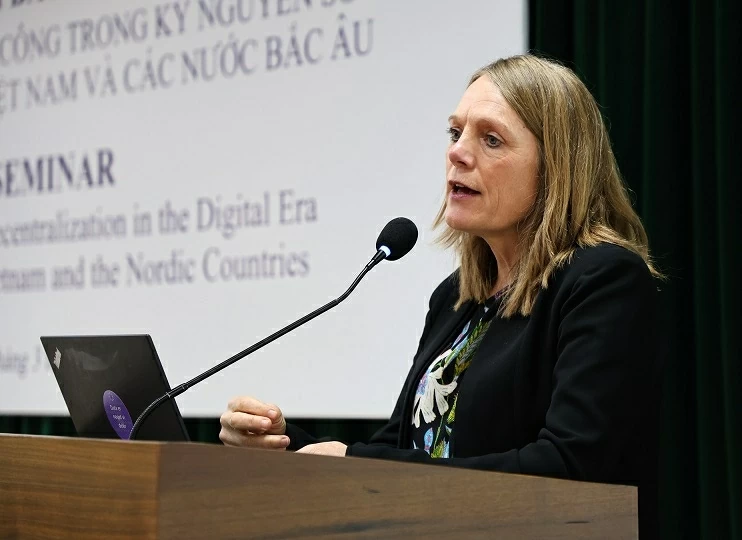 |
| Ms. Kiann Stenkjær Hein shares about the digital transformation journey of the Danish tax authority. (Source: Organizers) |
Mr. Konsta Heikkilä from the Finnish Institute of Public Management (HAUS) and Ms. Kiann Stenkjær Hein pointed out that the application of digital tools in tax management is not only aimed at increasing budget revenue but more importantly, at creating fairness and transparency.
Withholding at source and the automation of tax filing processes in Denmark have turned civic duty into a simple, trustworthy experience. When citizens see their tax money transformed into quality public services, trust in state institutions is strongly reinforced.
Notably, at the seminar, the gathering of Nordic Ambassadors sent a powerful message: Trust is the ultimate “operating system” of digital transformation.
Nordic Ambassadors shared the view that decentralization in the digital era is not just about transferring authority but also about strengthening public trust, enhancing accountability, and improving service quality.
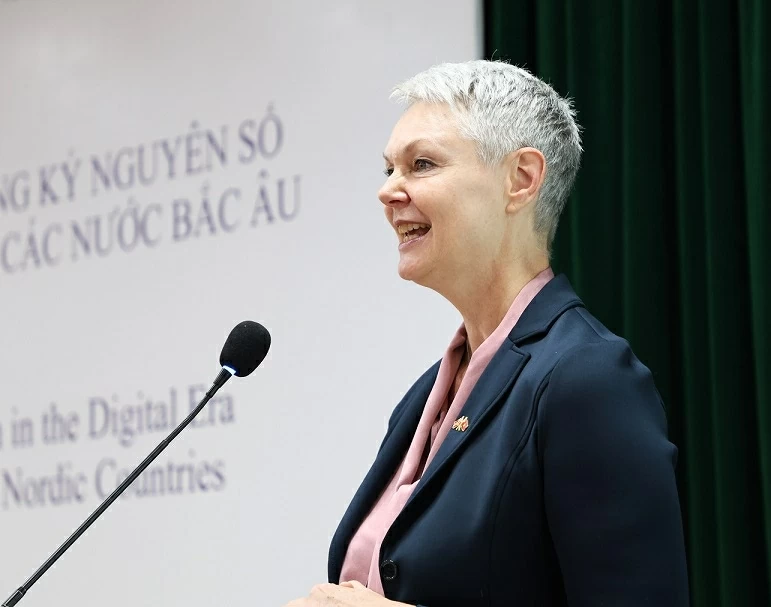 |
| Norwegian Ambassador to Vietnam Hilde Solbakken speaks. (Source: Organizers) |
Norwegian Ambassador Hilde Solbakken and Swedish Ambassador Johan Ndisi both affirmed that technology is merely a means, while public service ethics and transparency are the roots of sustainable development.
Decentralization does not mean losing control from the central level but rather replacing rigid written control with output-based control and citizen satisfaction.
Emphasizing the human factor, Finnish Ambassador Pekka Voutilainen shared: “By combining technology with a governance model based on trust and education, Finland demonstrates that digital transformation can strengthen democratic institutions and make public governance more flexible amid many changes”.
Finland's readiness to connect technology enterprises with Vietnamese partners, or Sweden's efforts in sharing sustainable welfare models, are evidence of a deep partnership friendship, looking towards the future.
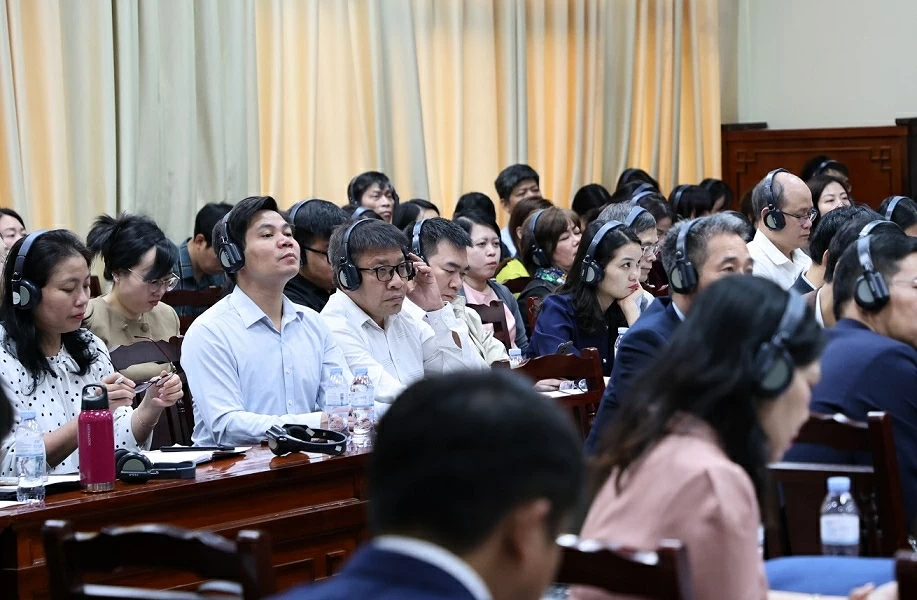 |
| Seminar overview. (Source: Organizers) |
Concluding the event, lessons from the Nordic region on the combination of local autonomy and digital oversight, innovation, and accountability have opened new directions for reform in Vietnam.
In the digital era, when governance is no longer the sole concern of individual countries, international dialogue and experience sharing like the Nordic Seminar will continue to be a crucial driving force for Vietnam to perfect its institutions, building a service-oriented, modern administration that truly centers on its citizens.