







The Méndez Principles - An international framework for investigative interviewing and initial insights for Vietnam
WVR - For Vietnam, continued research and academic exchange on the Méndez Principles can deepen the understanding of ensuring human rights in investigative activities, aligning with the requirements of building a rule-of-law state and international integration.
Latest
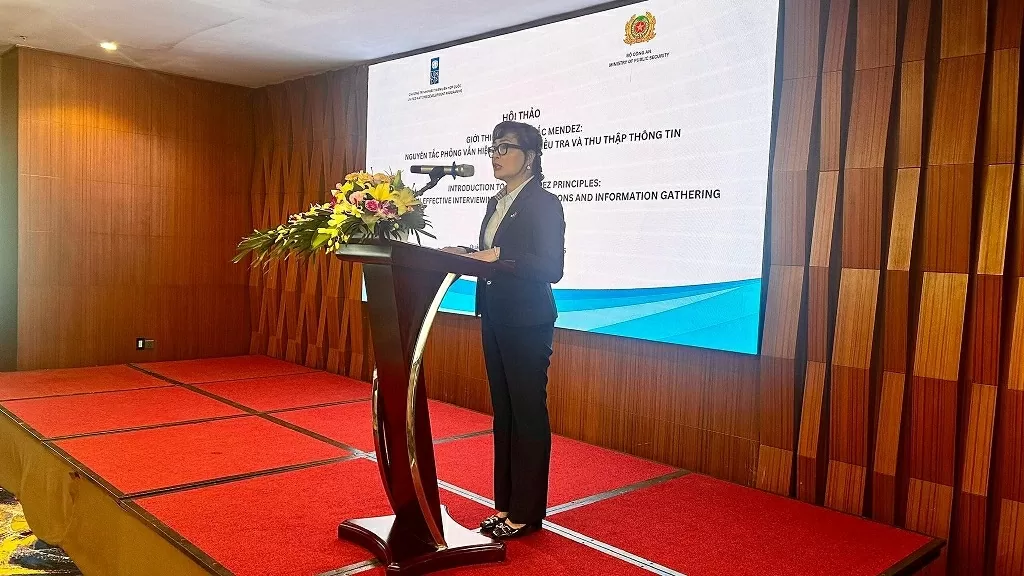 |
| Deputy Editor-in-Chief of Vietnam Human Rights Magazine, Nguyen Thi Thanh Huong, at the workshop. (Source: Organizing Committee) |
On December 11, in Ha Long City (Quang Ninh Province), the Ministry of Public Security, in collaboration with the United Nations Development Programme (UNDP) in Vietnam, organized a workshop on effectively implementing the United Nations Convention Against Torture (CAT), introducing and discussing the Méndez Principles – an international framework for effective interviewing in investigations and information gathering. The workshop attracted representatives from judicial agencies, law training institutions, and both domestic and international experts, highlighting the growing interest in new standards for ensuring human rights.
Respecting human dignity
Historically, torture, violence, and coercion were once considered methods to quickly uncover the truth in judicial processes. However, practical experience and modern scientific research indicate the opposite: fear often leads to false confessions rather than objective truth. Under physical or mental pressure, those being interrogated tend to say what they think the interrogator wants to hear, rather than honestly reflecting what happened. This results in wrongful convictions, overlooked crimes, and diminished public trust in the judicial system.
Recognizing this, many countries have gradually changed their approach to criminal investigations. Instead of the "interrogation" model focused on extracting confessions, the "investigative interviewing" model has been developed, viewing information gathering as a professional process based on evidence, psychological science, and respect for human dignity. In this context, the Méndez Principles emerged as a crystallization of the global shift from "interrogation" to "interviewing", suggesting new approaches to preventing torture and ensuring human rights.
The Méndez Principles on Effective Interviewing for Investigations and Information Gathering is an international framework for interviewing in investigative activities, published in 2021. Named after Juan E. Méndez, an Argentine lawyer and former United Nations Special Rapporteur on Torture and Other Cruel, Inhuman or Degrading Treatment or Punishment from 2010-2016, the principles were proposed in a 2016 report to the UN General Assembly, calling for international standards to replace coercive interrogation methods. This led to a research and drafting process involving legal, psychological, and human rights experts, culminating in the Méndez Principles.
The Méndez Principles are not an international treaty and do not create binding legal obligations. They serve as a reference framework to help countries more effectively implement obligations established in the CAT and related human rights standards. This framework is not rigid, allowing countries to study, select, and apply it according to their legal, institutional, and cultural conditions.
At its core, the Méndez Principles assert that investigative interviewing should be conducted on three foundations: science, law, and ethics. Interviewing is no longer seen as a pressure-inducing activity to extract confessions but as a professional process to gather accurate, reliable information based on evidence and cooperation, where the rights and dignity of the interviewee are always respected.
The shift from the "interrogation" model to "investigative interviewing" results from reassessing the actual effectiveness of coercion-based investigative methods. Research in psychology and cognitive science shows that human memory can be distorted under stress and fear. Under coercion, the ability of the interviewee to recall and present accurate information diminishes. This explains why pressure-based methods often carry high risks of wrongful convictions and legal disputes.
From these insights, the investigative interviewing model was developed as an alternative approach. Instead of confrontation, this model emphasizes creating a cooperative communication environment where the interviewee is encouraged to provide information in a respectful and psychologically safe setting. The focus is not on confessions but on gathering information to verify evidence and objectively reconstruct events.
International practice shows that applying science-based investigative interviewing models improves evidence quality, reduces complaints related to coercion and mistreatment, and helps shape a judicial culture where effective investigation and human rights protection are no longer in opposition. The Méndez Principles systematize these experiences and standards.
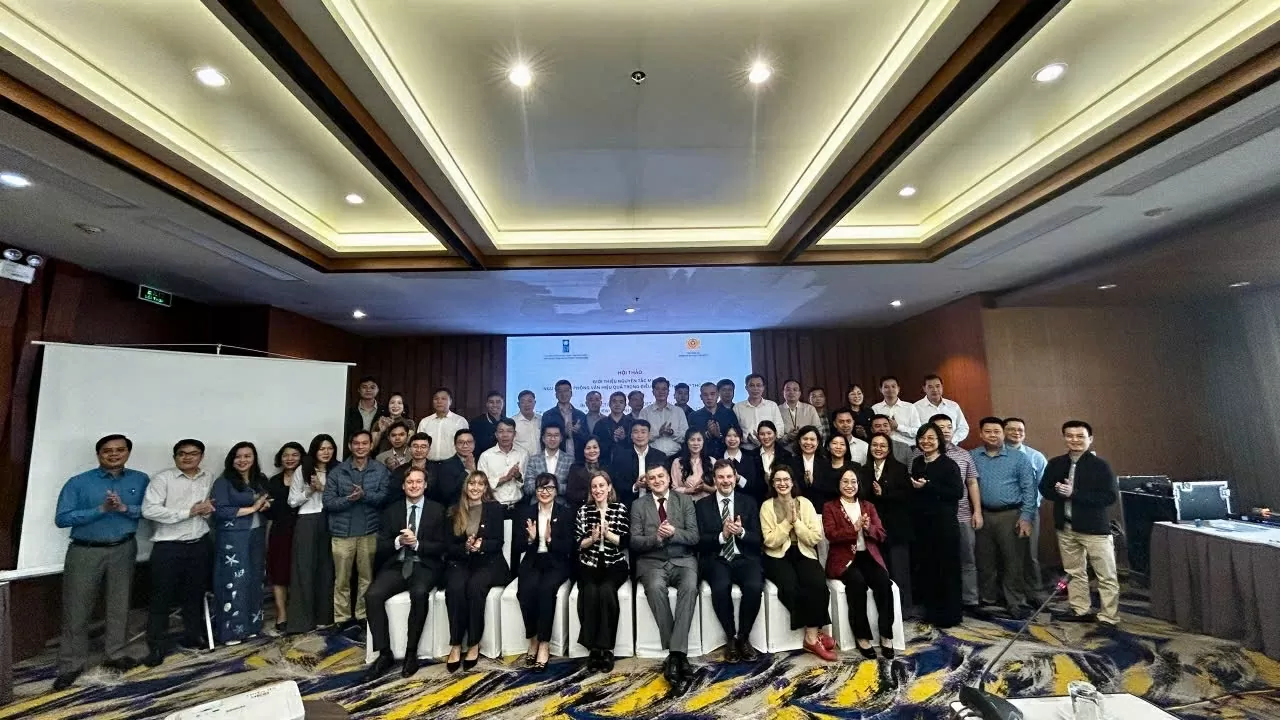 |
| Delegates attending the workshop "Introducing the Méndez Principles – Principles of Effective Interviewing in Investigations and Information Gathering". (Source: Organizing Committee) |
Investigative interviewing – Opening effective implementation of the Convention against torture
The CAT asserts the absolute prohibition of all acts of torture and cruel, inhuman, or degrading treatment or punishment. The Convention not only establishes a prohibitive standard but also imposes a positive obligation on member states to proactively prevent torture, especially during sensitive stages of the legal process such as interrogation and testimony collection. Investigative interviewing becomes a direct component of the obligation to protect human rights.
The Convention requires states not only to refrain from using torture but also to establish effective measures to eliminate conditions and circumstances that could lead to torture from the outset. The Méndez Principles can be seen as a concretization of this requirement, focusing on organizing interviews in a manner that respects human dignity, ensures voluntary testimony, and is based on scientific methods.
In a broader sense, the Méndez Principles emphasize several core orientations that directly impact the implementation of the CAT: interviews must be based on science, law, and ethics; the interview process should be conducted transparently, with preparation and appropriate accountability mechanisms; and special attention should be given to protecting vulnerable groups and requiring thorough training for interviewers. These orientations do not create new legal obligations but serve as specific preventive measures to minimize the risk of torture and cruel treatment in practice.
Rather than approaching the issue formally, the Méndez Principles within the CAT context serve as a clear complement: the Convention establishes legal obligations at the principle level, while Méndez provides practical guidance to realize those obligations in investigative activities.
Vietnam officially became a member of the CAT in 2015, demonstrating the state's commitment to preventing torture and protecting human rights. The 2013 Constitution affirms the prohibition of torture, violence, and mistreatment, and the protection of human body, honor, and dignity. Specialized legal systems such as the Penal Code, Criminal Procedure Code, Law on Temporary Detention, and regulations on audio and video recording of interrogations have gradually concretized these principles.
After more than 10 years of joining the CAT, Vietnam has significantly transformed international commitments into tangible results. To date, audio and video recording systems with sound have been widely implemented and effectively operated in most detention facilities nationwide. Reports from 2025 in various localities like Đắk Lắk and Hải Phòng indicate a significant reduction in violations of body and dignity due to strict supervision of interrogation processes, enhancing transparency in legal proceedings and reducing wrongful complaint letters. Notably, a survey published at the CAT Convention propaganda summary conference in September 2025 in Gia Lai showed that 100% of judicial officers in attendance mastered "friendly interrogation" skills, shifting from a "command" mindset to "respect for human rights". Particularly, Vietnam completed and published its second national report on CAT implementation, providing a comprehensive picture of substantial efforts, affirming that Vietnam is not only perfecting the legal framework but also effectively implementing it in practice, protecting citizens' inviolable bodily rights.
A basic legal framework for preventing torture has been established; however, the CAT emphasizes that prevention is a continuous process, requiring improvement not only at the legal document level but also in operational procedures and implementation capacity.
The Méndez Principles suggest viewing investigative interviewing as a professional skill requiring thorough training, based on psychological science and modern information-gathering methods. Beyond the legal framework, enhancing the capacity of those directly conducting interviews plays a crucial role in preventing coercion and mistreatment. The principles also emphasize the need to protect vulnerable groups during interviews, such as minors, people with disabilities, or those with psychological difficulties. Recognizing and appropriately approaching these groups is not only a human rights requirement but also ensures the reliability of the information gathered. Properly designed recording and monitoring mechanisms can protect both the interviewee and the interviewer, while also reinforcing public trust in investigative activities.
The Méndez Principles reflect a significant advancement in thinking about preventing torture and ensuring human rights in investigative activities. Studying these principles is not about mechanically applying international models but serves as a reference, helping countries consider organizing investigative interviews in a more humane, scientific, and effective manner.
In relation to the CAT, the Méndez Principles provide specific suggestions for realizing the obligation to prevent torture, especially in sensitive stages of the legal process. For Vietnam, continued research and academic exchange on the Méndez Principles can deepen the understanding of ensuring human rights in investigative activities, aligning with the requirements of building a rule-of-law state and international integration.


