


Strengthening Vietnam-Republic of Korea cooperation in key high-tech sectors: Ambassador Vu Ho
WVR - On June 2, in Seoul, Vietnamese Ambassador to the Republic of Korea Vu Ho held a working session with Mr. Koo Huck Chae, First Vice Minister of the Ministry of Science and ICT of the Republic of Korea (MSIT), to discuss measures to promote scientific, technological, and innovative cooperation between Vietnam and the Republic of Korea.
Latest
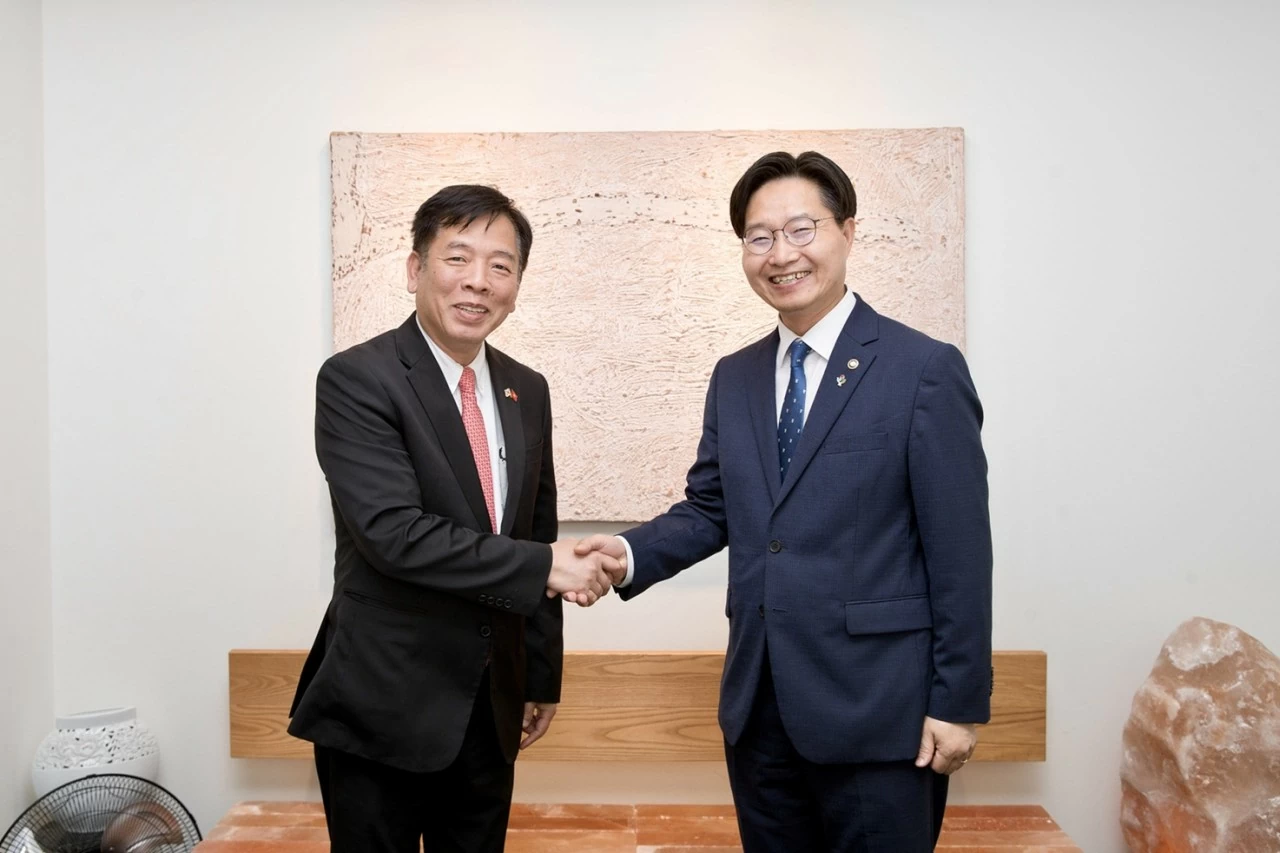 |
| Vietnamese Ambassador to the Republic of Korea Vu Ho and First Vice Minister of the Ministry of Science and ICT of the Republic of Korea Koo Huck Chae. (Source: Vietnamese Embassy in the Republic of Korea) |
The meeting was attended by representatives from MSIT, the Korea Institute of Science and Technology (KIST), the National Research Foundation of Korea (NRF), and officials from the Vietnamese Embassy in the Republic of Korea.
During the meeting, both sides agreed on the urgent need to implement the common understanding of the high-level leaders of the two countries regarding Vietnam-Republic of Korea scientific and technological cooperation. They emphasized the need to quickly establish a lead mechanism and develop an action plan for the 2026-2028 period with concrete outcomes.
Priority areas discussed included artificial intelligence (AI), AI governance, AI standards - evaluation - certification, digital transformation, 6G technology, semiconductors, AI infrastructure, digital twins, and cooperation in training and expert exchange.
Ambassador Vu Ho requested that MSIT continue to support Vietnam in implementing the Vietnam-Republic of Korea Comprehensive Cooperation Framework for Science, Technology, and Innovation; promote KIST's role in developing and executing the Master Plan; connect Vietnamese research institutes with leading institutes in the Republic of Korea; and enhance joint research cooperation, joint laboratories, and high-quality science and technology human resource training programs during the 2026-2028 period.
To enhance the effectiveness of the Joint Research Program, Ambassador Vu Ho suggested that the National Research Foundation of Korea (NRF) consider the proposal from the Vietnam National Foundation for Science and Technology Development to sign a Memorandum of Understanding to create a long-term cooperation framework, aiming for flexible cooperation models such as thematic cooperation programs and science and technology personnel exchange programs between the two countries...
Both sides also discussed advancing the next phase of the VKIST Project, including completing project documentation, enhancing KIST's role, and coordinating with KOICA and the Vietnamese Ministry of Science and Technology to improve research and development cooperation, innovation, technology commercialization, and human resource training.
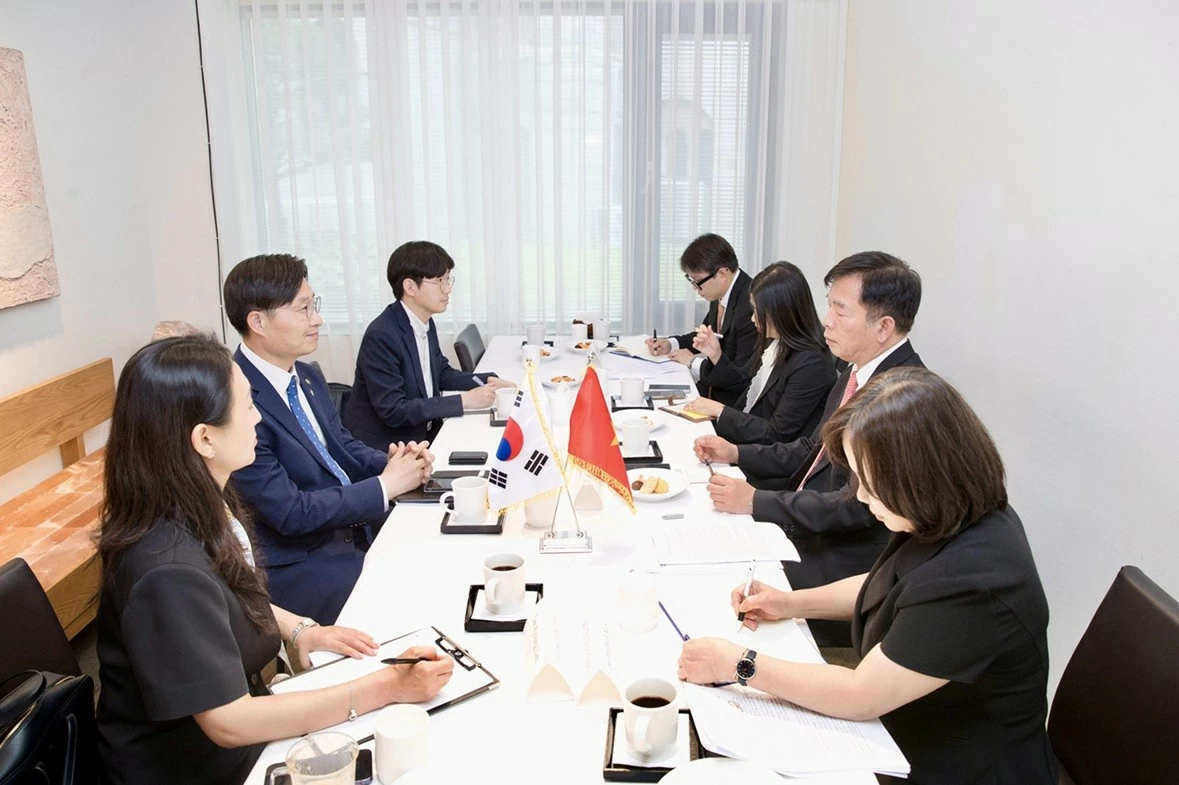 |
| Overview of the working session. (Source: Vietnamese Embassy in the Republic of Korea) |
Additionally, Ambassador Vu Ho proposed that MSIT organize training sessions for officials specializing in the development, management, and implementation of projects within the framework of the two countries' science and technology cooperation.
In discussions with Ambassador Vu Ho, Vice Minister Koo Huck Chae highlighted some changes under President Lee Je Myeng's administration. According to Koo Huck Chae, the new government requires a thorough reassessment of ODA projects.
The budget for R&D activities has increased, but the evaluation of international cooperation projects has become more stringent. Therefore, agencies must work closely to develop comprehensive project documentation that meets the current rigorous evaluation requirements.
To develop the Master Plan as agreed, Vice Minister Koo Huck Chae proposed establishing a Working Group to quickly produce a feasible Master Plan, clearly identifying key focus areas, priorities, scale, and specific implementation timelines, with a particular emphasis on attracting human resources to effectively implement the Comprehensive Cooperation Framework for Science and Technology.
Furthermore, Vice Minister Koo Huck Chae recommended that Vietnam focus on completing its legal system to ensure it does not hinder the implementation of the Comprehensive Cooperation Framework.
Vice Minister Koo Huck Chae also suggested that, in addition to establishing a Working Group to develop the Master Plan, Vietnam should have a high-level advisory board to provide the government with strategic advice, planning, policies, and long-term and effective development directions for science and technology and innovation.