







ASEAN Future Forum elevates Vietnam's economic role: RMIT scholar
WVR - According to Dr. Chu Thanh Tuan, Deputy Head of the Bachelor of Business Program at RMIT University Vietnam, the ASEAN Future Forum 2026 is an opportunity to clarify Vietnam's increasingly proactive role in shaping the region's development priorities.
Latest
Dr. Chu Thanh Tuan gave an interview to the press on the occasion of the ASEAN Future Forum 2026 (AFF) held in Hanoi from June 9-10, 2026.
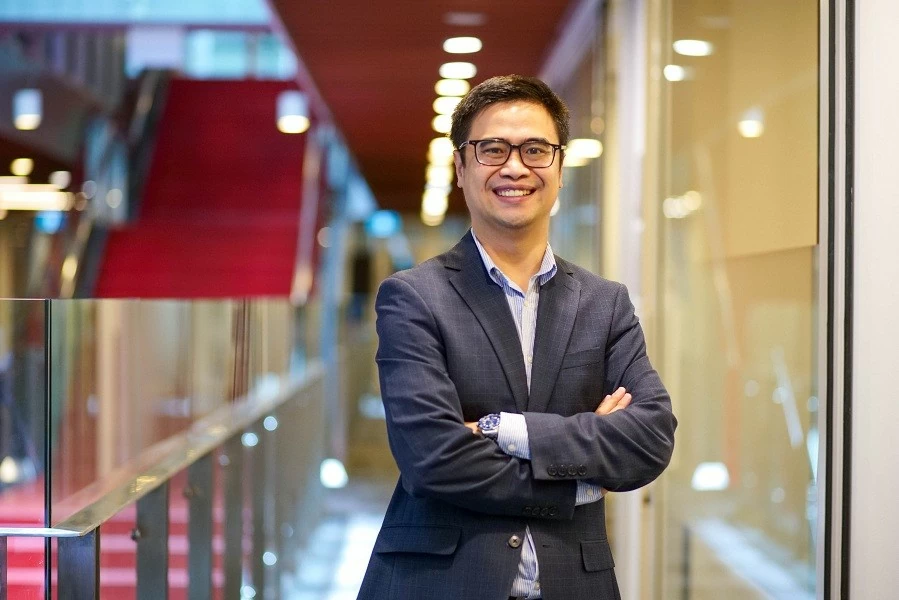 |
| Dr. Chu Thanh Tuan, Deputy Head of the Bachelor of Business Program, RMIT University Vietnam. (Source: RMIT) |
In the context of increasing strategic competition among major powers, according to Dr., what is the biggest economic challenge facing ASEAN in the coming years?
In my opinion, the biggest economic challenge for ASEAN in the coming years is not merely a decline in trade or a short-term shock, but the risk of being drawn into the process of global economic fragmentation.
Strategic competition among major powers is altering how businesses choose supply chains, technology, data, green standards, and investment flows.
For ASEAN, this is a complex issue, as the region's prosperity over the past decades has been based on an open environment where countries can trade with many global partners.
I want to highlight the economic decoupling process among major powers, forcing ASEAN to choose between different trade, technology, and investment ecosystems. In the ASEAN Economic Community Strategic Plan 2026-2030, ASEAN identifies geopolitical tensions, trade shifts, technological transitions, climate change, and demographic changes as major trends with comprehensive impacts on the region.
Therefore, the fundamental answer is that ASEAN needs to accelerate intra-regional integration, not just to be an "alternative location" in the global supply chain, but to become a common market with intrinsic capabilities, a voice, and collective coordination ability.
 |
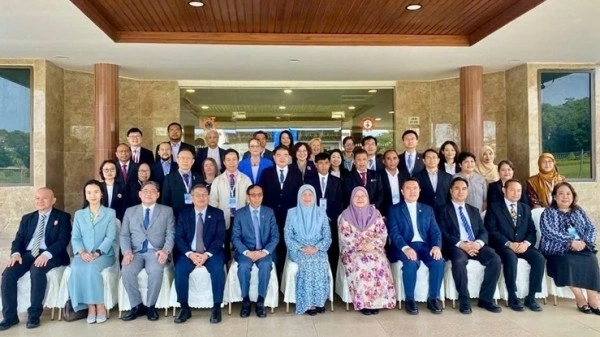
| Prime Minister Le Minh Hung speaking at the opening session of the ASEAN Future Forum, held from June 9-10 in Hanoi. (Photo: Quang Hoa) |
ASEAN has talked a lot about resilience. In your opinion, what is the area ASEAN should prioritize cooperation in to enhance the region's competitiveness?
If I had to choose one cooperation priority to enhance the region's competitiveness, I would say it is digital economic integration linked to the region's production capacity. ASEAN has talked a lot about resilience, but resilience does not mean being closed. Resilience in the new context should be the ability to connect within the bloc faster, more reliably, and less dependent on external bottlenecks.
Therefore, the ASEAN Digital Economy Framework Agreement (DEFA) holds strategic significance. This is ASEAN's first comprehensive digital economy agreement, covering digital trade, cross-border e-commerce, data governance, digital identity, electronic payments, online safety, cybersecurity, emerging technologies like AI, and digital talent mobility. If effectively implemented, ASEAN's digital economy could reach USD 2 trillion by 2030.
However, DEFA only holds substantial meaning if accompanied by logistics, common standards, cross-border payments, labor skills, and the capacity of small enterprises. ASEAN's resilience must be measured by the ability of regional businesses to sell products, raise capital, transfer data, protect intellectual property, and expand markets within ASEAN before reaching out globally.
Artificial Intelligence (AI) is opening up many opportunities but also creating numerous risks. In your opinion, how should ASEAN cooperate to leverage AI for economic growth while limiting negative impacts?
AI is a significant opportunity, but if ASEAN does not cooperate correctly, AI could also deepen the development gap among member countries. In my view, ASEAN should approach AI as a development infrastructure, not just a commercial technology.
Firstly, there should be common principles for AI governance, including safety, transparency, personal data protection, accountability, and algorithm auditability in sensitive areas such as finance, healthcare, education, public administration, and cybersecurity.
Secondly, ASEAN needs to avoid a situation where each country develops its own set of regulations, leading to a fragmented market. A mutual recognition framework for AI standards will help businesses deploy products on a regional scale while reducing compliance costs.
Thirdly, AI must be accompanied by labour policies. Workers in manufacturing, logistics, agriculture, services, and administration will be significantly impacted if retraining does not keep pace.
Therefore, ASEAN's AI cooperation must include a pillar on digital skills for small businesses, general labor, women, and youth. This approach aligns with the spirit of the ASEAN Future Forum (AFF) 2026, which emphasizes people-centered development and seeks solutions to build a stronger, more resilient ASEAN.
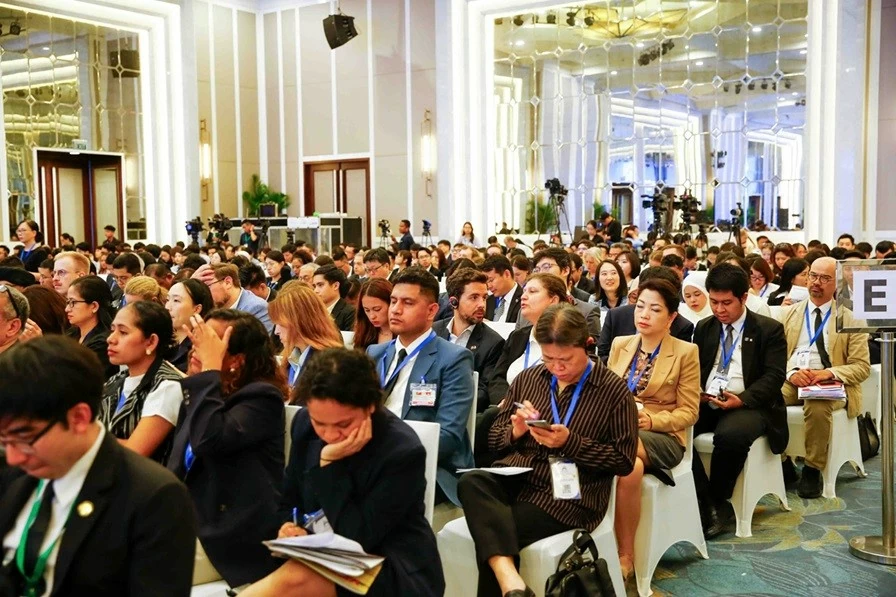 |
| Delegates attending the ASEAN Future Forum 2026 include 11 political parties from Southeast Asian countries, along with numerous scholars and experts in the region. |
Vietnam is increasingly proactive in proposing regional initiatives, including the ASEAN Future Forum. In your opinion, what unique mark can Vietnam make in ASEAN's development process over the next decade?
Vietnam can make a unique mark in ASEAN by playing the role of an agenda-setting nation.
Vietnam's distinction lies in its ability to combine development, stability, and proactivity in strategy. Vietnam deeply understands the value of peace, integration, and industrialization, and has experience in balancing relations with major partners.
In the next decade, Vietnam's mark should lie in three areas: promoting open strategic dialogue like AFF, leading cooperation in the Mekong Delta and smart cities, and contributing to regional standards on the digital economy, AI, the green economy, and inclusive development. This role aligns with a Vietnam that is maturing economically and more confident in diplomacy.
From an economic perspective, what should Vietnam do in the next 5-10 years to not only be a destination for investment flows but also become a center for innovation and high-value creation in ASEAN, Dr.?
From an economic perspective, for Vietnam to become a center for innovation and high-value creation in ASEAN, it must move beyond a growth model primarily based on competitive labor costs, industrial land, and tax incentives.
FDI remains crucial, but in the next 5 to 10 years, Vietnam needs to prioritize upgrading its endogenous capabilities. Vietnam's semiconductor strategy by 2030, with a vision to 2050, aims to establish at least 100 design companies, a small-scale manufacturing plant, 10 packaging and testing plants, semiconductor revenue of over USD 25 billion annually, and a workforce of more than 50,000 engineers and bachelors serving the industry from 2024 to 2030.
This is the right direction, but it must be accompanied by university reform, increased investment in research and development (R&D), intellectual property protection, development of deep-tech venture capital funds, and substantive linkage policies between FDI corporations and Vietnamese enterprises.
If Vietnam only attracts factories, it will remain an investment destination. But if it masters human resources, data, design, standards, branding, and innovation networks, Vietnam can become ASEAN's value creation center.


