






Growing better, not just faster - Vietnam’s new competitiveness
WVR - If Vietnam has proved one thing in recent years, it is that ‘it can grow’, according to Prof. Andreas Stoffers.
Latest
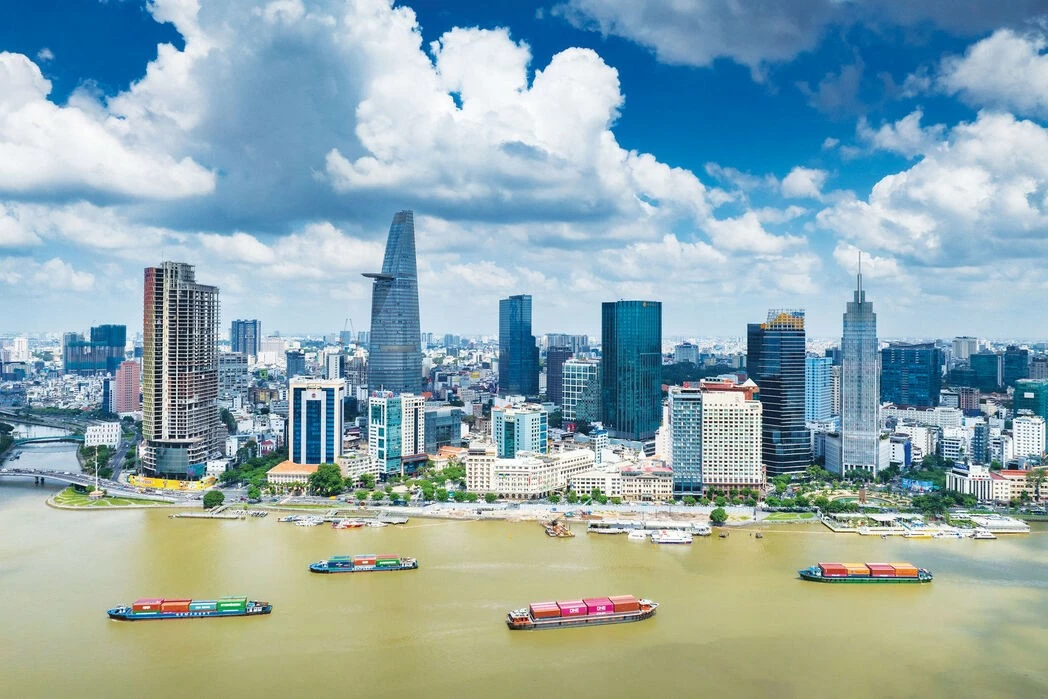 |
| Vietnam has reached the point where competitiveness no longer stems solely from its costs, but from better institutions, better businesses, more modern infrastructure and a more skilled workforce. (Photo: Hung Khanh) |
Despite difficult circumstances, the country has managed, since the end of the war and the start of the Doi Moi reforms (1986), to transform itself from one of the world’s poorest countries into a recognised growth model in the Asia-Pacific region. Strategic turning points followed: from the lifting of the trade embargo and the bilateral trade agreement with the US, through accession to the WTO, to becoming a reliable trading and investment partner within the global economy… when people speak of a country’s phoenix-like rise, Vietnam is certainly a prime example.
However, Vietnam must now focus on taking the next step to ensure the sustainability of this development and move towards becoming an industrialised nation by 2045. The prospects for this are good. However, significant steps are now required. Vietnam has reached the point where competitiveness no longer stems solely from its costs, but from better institutions, better businesses, more modern infrastructure and a more skilled workforce.
A milestone reached, not the finish line
A very recent indicator of Vietnam’s positive economic development is that the country was included in the IMD World Competitiveness Ranking 2026 and immediately reached 27th place among 70 economies surveyed. This places Vietnam in the middle of the pack within the ASEAN region, just behind Thailand (26), well behind Malaysia (15) and Singapore (1), but well ahead of the Philippines (47) and Indonesia (48). The sub-categories in which Vietnam particularly excels are the domestic economy (16th), international trade (9th) and employment (11th). There is a particular need for improvement in the areas of domestic investment and infrastructure.
In the prestigious WIPO Global Innovation Index 2025, Vietnam ranks 44th out of 139 economies and is in second place among lower-middle-income economies. All of this underlines Vietnam’s remarkable performance in recent years, but also indicates that there is still ample room for improvement.
Rankings such as those by the IMD or WIPO are, of course, a strong indicator. However, they are not laurels on which a country can rest. Rather, they clearly highlight the challenges that Vietnam must now address. Just as a person's mental and physical condition begins to decline if they do not continually keep themselves fit, build on their strengths, and address their weaknesses, so too do nations that assume they have already done enough to sustain the same pace and vigour of development in the future.
FDI, trade, consumption and enterprise momentum – what makes Vietnam strong today
Anyone who looks at the current figures for Vietnam and the data from recent months and years will have to acknowledge that, in many areas, these results are impressive not only for the current year but, above all, when viewed against the backdrop of developments over recent years and decades.
Even if the government’s target of double-digit growth for the 2026-2030 period is highly ambitious, analysts’ baseline scenarios – with figures just under 10 per cent – are also thoroughly impressive, particularly when one takes the challenging global environment into account. In the first five months, industrial production rose by 9.1 per cent, whilst exports increased by 19.5 per cent year-on-year. FDI has remained one of the strongest anchors: registered FDI reached USD 24.8 billion in the first five months of 2026, up 34.9 per cent year-on-year. The recovery of the domestic economy is reflected in the 11.2% rise in retail and services.
Moody’s has recognised Vietnam’s performance to date by confirming its Ba2 rating and upgrading its outlook from ‘stable’ to ‘positive’. In 2026, Vietnam is demonstrating a robust breadth of growth drivers, which is a major asset for the country’s competitiveness.
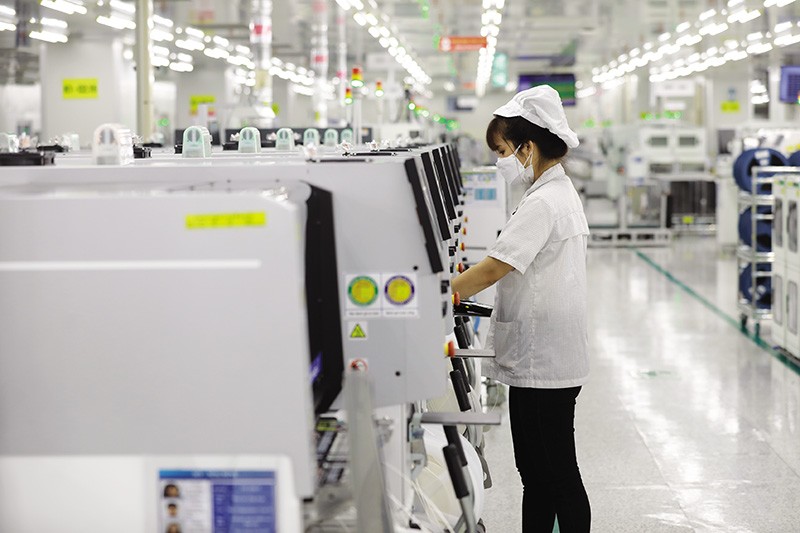 |
| Strengthening entrepreneurship should not rely solely on large enterprises, but should aim to build a strong SME sector (Photo: Tran Nam) |
Nevertheless, strong economic growth is not a foregone conclusion. Sustaining this trend therefore requires an acceleration of reforms and certainly not just a focus on short-term economic performance. Sustainable and sustained economic growth requires a qualitative leap forward.
During the first five months of 2026, a very active reform agenda was implemented: the National Assembly passed a series of laws and resolutions, whilst the government issued 150 decrees and 34 resolutions. Particularly helpful from a business perspective are the eleven resolutions on administrative reform, which are intended to reduce business and compliance costs noticeably, thereby facilitating business operations. Resolution 25/2026/QH16, in particular, emphasises the importance of sustainable development and the synchronisation of infrastructure, science, technology, innovation, digital transformation and the quality of resources. Vietnam will be judged on its implementation of these ambitious plans. In the forthcoming new, quality-driven phase of growth, institutions will be for Vietnam what low wages and investment incentives were in the past: a decisive locational advantage.
Digitalisation, energy and human capital - infrastructure means more than just roads and ports
In times of increasingly fierce international competition, particularly in the booming Asia-Pacific region, quality growth and technology-driven productivity will be of paramount importance. The aim is not simply to pump more money into the economic cycle, but to vigorously implement the reform agenda once it has been set in motion. Competitiveness stems from quality and planning certainty. Infrastructure in any form must, in any case, be linked to industrial clusters and technological development. It must be emphasised that infrastructure goes far beyond traditional thinking: it is no longer simply a matter of building a road to an industrial estate or constructing a seaport.
Rather, modern infrastructure comprises, on the one hand, a stable and cost-effective energy infrastructure for semiconductors, data centres, AI and the high-tech industry. On the other hand, digital infrastructure must also be secured as a key location factor: data centres, cloud infrastructure, cyber security, digital identity, interoperable administration and high-speed networks. The latter, in particular, are something like ‘Vietnam’s new roads’. In the age of AI, human capital is no longer a soft factor. It is hard infrastructure, as high-tech investors in particular require highly qualified staff who can react agilely and flexibly to situations that are changing more rapidly than in the past.
The private sector will play a greater role in this regard, as was already clearly emphasised in Resolution 68. This is not merely an economic policy, but a continuation of the shift in mindset that has made Vietnam successful since the Doi Moi reforms (1986). Strengthening entrepreneurship should not rely solely on large enterprises, but should aim to build a strong SME sector. In an industrialised country such as Germany, for example, it is not the large firms such as BMW, Mercedes or Siemens that form the backbone of the economy, but the thousands of SMEs, including many ‘hidden champions’.
Vietnam currently has a localisation rate of just 36.6 per cent, which is below average within ASEAN. Yet it is precisely localisation that will help ensure that economic progress no longer benefits foreign investors alone, but ultimately Vietnamese companies as well. For it will be the Vietnamese firms that determine how much value added remains in the country in the long term. The logic is clear: more local suppliers, greater technological understanding, greater competitiveness, more Vietnamese value creation.
To achieve this, private companies need access to finance, digital skills, management expertise, technical standards and better links to FDI corporations. In this way, Vietnam will evolve from an FDI magnet into a base for its own value creation.
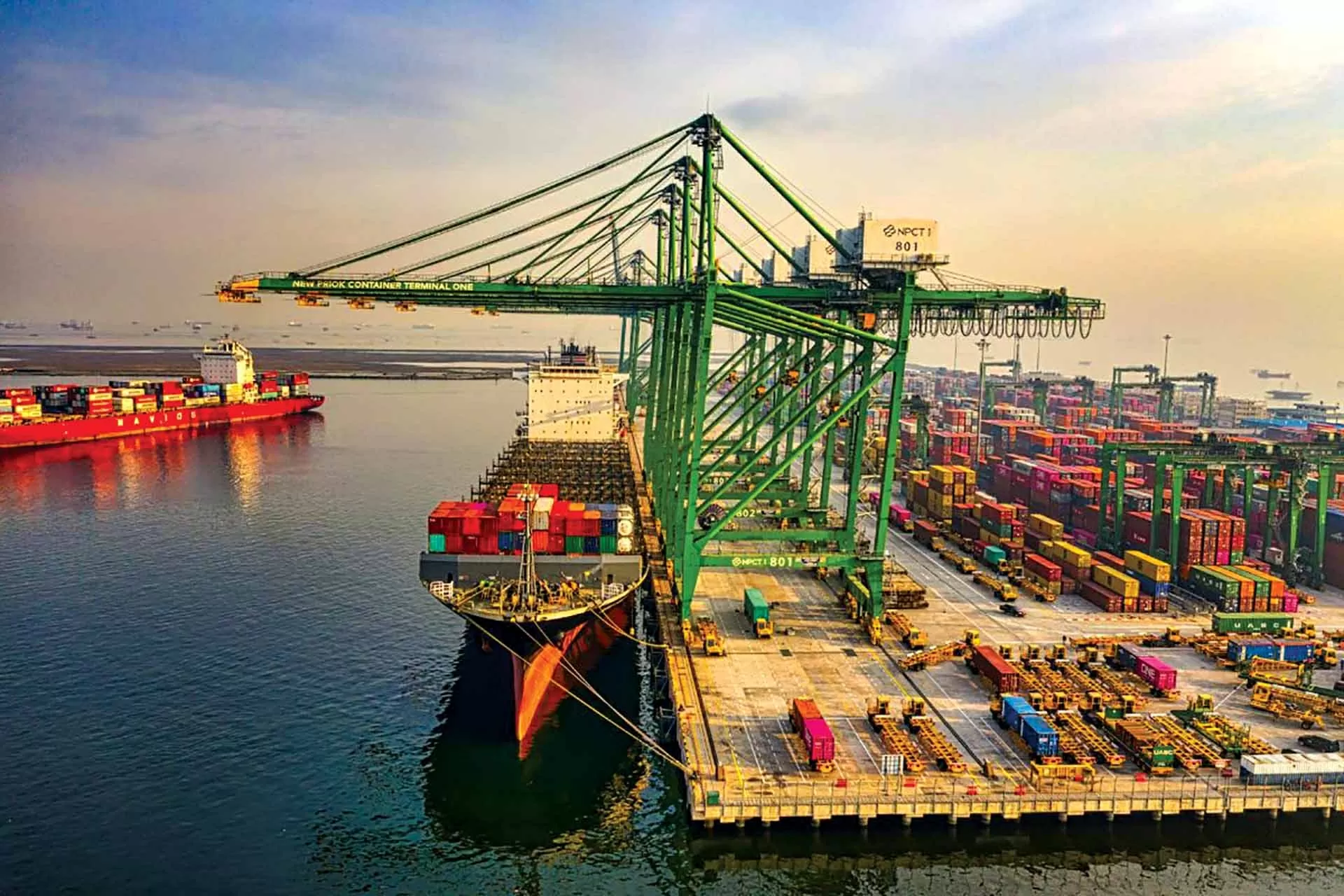 |
| In 2026, Vietnam is demonstrating a robust breadth of growth drivers, which is a major asset for the country’s competitiveness. (Source: Pexels) |
Vietnam as a platform for future technologies: Innovation, digitalisation and financial centres
It remains important for Vietnam to recognise that the next step must lie in its own capacity for innovation. The Digital Technology Industry Law, in force since January 2026, has created an important legal framework for digital technologies, AI, digital assets and innovation-driven business models. Legal clarity is always a competitive advantage, especially when combined with regulatory sandboxes, skills development and incentives.
The financial centres in Ho Chi Minh City and Da Nang will also offer significant potential with substantial spillover effects, provided they are, hopefully, realised soon. Here, links with global future-oriented clusters – such as semiconductor design, AI applications for industry and administration, robotics and automation, digital financial services, agritech, logistics, energy and storage technology, as well as satellite and geodata applications – will play a major role. Let’s think outside the box here: when it comes to future technologies, such as space exploration, those locations offering the best technological and legal conditions will have the advantage.
Despite all this optimism, it is nevertheless important to carry out a thorough risk analysis. This involves, quite simply, assessing the likelihood of a risk occurring and its potential impact. Once the risks have been honestly identified and acknowledged, we must set about preparing for potential problems. Risks certainly include geopolitical tensions, protectionist tendencies, energy and logistics shocks, and a weakening economy in key export markets. Added to these are dependence on FDI, trade balance issues, price rises and inflation, as well as the implementation risk associated with Vietnam’s truly ambitious reforms. Once these risks have been identified and safeguards put in place, this will have a direct impact on increasing Vietnam’s resilience.
Vietnam must, without a doubt, continue to simplify and digitise administrative procedures (keyword: ‘one-stop shop’), monitor the quality of regulation even more closely, and engage in enhanced dialogue with businesses. Furthermore, the aim is to boost labour productivity through better, more practical training – particularly in the age of AI. Benchmarking against successful models, such as those in Singapore, Republic of Korea or Germany, is always helpful. However, it will be crucial not simply to copy these models, but to adapt them specifically to Vietnam. After all, these countries were successful in the ‘pre-AI era’.
The present calls for new solutions. These still include, however, the creation of a strong SME sector, the improvement of technical training, and close links between businesses and universities.
As improvements in international rankings show, Vietnam’s competitiveness is growing. The crucial task, however, will be to translate these achievements into sustainable development and take Vietnam to the next level. Important milestones in competitiveness have been reached, but Vietnam's competitiveness story is far from finished. The real test begins now.